
Packers’ run game rescue could come from a cheaper running back who fits Matt LaFleur’s scheme better than Jonathan Taylor
Green Bay’s rushing attack still sits near the bottom of the league, and the issues go beyond the running back room into the guard spots.


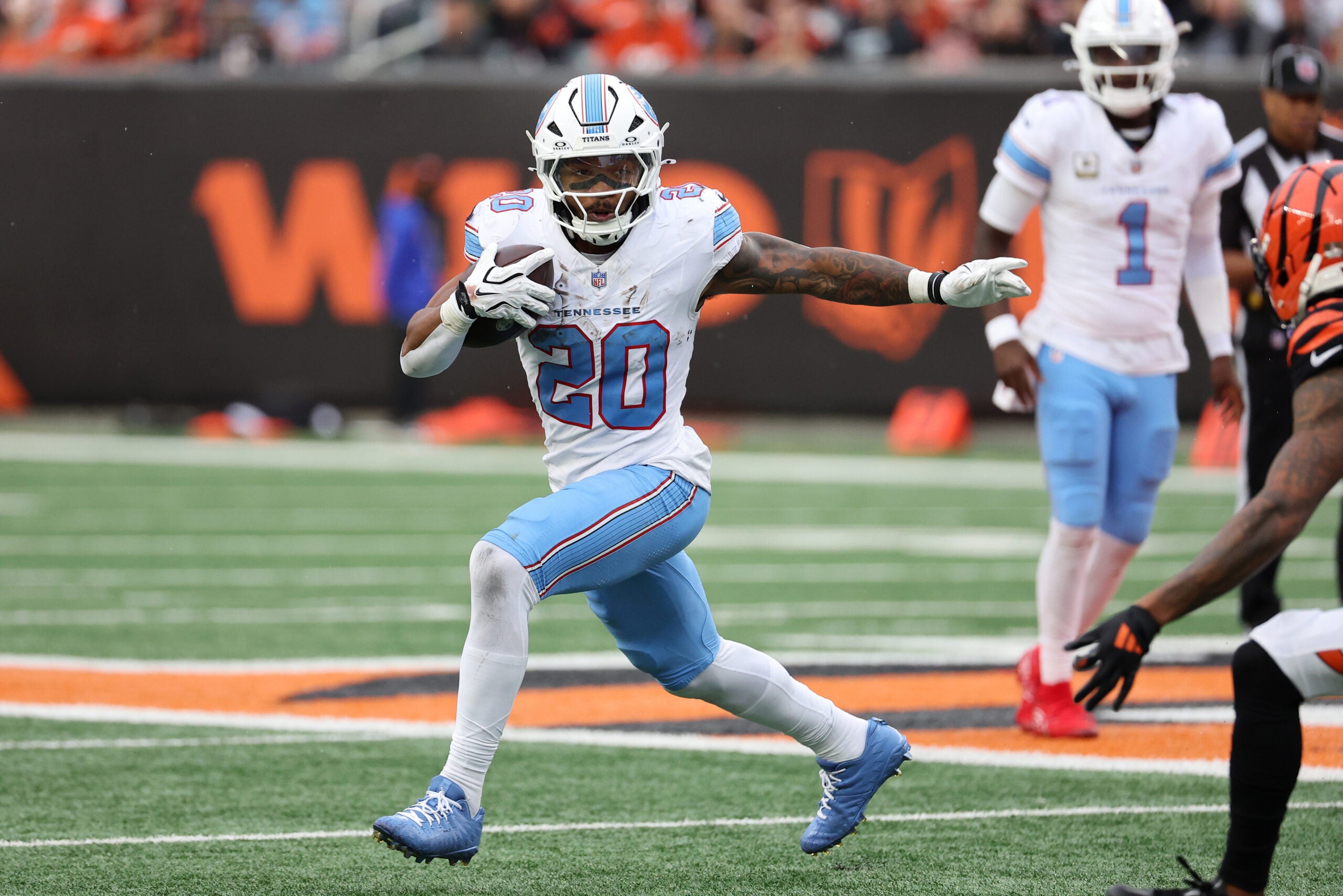
The Green Bay Packers need help in the run game, and Jonathan Taylor is the biggest name in that trade conversation. However, Tony Pollard might be a better fit for the Packers’ offensive scheme, and the trade compensation makes that gap even wider.
The comparison starts with the two running backs who defined Green Bay’s ground game in recent years. Aaron Jones was fast, could take advantage of small holes, and picked up yards after contact because of that. Josh Jacobs is more of a pounder who needs a high volume of carries, getting dirty yards through the middle. As offensive coordinator Adam Stenavich said this week, Jacobs gets better as the game gets going.
The problem is that the volume isn’t there, because the Packers simply can’t run the ball. The offensive line isn’t giving the running backs much. At the same time, the running backs aren’t taking advantage of the small things the line does give them.
Style and cost favor Pollard
Pollard fits the Aaron Jones mold. He’s a slasher who uses his speed to exploit openings, and that could add something different to this part of the offense. Taylor leans more toward the pounder style. He’s still a very explosive runner and a better player than Jacobs, but the skill set overlaps more with what Green Bay already has.
Then there’s the price. The Indianapolis Colts want something close to first-round value for Taylor. That’s too much. Taylor is already 27, so even if the trade works, Green Bay would get two or three seasons out of him at most. Paying a first-round pick plus his salary for that scenario doesn’t make sense. The problem for Pollard is that he’s already 29, so the trade cost would also have to be reasonable.
Expectations should stay realistic either way. If the Packers can climb from 32nd to 25th or 24th in rush EPA, that would be a reasonable improvement.
The guard question
The other half of the fix is up front. Kevin Zeitler is probably the player who could put things together. Aaron Banks doesn’t look viable anymore, partly because of injuries and partly because he’s a limited player, especially as a run blocker. The most logical patch would have Laken Tomlinson at left guard and Zeitler at right guard.
However, the coaching staff doesn’t seem as high on Zeitler. One possible explanation goes back to the start of the season. Green Bay opened with Jacob Monk and Donovan Jennings, both shorter guards. When they played Travis Glover at right guard, the explanation from Matt LaFleur was that they wanted bigger bodies up front, and they thought those bigger bodies could offer Jordan Love a better pass protection.
Zeitler is also on the shorter side, so maybe the team doesn’t want to go back to that profile. Still, he’s the better player. If two guards perform at the same level and one is bigger, choosing the bigger one is understandable. Zeitler doesn’t need to play at his prime level, either. If he does exactly what he did last year for the Tennessee Titans, he’d be a major upgrade over Banks.
For now, the team seems to view Tomlinson on the right side as the answer, because it believes the best combination includes both Banks and Tomlinson, with Sean Rhyan back at center. The line that played against the Carolina Panthers with Rhyan at center is probably Green Bay’s preferred starting five.
Talent at RB is only part of the issue
The running back room has enough talent. Jacobs is a very good player with a Pro Bowl track record. Pierre Strong runs hard, sees the holes, and can produce. Kaleb Johnson is a productive runner too, even though the Packers don’t trust him much because of his fumble issue. MarShawn Lloyd, though, is less efficient.
Confidence is part of the story. Early in the season, the line was doing its job, and Lloyd wasn’t taking advantage of it. After three or four weeks, Green Bay ranked in the top 10 in run block win rate and 32nd in rush EPA. That pointed straight at the running backs. Now Jacobs is back, and the Packers still can’t run the ball, which makes it a different kind of problem. Matt LaFleur as a run game savant, the offensive structure isn’t the problem.
Even so, the rushing offense can improve if the guards play just a little better. And Zeitler would be the alternative with the highest ceiling.
