
Notre Dame football’s transfer portal strategy takes a massive shift with multi-year eligibility additions this offseason
Notre Dame football saw a major transfer portal shift this offseason. The Fighting Irish fans should be very excited about it.


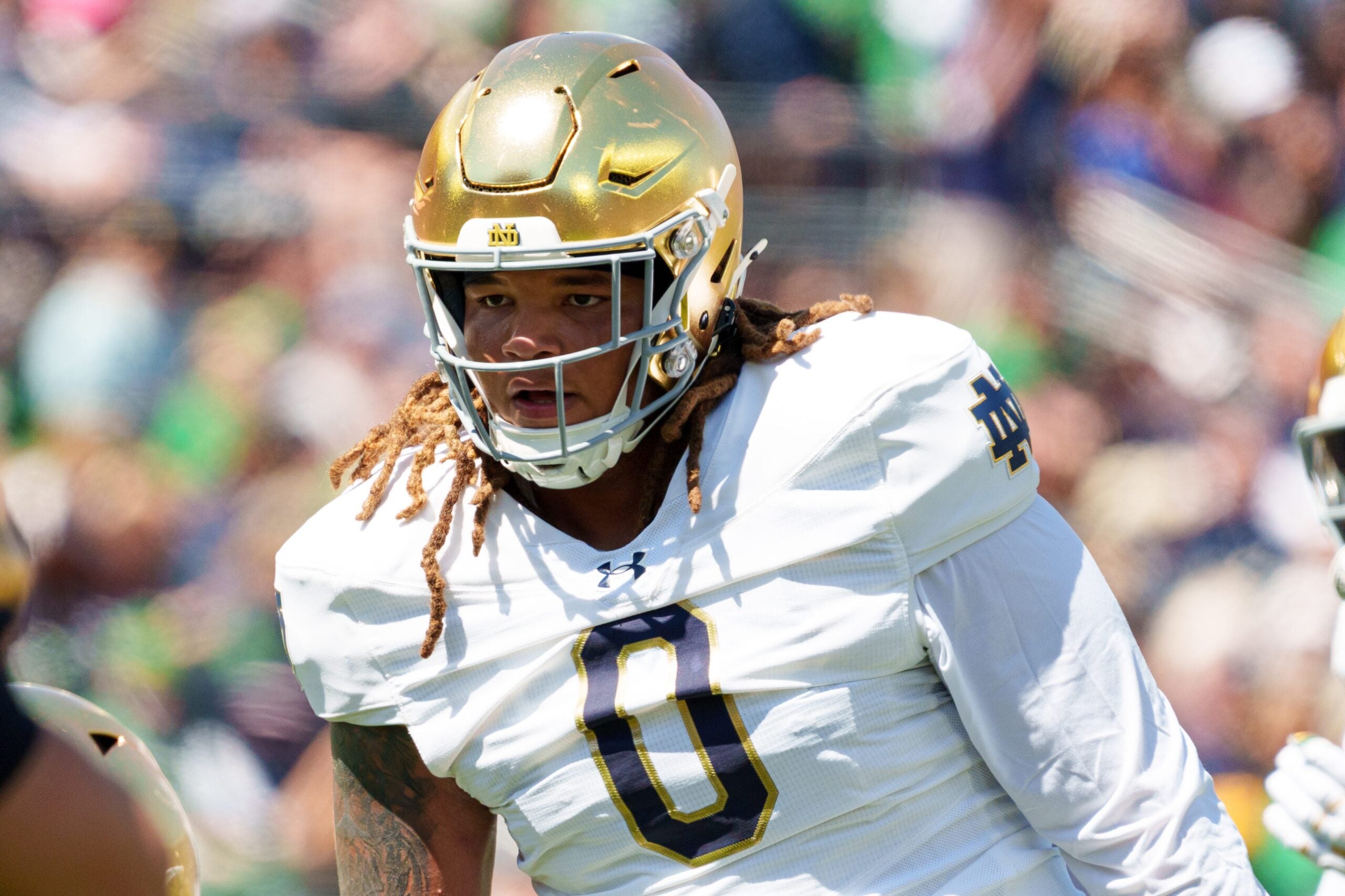
Notre Dame football and head coach Marcus Freeman have long built their roster around high school recruiting, player development, and retention.
The Fighting Irish have never been a program that floods the transfer portal looking for volume additions. That much remains true. But the 2026 portal cycle revealed a significant shift in how Notre Dame approaches portal acquisitions, one that could reshape how Freeman and his staff construct rosters for years to come.
The change comes down to eligibility. In the past, Notre Dame leaned heavily on graduate transfers and one-year rentals to supplement its roster.
The list of those players is impressive. Quarterbacks include Jack Coan, Sam Hartman, and Riley Leonard. Wide receivers have included Malachi Fields, Beaux Collins, and Will Pauling. Defensive end RJ Oben and defensive tackle Jared Dawson have been notable additions up front. Defensive backs Jordan Clark, Thomas Harper, Rod Heard, and Jalen Stroman have also made huge contributions.
Notre Dame did a strong job of evaluating that type of player, bringing in veterans who could raise the floor and potentially the ceiling of the roster.
This offseason, however, brought a new element to the equation.
Multi-year portal additions signal a new era
Outside of former Colorado cornerback DJ McKinney, Notre Dame signed six transfer portal players this offseason who have eligibility beyond the 2026 college football season. That group includes wide receivers Quincy Porter and Mylan Graham from Ohio State, defensive end Keon Keeley from Alabama, defensive tackle Francis Brewu from Pittsburgh, defensive tackle Tionne Gray from Oregon, and punter Spencer Porath from Purdue.
That is a notable departure from the way things have been done in South Bend.
The struggle in the past centered on Notre Dame’s academic standards. Getting a non-graduate transfer into the university was incredibly difficult given those requirements. There were exceptions along the way, including Leonard, who had not finished his degree at Duke before transferring. But for the most part, academic hurdles limited the Fighting Irish to graduate transfer acquisitions.
Clearly, there has been some give on the academic side this offseason to make these additions possible. That is a significant development for Notre Dame’s roster-building model.
Why this shift matters for 2026 and beyond
The multi-year eligibility window changes the calculus for both the players and the program. For Porter, Graham, Keeley, Brewu, Gray, and Porath, this presents a developmental runway that one-year rentals simply do not have.
We have seen across college football that players with multiple years at their new destinations tend to show tremendous growth in their second season. The adjustment period matters, and having time to fully absorb a new system unlocks upside that a single year often cannot.
Each of those players could pay huge dividends for Notre Dame’s pursuit of a national title in 2026. But their stories do not necessarily end after next season if they choose to stay. That flexibility is valuable on its own.
From Notre Dame’s perspective, the roster implications extend into the following offseason. If the Fighting Irish hit on this year’s portal class, they may not need to be as active in next year’s cycle. That is a meaningful shift for a program that has always prioritized continuity and development over high portal volume.
A new blueprint for Freeman and company
This offseason’s portal class represents a real evolution in how Notre Dame fills out its roster. The program is still centered around high school recruiting and long-term development. Freeman has made that clear, and nothing about this cycle changes that foundation. But the willingness to bring in multi-year portal additions opens a new layer of flexibility that Notre Dame has not previously had access to.
The successes from this year’s class will go a long way in determining how aggressively the Irish staff leans into this approach going forward. If these players develop the way the staff believes they can, it could continue to mold how Freeman constructs rosters for years to come.
