
Michigan is about to learn what Penn State already did about coaching searches in 2025
Michigan fired Sherrone Moore and now faces the same chaotic coaching search Penn State endured. Here’s why the Wolverines’ situation might be even messier than the Nittany Lions’ 54-day saga.


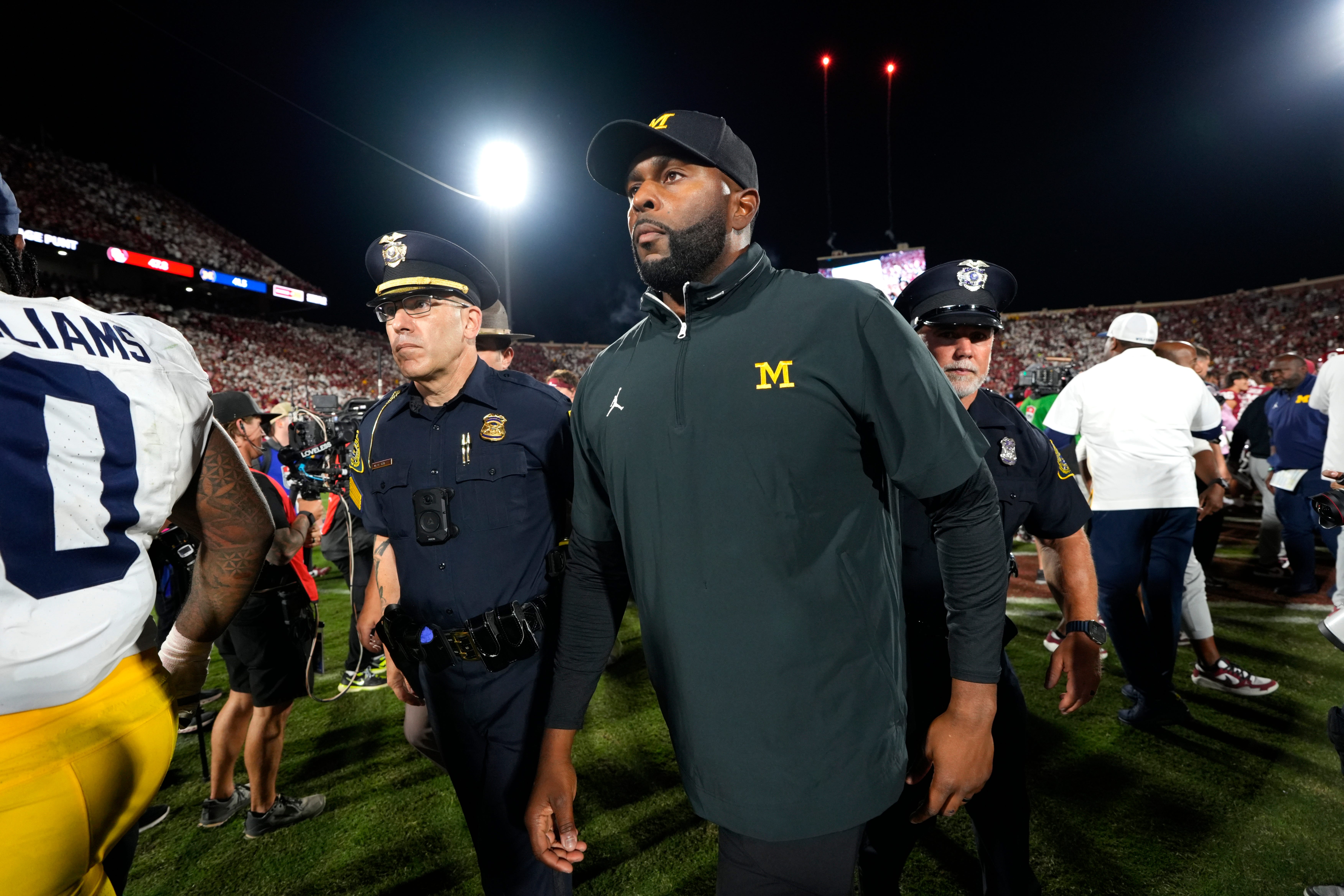
Michigan is learning the same lesson Penn State did back in October—your season can unravel in a week, and by the time the fanbase finishes processing what went wrong, the program is already staring at a bigger crisis: leadership. Michigan fired head coach Sherrone Moore “with cause” on December 10 after an investigation found evidence of an inappropriate relationship with a staff member. Suddenly, Michigan’s season stopped being about recruiting rankings, or portal positioning. It became about control—who’s running the program, who’s making decisions, and whether anyone inside the building has a plan that extends past the next 48 hours.
Penn State lived that exact movie this fall. It fired James Franklin on October 12 after a three-game collapse, then spent the next 50-plus days getting dragged through the coaching carousel before finally landing on Iowa State’s Matt Campbell. Different reasons, same feeling—a proud program walking around in public without an anchor, trying to convince recruits, donors, and its own locker room that stability is coming even though nobody’s sure when. That’s where Michigan is now.
Michigan’s interim window
Someone has to hold the building together while the execs figure out the next hire. Penn State handed the wheel to Terry Smith, and he did the job the program actually needed. He stopped the bleeding, calmed the roster, and gave the locker room a voice while the search turned into a national soap opera.
Michigan is now in that same interim purgatory. And in 2025, “interim” does not mean placeholder. It means recruiter, therapist, portal firefighter, and brand protector, all at once. Because the sport does not pause for a coaching search, but accelerates.
The leverage game
Here is where the Penn State comparison gets clearer. Penn State thought firing early would give it a head start. Instead, it became the carousel’s most valuable bargaining chip. Candidate after candidate used “Penn State interest” to squeeze extensions, raise budgets, or simply cement their current situation, with Kalani Sitake’s BYU extension becoming one of the loudest examples of the market closing a door in real time.
Michigan is about to become that same leverage machine, except it is starting later and in a messier public moment.
That matters. A clean search is already hard. A search that starts with “for cause” headlines is a another level of difficulty, because agents do not just sell the job. They sell the optics of the job.
And every rival recruiter is going to sell the opposite.
The roster clock
This is the modern college football nightmare: your coaching change collides with the transfer portal calendar, recruiting dead periods, and NFL decisions. You do not just hire a head coach. You try to keep your roster from evaporating before he arrives.
Penn State felt that pressure during its 54 day marathon, which is a big reason Campbell’s appeal made so much sense at the finish line. Penn State did not just hire a play caller. It hired a stabilizer with a reputation for development, culture, and alignment, the traits that keep a roster from splintering when things get loud.
Michigan is now entering that same race, except with less time and more noise.
The fantasy board phase
Every big coaching search follows the same emotional curve. First comes denial that it’s happening at all. Then comes the dream board—fans talking themselves into home-run hires, message boards building mock staffs, insiders floating names that generate clicks. Then comes the public panic when the dream board stops returning calls. Penn State did the full dance this fall. Reported targets drifted away, the search stretched into weeks, and the internet got louder with every passing day. Eventually the conversation stopped being about football and started being about whether the administration had any idea what it was doing.
Michigan is already at risk of hitting that same spiral, because the Michigan job will attract power names—but attraction isn’t the same as alignment. Penn State learned that the hard way. The flashiest candidates weren’t always the best fits, and the longer the process dragged on, the more valuable “fit” became over star power. That’s how Matt Campbell won the race in the end—not because he was the loudest name, but because he was the right one at the exact moment Penn State needed clarity more than headlines. Michigan needs to figure that out fast, because the longer this search takes, the more it starts to look like chaos instead of strategy.
Why this feels familiar
This isn’t about Michigan copying Penn State’s playbook or learning from its mistakes. It’s about college football in 2025 being built to punish instability at every turn. Penn State’s search became chaotic because the sport is chaotic—the portal never closes in spirit, recruiting never sleeps, optics matter as much as X’s and O’s, and the most important position in the building isn’t quarterback. It’s the adult who can convince everyone to stay when everything feels like it’s falling apart.
Penn State found that adult in Matt Campbell at the end of its spiral. Michigan is now staring at the same test, just with a different starting point, messier headlines, and a louder storm overhead. The question isn’t whether Michigan can find a good coach—it’s whether it can find the right one before the noise becomes the story and the story becomes the brand. That’s the real risk. And it’s the same one Penn State barely escaped.
