
The worst part about Joey Aguilar getting denied another season at Tennessee isn’t what most Vols fans think it is
Joey Aguilar won’t be suiting up for the Tennessee Vols in 2026.
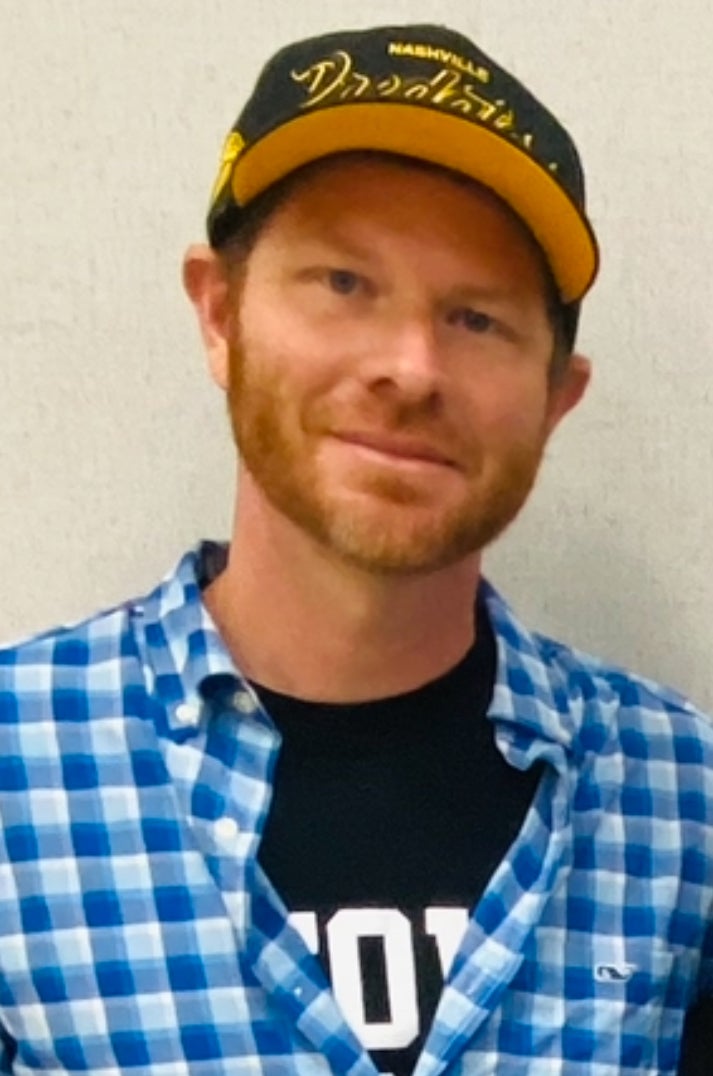


Quarterback Joey Aguilar won’t be suiting up for the Tennessee Vols this fall.
Aguilar learned on Friday afternoon that his college football career is effectively over after a judge denied him an injunction that would’ve allowed the California native to play for Tennessee in 2026.
According to VolQuest, Aguilar has 30 days to appeal the ruling. But as VolQuest noted, appeals can take anywhere from six months to a year to be heard. Aguilar will likely begin preparing full-time for the 2026 NFL Draft instead of appealing.
Joey Aguilar is by far the biggest loser in this situation
Tennessee obviously would’ve preferred to have Aguilar back in 2026. The former Appalachian State quarterback has a year of starting experience in Josh Heupel’s offense. Had Aguilar returned, it would’ve been just the second time in the Heupel era that UT had a returning starting quarterback (Hendon Hooker was the previous).
With Aguilar now NFL bound, it means that Tennessee will feature a three-man quarterback competition this spring/fall between redshirt freshman George MacIntyre, true freshman Faizon Brandon, and Colorado transfer Ryan Staub.
Tennessee’s sudden quarterback uncertainty, however, is far from the worst thing about this situation.
Aguilar is by far the biggest loser in this ordeal. And it’s not close.
The 2026 season may have been Aguilar’s last chance at a big payday. I don’t know what his future looks like as an NFL player, but the general feeling is that he’ll be a late round selection or go undrafted. If that’s the case, it’ll be an uphill battle for Aguilar to gain traction in the NFL. Sure, he could be the next Brock Purdy, but that’s a rare outcome for quarterbacks who are drafted in the seventh round.
According to court documents, Aguilar’s compensation at Tennessee in 2026 would’ve been around $2 million.
Former Texas Longhorns quarterback Quinn Ewers was the last quarterback selected in the seventh round of last year’s draft. He signed a four-year deal worth $4.3 million with just $131,000 in guaranteed money.
Former Missouri quarterback Brady Cook was signed as an undrafted free agent last year, and he started four games as a rookie in 2025. Cook, though, signed a two-year deal worth just $1.8 million with no guaranteed money.
I think it’s pretty clear that playing for the Vols in 2026 would’ve been a much better financial situation for Aguilar (and he might have improved his draft stock some). Especially since Aguilar won’t be able to do much, if anything, physically at the NFL scouting combine as he recovers from offseason surgery.
Aguilar is getting denied a chance to earn $2 million because he was ignored by schools coming out of high school, and he had to grind through two years at City College of San Francisco (where he played zero games) and two years at Diablo Valley. Those few years of proving himself at the juco level are what’s preventing Aguilar from an opportunity to earn $2 million this fall.
Let’s put it another way: because college football coaches misevaluated Aguilar (or didn’t evaluate at all in some cases), he had to start at the very bottom level, post-high school, to prove himself. Most young players give up on major college football dreams at that point. Aguilar, in fact, almost did.
It just doesn’t make sense. Diego Pavia was allowed to play at Vanderbilt last season even though he played two seasons at New Mexico Military Institute, two seasons at New Mexico State, and the 2024 season at Vanderbilt. Aguilar was allowed to play for the Vols last season because of the same waiver.
If one year of juco football doesn’t count, how does two years? That seems like an arbitrary decision.
And it’s a decision that’s robbing Aguilar, a guy who’s a role model to young late bloomers everywhere, of literal millions.
Good job, NCAA. Whatever point you’re trying to make was made — and it cost a player who deserves it a chance to get paid.
