
The Chaz Coleman situation at Tennessee revealed a change that college football badly needs that would alter the sport forever
The Tennessee Volunteers’ biggest transfer addition of the offseason, Penn State transfer EDGE Chaz Coleman, missed most of spring practice at UT. Coleman also didn’t report on time for summer workouts last week.


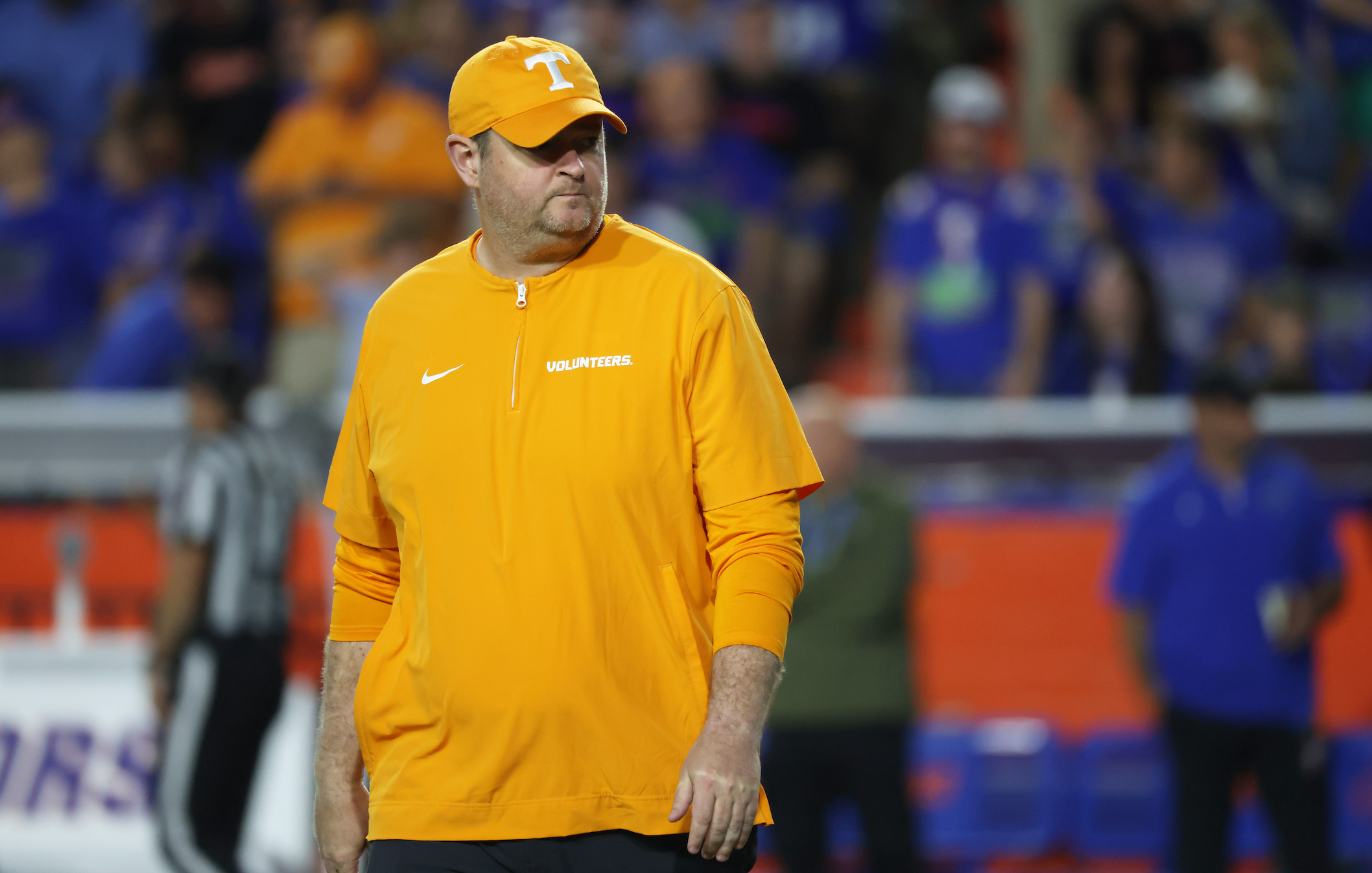
We still aren’t sure how the Chaz Coleman situation at Tennessee is going to play out, but the whole ordeal has revealed a “fix” that college football badly needs.
Coleman, the Penn State transfer EDGE who was the Vols’ highest profile portal addition this offseason, missed most of spring practice while dealing with some off-the-field personal issues.
The Ohio native didn’t report on time for summer workouts last week, but he did arrive in Knoxville this past Friday according to a report from VolQuest’s Austin Price.
Price noted in his report that it’s still “unknown” what Coleman’s return to Knoxville means for his status with the program.
While we don’t know what the future holds for Coleman at Tennessee — there still isn’t much optimism that he’ll actually play for the Vols this fall — this whole situation has revealed a change that college football desperately needs.
The Chaz Coleman situation at Tennessee has given college football the perfect way to “fix” the sport
College football has plenty of problems to work through as the sport adjusts to the effects of massive NIL deals and the transfer portal.
There are a ton of different fixes for college football that make sense (one problem is getting everyone to agree on various fixes). But the Coleman situation, I believe, gave college football the blueprint for one fix that would eliminate a significant amount of problems and make the sport much healthier.
Coleman transferred to Tennessee just a few weeks after deciding to leave Penn State. He wasn’t recruited by Tennessee as a high school player, so he wasn’t familiar with Knoxville. The Vols landed Coleman thanks in part to his previous relationship with defensive coordinator Jim Knowles (Coleman played for Knowles at Penn State in 2025). Tennessee also made Coleman a lucrative NIL offer (On3’s Chris Low believes UT has paid Coleman $200k to $250K so far of his $2 million-ish deal).
This was a major decision made by a young player after just one visit to Tennessee and only a few weeks to consider it.
And that’s how most transfer decisions are made in January. Players only have a couple of weeks to figure out their next move while negotiating five-figure, six-figure and seven-figure deals. It’s a lot for young athletes who are still finding their way as adults. And many of the players are receiving poor guidance from fly-by-night “agents.”
But there’s a very easy fix — if everyone would just agree to it.
I think the sport would be much healthier if players had to finish the school year at the program they played for in the fall. Players could finish the spring semester and the portal would officially open sometime in late April for a week. This would mean coaches would have their rosters finalized in early May — which is essentially how it works in the NFL.
Now, here’s the part that I think makes college football healthier. There should be a “legal tampering period” that opens immediately after the national championship game. This would give programs three months to evaluate the roster, and come up with a plan to retain players. Players would also get three months instead of three weeks to make a huge decision that will impact the rest of their career. I think allowing players to take visits during the three month tampering period would be ideal.
No deals can be made official until the portal opens in this scenario, so even if a player agrees to something in February, it’s not written in ink until late April.
This scenario would obviously eliminate spring practice. But that’s something that’s been on the table for a while. If the portal is moved to late April, teams could have minicamp style practices starting immediately after the semester ends in May.
I could see the offseason calendar setting up something like this:
- Mid May to Memorial Day: Minicamps
- Brief break for Memorial Day
- Return to minicamps on designated dates in June
- Break From July 1 until fall camp begins (perhaps there are some workouts happening during this time, whatever works best for programs and the athletes)
This is how the NFL is set up and it works well. No one is making a career decision in just a week or two (while under pressure to make a decision) in this scenario. Athletes would be able to make more informed decisions, and so would programs. And we wouldn’t see nearly as many Chaz Coleman-type situations. This scenario would also allow the coaching cycle to fall into January and prevent the Lane Kiffin Ole Miss-to-LSU type drama from happening again.
Coaches like knowing their rosters in January because of winter workouts and spring practice. I get it. But the current late December/early January calendar is an unsustainable cluster ****. It’s not ideal for the athletes, and it continues to create headaches for college football programs.
Teams could still have voluntary winter workouts. Everyone would be facing the same scenario, so it’s not like it’s a disadvantage for anyone.
(A byproduct of this “fix” would be moving National Signing Day back to February because there would no longer be a need for early enrollees — those players would join the team in May for minicamps if they graduate early or in June if they graduate with the rest of their class.)
The best fix for college football is one that gives players and programs more time to make informed decisions. This would provide that.
