
ESPN’s criticism of Dallas Cowboys’ Osa Odighizuwa trade is understandable, but it misses the point
The Dallas Cowboys’ trade of Osa Odighizuwa to the San Francisco 49ers remains one of the biggest moves of their offseason. And though criticism is understandable given how good he is, ESPN is missing the point.


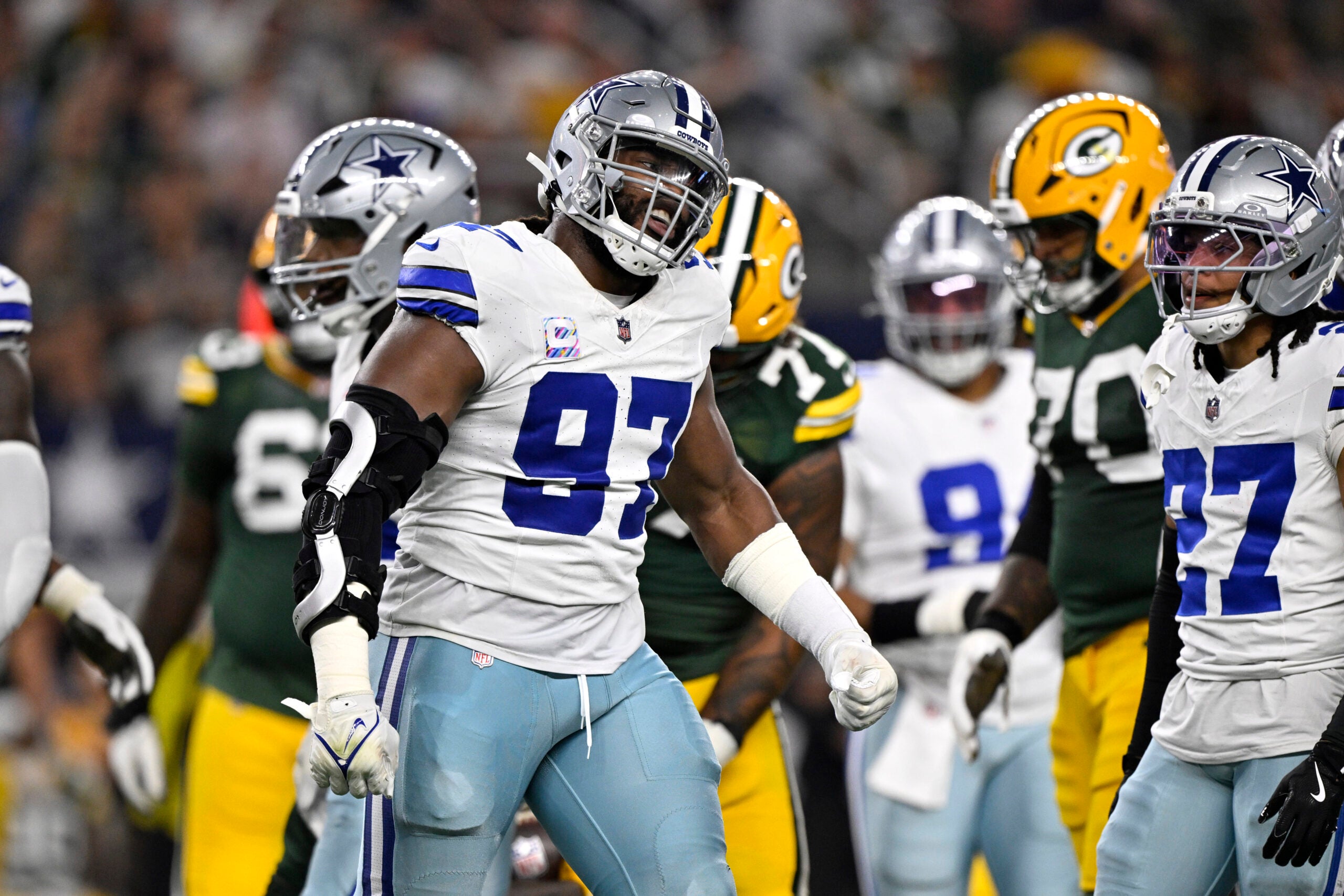
When the dust settles on the 2026 Dallas Cowboys season, there is no question we will look back at the Osa Odighizuwa trade. Rarely is an $80 million player dealt two years into his contract, but that’s exactly what happened when Dallas sent him to the San Francisco 49ers for a third-round pick.
Though it’s easy to forget given it happened in early March, it remains one of the biggest moves of the Cowboys’ offseason. And it’s one that’s earned them criticism, most recently from ESPN.
The Cowboys recently received a C+ offseason grade from analyst Seth Walder, and the trade of defensive tackle Osa Odighizuwa played a significant role in that middling evaluation. Walder listed the Osa trade as the move he disliked as he argued the Cowboys dealt the wrong defensive tackle.
His thesis: Odighizuwa is younger, cheaper, and arguably better than Kenny Clark at this stage of their careers. It’s a fair point on the surface. But when you factor in what new Cowboys defensive coordinator Christian Parker wants to do schematically, the picture changes. And it even nets the Cowboys the benefit of the doubt. Let’s break it down.
The case against the trade is simple
Walder writes that the Cowboys “chose the wrong defensive tackle to deal,” noting Odighizuwa’s age and contract advantages over Clark. He also speculates Dallas may have kept Clark because he was part of the Micah Parsons trade package, and moving him would have created poor optics.
I can see the logic. In fact, when the trade happened, I didn’t love it either. I was highly critical of it due to this being a win-now year for Dallas. Moving on from a defensive standout didn’t seem like the right approach to me, let alone for a third-round pick.
However, if I’m playing Madden and picking between Odighizuwa and Clark, I’m probably taking the former, who has been one of the better pass-rushing defensive tackles in the league. However, scheme fit plays a major role in team building, and that’s where the perception of the deal should change.
Why new Cowboys scheme changes the equation
The more we’ve learned about Christian Parker’s defensive vision, the more the decision starts to make sense.
A video surfaced on social media of Parker speaking at what appears to be a coaching clinic. In it, he describes wanting his defensive linemen to attack blocks, staying square, and showing good extension between themselves and the offensive linemen. In other words, he doesn’t one defensive linemen aggressively attacking just one gap, where Odighizuwa excelled. Parker’s goal is to defend the run with a light box, keeping defensive backs out of run-support responsibilities as much as possible.
To do so, he can’t have the Cowboys defense play a one-gap defense (which, as the name suggests, is all about assigning one gap to each defensive linemen and each linebacker). That’s a departure from the one-gap system the Cowboys ran under Dan Quinn and Matt Eberflus. Parker is moving toward what you might call a one-gap-and-a-half defense, where interior linemen are tasked with attacking two gaps and occupying multiple blockers to free up linebackers.
Odighizuwa’s best traits are his explosiveness, his get-off, and his ability to penetrate into the backfield. Those are one-gap traits. Clark, on the other hand, started his career as a nose tackle in Green Bay before evolving into more of a 3-technique later. His role was blurry in 2025, but Parker’s scheme should give him clarity in 2026.
With Quinnen Williams projected to play the majority of his snaps at 3-technique, Dallas needs someone who can hold up at nose tackle, occupy space, and take on double teams. Clark fits that profile better than Odighizuwa. And keeping both Odighizuwa and Williams would have created redundancy at the same position rather than complementary pieces across the interior.
Benefit of the doubt
I don’t think it’s fair to grade the Cowboys harshly for choosing Clark over Odighizuwa when scheme fit is such a large part of the equation. One of the reasons there’s genuine excitement about Parker’s defense is that the personnel fits the vision. You don’t want scheme to dictate every personnel decision because talent is king in the NFL. But when the scheme and the roster align, you lean into it.
Would I have loved to keep Odighizuwa around and give Dallas a three-headed monster at defensive tackle? Of course. This remains one of the most controversial decisions of the Cowboys’ offseason, and it’s one I didn’t initially support. But I’m giving them the benefit of the doubt because they appear to have a very clear plan in place. We’ll see how Clark performs in Parker’s system and whether third-round rookie Jaishawn Barham (drafted with the pick acquired from San Francisco) can contribute as a rookie.
