
The many ripple effects of Tyler Smith’s unfortunate thumb injury on the Dallas Cowboys’ offense ahead of Week 1
The Dallas Cowboys are entering the 2026 NFL season without one of their best players. And the impact goes well beyond having to start T.J. Bass in his place.


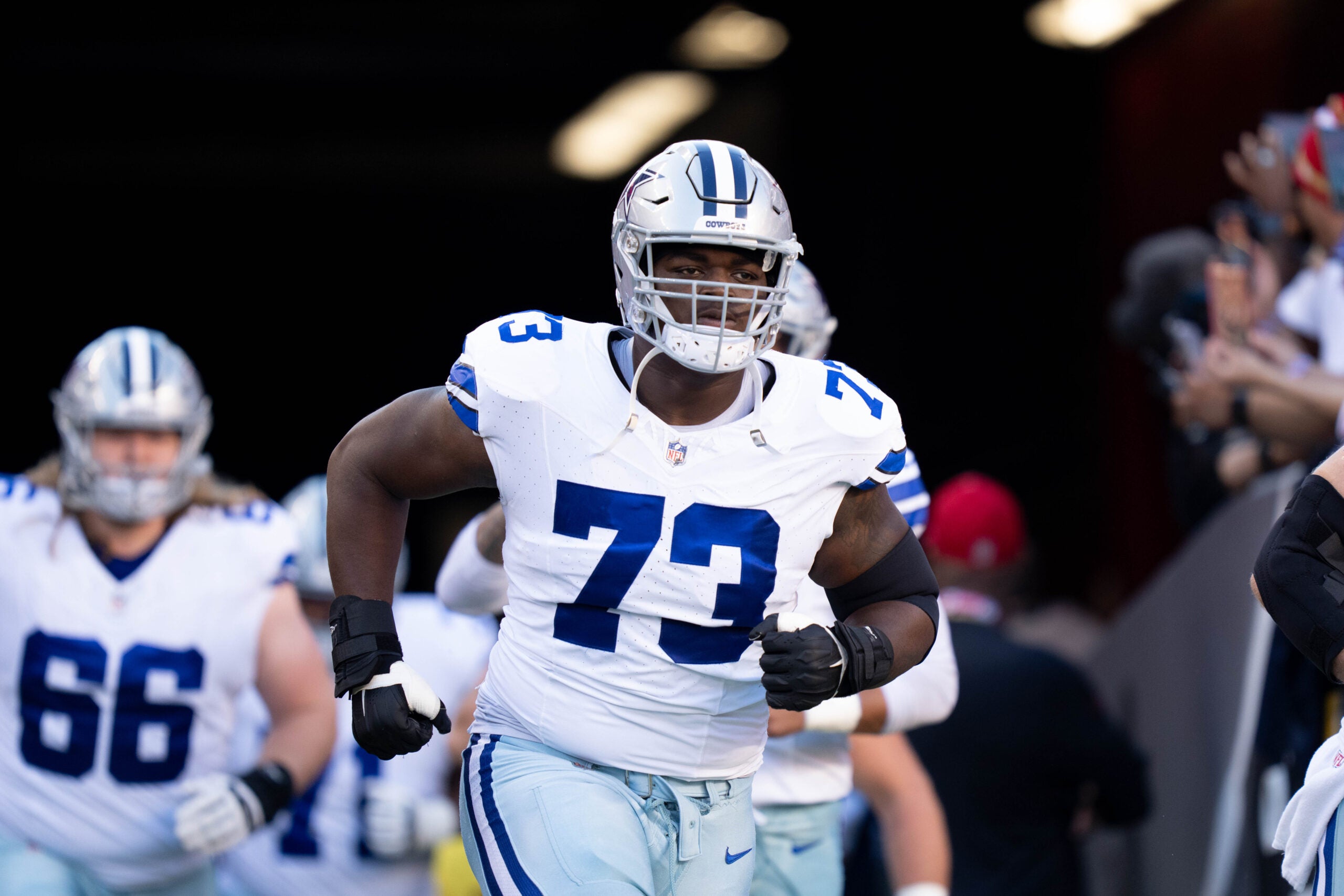
The focus is on backup lineman T.J. Bass, who is taking over at left guard in place of the injured Dallas Cowboys, All-Pro Tyler Smith. But the latter’s surgery, who will land him on Injured Reserve as he’s expected to miss four to six weeks, will create more ripple effects beyond Bass’ promotion.
Let’s break them down.
T.J. Bass steps into the starting lineup
The most immediate effect is that the Cowboys will promote T.J. Bass to the starting left guard spot. The good news? Dallas appears comfortable with that arrangement.
Bass is a high-end backup who could be starting for other NFL teams. The Cowboys signed him to a $6 million tender earlier this offseason because they trust him. He started five games for the Cowboys last season, and in those five games, Dallas averaged almost 35 points per game. The Cowboys’ offense can operate with Bass at guard.
Smith is still the team’s best offensive lineman, and the Cowboys will miss him. But if you had to pick one position along the offensive line to absorb an injury, left guard with Bass waiting behind Smith is the most manageable scenario.
The backup left tackle situation becomes a serious concern
Here’s where it gets tricky. Smith’s injury doesn’t just remove a starting guard. It also likely removes the Cowboys’ Plan B at left tackle.
The Cowboys brought in Broderick Jones to compete with Terence Steele at right tackle, according to Schottenheimer. But Jones doesn’t sound like a swing tackle. He told reporters that one of the reasons he struggled with the Pittsburgh Steelers was that he was asked to move around too much. Schottenheimer confirmed last week that Jones has been taking snaps exclusively at right tackle. Everything about Jones points to him being a right tackle, not someone you flip to the left side.
That means Dallas’ backup plan at left tackle was likely (and I’m admittedly speculating here) kicking Tyler Smith from guard to tackle if starter Tyler Guyton went down. With Smith on IR, that option vanishes. Should Guyton suffer an injury, the Cowboys would have to give Jones a shot at left tackle or find another solution. Nobody in Dallas wants to find out what that looks like.
Nick Leverett should get called up from the practice squad
With Bass now locked in at left guard, the Cowboys need a backup center. I expect them to call up Nick Leverett from the practice squad.
Leverett was one of the biggest roster cut surprises on cutdown day. He had a strong preseason at center, a position where Dallas lacked a clear backup. Before Leverett’s emergence, the Cowboys focused on giving Bass practice snaps at center. Once Leverett played well enough to handle that role, it freed Bass to focus on guard.
Now that Bass is starting, the Cowboys need Leverett back in the fold. He gets three practice-squad call-ups before needing to be signed to the 53-man roster. We’ll see how Dallas handles that timeline given Smith’s 4-to-6-week window. Do they burn all three call-ups in consecutive weeks, or do they just sign Leverett outright? A lot of factors will go into that decision.
The run game plan could change
One of the staples of offensive coordinator Klayton Adams’ scheme is pulling guards. The Cowboys want Tyler Smith pulling on counters, traps, and power plays. Smith is a violent, powerful player who thrives in that role.
Bass has been solid, but he’s not Smith. I wonder how often Adams asks Bass to be a pulling lineman, and whether the run-game identity shifts as a result. The Cowboys built part of their offensive philosophy around Smith’s ability to get to the second level and create movement. Losing that element for a month or more matters.
Pass-protection priorities get complicated
One of the big stories for this Cowboys offensive line is that left tackle Tyler Guyton has improved drastically. That improvement was supposed to make it easier to mask the pass-protection struggles Terence Steele has dealt with on the right side for the past few seasons. The plan likely involved sliding the offensive line toward Steele, keeping a tight end or running back near him for help.
But with a new variable at left guard, does that calculation change? If the Cowboys need to account for the guard spot, it could limit how much help they send Steele’s way. Or it could mean keeping a running back in protection more often, which reduces the number of bodies in the route tree.
I want to see if the Cowboys simply trust Bass to hold up without extra help or if they adjust their half-slide tendencies. Either way, the passing game’s protection scheme just got more complicated.
For now, we wait. Smith’s absence creates questions at nearly every level of Dallas’ offensive line operation. The Cowboys have the pieces to survive this stretch, but expect it to be quite the rocky ride.
