
Packers have 3 questions to answer right away when their 2026 season opens against the Vikings
Green Bay faces Minnesota on Sunday at the U.S. Bank Stadium, and the NFC North race won’t wait.


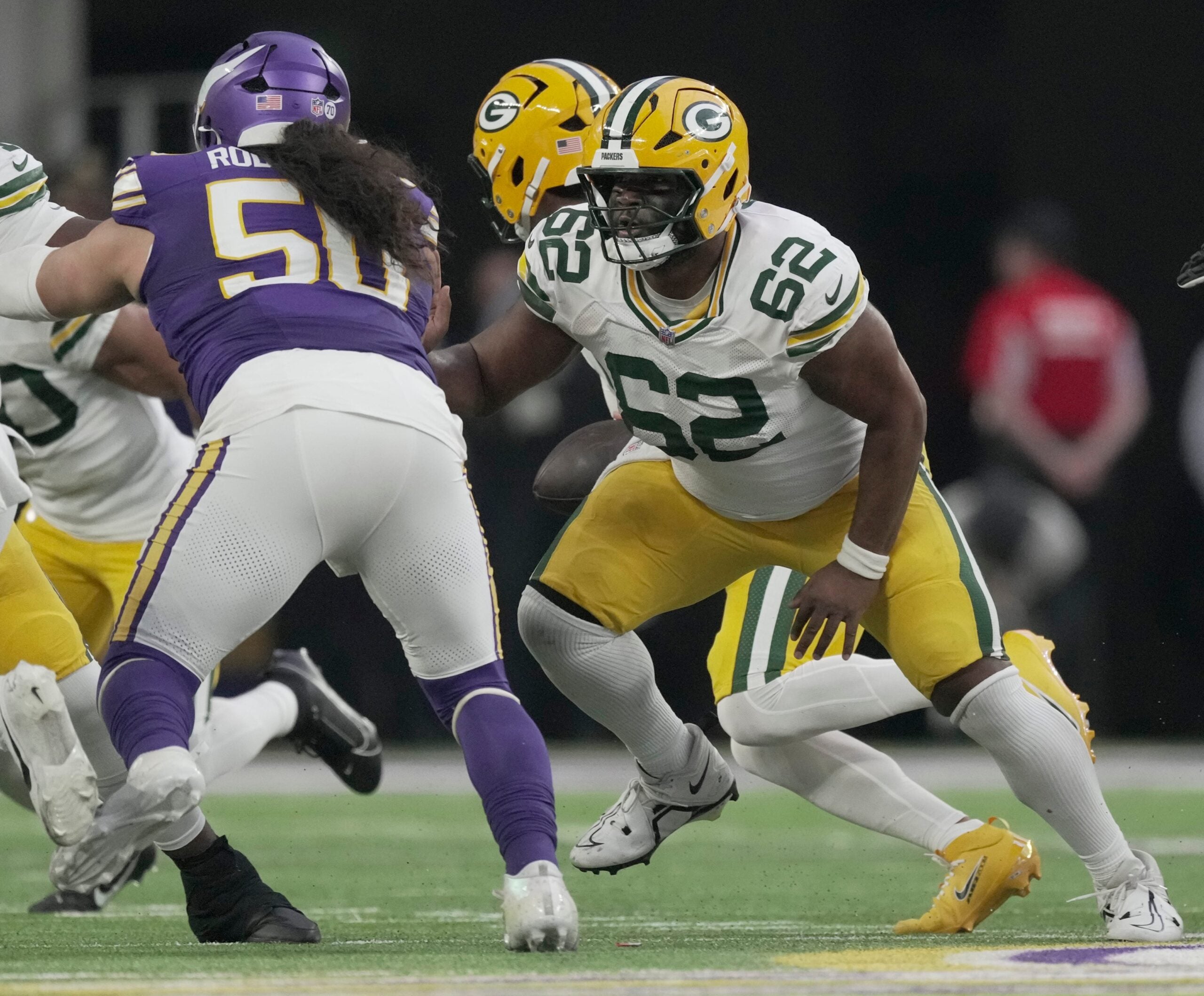
The Green Bay Packers open the 2026 regular season on Sunday against the Minnesota Vikings, and the team has three significant questions to answer early in the campaign. These topics apply to the Vikings game and the stretch of games that follows, and they will define what Green Bay is about this season.
Can the defense hold up without Micah Parsons?
The Packers were affected badly by Parsons’ injury late last season. With Parsons on the field, Green Bay ranked 10th in defensive success rate in 2025. In the three games without him, the Packers fell to 30th. Losing a player of that caliber during the season is difficult enough, but now the team has had an entire offseason, training camp, and preseason to prepare for life without him for the first four or so games.
The challenge remains substantial because the Packers don’t have the horses in the edge room to replace Parsons at nearly the same level. How the defense performs without him under new defensive coordinator Jonathan Gannon will be massive for how the season shakes out. Even if Green Bay plays well once Parsons returns, the Packers need to win at least two of those four games (or three of five) without him to stay truly competitive in the NFC playoff race.
Can the offensive line get back on track?
The Packers’ offensive line situation carries multiple layers of uncertainty. The first is whether Jordan Morgan can be a viable (or high-level) full-time left tackle. This will be his first season as the permanent starter on the left side. The talent is there, and Morgan has been reasonable through preseason and training camp. His experiences playing at tackle, particularly on the right side where he’s logged more snaps, have been fine. There are good expectations, but full confirmation won’t come until the regular season.
Left guard Aaron Banks and right tackle Zach Bako-Bewele are still handling knee injuries and are probably not 100% physically. That brings additional questions to the group. The right guard spot is probably the biggest hole in the entire offense in terms of personnel talent because Jacob Monk will start there, and Sean Rhyan will have his first season as a full-time center. If Green Bay’s offensive line can survive through scheme or coaching development of players, that will be huge for the team’s success.
Can the Packers run the football?
This question connects to the offensive line too, but it goes deeper than blocking alone. Last year, the Packers probably forced their hand in terms of their willingness to run the ball, and that’s a characteristic of head coach Matt LaFleur. In 2024, Green Bay passed the ball less than 50% of the time for the first time since 2003. That’s the identity LaFleur wants to establish.
The situation is different now because the offensive line isn’t great at run blocking, and the Packers also don’t have running back Josh Jacobs to start the season. Jacobs is on the NFL Commissioner’s Exempt List, so Green Bay will rely on a combination of MarShawn Lloyd, Chris Brooks, and Kaleb Johnson to carry the load early.
The run blocking has been a big problem, and the offensive line is better at pass protecting than run blocking. In 2025, the Packers were sixth in pass block win rate and 19th in run block win rate, via ESPN. LaFleur, however, tends to protect a weaker offensive line by running the football and exposing it less to diminish the risk of a Jordan Love injury. Beyond that, LaFleur believes a strong run game can facilitate things for the passing game, and balance is one of his core beliefs in terms of offensive structure.
If the Packers can’t run the ball well, the consequences could ripple through the entire offense. The passing game may not be as efficient as it has been over the past few years, and the offensive line issues would be exposed even further.
