
Packers’ huge evaluation mistake reveals important roster-building lesson for GM Brian Gutekunst
Last offseason, Green Bay decided to sign Aaron Banks in free agency instead of trading for Joe Thuney. That sequence looks awful now.


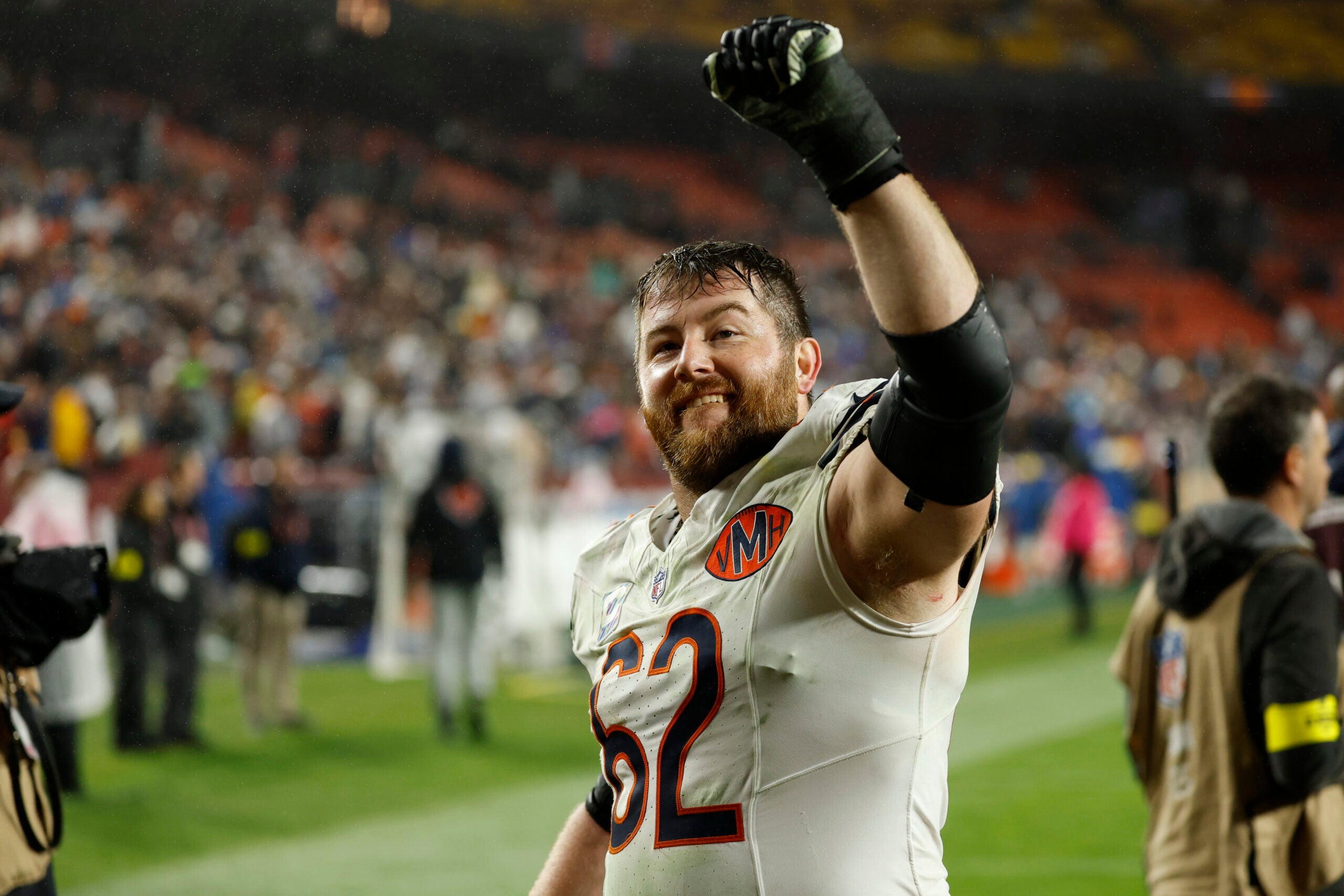
The Green Bay Packers made a roster decision last offseason that continues to loom over the franchise’s approach to complete roster-building through free agency. Green Bay signed guard Aaron Banks while passing on the opportunity to trade for guard Joe Thuney, and the results have made one thing clear. Sometimes, the best move is to break your own rules and simply acquire the best player available.
General manager Brian Gutekunst has long preferred signing players entering their second NFL contracts, and the logic is sound. Target younger, ascending players who will theoretically play their best football in Green Bay.
But that preference cost the Packers in this case, because the Chicago Bears swooped in and traded just a fourth-round pick in the 2026 NFL Draft to acquire Thuney from the Kansas City Chiefs. Chicago then signed him to a two-year, $35 million extension, keeping Thuney under contract through 2027 at a reasonable rate.
The contract comparison tells the story
Banks is five years younger than Thuney, and the Packers didn’t need to send draft compensation to the San Francisco 49ers because Banks was a free agent. Those factors fit Gutekunst’s typical playbook. But the financial commitment tells a different story.
Green Bay gave Banks a four-year, $77 million contract, averaging $19.25 million per year. That figure exceeds what Thuney earned from the Bears. The deal was heavily front-loaded, with Banks receiving a $27 million signing bonus and making nearly $30 million in his first year. His cap hits break down to $18.1 million this season, $15.5 million in 2027, and $14 million in 2028. The Packers had a potential out this offseason but chose to restructure instead, tying Banks to the roster for at least one more year.
Meanwhile, Thuney made $18 million last season and is making $16.5 million this year and next. A fourth-round pick is real draft capital, but finding a player of Thuney’s caliber in that range is extraordinarily difficult, even at 33 years old. Especially because interior offensive linemen tend to age well.
Thuney earned Protector of the Year honors in 2025, was named a first-team All-Pro and Pro Bowler, and was recognized as the best offensive lineman of the entire season. He became a cornerstone of the Bears’ offensive line under head coach Ben Johnson, helping quarterback Caleb Williams take a significant step forward in his development. Chicago got a premium player for a mid-round pick and a contract that fits comfortably within its structure.
That outcome makes the Packers’ decision look worse with every passing month. An NFC North rival got the better player for less money and modest draft compensation.
When to break the mold
This is not solely a discussion about Banks versus Thuney as individual players. It’s a broader lesson about when a front office should make exceptions to its own roster-building philosophy. The Packers’ preference for younger players on second contracts is a reasonable framework. Banks, at 27 at the time of the signing, fit that profile on paper. But Thuney was an established, elite interior offensive lineman, and the cost to acquire him was manageable.
Banks’ contract was widely viewed as a reach and an overpay at the time of signing. The Packers committed more money to an inferior player because he checked the organizational boxes Gutekunst prioritizes. That rigidity had a tangible effect on roster quality while simultaneously strengthening a division rival.
Good roster-building requires principles, but it also demands the flexibility to recognize when an opportunity outweighs the model. The Thuney situation is a case study in what happens when a team lets its process override the obvious answer.
