
Packers' deal with Josh Jacobs already looks like a steal after one season, and the long-term value could be even greater
Running back is a tricky position to pay. Durability is always a concern, the cliff can come faster than for players at other positions, and there's the ongoing discussion about value and impact—ultimately, a question about how running backs truly make the running game and the offense in general better, versus how much they are […]


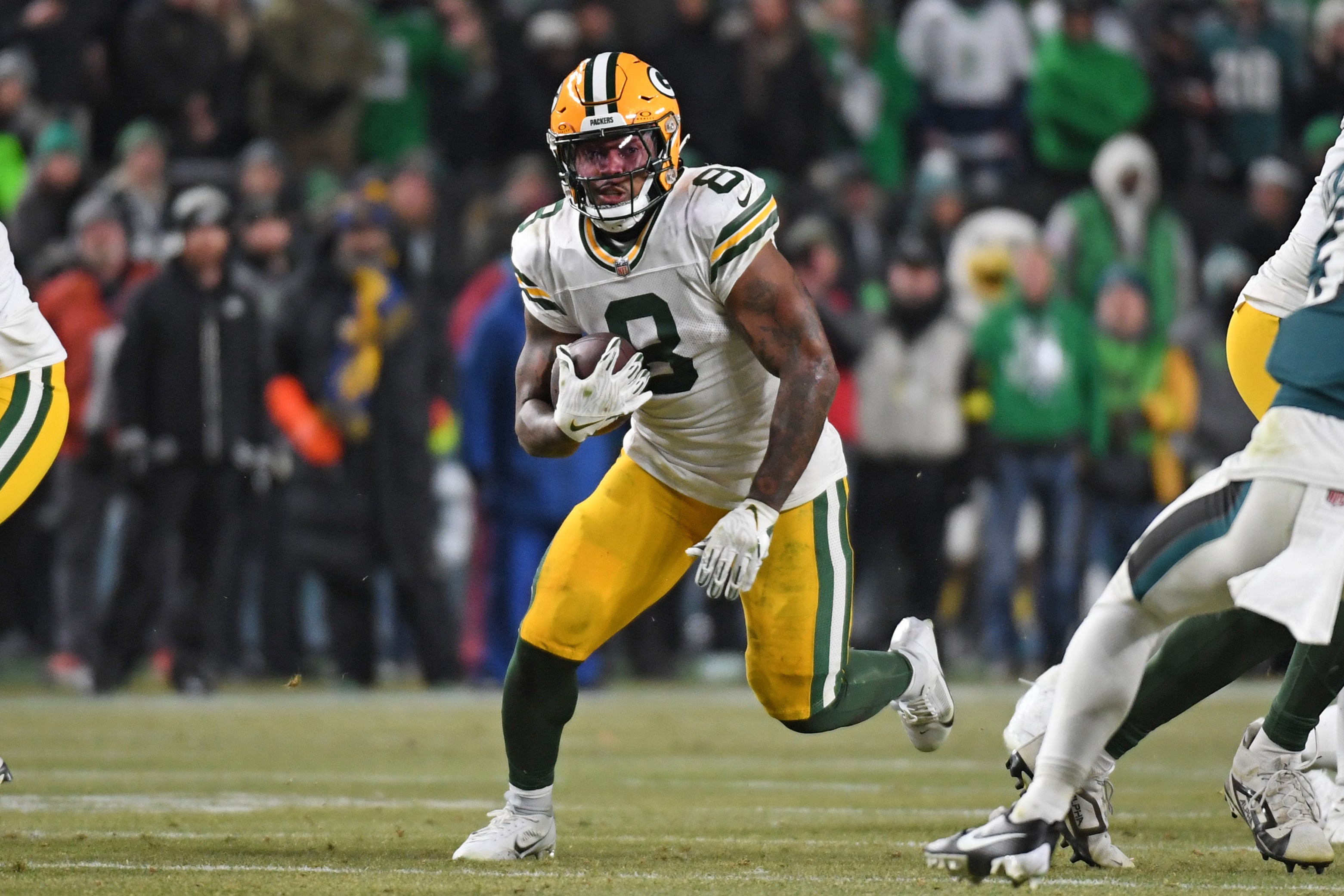
Running back is a tricky position to pay. Durability is always a concern, the cliff can come faster than for players at other positions, and there's the ongoing discussion about value and impact—ultimately, a question about how running backs truly make the running game and the offense in general better, versus how much they are a product of the environment.
Conversely, the market suffered so much from that perception that backs started to become undervalued to some degree. The pendulum, though, is getting the position back in vogue after strong seasons from Saquon Barkley and Derrick Henry for their new teams in 2024.
The Green Bay Packers took their swing at the perfect time with Josh Jacobs, also added in the 2024 free agency, and their model of signing contracts put them at a huge advantage over other teams.
Structure and market
Last year, the Packers signed Josh Jacobs to a four-year, $48 million contract, while the Philadelphia Eagles gave Saquon Barkley a three-year, $37.75 million deal. Barkley is certainly a better player, and he was instrumental for the Eagles to reach and win the Super Bowl, so you could argue that the Packers could have signed Saquon instead.
Well, sure, but the contract details explain why Green Bay made the decision. Jacobs signed a deal with only $12 million in guarantees, which is essentially his first year, and now will play under three team options. He's slated to earn $8.2 million in 2025, $11.5 million in 2026, and $13.5 million in 2027.
For Barkley, the Eagles have to give two guaranteed years ($26 million), and just one team option at the end. And after the season he had in 2024, the team felt forced to extend him already.
Now, the market is different.
New reality
After there was a running back frenzy in free agency last year with Barkley, Henry, and Jacobs signing new deals, the San Francisco 49ers rewarded Christian McCaffrey with a two-year, $39 million extension—$19 million per year in new money. That was an increase the running back market hadn't seen since McCaffrey himself signed his first extension with the Carolina Panthers.
When the Eagles extended Barkley this offseason, putting him as the highest-paid running back in football was inevitable. He agreed to a two-year, $41.2 million contract, with $20.6 million on yearly average—the first time ever a running back surpassed $20 million per season. James Cook from the Buffalo Bills is asking for at least $15 million a season, because that’s what the new market indicates he can realistically make.
Now, look back at Josh Jacobs' numbers. He's slated to earn $8.2 million in 2025, $11.5 million in 2026, and $13.5 million in 2027. In this scenario, his deal is already a bargain—and the production on the field, with 1,671 scrimmage yards and 16 total touchdowns, put him among the best players at his position in the NFL. At 27 years old, it's easy to see a path for Jacobs to playing at a high level throughout the life of his contract.
Moving on from Aaron Jones was a tough decision, but the Packers are showing they made the most out of their running back budget.
