
Packers’ stubborn play-calling approach is holding back the offense, and the numbers prove it
Matt LaFleur’s run-heavy tendencies on first and second down are putting Jordan Love in difficult late-down situations, and the data from the first two weeks is concerning.


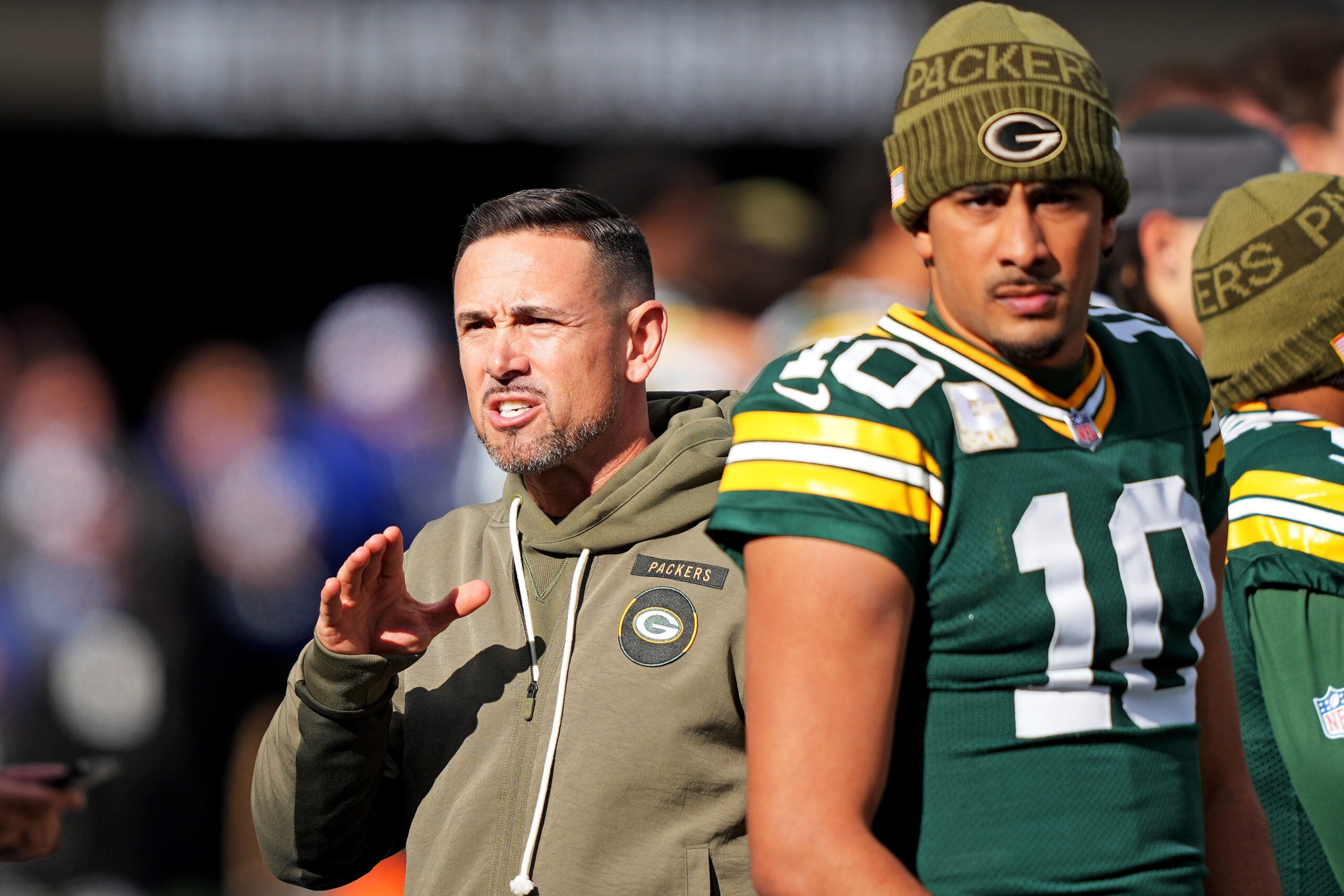
The Green Bay Packers are banging their head against the wall on offense. Through the first two games of the 2026 regular season, the offense has had serious problems, and one specific schematic tendency from head coach Matt LaFleur is at the center of the problem.
Green Bay scored 22 points against the Minnesota Vikings in Week 1 and 20 against the New York Jets in Week 2. Neither performance was catastrophic on the scoreboard, but the process behind those numbers reveals a deeper concern with the Packers’ early-down play-calling and offensive identity.
The early-down problem
LaFleur has insisted on running the football on early downs, and while keeping an offense balanced is a reasonable goal, the Packers are taking the idea too far. Against the Jets, the Packers ran 46 plays through regulation (not counting overtime) and ran the ball on the first play of their drives 67% of the time.
The efficiency gap between running and passing on early downs is significant. On first and second down against New York, the Packers had a -0.59 EPA per play on runs, compared to a positive 0.25 EPA per play on passes. The running game simply is not generating the yardage the offense needs to stay on schedule.
In hindsight, the 22 points scored against the Vikings wasn’t terrible because Minnesota has a fantastic defense, which allowed only three points to the Chicago Bears in Week 2. The Jets game had weather complications and a solid defensive front working against the Packers. But the structural issues aren’t circumstantial.
Green Bay lost right tackle Zach Bako-Bewele potentially for the season, or at least for an extended stretch. And Josh Jacobs remains unavailable to start the year. Without the team’s top running back and with an offensive line in flux, running the ball on early downs hasn’t been a viable solution.
Falling behind the sticks
The consequence of those early-down failures is predictable. When the Packers don’t gain enough on first and second down, they put enormous pressure on the passing attack in late-down situations. On third and fourth downs against the Jets, Green Bay posted a -0.47 EPA per play on passes.
Packers’ early down ranks through 2 weeks
Via RBSDM
- Dropback EPA: 8th
- Rush EPA: 31st
The Packers are eighth in dropback EPA on early downs, but fall all the way down to 30th on third and fourth downs. Green Bay’s offense is 31st in rush EPA on early downs and 32nd on late downs.
That’s a significant drop from the early-down passing efficiency, and the reason is straightforward. The Packers are consistently playing behind the sticks because LaFleur has been stubborn about keeping the running game alive. That forces quarterback Jordan Love, the offensive line, and the receivers into high-pressure situations where the defense knows a pass is coming.
LaFleur and Love need to adapt
LaFleur is a pound-and-bomb play-caller who likes to establish the run, find offensive balance, and then attack with big explosive plays in the passing game. Jordan Love thrives in that style as a quarterback. But the 2026 Packers don’t have the personnel to execute that vision right now, especially while Jacobs is out.
What the Packers need is a rhythm passing attack. Shorter, more consistent throws to move the chains and circumvent the offensive line’s limitations. Green Bay has the passing weapons for that approach, but it requires a shift in mentality. Without a functioning running game to create balance, the Packers cannot rely on hunting for explosives exclusively. They need to generate consistency through the air first.
That’s not ideal for the team’s identity. But with all of the offensive personnel challenges the Packers are managing this season, adapting the approach is probably how LaFleur and Love will have to operate if they want to find sustainable production.
