
Exposing the 3 worst takes regarding the Buccaneers offseason and they start with former WR Mike Evans
The Buccaneers have a good offseason, but there are a few bad takes that need to be shut down before training camp begins.


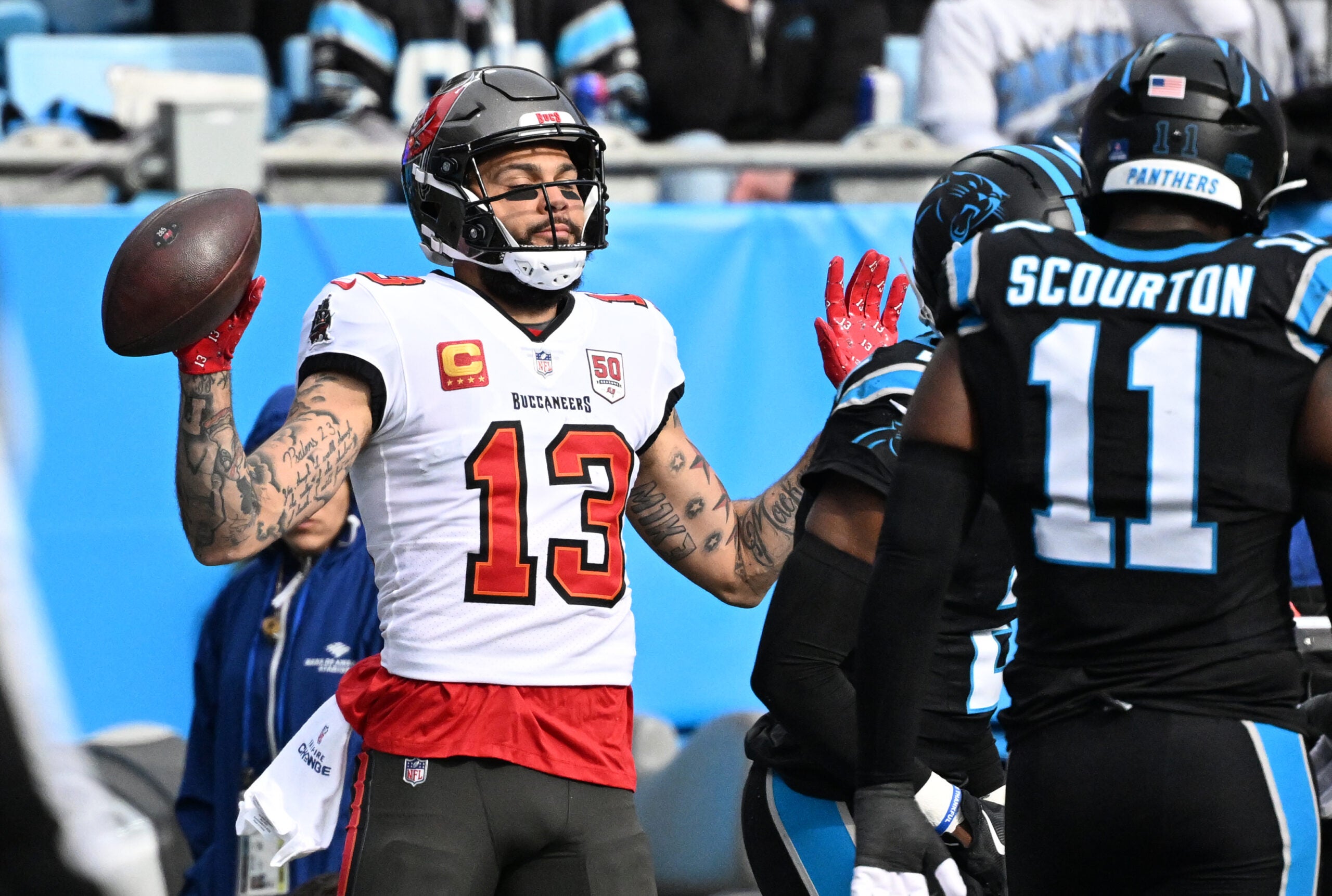
The Tampa Bay Buccaneers have had a productive offseason, yet national coverage continues to dock them points for moves that were either unavoidable or genuinely smart.
Covering the NFL as a whole is difficult, and I get that. But when analysts venture outside their comfort zone and talk about teams they don’t follow closely, the slightest bit of inaccurate analysis can throw an entire argument out the window.
That’s the exact case with the Tampa Bay Buccaneers, as there are three specific offseason takes circulating around that need to be silenced before training camp opens.
The Bucs ‘failed’ to keep Mike Evans
So many people are penalizing Tampa Bay’s offseason grade because the franchise apparently could not retain Mike Evans, the Hall of Fame-caliber receiver who posted 11 straight 1,000-yard seasons.
It was painful to watch him leave. There’s no doubt about that. But the Buccaneers did everything they could to keep him. General manager Jason Licht is on record saying Tampa Bay offered Evans more money than the San Francisco 49ers, and they did it from the start of free agency.
Evans simply did not want to be there anymore. Last season’s frustrating collapse was difficult for any respected veteran to stomach, especially one with his resume. He wanted a fresh start, a chance to add to his career numbers, and another shot at a ring. The 49ers gave him that opportunity, and he took considerably less money to go play in San Francisco’s offense.
If the guy was always going to leave and there was nothing the Buccaneers could do to stop it, how is that a failure? It makes no sense. Tampa Bay shouldn’t lose points for something that was never within its control.
The Bucs should have kept Jamel Dean
This one follows a similar thread, but there’s more history behind it. The Buccaneers made Dean take a pay cut to stay on the roster in 2025 and removed the final year of his contract in the process, making him a free agent heading into this past offseason. The split was always coming.
The reasons why were simple: Dean has never played a full NFL season and his ball production just wasn’t there (he has just 11 career interceptions over the course of 96 games). Todd Bowles has even said it himself multiple times: Dean drops the ones he should catch and catches the ones he shouldn’t.
The ball production issues, combined with the inability to stay healthy, meant Dean was a known product. Even if he had set the NFL record for interceptions last season, the chances of him returning were probably less than 1%.
People see the deal he signed with the Pittsburgh Steelers (a little less than $13 million per year) and think Tampa Bay should have matched it coming off his career year. That ignores the full picture. The Buccaneers already had a plan to retool the secondary. They drafted cornerback Benjamin Morrison in the second round and Jacob Parrish in the third round last year, then added Keionte Scott in the fourth round of this past year’s draft.
The front office and coaching staff were prepared for life without Dean, and that’s exactly how it played out.
Cade Otton didn’t deserve his contract
Three years, $30 million, $20 million guaranteed. People see those numbers and react like Tampa Bay overpaid, but unless you’ve followed the Buccaneers since Otton arrived in 2022, you’re missing context.
Otton is one of the more underrated all-around tight ends in the NFL. He blocks and he’s a versatile pass-catcher than can play inline or be split outside. He does a lot of things at an above-average level, at minimum. Since 2022, he ranks around 13th in total receptions (207) among tight ends and 17th in receiving yards (2,018).
The touchdown production (11 receiving touchdowns over his career) is the one area where critics have a case. But context matters. His rookie year came during a brutal 2022 Buccaneers offense under Byron Leftwich with a declining Tom Brady. Then, 2023 was the first year with Baker Mayfield in Dave Canales’ system. Last season, Tampa Bay asked him to block and chip far more than usual because of the offensive line issues, limiting his opportunities in the passing game.
His average annual value of $10 million ranks 17th among all tight ends, which lines up almost perfectly with his production. The total value and guaranteed money land around 12th at the position, so you can argue the structure is slightly aggressive. But overall, Otton got paid a fair amount and it was not backbreaking for the Buccaneers. In the context of the NFL’s tight end market, it’s a solid deal, and he earned every penny.
Three bad takes, three corrections. Training camp is right around the corner, and Tampa Bay’s offseason deserves a more honest evaluation than it’s been getting. Let’s hope this changes once camp kicks off.
