
Tennessee Titans biggest secondary issues aren’t about lack of talent, and the heartbreaking loss to the Eagles verified that
The Tennessee Titans have a depth problem in the secondary that showed up in a big way. How much of the issue is talent, and how much is execution?

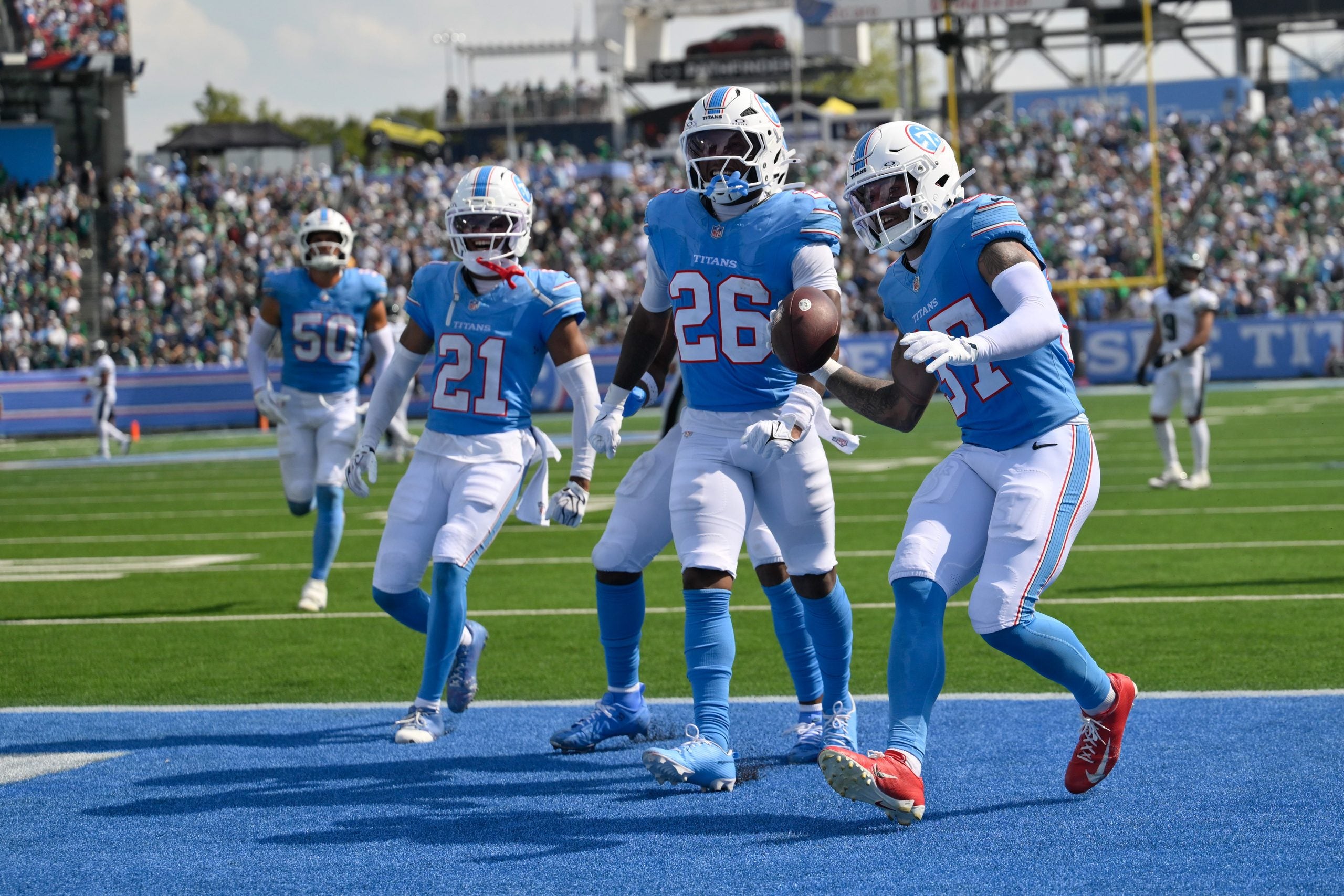
The Tennessee Titans secondary looked lost against the Philadelphia Eagles, and the film only made things worse. Between blown zone assignments, poor eye discipline from the safeties, and a depth chart stretched thin by injuries, the Titans’ defensive backfield is flashing warning signs that go beyond one bad game.
When head coach Robert Saleh said the film was going to make people sick, he wasn’t exaggerating. The third-down conversions in soft zone coverage were maddening, and the breakdowns weren’t just a product of facing a former Heisman winner in DeVonta Smith and Dontayvion Wicks.
The Titans beat themselves in coverage more than the Eagles beat them.
The secondary concern was always there
The secondary was the biggest question mark heading into the season. That’s not a shot at Alonte Taylor, and it’s not a shot at Cor’Dale Flott, who missed this game due to injury in what has been a strange situation.
No, the problem is depth. Joshua Williams is also out, and when you’re forced to start Micah Robinson as your corner four (or arguably corner five if you count Marcus Harris as the starting nickel), you’re in a tough spot.
That lack of depth fundamentally changed how Tennessee played defensively. It led to more zone coverage, and while the concept of playing zone against Smith wasn’t necessarily a bad idea, the execution was poor.
Two plays that tell the story
The DeVonta Smith touchdown perfectly illustrated the problem. Smith was streaking across the field against what appeared to be either a cover 2 or cover 4 variation.
Amani Hooker, who had already made a game-changing interception return earlier, wasn’t threatened vertically and settled on the hash. For whatever reason, Hooker came up and allowed Smith to run right behind him.
The coaching point is simple. When you’re on the backside in a cover 2 or cover 4 as a safety, you settle on the hash and get your eyes to the opposite side of the field if nothing threatens you. If you do that, Smith runs with you and you stay in his hip pocket.
That’s all it should have been.
The other play came near the end of the game, when Smith caught the ball near the offense’s left sideline. The corner got sucked up worrying about flat responsibility and didn’t carry the route at all. At a minimum, carrying underneath that route gives you a chance at a pass breakup and makes the conversion harder. Instead, the Titans made it easy.
Those aren’t talent issues. Those are wrong-spot issues.
The bigger picture for the Titans secondary
There is a talent deficiency at a couple of spots.
Safety needs to be a priority going forward. Kevin Winston Jr. is good coming downhill, but he’s not a player you want working from depth consistently. Hooker has been regressing over the last couple of seasons. The big interception return in this game was impressive, but his overall performance wasn’t great.
Taylor is a player who profiles well in the nickel but may not be a natural outside corner. When Flott is out, the depth at corner becomes a real problem. Upgrading secondary depth should be a major offseason priority.
The maddening part isn’t that Micah Robinson can’t cover DeVonta Smith one-on-one. Everyone knows he can’t do that.
The coaching staff knew that going in and adjusted accordingly by playing more zone. The maddening part is that the Titans were in the wrong places too often, weren’t getting enough depth in their drops, and had their eyes in the wrong spots in simple cover 2 variations.
The Titans hurt themselves more than the Eagles hurt them from a coverage perspective. Several of Philadelphia’s biggest plays came because Tennessee’s secondary simply wasn’t in the right spot. The depth concerns flagged early in the offseason are now rearing their ugly head, and the question is how concerned Titans fans should be about this secondary moving forward.
