
The Athletic punishes the Titans roster calling it “unhealthy” but they’re overlooking what’s being built underneath
The Tennessee Titans roster has been under renovation for years. The Athletic Football Show may call it “unhealthy” but that’s for a very clear reason.


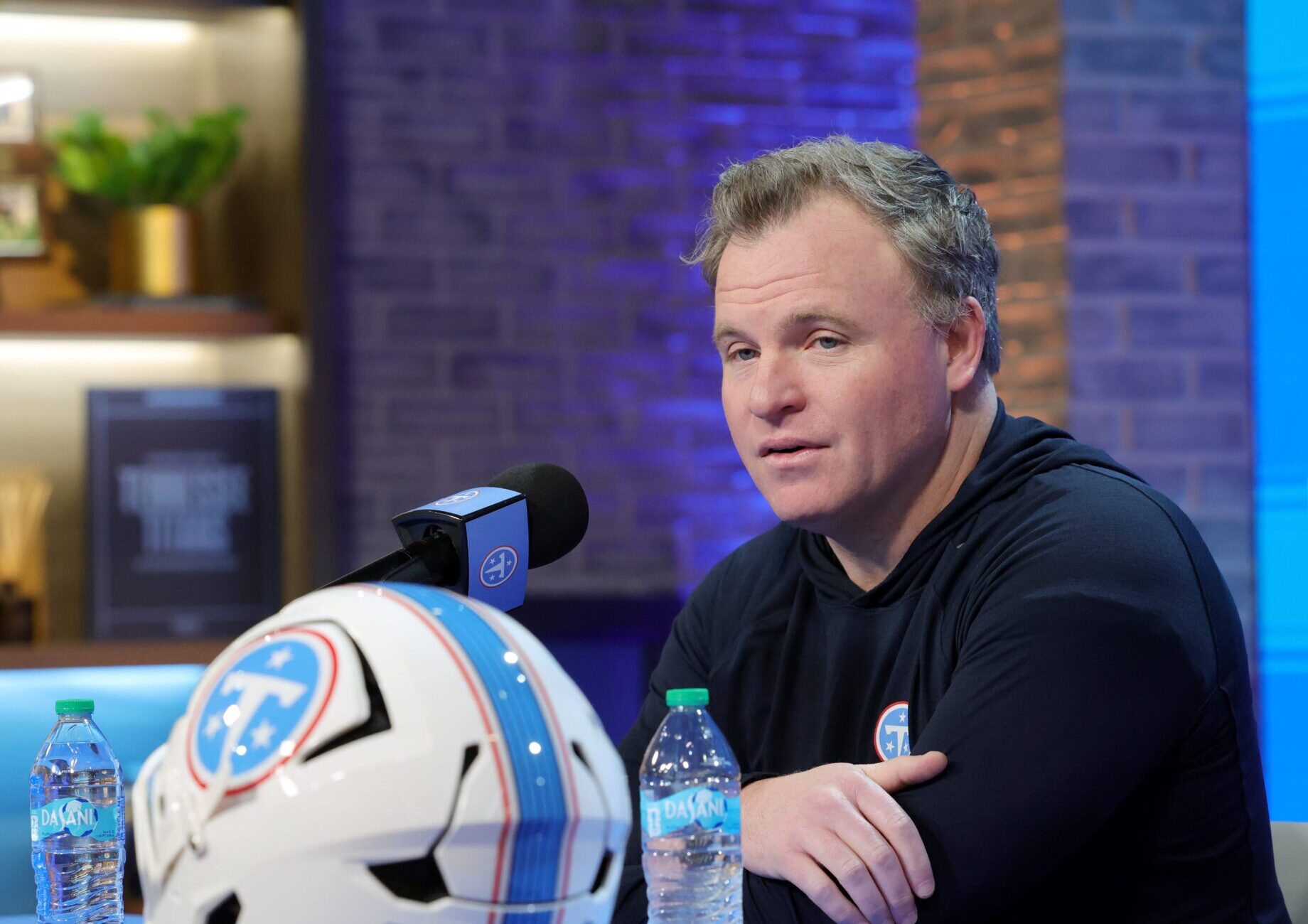
The Tennessee Titans landed near the bottom of The Athletic’s healthiest roster construction conversation heading into the 2026 season, and the criticism is valid on the surface, but doesn’t tell the story that actually matters.
The Athletic Football Show, hosted by Dave Hellman and Derek Klassen, walked through every NFL roster evaluating cost-controlled rookie contracts, specifically players entering their second, third, and fourth years who are producing on cheap deals.
The concept is straightforward. Rookies entering year one don’t count because we haven’t seen them play yet. Players who have already received extensions get removed from the equation. For example, the Super Bowl champion Seattle Seahawks got dinged because they already extended wide receiver Jackson Smith-Njigba after his Offensive Player of the Year season, while the Rams still have Puka Nacua on a cost-controlled rookie deal.
The Titans were one of the teams the podcast duo brought up as “unhealthy” rosters after their top eight rankings.
What The Athletic got right about the Titans’ situation
The Titans’ 2023 draft class entering year four offers Peter Skoronski and Tyjae Spears. Skoronski counts as a win. Spears has been a backup player entering the last year of his contract. Will Levis doesn’t move the needle because he might be the third quarterback at best and probably won’t be around much longer.
From the 2024 class entering year three, JC Latham is entering a pivotal year for his career. Linebacker Cedric Gray is a good player for this defense and will have an impact as one of the starting linebackers. Beyond those two, the 2024 class has been gutted. T’Vondre Sweat was traded because he doesn’t fit the current defensive scheme. Jarvis Brownlee Jr. was traded because he was drafted by a different general manager for a different defensive system than the one general manager Mike Borgonzi wants to run. Jaquan Jackson at wide receiver was a disaster. James Williams and Jalen Harrell, the two seventh-round picks, are still fighting for roster spots going into their third year with no guarantees.
So yeah, the Titans have an “unhealthy” roster by this metric. That’s exactly why Tennessee has spent among the most money in free agency over the last three cumulative years. If you don’t draft well, you have to go spend the money somewhere.
The Athletic is overlooking the context behind the departed stars
Hellman laid out the obvious when he pointed to Derrick Henry, Kevin Byard, Harold Landry, and A.J. Brown as Titans draft success stories who are all still productive NFL players.
“If you go back far enough,” Helman said. “Their draft history is full of success stories, but it just so happens that none of those guys work for the Titans anymore.”
He’s right. But the context behind all of those departures matters.
Henry and Byard are entering their 10th NFL season. They were in the 2016 draft class. I don’t know how many players in the NFL are still playing for the team that drafted them going into year 10. That’s rare. Landry was a 2018 draft pick who tore his ACL before the 2023 season and had a couple lost years in Nashville before reuniting with Mike Vrabel in New England.
Brown was traded on draft night in 2022 in the infamous Jon Robinson deal. Byard was shipped at the trade deadline because the Titans were sellers in 2023. Henry walked in free agency because both sides understood what that situation was following Vrabel’s firing.
Every one of those decisions was made by people who were fired by the Titans. The front office and coaching staff responsible for not retaining that talent are long gone.
The Titans roster issue wasn’t the exit of those four key players. The issue was the draft classes from 2020-2022, led by massive busts in every one of those first rounds.
“That might be an all-time bad… it had never registered to me that those were in a row,” Klassen said after Helman listed first round pick busts of Isaiah Wilson, Caleb Farley, and Treylon Burks.
Titans new growth these rankings are missing
What Hellman and Klassen are missing is the cost-controlled rookie contracts that are just now starting to sprout.
The 2025 draft class led by quarterback Cam Ward showed real promise late in his rookie season, and three second-year pass catchers from that group are flashing alongside him. Both hosts are high on Ward as a franchise quarterback, and recognized tight end Gunnar Helm as a plus for this exercise.
Borgonzi’s 2026 class under Robert Saleh’s new coaching staff is still too early to grade fully, but the early returns on fourth overall pick wide receiver Carnell Tate have been outstanding. Keldric Faulk and Anthony Hill feel like strong additions on defense who both fit specific scheme roles. The Day 3 picks are up in the air, which is normal.
The Titans traded their dead weight to the New York Jets for Jermaine Johnson because he fits the defense. They signed high-dollar free agents like Alontae Taylor and Cor’Dale Flott to fill the holes left by bad drafting under previous regimes.
And underneath all of that, they have Ward with a promising young supporting cast, Saleh’s defensive scheme, and Brian Daboll’s offensive design to tie it together.
The Titans are going through the ugly part of a roster teardown, and The Athletic’s rankings reflect that accurately. But the people who created the mess are gone, and the people cleaning it up are barely two draft classes into a rebuild with a franchise quarterback on a rookie deal.
That’s the context the rankings can’t measure yet.
