
The Athletic’s Dianna Russini investigation has no teeth because it examined the wrong Mike Vrabel chapter
The Athletic found a clear conflict-of-interest violation but no evidence of inaccurate or biased reporting during Russini’s tenure. The most consequential questions involve four earlier offseasons at ESPN and the Tennessee Titans.

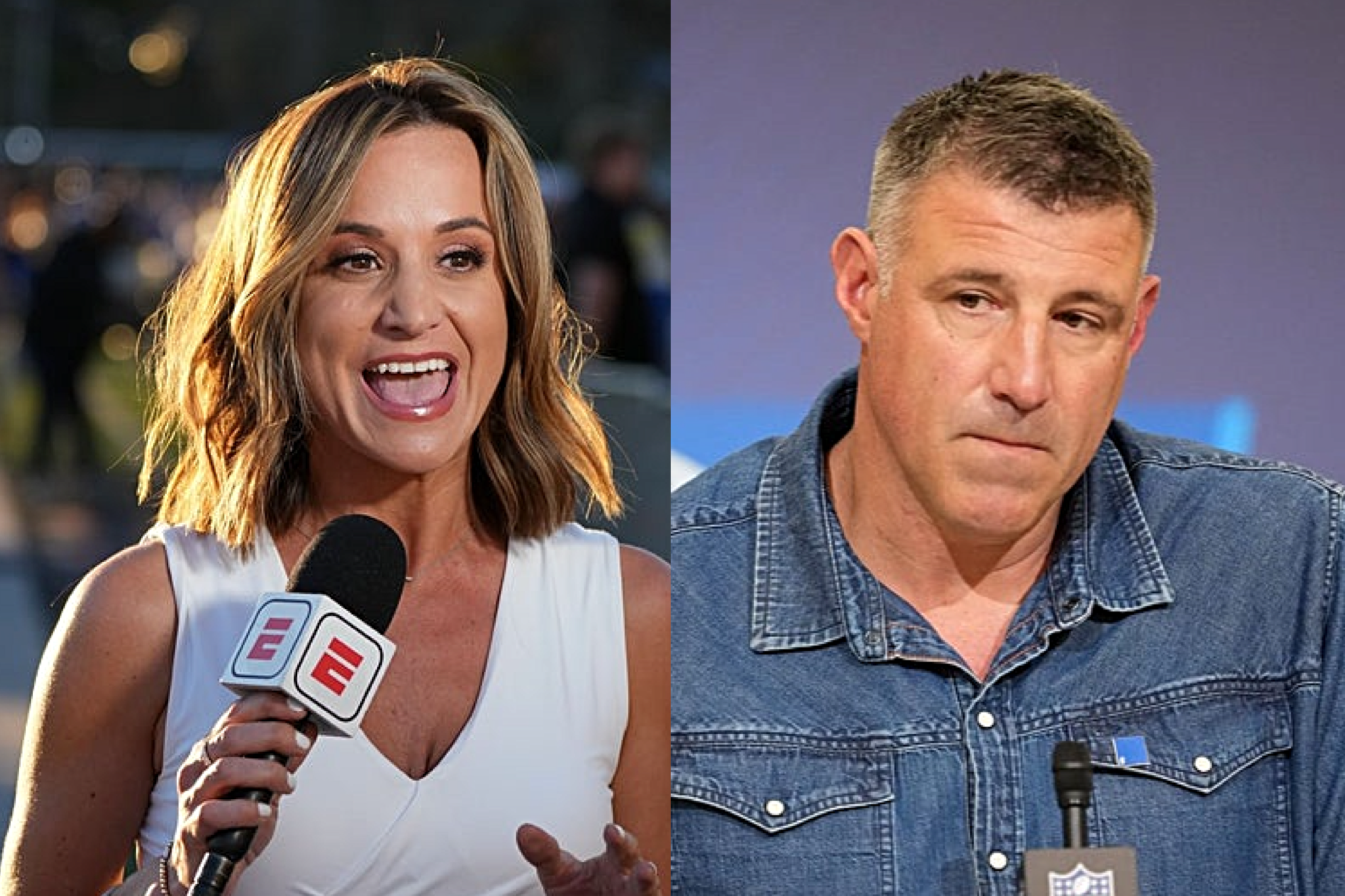
The Athletic released the findings of its nearly 5-month internal investigation into former NFL insider Dianna Russini’s journalistic work regarding New England Patriots head coach Mike Vrabel.
The conclusion? Russini was “noncompliant” with the outlet’s conflict of interest standards. For anyone who followed this story from the moment it broke at the owners meetings, that revelation landed with a thud.
The Athletic’s review, conducted by editorial director for standards and editorial quality Mike Semel, covered an enormous volume of content. They concluded that Russini violated its conflict of interest rules by failing to disclose her relationship with Mike Vrabel. The review found no inaccuracies in Russini’s reporting involving Vrabel or his teams. The Athletic also says that it found no clear evidence that Russini used her platform to promote Vrabel or help his teams. The investigation did identify several pieces of coverage that now warrant some scrutiny, including one item that did not meet sourcing standards. The Athletic reviewed 903 total stories, 204 podcast episodes, 77 videos, and interviewed approximately 14 athletic staffers. The Athletic says it did not complete an investigation or reach any conclusion about the full nature of Russini and Vrabel’s relationship, including whether there was more to it than what they know.
That last line is the one that should jump off the page.
The scope of the investigation was massive but narrow
Semel did not investigate Russini’s personal conduct because she was no longer an employee of the company, but he continued to examine her journalism. And from that examination came this statement: Russini should have disclosed to The Athletic the nature of her relationship with Vrabel to allow editors to assess the kinds of stories on which she would have been working on, if any. She did not.
Right. She didn’t disclose the relationship. We knew that within 5 minutes of this story breaking. It took nearly 5 months for The Athletic to arrive at the same conclusion.
Why this investigation is flawed
Here is the core problem. Russini joined The Athletic in Aug. 2023. That was right as Vrabel’s final season as Tennessee Titans head coach was about to begin. During her roughly 3 years with the New York Times-owned outlet, the window of Vrabel-related coverage was limited. Vrabel’s last year with the Titans ended in a firing, followed by a gap year, followed by his first season in New England where he coached the Patriots to the Super Bowl. Everything was rosy. There were no glaring red flags during The Athletic tenure that would scream, “Russini is carrying water for Vrabel.”
The real damage, the reporting that raises the most questions, happened during her time at ESPN.
In the 4 offseasons of 2020, 2021, 2022, and 2023, Russini was the reporting voice on the biggest offseason storyline for the Tennessee Titans. This was a team fresh off an AFC Championship game appearance and back-to-back division titles.
In March 2020, Russini reported the Titans were not interested in Tom Brady and wanted to extend quarterback Ryan Tannehill. That was roughly 3 days after Russini and Vrabel were photographed at a bar in New York in very close quarters.
In 2021, Russini reported the Atlanta Falcons had a first-round offer on the table for wide receiver Julio Jones, only for Tennessee to execute a trade for a second-round pick. That same month, the two were on a rented boat in Tennessee, just an hour east of Nashville.
In April 2022, Russini broke the AJ Brown trade news on NFL Draft night. The contract negotiation details she reported framed the Titans as dealing with a difficult wide receiver who cut off communication, painting the move as the right decision for the franchise.
April 2023 might be the most consequential. Russini reported the Titans had trade interest in moving up for quarterback C.J. Stroud at the third overall pick. Tennessee held the 11th pick. The Houston Texans took Stroud second overall after maneuvering to acquire the third pick from Arizona, blocking the Titans. A week before the draft, Russini mentioned on a podcast she would be in Indianapolis with the Colts, who picked fourth. She ended up in Nashville, where the Titans picked 11th. Why would ESPN send their insider to the 11th pick instead of the fourth? The Titans didn’t get Stroud. They took Peter Skoronski and selected Will Levis in the second round on Day 2.
That is 4 consecutive offseasons during the heated part of this relationship where Russini had her hands all over Vrabel’s team, the reporting, the messaging, and allegedly some roster moves.
The Athletic got off easy, and ESPN has no incentive to dig
The Athletic essentially said: when she was here, she didn’t do anything wrong. Our hands are clean. Go look at ESPN.
That is very convenient because ESPN will never investigate this. Russini left ESPN for The Athletic because she received a better offer. ESPN has zero incentive to look back at the work of a former employee.
Unless someone with the resources and independence of Pablo Torre, who just exposed the NBA’s Clippers situation, decides to pursue this, the full picture will remain incomplete.
The Clippers investigation followed financial receipts. This situation is entirely relational, which makes it far more complicated to trace. But the larger issue extends beyond one reporter and one coach. The entire insider reporting industry operates on relationships that blur the line between source cultivation and conflict of interest. Newsbreakers trade information back and forth. Agents, coaches, and players use the biggest microphones to control narratives. Russini was competing in that ecosystem like anyone else. With the Vrabel situation, it went too far.
The Athletic’s investigation told us what we already knew and punted on everything we didn’t. It has no teeth because the outlet was chasing the wrong thing from the beginning. The real story lives in those 4 ESPN offseasons, and no one with the power to investigate them has any reason to do so.
It’s now doubtful this ever gets resolved. The entire sports media industry is hanging on it. All of your secrets exist digitally somewhere, kids. That’s the lesson today.
