
Titans collapse vs. Saints is easily explained by one simple stat they must change dramatically in 2026
And no, it has nothing to do with the poor defense.


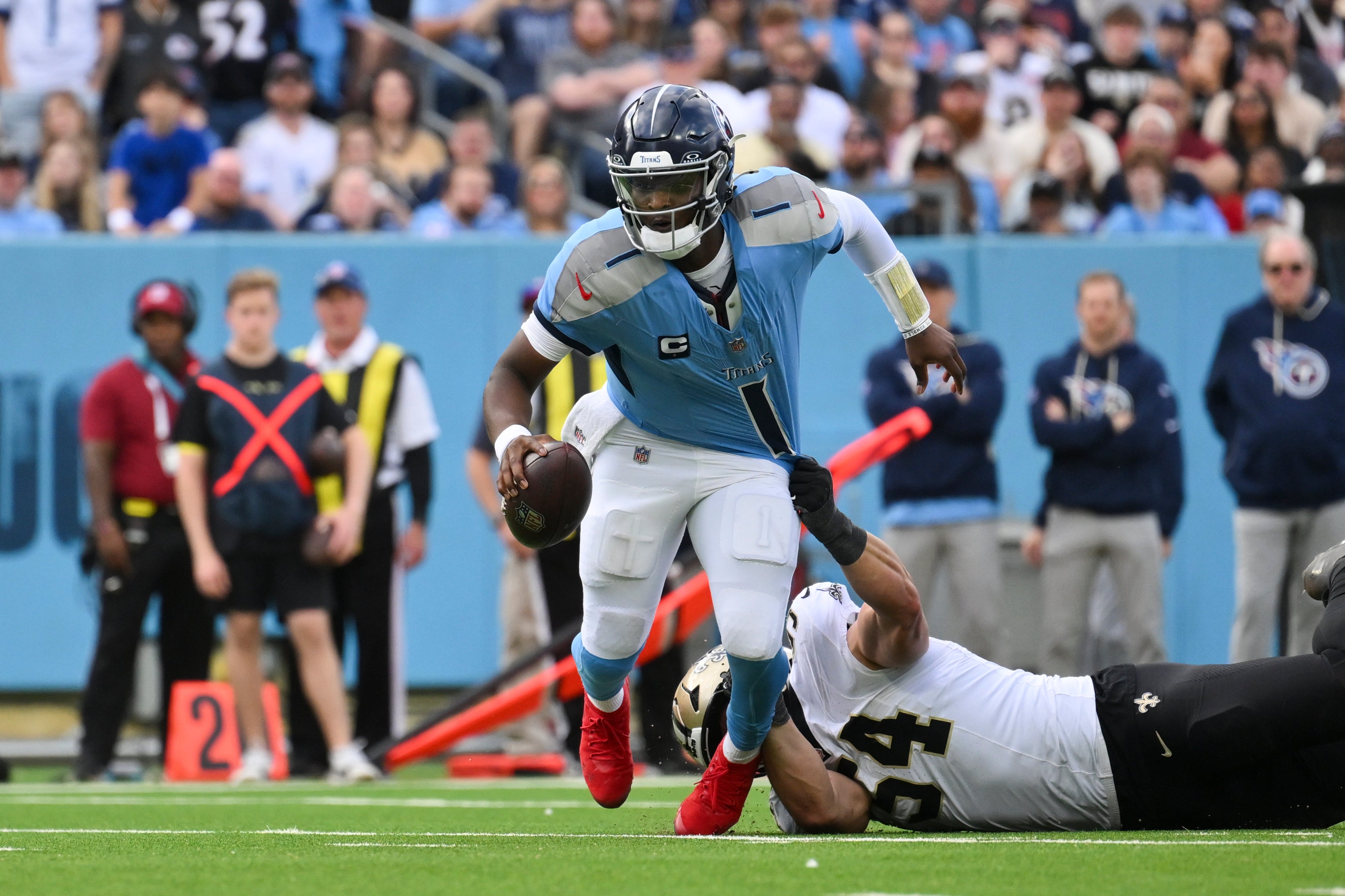
The Titans led nearly the entire way in Week 17, looking competent and competitive against a trending New Orleans Saints team at home. But they lost the lead with less than seven minutes left, and failed to regain it before time expired. The Saints won 34-26.
In hindsight, it’s pretty clear where the Titans lost this game. And no, I’m not here to blame the defense for its poor showing down the stretch.
The Titans must learn to capitalize on drives in 2026
There’s no doubt that the Titans’ defense played a large role in this loss. It gave up 34 points, and 24 of them came in the second half, including 14 unanswered in the fourth quarter. The Titans’ offense stalled out, and the defense turned into tissue paper.
But (and I’m sure many of you all), I basically have no expectations for this defense the rest of this year. Pardon me if I don’t go into each game with particularly high hopes for the starting unit that traded two starting CBs and its best EDGE, put both of their top-100 draft pick rookies and an ascending Day 3 (at one point, starting) rookie CB all on IR, and is rolling out guys like Jalyn Armour-Davis and Kemon Hall to defend the back end.
It’s a skeleton crew. Outside of Jeffery Simmons and a few other nice pieces, mostly in the box, this group isn’t the future of this team.
The offense is. And this is where the Titans lost this game. They drove to the Saints’ 6, 20, 31, and 32-yard line on four drives of this game and came away with a grand total of 12 points from those trips. You don’t often win football games by taking so many field goals instead of sevens.
Statistically, they at first glance look like a group that’s been decent in the red zone this year. Their 58.1% redzone touchdown efficiency ranked 16th in the NFL through 16 weeks. They went one of two in the redzone in Week 17.
And their total scoring rate in the redzone (trips where they came away with something, whether it be a touchdown or field goal) was an excellent 93.5% heading into this week.
But the problem is how often they get into scoring position, and how often they take three instead of seven. Tennessean beat writer, and my friend Nick Suss, started manually tracking trips beyond midfield that resulted in zero points for the Titans in October.
Through Week 17, that tally stands at 39.
These Titans have been fantastic at driving the soft yards of the field and then slamming their heads into a brick wall when defenses bow up in their own territory.
Those are the money yards, that’s where teams win and lose games. Succeeding in the red zone and turning those trips into touchdowns instead of field goals is important for this team in 2026. But so is getting to the red zone once they cross midfield in the first place, or at least hitting a long field goal, as is so commonplace in the modern NFL. And on that front, they have a lot of work to do.
