
Titans Defensive Depth Chart Questions: New position terminology changes the math and one ‘emergency plan’ arises
Robert Saleh has flipped the Tennessee Titans defense upside down this offseason, and that includes how we read their defensive depth chart.


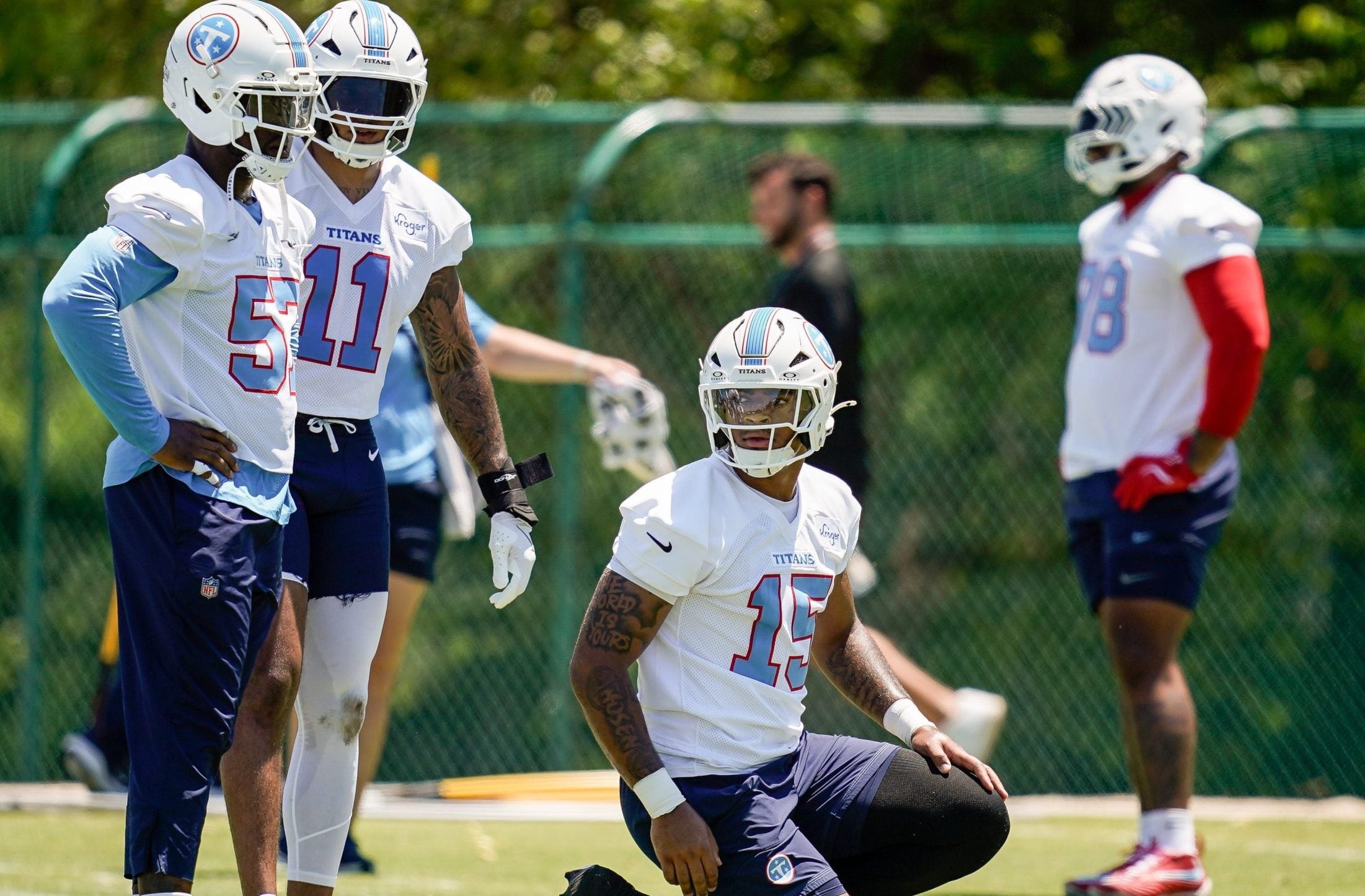
The Tennessee Titans are installing a new defensive scheme under Robert Saleh, and the defensive depth chart carries more uncertainty than the offensive side of the ball heading into training camp.
From a three-position defensive line to cornerback versatility puzzles, Tennessee has real roster decisions to sort out before September.
The single biggest adjustment for Titans fans and media alike requires rewiring how we think about the defensive line.
This is no longer a two-position group. It is three distinct positions: defensive tackle, big end, and rush end. Tennessee has run a 3-4 defensive line dating back to 2016 when Mike Mularkey’s staff began the transition, so the shift to Saleh’s scheme means learning a new vocabulary for how these players fit.
The big ends are easy to identify. John Franklin-Myers and Keldric Faulk fill that role. The rush ends are a separate group with names like Jermaine Johnson, Femi Oladejo, Jaylen Harrell, and Truman Jones. Defensive tackle belongs to Jeffery Simmons and Solomon Thomas as the primary options.
The question is how the Titans split nine (or maybe 10) roster spots across three positions. Is it an even 3-3-3? Something closer to three defensive tackles, two big ends, and four rush ends? That math is the puzzle Saleh’s staff has to solve, and it will shape roster cuts in a major way.
Linebacker depth and James Williams won’t go quietly
The linebacker room has its top three locked in. Cody Barton and Cedric Gray will be the main two, with second-round rookie Anthony Hill Jr. working his way into the rotation. Beyond that trio, the picture gets fuzzy.
Mohamoud Diabate did not stand out during OTAs and minicamp. Dorian Mausi was more noticeable. And then there’s James Williams, who made plays with the third-team defense and made sure everyone in the building knew about it.
That’s not a bad sales tactic when you’re a player fighting for a roster spot. Williams letting the coaching staff hear him celebrate a play is the kind of competitive energy that earns attention in a crowded room. The real question is whether the Titans keep four or five linebackers, and that answer depends on how the defensive line numbers shake out.
Saleh leaks ’emergency nickel’ plan
The cornerback group got a bit clearer when Saleh revealed that Alontae Taylor is a full-time outside corner and part-time nickel.
That revelation helps map out the nickel pecking order: Marcus Harris is the primary nickel, Tony Adams serves as the big nickel out of his third safety role, and Taylor could slide in for what I’ll call the “emergency nickel” spot. This Taylor part-time nickel storyline is still new, so we don’t really know how prevalent it will actually be.
The concern with that emergency plan is the domino effect. Moving Taylor from outside corner to nickel to replace an injured or underperforming Harris would disrupt two positions at once. It’s a similar concept to the offensive line idea of sliding Peter Skoronski from left guard to left tackle if Dan Moore goes down. You fix one hole and create another.
The good news is that Taylor earned his free-agent contract with the Titans largely because of what he showed as a nickel player in New Orleans. So, the “emergency plan” is not as chaotic as it might seem on paper.
Joshua Williams, after other outside starter Cor’Dale Flott, projects as the third outside corner, with Micah Robinson as a potential fourth.
Robinson is 24-years-old, as is Keydrain Calligan. I think it’s worth giving both developmental opportunities and letting them figure it out. The defensive front should be strong enough to allow some growing pains in the secondary, which is a theme of Saleh’s previous defenses.
Safety upside and special teams solidified
The safety room does not carry many depth chart questions. Amani Hooker, Kevin Winston Jr, Tony Adams, and Jerrick Reed form a solid group. Kendall Brooks has shown up in a pinch.
The real conversation at safety is about ceiling rather than competition, specifically the upside of Winston that we’ve discussed at length on the A to Z Sports Nashville morning show.
Special teams might be the most boring position group on the roster, and that’s a compliment. Kicker Joey Slye, punter Tommy Townsend, and long snapper Morgan Cox are locked in with no competition.
Chimere Dike should continue to handle kick and punt returns, and the Titans would be foolish to mess with an All-Pro rookie return man who changes the game every time he touches the ball. Could Nick Singleton get a few return opportunities? Maybe. But Dike is also the team’s fourth receiver and arguably its best playmaker with the ball in his hands. The return game gives Tennessee a free first down weapon. Don’t overthink that.
Training camp officially gets rolling the last week of July and we’ll get plenty of answers to these questions. Ideally.
