
Titans QB coach Shane Tierney breaks down what Cam Ward’s accuracy really means, citing Josh Allen transformation he saw firsthand
If you have to use Josh Allen’s transformation to argue for a QB, you’ve probably got a losing argument. But what about the people that were actually a part of it? A masterclass in measuring accuracy:


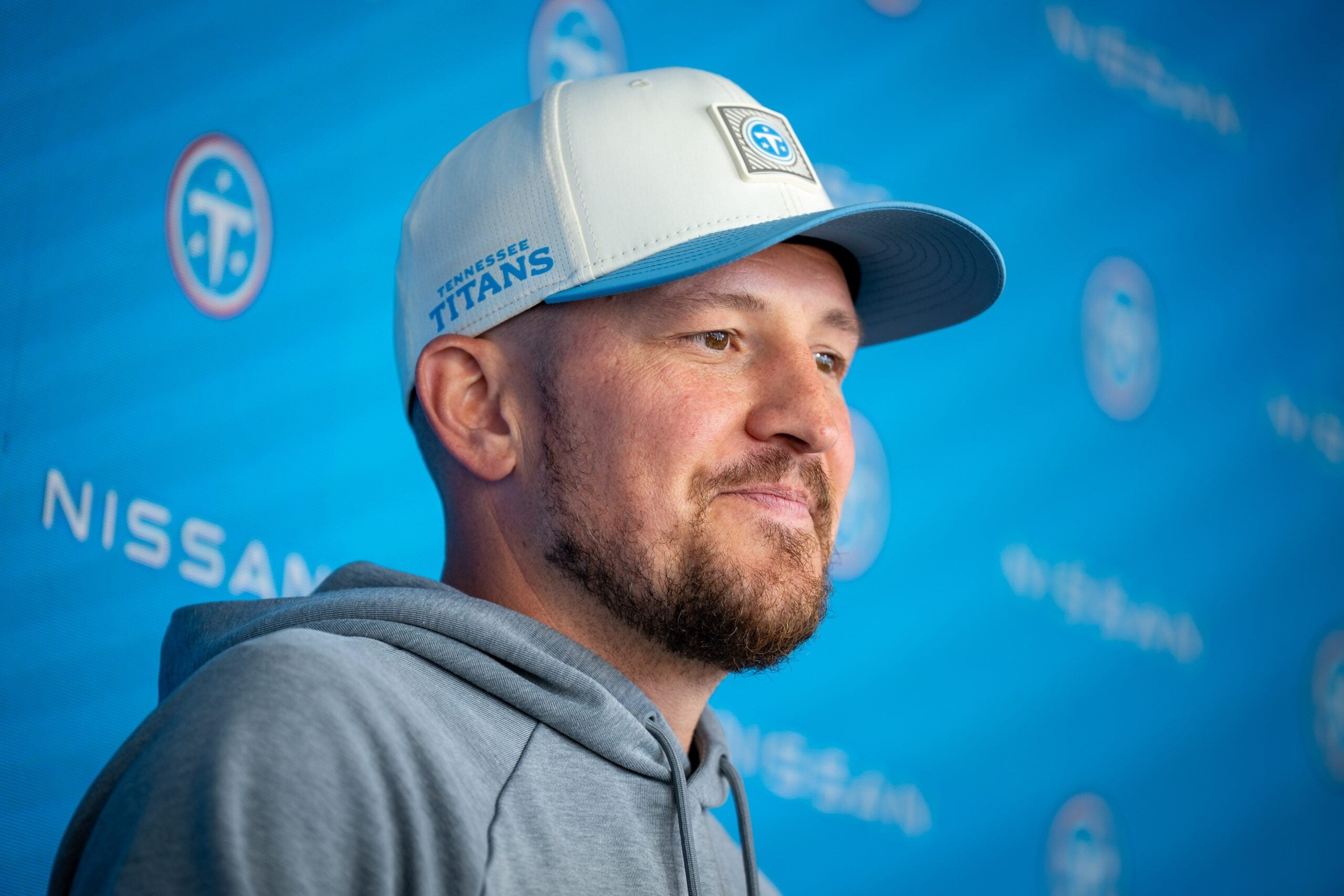
The Tennessee Titans believe Cam Ward can become a more accurate quarterback, and the coaching staff has firsthand experience turning that belief into reality. Quarterback coach Shane Tierney, who was in Buffalo during the early stages of Josh Allen’s now-legendary accuracy transformation, spoke at mandatory minicamp about what accuracy actually means for Ward and why completion percentage can be a misleading stat. For Titans fans wondering whether Ward’s inconsistency as a passer can be fixed at the NFL level, Tierney’s comments offer a window into how Tennessee’s offensive staff plans to develop its franchise quarterback.
The annual debate about whether quarterbacks can improve their accuracy tends to circle back to Allen, the most dramatic example the league has produced in recent memory. Allen came out of Wyoming as a player whose accuracy was a legitimate concern on paper, then physically transformed his mechanics over two to three years into one of the NFL’s most complete passers. It’s a rare case, and if your accuracy argument for a quarterback starts with “well, Josh Allen did it,” you’re probably making a losing argument.
But here’s the thing about this Titans staff: they were there. Tierney and other offensive coaches on the staff lived through that transformation in Buffalo. That experience gives their assessment of Ward’s ceiling more weight than the typical optimism you hear from coaches in June.
Tierney defines what accuracy actually means
Tierney was asked directly whether a quarterback can become more accurate, and his answer was emphatic.
“Oh, 100%. Not that he was inaccurate, but I was there for the start of Josh Allen’s career in Buffalo, and you could see the accuracy on film in Wyoming,” Tierney said. “It’s just how do you make it more consistent.”
That word, consistent, is the key for Ward. He’s not a consistently inaccurate passer. He just isn’t consistently accurate, and bridging that gap is the developmental challenge Tennessee’s coaching staff has accepted.
Tierney then offered what amounted to a full breakdown of how play-calling distorts the perception of accuracy. He explained the difference between taking shots downfield, hitting intermediate throws for chunk plays, and throwing short passes designed to augment the run game.
“Does that help drive completion percentage up? Yes,” Tierney said. “That doesn’t necessarily mean your accuracy is better because you’re calling a higher completion play and now you’re hitting 75% of your passes and everyone thinks, oh, he’s got 75% accuracy. That’s not always the case.”
This tracked with what we saw during OTAs and mandatory minicamp. Some of Ward’s highest completion percentage games came on days heavy with hurry-up, short-to-intermediate throws, and passes to the flat. Those are high-percentage plays by design. They don’t tell you much about whether the quarterback is actually placing the ball where the offense needs it.
Completion percentage lies, according to Tierney
Tierney then laid out his personal definition of an accurate passer, and it had nothing to do with the box score.
“An accurate passer to me is somebody who can execute the intent of the play call and hit what we’re trying to hit,” Tierney said. “And if we’re hitting those spots that we’re trying to hit based on the play call, that’s an accurate passer. Completion percentage lies a lot.”
I asked Tierney what it means to look accurate on tape but not quite as sharp on paper. His answer revealed just how granular the evaluation process is.
“We separate the fields into different yardages, separate the fields into different quadrants going left to right, and we track all of those,” Tierney said. “And then when there’s a lower completion percentage in one of those areas, let’s say we look at that first. Why is it that he got a lower completion percentage in that area? If you have a quarterback where the completion percentage is low, let’s just call it in 4 of the 6 areas, all right, there’s probably some inaccuracy issues there.”
From there, the question becomes whether those issues are fixable, which Tierney said depends on the quarterback’s flexibility, mechanics, and base.
The bottom line is that accuracy within the structure of a play call matters far more than the black-and-white completion percentage at the end of a game. A quarterback can dink and dunk his way to a sparkling number, but that doesn’t mean he’s scoring points, converting first downs, or moving the offense efficiently. For Ward, the Titans aren’t chasing a stat. They’re chasing the kind of throw-to-throw consistency that Allen eventually found in Buffalo, coached by some of the same people now tasked with developing Tennessee’s quarterback.
