
‘If you can… you’re not doing it right’ — Robert Saleh’s new approach for Jeffery Simmons, upgraded defensive line is misunderstood
The Titans’ defense is built for the front to be the engine. Robert Saleh is well known for his heavy rotation of personnel to rush the passer, but what will that mean for stars like Jeffery Simmons who want to be out on the field every snap?


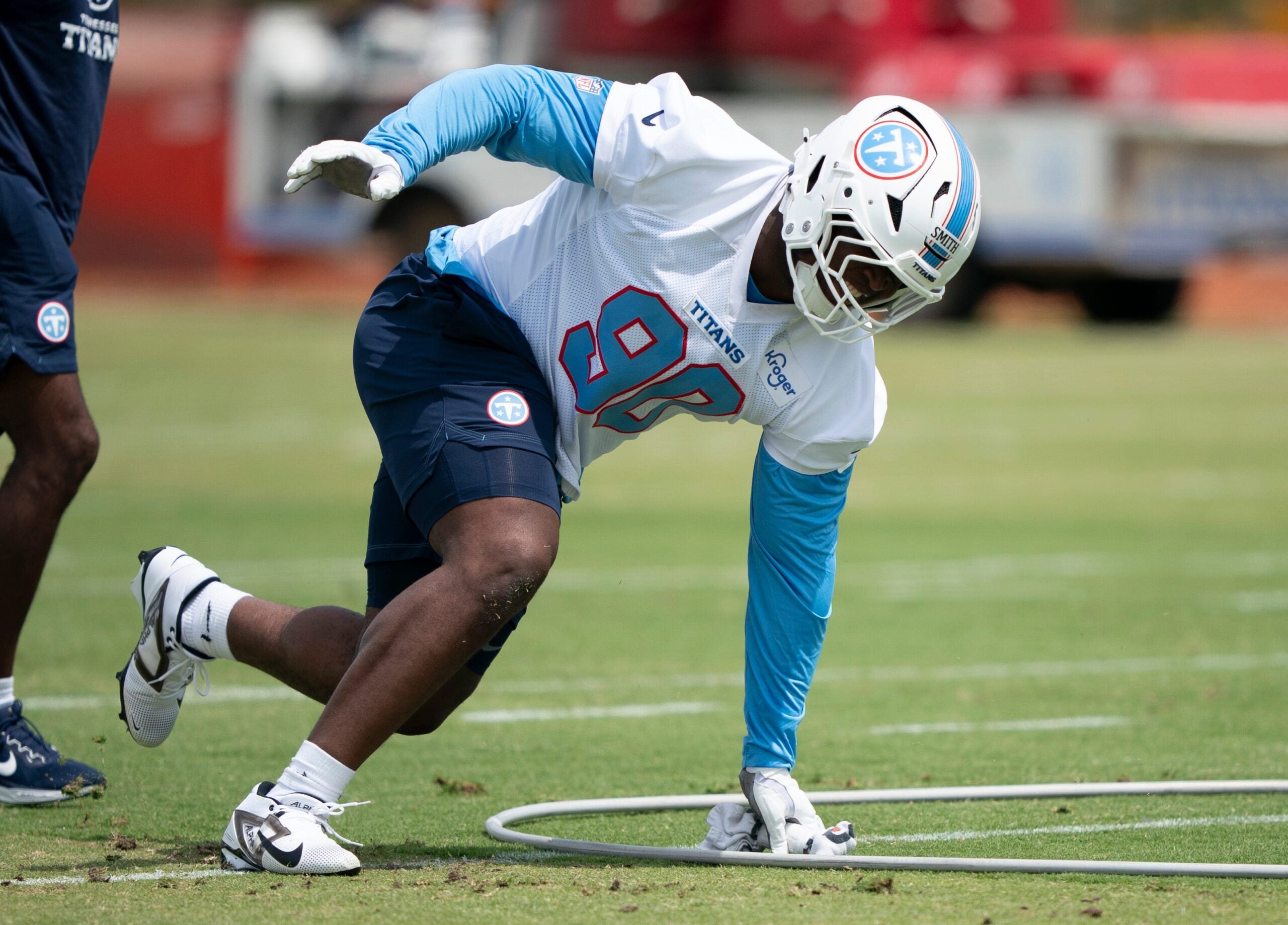
In 2026, there’s going to be more hockey references than there ever have been when talking about the Tennessee Titans.
Specifically, the “hockey line rotation” of head coach Robert Saleh’s defensive front. His reputation for keeping his pass rush fresh precedes him, and everybody is curious how it might impact big moments this fall.
The worst case scenario looms over the unknown: what happens when an opposing offense makes a game-defining play and Jeffery Simmons is on sideline watching? The armchair quarterback narratives write themselves. But the intent and the process behind Saleh’s approach seems to be a bit misunderstood.
Why the Titans DL will rotate so heavily
The elevator pitch for heavily rotating linemen is very simple. “The reason why we rotate so much is so our horses can rush the passer when it’s time to rush the passer,” Saleh explained on Friday. “So if Jeffery (Simmons) is too tired to rush on third down, then our D-line coaches — we have a problem. Sothe objective is to make sure guys like Jeffrey, John (Franklin-Myers), Jermaine (Johnson II), Jacob (Martin), Femi (Oladejo) are as fresh as heck when it comes down to third down and two-minute so we can go get after the quarterback.”
Step 1 for being able to pull this off in the first place, of course, is building a roster with enough good players to rotate eight or nine deep. Tennessee has that in Simmons, JFM, Thomas, Elliott, Faulk, Johnson, Oladejo, and Martin. But the worst-case scenerio still looms: what if something big happens with your best players on the sideline?
Saleh said it plainly: you cant play close to every snap on this defensive line. It’s not possible:
“With the way we play and the demands that we have on the D-line, if you can go four plays in a row, you’re not doing it right.”
Stars like Simmons have been in the 80-90% snap count range in recent years here. The expectation is that most of these guys will sit in something closer to the 60-70% snap count range with Saleh. But how and when they come out of the game is dependent on the situation, just like it is in any other defense.
“It’s play-to-play,” DL coach Aaron Whitecotton explained. “The way I always talk about that, come out here and put 320lbs on a prowler (sled), push it backwards five yards, and then run to the ball. Ok, well, let’s say for some strange reason somebody breaks a shoelace and the ball carrier goes 50 yards. Well, you’ve got to run 50 yards. You may not be able to go three more (plays) after that. Whatever play-to-play that looks like, it’s what we’re going to do. If a guy needs a break after he did some spectacular, we’ll give him a break. If he can keep going, he’s going to keep going. But we’re only going to play one way. And if you don’t want to play that way, you aren’t going to play.”
Whitecotton said he’s had these conversations with the veterans like Simmons, and they’re 100% on board with the approach. It’s not about keeping your playmakers from seeing the field in pivotal spots, it’s about making sure they’re as fresh as possible when those pivotal spots are most likely to come along.
