
Has the running back market shifted after big contracts handed out in first wave of free agency?
There was a time when the focal point of an NFL offense was the running back. You needed to have one of the best in order to compete and that would cost big money. But with the shift in play style over the years and the changing of rules, a modern NFL offense starts and […]


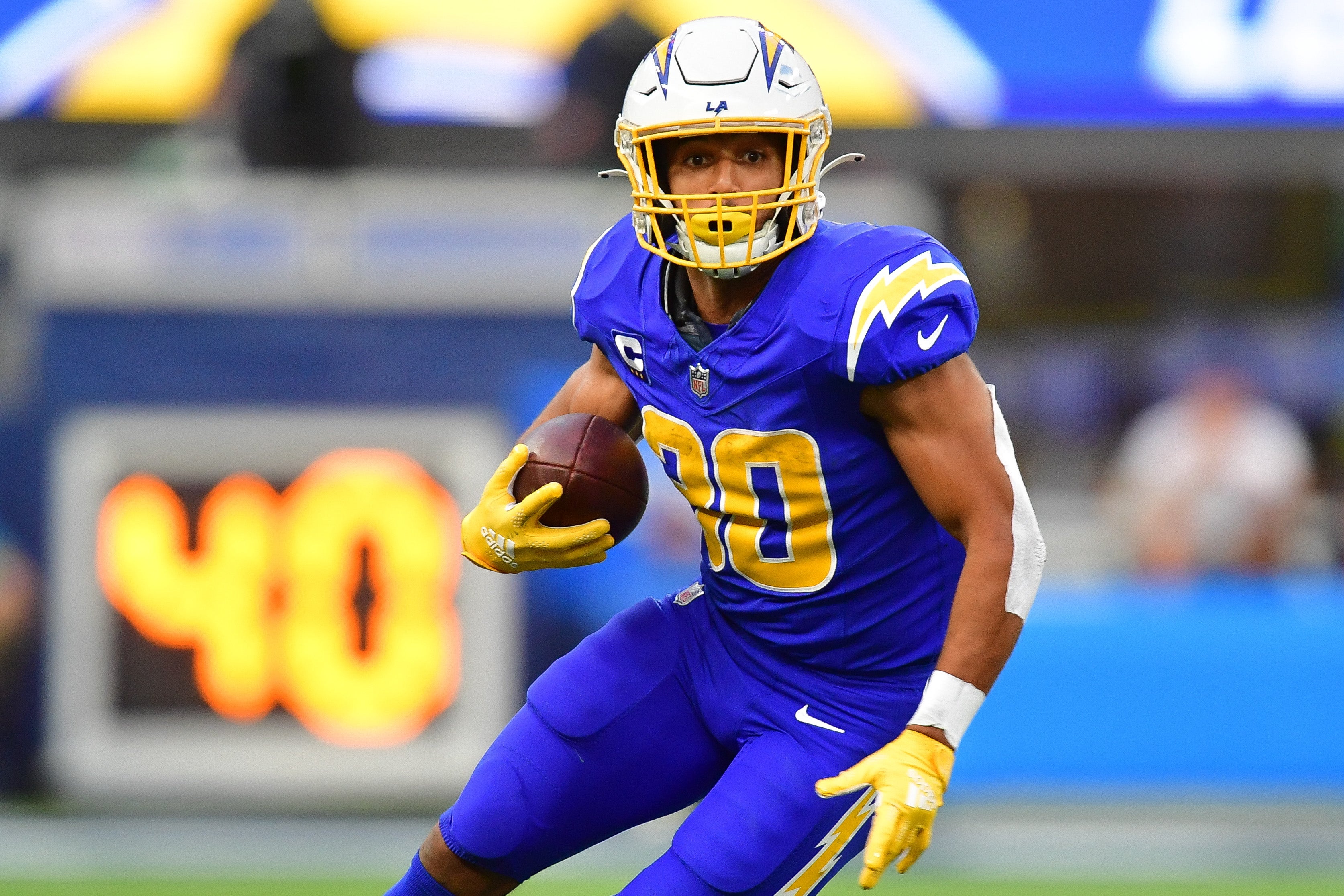
There was a time when the focal point of an NFL offense was the running back. You needed to have one of the best in order to compete and that would cost big money.
But with the shift in play style over the years and the changing of rules, a modern NFL offense starts and ends with the quarterback, while running backs have been relegated to bit players in the high scoring offenses of today’s NFL. If you need proof all you need to do is look at how running backs have been paid recently.
Prior to this season, the running back market was basically the stereo aisle at a Circuit City – dated with no demand.
Perhaps no offseason demonstrated the lack of value at the running back position than last year. The Dallas Cowboys cut Ezekiel Elliott (age: 27). The Vikings did the same with Dalvin Cook (27), Tampa Bay released Leonard Fournette (28), and the Browns declined to re-sign Kareem Hunt (27). Cincinnati’s Joe Mixon (26) took a significant pay cut to avoid joining them in the free agent pool. Green Bay’s Aaron Jones (28) also took a $5 million pay reduction.
The Titans reportedly made Derrick Henry (an elderly 29) available for trade in the spring, but had no takers for a player who had more than 1,900 yards from scrimmage the previous year. And there was no trade market for the Los Angeles Chargers’ Austin Ekeler (28), despite having a dozen more touchdowns than any skill position player in the NFL over the prior two seasons, before that. Ekeler stayed in L.A. and settled for some extra contract incentives.
When an ESPN NFL Analyst put out a tweet saying the correct way teams should treat running backs in today’s NFL several players took offense to it, including Ekeler.
Derrick Henry responded in a deleted post, “At this point, just take the RB position out the game then,” Henry wrote. “The ones that want to be great & work as hard as they can to give their all to an organization, just seems like it don’t even matter. I’m with every RB that’s fighting to get what they deserve.”
With a large number of high-profile running backs set to hit the free agent market this year, many wondered if we would see a repeat of 2023. Even players who seemed to be the focal point of their team’s offense were not going to be viewed as anything more than the disposable piece they were.
Asked whether he’s viewing negotiations with star running back Saquon Barkley through the lens of the running back market value or of what Barkley — a team captain and the franchise’s Walter Payton Man of the Year nominee — means to the team and city that drafted him with the No. 2 overall pick in 2018, the general manager Joe Schoen responded simply, “running back market.”
A Changing of the Tide?
Fast forward to this offseason. The first deal that was agreed to during the legal tampering period was D’Andre Swift signing with Chicago Bears. This was followed by a rush of signings including Josh Jacobs who got four years, $48 million from the Green Bay Packers, Saquon Barkley who got three years for $37 million from the Philadelphia Eagles, and Tony Pollard, who went to the Tennessee Titans for three years and $21 million.
Derrick Henry, who got two years for $16 million from the Baltimore Ravens, spoke on the Adam Schefter Podcast about how happy he was not only to get his own contract, but to see so many others at his position get theirs.
I thought it was kind of cool. You know, from us going from last, we're going into the season, stating our opinion on what the running back market is, and the value of the running back position and trying to fight for everything that we can get, as far as a group and forming that message and us trying to do some collectively to start something to be able to have a better market overall for the running backs and the guys that are behind us. Seeing Saquon go and Josh, I thought that was cool. They got what they felt like was their worth and I was happy for every single guy to finally get there, they're share due. And hopefully it continues, and I feel like teams want to get away from it and not acknowledge the running back. But I felt like this free agency. They're like, 'Oh, we still have hope that these backs on the market can change the game and are and are generational special backs.'
Austin Ekeler, who appeared on God Bless Football, still saw some room for improvement in the running back market. “Yeah, there was some encouraging stuff out there,” Ekeler said. “You know, I liked the Saquon deal, him getting himself in there. But it's, it's tough. It really is tough. Because how do you quantify the impact on the field? I think it's almost skewed a little bit.”
Ekeler said on the podcast that he entered free agency with a number in his mind and was prepared to retire if he didn’t receive an offer that exceeded that amount, “if there was not enough interest to get me to this type of contract, then I would walk away from the game because regardless, yeah, you get paid, it's still good money, but your body still has to go through it.”
Austin thinks that a lot of the issues arrive for running backs because so much money is given to quarterbacks and wide receivers leaving not much left over to pay running backs who touch the ball far more than receivers. “It's crazy because, you can have receiver go and catch, you know, 60 balls a year [and] have, you know, 600 yards, [and] two, three, [or] four touchdowns and get paid $10 million a year. It just seems skewed when you have your starting running back who's gonna touch the ball 300 times a year, not able even get close to or get around that [dollar figure],” Ekeler said.
Has The Market Turned?
Make no mistake, the money handed out to running backs this free agency period was not charity by the team executives, but rather a reflection of the market. The group of running backs that entered free agency this year were some of the top-level talent at the position and many of the teams that spent at the position believe themselves to be close to a championship run.
The perception of the incoming class of rookies also had a hand in the money handed out. While the upcoming draft is very ripe with QB, offensive line and wide receiver talent, it is considered to be a very weak running back class. With team not believing that their future running back will have his name called in April, they were forced to look at the running back market.
It will likely be a few years before we see another off season like this when it comes to running backs getting paid. Many running backs that were paid this year are unlikely to see the final year of their contract as cheaper options become available.
While guys like Austin Ekeler are frustrated with how they are paid versus how they are used, it is not likely to change as long as the NFL rookie contracts give teams the opportunity to acquire good players for cheap.
