
Packers have built a smart roster overall, but these current contracts might come back to haunt them
The Green Bay Packers have a healthy cap situation. Nobody has had more draft picks than the Packers over the past three years, which means the team has a lot of cheap pieces playing under rookie deals, and most of the big- or mid-money players are worth it—Jordan Love, Josh Jacobs, Xavier McKinney, Keisean Nixon, […]


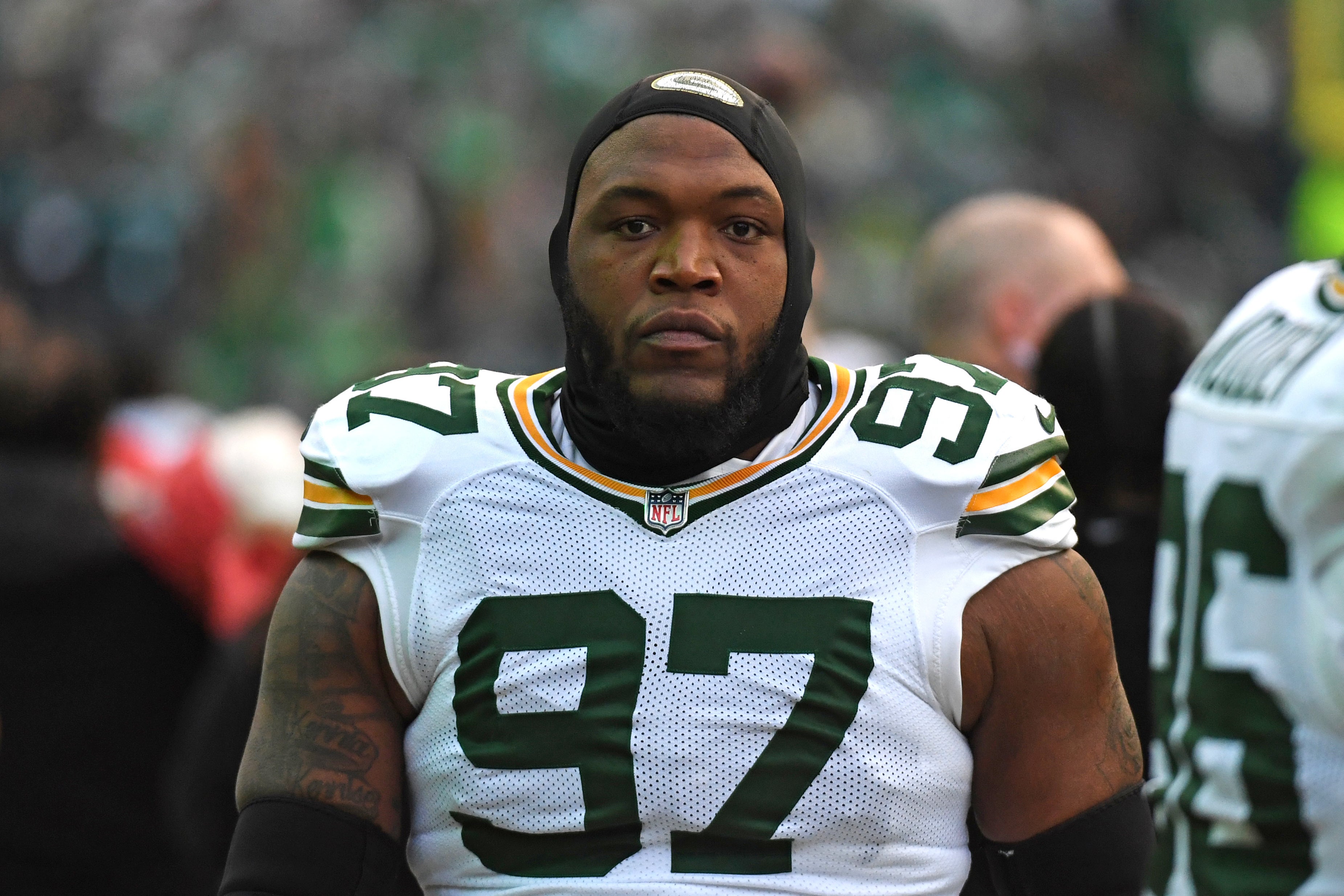
The Green Bay Packers have a healthy cap situation. Nobody has had more draft picks than the Packers over the past three years, which means the team has a lot of cheap pieces playing under rookie deals, and most of the big- or mid-money players are worth it—Jordan Love, Josh Jacobs, Xavier McKinney, Keisean Nixon, Elgton Jenkins.
But not everything is perfect. There are some specific cases where players haven't performed to the level of their contracts. The good thing is: nothing is egregious, and all players have a clear path in 2025 to make their deals look much better.
Three worst contracts on the Packers roster
Kenny Clark
The Packers usually don't give third contracts to non-quarterbacks. Clark was an exception, getting another extension last offseason. It was a combination of factors: First, Clark was absurdly young when drafted in 2016, so he was still 28. Second, the team wanted to lower his cap hit after a sequence of restructures. And third, Devonte Wyatt hadn't (and hasn't) played as you would expect from a first-round pick, increasing the need to keep a good defensive tackle around for longer. So Clark got a three-year, $64 million extension through 2027.
His $21.333 million average per year isn't that bad, and the deal looked excellent at first glance. But Clark probably had his worst season in the NFL in 2024, in part due to a foot injury. He was still a viable starter, but the team needs more based on what it's paying.
The good news is that the contract has a reasonable $20.365 million cap hit in 2025, and it's possible to get out of the deal in 2026 if the Packers want to—it would generate a $17.007 million dead hit, but there would be $14.358 million in cap savings.
Aaron Banks
Some Packers fans have been pretty defensive about this one, saying that we have to wait and see how Banks will perform in Green Bay. Sure, the situation can change if he plays well. But in terms of process, it's important to base the analysis on the information we have, and this is his performance in four years with the San Francisco 49ers—who are also a well-coached offensive team, by the way. The arguments to say Banks' contract can be good (improvement on the Packers, benefit of the doubt, let's wait and see) could be made for any signing. Ever.
Right now, the four-year, $77 million contract is an overpay. He became the highest-paid interior offensive lineman in free agency, and the sixth highest-paid guard in the entire NFL.
Last season, which theoretically was his best for the 49ers, Banks ranked 38th out of 64 guards in pass block win rate (92%) and 46th in run block win rate (69%), via ESPN. Amongst 77 qualified guards for PFF, he was 42nd in block efficiency, 55th in pass block, and 26th in run block. The Packers have top money for a projection. It might work, but the risk is undeniable.
The Packers could cut Banks after a year, but that would be unrealistic, with $20.25 million in dead money and only $4.6 million in cap savings. The cash flow is player-friendly, so Banks will earn $29.4 million in Year 1, $47.5 million through two years, and $63 million through three years.
Rashan Gary
The edge defender signed a four-year, $96 million extension back in 2023, in the middle of the season. He's under contract through 2027, and so far he hasn't lived up to the deal. Gary is a good player, and is clearly the best edge defender on the roster. However, there were expectations that Gary could solidify himself as a top 10 edge in the NFL, maybe enter the top 5, but he actually regressed in 2024, generating 47 pressures.
Now, based on the edge market, Gary's compensation is reasonable. He will count against the cap $25.771 million in 2025, $28.021 million in 2026, and $31.021 million in 2027, and there are no guarantees left after the initial signing bonus. At a time where edge rushers are making North of $40 million, Gary is eighth amongst edges in yearly average. The production is not ideal, but the contract structure isn't that bad after all.
