
Controversial play that changed the course of the Tennessee Vols' 2024 season appears to have caused the SEC to change its rules
A controversial play that altered the course of the Tennessee Vols' 2024 season appears to have led to an SEC rule change. But it’s not a rule change that would’ve helped the Volunteers last season. Instead, it’s one that will frustrate Tennessee fans — because it was enforced last season when it shouldn’t have been. […]


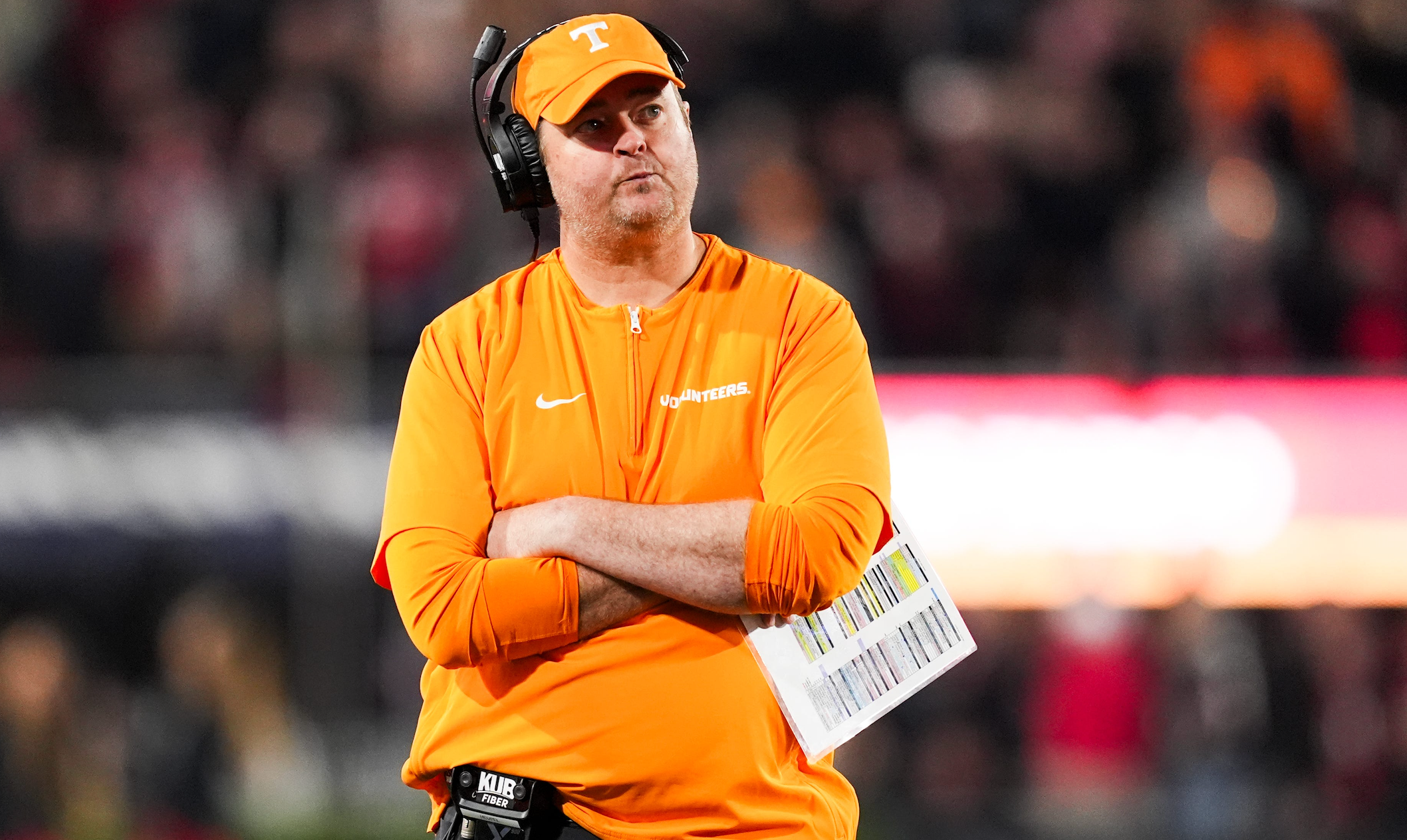
A controversial play that altered the course of the Tennessee Vols' 2024 season appears to have led to an SEC rule change.
But it’s not a rule change that would’ve helped the Volunteers last season. Instead, it’s one that will frustrate Tennessee fans — because it was enforced last season when it shouldn’t have been.
In Tennessee's 31-17 loss to the Georgia Bulldogs in Athens last season, the Volunteers were called for a controversial 12-men-on-the-field-penalty. Tennessee was matching Georgia's substitution and the officiating crew decided the Vols took too long to match the substitution. The penalty helped keep Georgia's drive alive at a critical point in the game (the game was tied at 17 in the third quarter).
Typically in that situation, the officials will hold the snap until the defense completes its substitution — even if the defense is deliberately moving at a slow pace.
In the immediate aftermath of that game, Georgia media and fans pointed to a "three second rule" that they claim says defensive players have three seconds to get off the field when matching an offensive substitution.
Georgia head coach Kirby Smart, however, said the following week that the rule is the substitution process has to start within three seconds, not that the substitution has to be completed within three seconds.
"A lot of people say, well, they say you have to sub in three seconds," continued Smart. "No, you have to start the substitution process in three seconds. That's how long you have to start the process. But it doesn't say once you start the process, you can go at a snail's pace off. They give you a reasonable amount of time, and they give you an opportunity to snap the ball.
Georgia finished its substitution with 20 seconds left on the play clock. Tennessee started running players onto the field with 17 seconds left on the play clock, so the Vols were in compliance with that part of the rule.
The SEC addresses the pacing of substitutions
Earlier this week at SEC Media Days, John McDaid, the SEC Coordinator of Football Officials, addressed various rule changes for the upcoming season.
McDaid said that substitutions must now be done at an "athletic pace" — which, obviously, is very subjective.
"The standard has always been the defense must substitute promptly," said McDaid. "That was the standard that we need to interpret for our judgment on what the defense is doing. We're adding now that they need to do it at an athletic pace."
"And what we're asking our teams to do is the match-up substitution rules are such that the defense needs to start their substitution within three seconds of the offense declaring their 11 players for the next snap," continued McDaid. "The replaced players need to be identified in that window as well."
"What are we going to do if this happens? And we do it in this game. Watch the center judge. He's the official right behind the center. If we deem the defensive substitution is not with athletic pace and it's not being done promptly, we're going to simply take the center judge off the ball like we're doing here, and now the offense is free to snap the ball, and the defense may or may not have 11 players on the field when the ball is snapped."
The example that McDaid used was the controversial play from the Georgia vs Tennessee game last season.
So basically, the SEC is giving officials the power to determine what they believe is a slow substitution. And if the official decides the defense is taking too long, they can allow the offense to snap the ball. That could result in the defense having fewer than 11 players on the field, or more than 11 players (which then results in a 12-men-on-the-field penalty).
Again, the frustrating part for Tennessee fans is that the new way of officiating this play is exactly how the officials approached it in the Vols' loss to Georgia last season (even though that's not how the same crew officiated that situation previously).
I understand making the change for the 2025 season — it's certainly a loophole that defenses have been taking advantage of for years in college football. But it shouldn't have been called the way it was last season. And it cost the Vols a chance to beat Georgia on the road (and possibly a higher seed in the College Football Playoff).
