
Is Aaron Rodgers trying to come back too fast?
New York Jets quarterback Aaron Rodgers went down with what looked like a catastrophic Achilles rupture in the opening minutes of the Jets Week 1 game against the Buffalo Bills. I've seen a lot of injuries in my time watching and covering the game, but I've never seen an Achilles tendon reverberate on live TV like […]


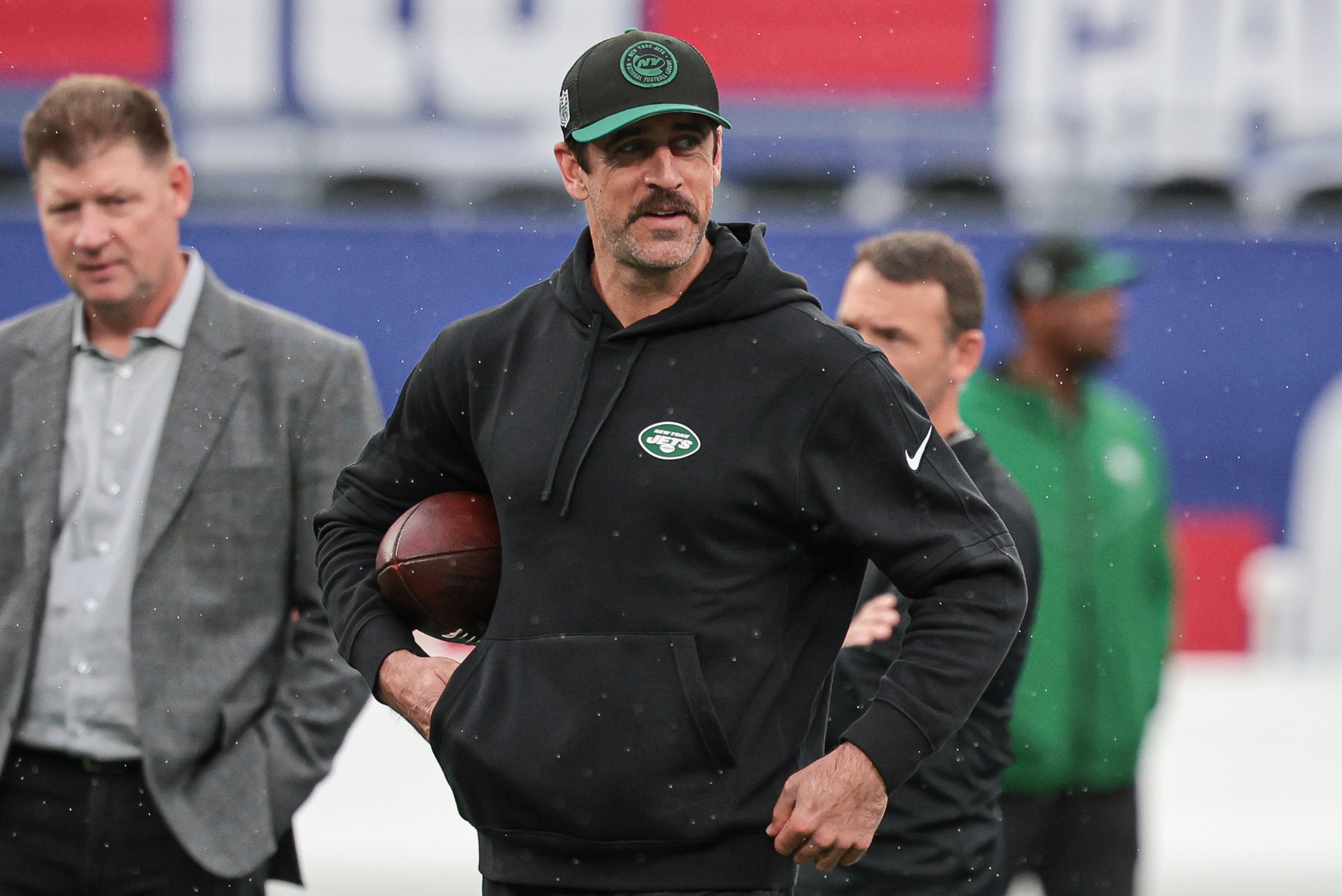
New York Jets quarterback Aaron Rodgers went down with what looked like a catastrophic Achilles rupture in the opening minutes of the Jets Week 1 game against the Buffalo Bills. I've seen a lot of injuries in my time watching and covering the game, but
I've never seen an Achilles tendon reverberate on live TV like that before.
Here we are eight weeks later and Aaron Rodgers is already walking around without crutches and he's dropping back in warmups and proclaiming that he believes he could be back this season.
Is this all this normal? What is this "innovative" surgery he had? These are all questions that you don't have to ask with other people. But with Rodgers, this is a guy that's publicly been controversial when it comes to science and medicine. The immediate thought is what kind of surgery did he have and is he going to wind up hurting himself worse because of it. Why is nobody asking these questions?
So I decided to sit down with an orthopedic surgeon to learn more about Rodgers' procedure and if he's coming back to fast. I spoke with Dr. Bruce A. Stewart and here's what he had to say.
What is this innovative surgery that Dr. Neal ElAttrache performed on Rodgers and is it common?
"This isn't something that he (ElAttrache) invented. This is a technique that's been out there for five plus years. And we do it on other parts of the body, too. It's called an internal brace. So you're using suture that you're anchoring into the bone to kind of act as like, extra reinforcement."
Is that becoming the new standard procedure or is this something athletes are just opting to try now? Is this a procedure you would do?
"Yeah, I wouldn't say that this is standard. But it's not like off label or unusual either. It's becoming more commonly done. Both for Achilles and for other sorts of procedures. It's a reasonable thing to do. I think the question becomes, then, what is the actual timeline? I think the procedure itself is fine, I think doing internal braces are good and it's something that I do. But you still have to respect the biology of the healing process, and how long that takes, and then how long it takes to get strength back and everything else. And so it speeds up the process. I'm not sure it makes it totally in two months. It's not like he's going back to normal two months."
If you were Rodgers surgeon, would you say he's good to be back this season?
"I wouldn't. I think that the risks outweigh the benefits in that. But, professional athletes are a different breed and they make a lot of money by being out there playing and they're highly competitive and want to try to get back. And they've got access to resources that most people don't right? Their job is to have their bodies in the best shape possible, right? So for you and I, how nice would it be if our job was like, 'Hey, you need to get in as good of shape possible. We're gonna have all the people working with you kind of around the clock to make sure your body is in peak performance all the time.' We're trying to do that, like when we get home from work. It's just like as and an add on after a long day. This their job.
So to be able to spend all your time rehabbing, and doing everything possible, they have access to resources and just the time that most people don't. So that's a factor too.
And the average professional athlete is made of different material than an average person. So, they are starting at such a higher level of fitness and athleticism and everything else, that sometimes they can achieve outcomes and timeframes or come back at a level that seems like 'Oh, wow, I can't believe they were they able to achieve that."
Why do you think Achilles tears are happening more right now?
'It's not a coincidence that Aaron Rodgers and Kirk Cousins tore their Achilles because they're in the age group. It's not a coincidence that Kobe (Bryant) tore his Achilles when he did, and not like 10 years earlier. The Achilles injuries are things that we see kind of take off with athletes in their 30s. So it's kind of like 35 to 65 is kind of the sweet spot for Achilles injuries. So when you see the quarterbacks in their 30s are the ones tearing it, it's like, well, yeah, statistically, that's who you'd expect it to be. I do see high school kids sometimes with it, too, but it's pretty rare in the high school population and relatively rare in the college population. Just because that's not the age where you usually see it. The quality of the tissue starts to degrade a little bit, and so it becomes a little bit more susceptible to rupture with time."
So in conclusion, Is Rodgers trying to come back too fast? Probably. Dr. Stewart thinks the risks outweigh the benefits, but he's right. Everyone is different. Some guys are just able to get right faster than others. We'll see if Rodgers actually returns this year. If you ask me, it just doesn't seem necessary this season. Let things play out and the Jets could be better in 2024 because of it.
