
'I think that's stupid, I don't think it's right' – Kirk Herbstreit drops strong take on NIL and its current role in college football
Kirk Herbstreit, a longtime member of the ESPN College GameDay crew, is one of the faces of college football. The former Ohio State quarterback has been involved with the sport in some form or fashion for nearly 40 years. Whether you agree with his takes or not, his words matter. Herbstreit's influence on how important […]


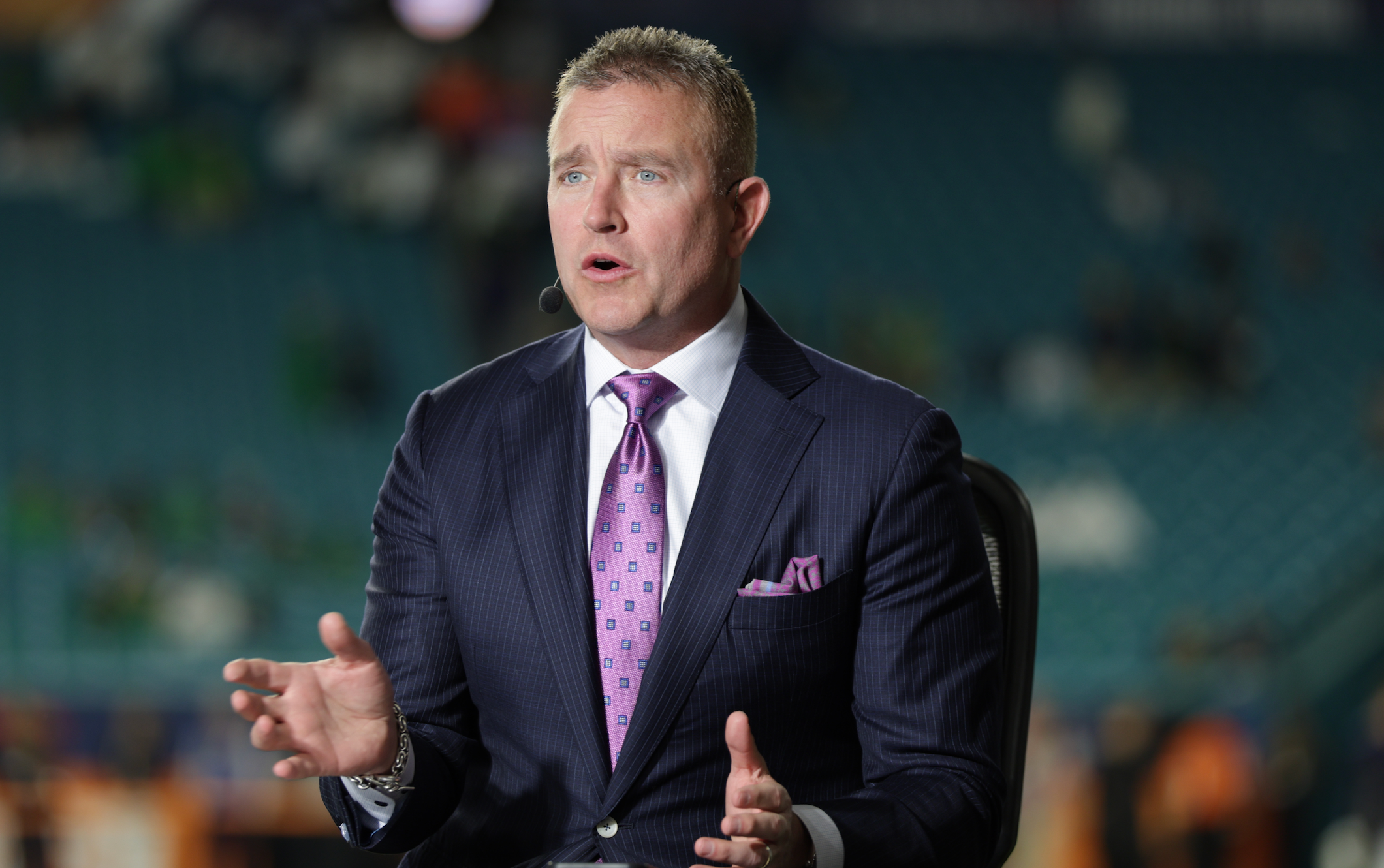
Kirk Herbstreit, a longtime member of the ESPN College GameDay crew, is one of the faces of college football.
The former Ohio State quarterback has been involved with the sport in some form or fashion for nearly 40 years. Whether you agree with his takes or not, his words matter. Herbstreit's influence on how important matters in the sport are viewed by fans is undeniable. Essentially, when he speaks, for better or worse, people listen.
That's why I thought his recent comments on the role of NIL (name, image, and likeness) in college football were incredibly interesting (and important).
Herbstreit recently joined Ryan Hawk for a live taping of The Learning Leader and he was asked about his thoughts on NIL and paying college football players.
The longtime ESPN broadcaster dropped a lengthy answer that might be the best take yet I've heard on NIL.
His entire answer is very long. But I think it's worth reading in its entirety.
"I'm a traditionalist, so all of this was difficult to digest. But I look at it like, I'm not retiring, so I can put my head in the sand and just say this isn't right, this isn't fair, or I can try to get my arms around it, try to be understanding, which I've done. I'm not a fan of collectives. I'm not a fan of pay for play. I'm not a fan of going and buying a player to bring him to your school. I think that's stupid. I don't think it's right, or healthy, or sustainable. I am a fan of if Jeremiah Smith becomes Jeremiah Smith after he gets there and becomes maybe the biggest name in the sport, and he can go make [money] — not because it's, hey, here's whatever you need [to stay at Ohio State]. It's [because] Pepsi wants to do something with him or whoever. If he can make money in marketing, which is name, image and likeness — it's marketing. So if he can create money for himself, I think we've all gotten to a point where that makes sense."
"But not a guy is over at Bowling Green, and he's an All American and LSU needs a left guard, and they're just like, how much? How much does it take (to transfer)? A lot of these guys, these five-stars, to me, they're looking at their lives like this (how much money can they earn right now) and not looking at it 40 years down the road. They're just looking at it right here. And they have [people in their ear], whether it's parents or agents, they're just trying to get as much as they can."
"Sometimes that (transferring) might be the right answer. Joe Burrow left Ohio State. He wasn't going to get an opportunity — it made sense for him. Dwayne Haskins went ahead of him after JT Barrett left, it worked out great for [Burrow]. There's plenty of examples where it works. I just don't think at the first sign of adversity you should leave. I think you have to fight through that adversity. I just don't believe in leaving your teammates. It's so foreign to me that that's even in play. So it's that part of it that's really difficult. So I don't want to say I don't believe in NIL or I don't believe in the transfer portal, because I think sometimes it applies."
"I think if you take a coach, these coaches are a little bit hesitant on how hard they're going to be on these guys, because they don't want to leave. Imagine being a coach, and you're worried about, is this guy going to leave if I really do what I want to do with him? And so that's a concern for me. The whole thing, I think where we're going, and hopefully in two or three years it's different from right now, like, in the NFL, there are rules, right? There's free agency. If Brock Purdy, who makes $850,000, in the middle of a Super Bowl run decides at Week Eight, I don't want to play anymore. I'm a Pro Bowler. You're only paying me $850k. I'm worth $50 million. Why am I going to play? Either get my contract right or I'm not playing next week against Philly. Can you imagine if that happened? That's what college football players are doing. It's complete BS. The players went from in our era (pre NIL/transfer portal), you had no say to now they have all the say. To put it in our perspective, as parents, if you have kids, imagine if your kids were, I don't know, 12 years old, and they're like, hey, I need the keys to the car. And you're like, I'm your parent, you can't drive, you're 12. And the kid's like, oh, really, give me the keys or I'm gonna go live somewhere else. And you're like, what, no. And the kid has all the power. You have no power. Does that make sense? That's what college football is right now. The 12 year olds are deciding what they want to do, and you're the parent going, okay, whatever you say. It's like the world is upside down right now when it comes to that aspect of it."
"What's crazy is you still turn on a college football game on Saturday, the marching bands come out, the uniforms come out, and we still go crazy. So as much as they're trying to kill the sport, I don't know if it's ever been more popular. So what I think the players are underestimating is what we all digest. They're great players, but I hate to say this, they're a dime a dozen. You're on a conveyor belt as a player. There's other players coming right behind you. As long as that Ohio State uniform is in play, or that Michigan [uniform], or that Notre Dame fight song, or that USC [fight song], that's all fans care about. So they're important, but they don't deserve all the say like they have right now. They need to learn some things and go through some tough times because it's for their own good. When they get older and become employees, whether it's the NFL or in the real world, or when they become husbands and they become fathers. This is hurting them long term, not helping them."
I think Hebrstreit nailed it. The pay for play aspect of NIL is the real problem with the current state of college football. Using the transfer portal as a way to get a pay day isn't what NIL is supposed to be.
Players generate a lot of revenue for the sport. There is no product without them. If a player like Jeremiah Smith or Arch Manning or Carson Beck can use his name, image, and likeness to generate revenue from legitimate endorsement opportunities, then I think most folks are all for that at this point. Whether that number is $100,000 or $100 million — players create their own value — generating income from true NIL opportunities should have always been a thing in college sports.
But the pay for play aspect, which leads to transferring for the wrong reason, is hurting the sport. And as Herbstreit alluded to, it's hurting the development of athletes as players and as people. Adversity isn't a bad thing. In fact, it's a necessity to truly grow as a player and as a human.
Who fixes it? Can it be fixed? Will it be fixed?
We're all anxiously waiting to see if those questions will ever be answered.
