
Penn State shows signs of life in 27-24 loss to No. 2 Indiana despite six-game skid
Although Penn State fell to Indiana on Saturday, the loss revealed real progress.


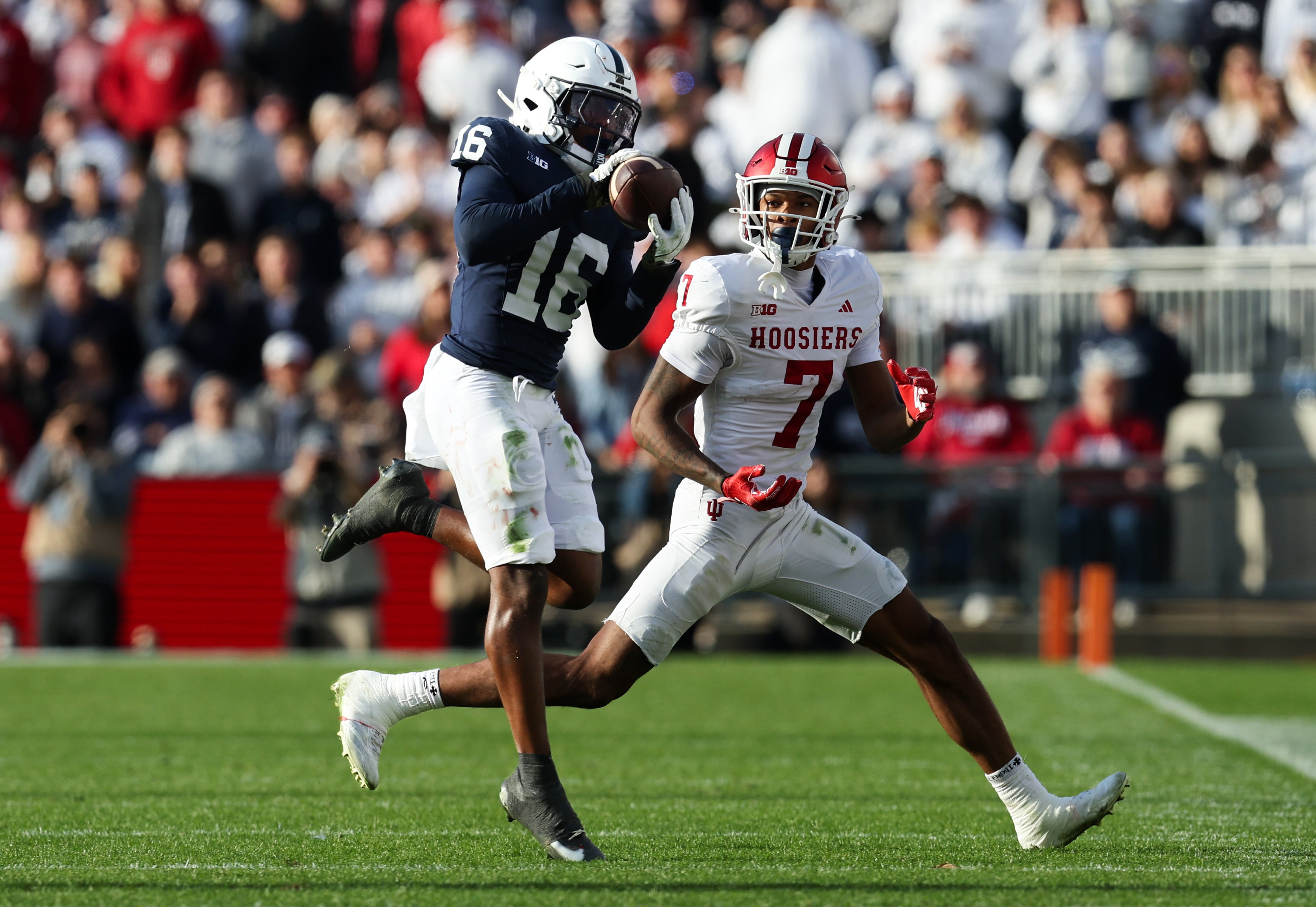
In contrast to Penn State’s last five losses, the Lions’ 27–24 defeat at the hands of No. 2 Indiana carried a different weight. This wasn’t another collapse built on miscues and missed assignments. This was a team that rediscovered its backbone, played physical football, and walked off the field knowing it had finally shown up, even if the scoreboard didn’t reflect it.
For interim head coach Terry Smith and a roster that’s been searching for a new identity since James Franklin’s firing, Saturday’s performance felt less like a moral victory and more like proof of concept. The Nittany Lions did more than just compete. They imposed their will for three quarters, made Indiana uncomfortable, and came within one defensive stand of pulling off one of the biggest upsets of the season.
The result still stings, but the execution is something that Penn State can build on.
Jim Knowles finally unleashed the defense everyone expected
Saturday marked the first time in weeks that Knowles’ unit looked like the aggressive, disruptive force it was supposed to be all season. The Penn State defensive coordinator dialed up creative pressure packages, sent linebackers through gaps Indiana didn’t see coming, and forced quarterback Fernando Mendoza into uncomfortable decisions all afternoon.
The front seven played with the kind of aggression that’s been absent during the losing streak. They collapsed pockets, pursued ball carriers through the second level, and made Indiana’s high-powered offense grind for every yard. Even on the game-winning drive, Penn State’s defense executed its assignment. Mendoza just made the kind of throw that beats perfect coverage: a dart over the middle with defenders draped all over him.
That’s not representative of scheme failure, but of a quarterback making a play when his team needed it most. For Knowles, the renewed energy and disciplined gap integrity were exactly what Penn State needed to see heading into the home stretch.
King Mack is starting to look like Penn State’s next elite safety
Few players have made more noise in limited opportunities than sophomore safety King Mack. Against Indiana, Mack played like a future cornerstone. Mack flew downhill on run fits, broke up contested throws, and delivered a momentum-swinging interception that set up Penn State’s go-ahead touchdown late in the fourth quarter.
At 5-foot-10, Mack doesn’t fit the traditional safety mold. But his instincts, closing speed, and fearlessness more than compensate for his size. His perfectly timed hit on Mendoza during the final play nearly knocked the ball loose and underscored just how much he’s matured in a short window.
Moving forward, Mack should be locked into a starting role alongside Zakee Wheatley. Penn State finally has a young, athletic tandem in the secondary that can build continuity, and that matters when roster stability is harder to come by than ever.
Nick Singleton finally looked like the player Penn State recruited
It’s been a frustrating season for Singleton, but Saturday felt like a reset. The junior running back accounted for all three of Penn State’s touchdowns (two rushing, one receiving). He totaled 71 yards rushing on just 10 touches. But more importantly, he looked decisive, explosive, and confident for the first time in weeks.
Singleton wasn’t just hitting the right gaps. He was finishing runs, slipping arm tackles, and turning solid gains into explosive plays. His patience returned. His burst looked natural again. For an offense that’s struggled to create consistent yardage, that version of Singleton changes the strategy going forward.
If he carries this momentum forward, Penn State suddenly has a legitimate home-run threat capable of flipping field position in one touch. That’s the difference between grinding for first downs and putting defenses on their heels.
Trebor Peña gave freshman QB Ethan Grunkemeyer a lifeline
In a receiving corps that’s been inconsistent all season, Peña emerged as the safety valve Grunkemeyer desperately needed. The Syracuse transfer worked the middle of the field with great timing and precision, finishing with several key receptions, including a 43-yard catch-and-run that shifted momentum late in the third quarter.
Peña doesn’t need to be a star. He just needs to be dependable, and against Indiana, he showed he can handle that role. For a freshman quarterback still adjusting to the intensity of playing in the Big Ten, having a target who consistently finds open grass makes all the difference.
The chemistry between the two is still developing, but Saturday proved there’s enough there to build around. If Peña keeps producing, Penn State’s passing game might finally have the consistent outlet it’s been missing since the season fell apart.
A loss that might actually mean something
There’s no such thing as moral victories in the Big Ten, but context matters. Smith’s interim staff inherited a fractured roster, a deflated locker room, and a six-game losing streak that had turned Penn State into a punchline. Saturday didn’t erase any of that, but it proved the team hasn’t quit.
From improved offensive balance to renewed defensive intensity, the Nittany Lions finally resembled a team that believes it belongs on the field. They played with purpose, physicality, and composure: traits that disappeared somewhere between the Oregon loss and Franklin’s dismissal.
If Penn State carries this version of itself into next week’s matchup with Michigan State, the losing streak ends. And if that happens, Saturday’s defeat won’t be remembered as another chapter in a lost season, but as the moment the rebuild finally started to take shape.
