
Texas could flood the 2026 NFL Draft, and Sarkisian is already reshaping the roster to survive it
Texas football faces a pivotal 2026 NFL Draft cycle, but Steve Sarkisian’s roster overhaul, portal additions, and elite 2026 recruiting class have positioned the Longhorns to absorb major departures and stay in championship contention.


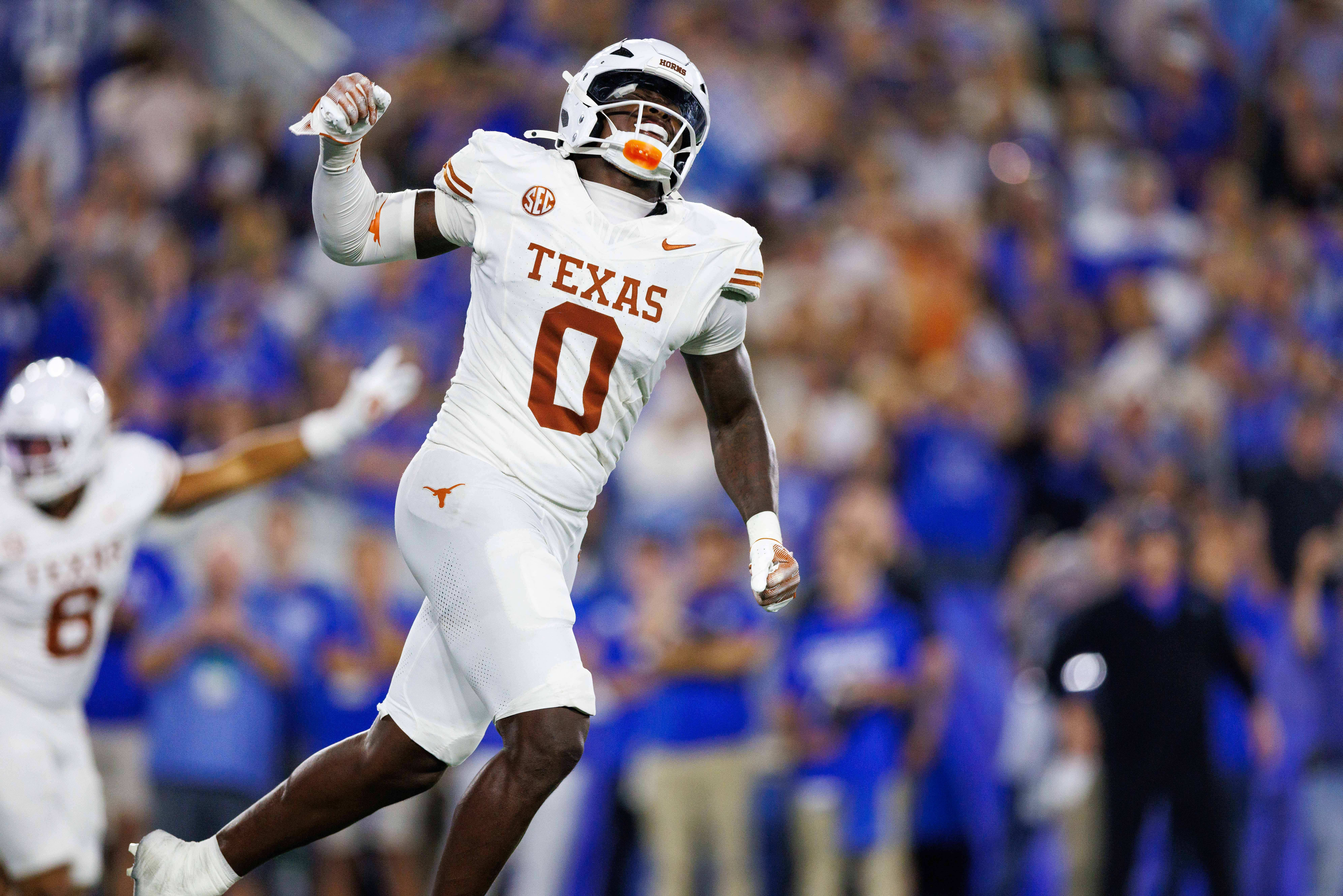
Texas’ 2025 season was never supposed to look like this. The Longhorns entered SEC play with a potential Heisman candidate at quarterback, a star-studded defense led by Anthony Hill Jr., and a roster loaded with future pro talent. What they got instead was a grind: uneven offensive line play, a revolving door at running back, and a defense that flashed brilliance but cracked under pressure.
Why the 2026 NFL Draft will reshape Sarkisian’s program
Texas is becoming an NFL factory, and the 2026 draft could be the most revealing window yet into what Steve Sarkisian is building. The names circling league scouts are familiar—Anthony Hill Jr., already declared; Arch Manning, the sport’s biggest gravitational force; Malik Muhammad, Trevor Goosby, Trey Moore, CJ Baxter, DeAndre Moore Jr., Ryan Niblett, Derek Williams Jr., Michael Taaffe, DJ Campbell. If the 2025 season forced Texas to reckon with its depth, the 2026 NFL Draft will force Texas to reckon with its identity.
This is the tipping point, and Sarkisian knows it. The decisions these players make will determine whether Texas reloads seamlessly or rebuilds on the fly, whether the program’s NFL pipeline becomes a recruiting advantage or a roster management crisis, and whether Sarkisian can sustain championship-level talent while watching his best players leave early for professional paychecks.
Anthony Hill Jr.
Anthony Hill didn’t just declare early—he launched himself into the first round. Hill was Texas’ most consistently dominant defender in 2025, a 6-foot-3, 235-pound linebacker who played with the downhill violence of a Mike, the range of a Will, and the pass-rush instincts of an edge, his production profile fitting today’s hybrid linebacker archetype perfectly. NFL draft analysts have him pegged inside the top 20, and his departure is both expected and seismic: Texas loses its emotional anchor and most reliable disruptor, the staff loses a defensive piece they built around schematically, and the SEC loses one of its few linebackers capable of running with backs and tight ends in man coverage. Texas will survive him leaving, but it won’t replace him.
Trevor Goosby
Texas knew Trevor Goosby was going to be an NFL player—they didn’t know he’d rise this fast. Goosby spent 2025 locking down SEC edge rushers with improved anchor and rare length for a young tackle, and if he declares, he’s a Day Two pick with a runway to climb into the first round after the combine. But here’s the twist: Texas needs him back. Kyle Flood’s offensive line is losing starters, adding portal pieces, and attempting to stabilize around its bookends, and without Goosby, the offensive line becomes a complete rebuild rather than a manageable retool.
Malik Muhammad
Malik Muhammad is the best corner Texas has had since Quandre Diggs, and NFL teams know it. Fluid hips, real ball skills, elite recovery speed—Muhammad shadowed top SEC receivers in 2025 and held his ground, draft boards hovering him anywhere from late first round to mid-second. Texas can’t afford a secondary reset, but that’s exactly what’s on the table if Muhammad declares, forcing the Longhorns into the portal aggressively for an experienced boundary corner capable of matching his production.
Trey Moore
Moore is the kind of edge rusher whose tape looks even better than his stats—his spin counter is lethal, his run fits improved dramatically in 2025, and his versatility as a stand-up rusher or hand-in-dirt end makes him a clean schematic fit in the NFL. He’s a Day Two lock if he leaves, and Texas will pray he doesn’t.
DeAndre Moore Jr. & Ryan Niblett
Sarkisian’s offense is built on space, angles, and after-catch explosiveness, and Moore and Niblett are built for that ecosystem. Both flashed in 2025, both have legitimate NFL speed, and both likely land somewhere between rounds three and six if they declare early. If even one leaves after 2026, Texas must hit the portal for a plug-and-play wideout, particularly with Chris Henry—the No. 1 high school receiver—still a signing-day toss-up who could leave the depth chart thinner than anticipated.
Derek Williams Jr. & Michael Taaffe
Williams is an NFL athlete playing safety in the SEC, while Taaffe is a cerebral field general with leadership value and four-year experience. Losing one is survivable, losing both is a defensive identity crisis, and both will get mid-round looks if they declare while retaining the option to return and boost their stock. Texas’ defensive ceiling in 2026 depends heavily on keeping at least one, as replacing both simultaneously would gut the backend’s communication and continuity precisely when the program needs experienced voices anchoring a retooled secondary.
Texas is preparing for an NFL drain
The 2026 draft could strip Texas of its best linebacker, best corner, best safety, best offensive tackle, potential franchise quarterback, edge rusher, and multiple skill players—no other SEC contender is losing this many potential early entrants at once. That’s why Sarkisian is attacking the portal like a program that understands what comes next: either Texas reloads with precision and maintains its championship window, or it watches that window slam shut while rivals capitalize on the talent vacuum.
How Sarkisian recruited to prepare for the Storm
Steve Sarkisian didn’t wait for the NFL draft declarations to tell him where Texas was headed. His 2026 recruiting class — now over 25 deep and built around blue-chip anchors like Dia Bell, Richard Wesley, Derrek Cooper, Tyler Atkinson, and Jermaine Bishop Jr. — was crafted with roster attrition in mind. This wasn’t just talent stacking. It was succession planning. Sark recruited quarterbacks who fit his vertical passing identity, backs who can survive SEC punishment, corners with length to match the league’s bigger receivers, and a front seven built to rotate waves of speed and power. The class reads like a blueprint for post-Manning, post-Hill, post-Muhammad Texas, proof that Sarkisian intends to absorb NFL attrition without blinking. The Longhorns aren’t scrambling to survive the draft drain. They’ve been recruiting toward it for a year.
Texas’ Portal additions tell the real story
Texas has already added:
- Multiple offensive linemen — instant starters to stabilize Flood’s unit
- A transfer defensive tackle — a clear admission that interior size was lacking
- A veteran defensive back — depth insurance in case Muhammad or Williams leaves
- A rotational linebacker — preparing for life without Hill
- Specialists — because Texas loses all three starters
Sarkisian knows what’s coming in the draft, and he’s preparing for the talent drain in real time.
What it means for Texas in 2026
The Longhorns are walking a tightrope next season—the 2026 NFL Draft will redefine this roster, and Sarkisian is building a program that can survive star departures without losing momentum. This is what modern college football looks like: development on one end, replacement on the other, constant recalibration in between. Texas isn’t running from that reality; it’s embracing it, because champions aren’t built from who stays—they’re built from who stays ready.
