
Packers show they learned their lesson with exciting weapon as interesting strategy becomes key to unlocking his potential
A third-round pick back in 2024, running back MarShawn Lloyd has played just one regular season game throughout his NFL career.


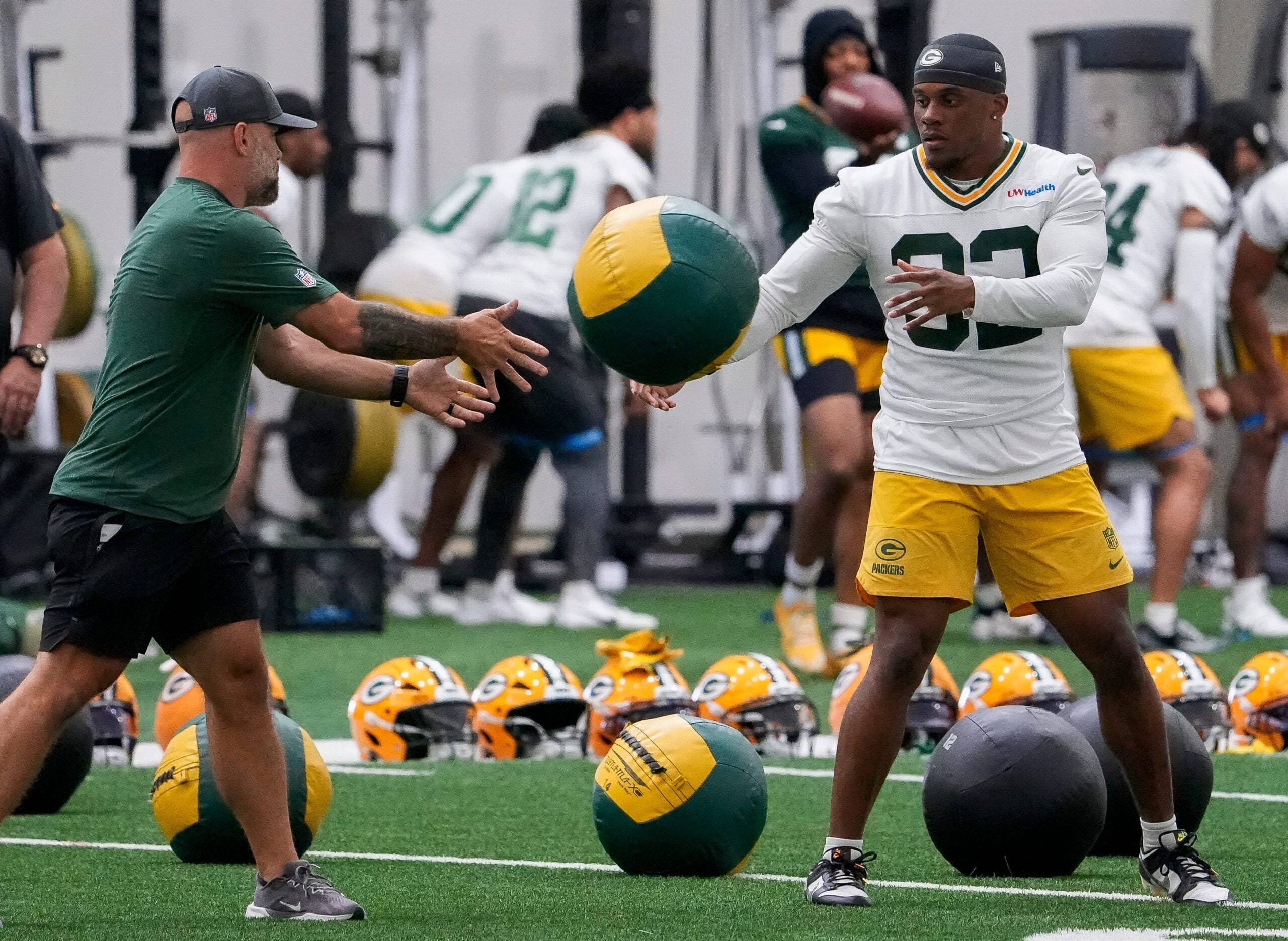
The Green Bay Packers have a new approach with running back MarShawn Lloyd, and it could determine whether the third-round pick from 2024 finally contributes to the offense. Green Bay’s coaching staff has adjusted how it manages Lloyd’s practice workload during OTAs and mandatory minicamp, a significant development for a player who has missed 35 of a potential 36 games across his first two NFL seasons.
Lloyd’s injury history reads like a medical textbook. Hamstring, ankle, hip, appendicitis, groin, and calf problems have combined to keep him off the field almost entirely since the Packers drafted him. He has played in one game, barely touched the ball, and returned almost nothing on the investment general manager Brian Gutekunst made two years ago.
LaFleur’s managed approach
Packers head coach Matt LaFleur addressed the situation during mandatory minicamp, acknowledging the coaching staff had to adapt.
“He’s a guy we’ve obviously had to learn, and we’ve learned together how you best manage him,” LaFleur said. “As long as we can continue to build on what we’ve done, I think he’ll be in good shape.”
LaFleur also pointed to Lloyd’s intensity as both an asset and a liability.
“He’s also learning how to practice,” LaFleur added, “when to really punch it and when he doesn’t have to go quite as hard, because that’s usually when he’s had some issues, is when he’s going 100 miles an hour all the time.”
The idea is straightforward. Lloyd plays at maximum effort constantly, and that tendency has contributed to his recurring soft-tissue problems. If the Packers can teach him to regulate his output during practice while maintaining his explosiveness on game days, they might finally see what the player can do at the NFL level.
A real path to RB2
Lloyd’s opportunity has never been clearer. The Packers let Emanuel Wilson walk in free agency, opening a lane in the backfield behind starting running back Josh Jacobs. Green Bay re-signed Chris Brooks to a two-year deal, and Brooks remains a reliable all-around option with solid pass protection and adequate rushing ability.
But Lloyd is the more explosive player. His ceiling as a runner exceeds what Brooks offers, and the Packers know it. The question has always been more about availability than talent, so that’s the obvious first step.
Low-risk financial situation
The contract math works in Green Bay’s favor. Lloyd was a third-round pick in 2024, leaving two years on his rookie deal. The Packers don’t need to rush any roster decision because the financial commitment is minimal. If Lloyd suffers another setback, the team can place him on injured reserve without the contract becoming prohibitive or forcing a wasted roster spot for an extended period.
That flexibility gives the coaching staff room to be patient with the workload management plan LaFleur described. There’s no pressure to force Lloyd into a heavy role before he’s ready, but there’s also genuine incentive to get him right.
Why it matters now
The Packers’ running back depth behind Jacobs is questionable at this point in the offseason. Brooks provides a floor, but the ceiling belongs to Lloyd if he can stay healthy. Green Bay needs a dynamic complement to Jacobs, and Lloyd’s skill set fits that role better than anyone else on the roster.
The Packers have acknowledged the problem, adjusted their methods, and given Lloyd the tools to succeed. Now the results have to follow.
