
Former Cowboys DE Marshawn Kneeland diagnosed with CTE months after his tragic death, here’s what we know
The former Dallas Cowboys defensive end died by suicide in November of 2025 at 24 years old. Here’s what researches are saying about his post-mortem diagnosis.


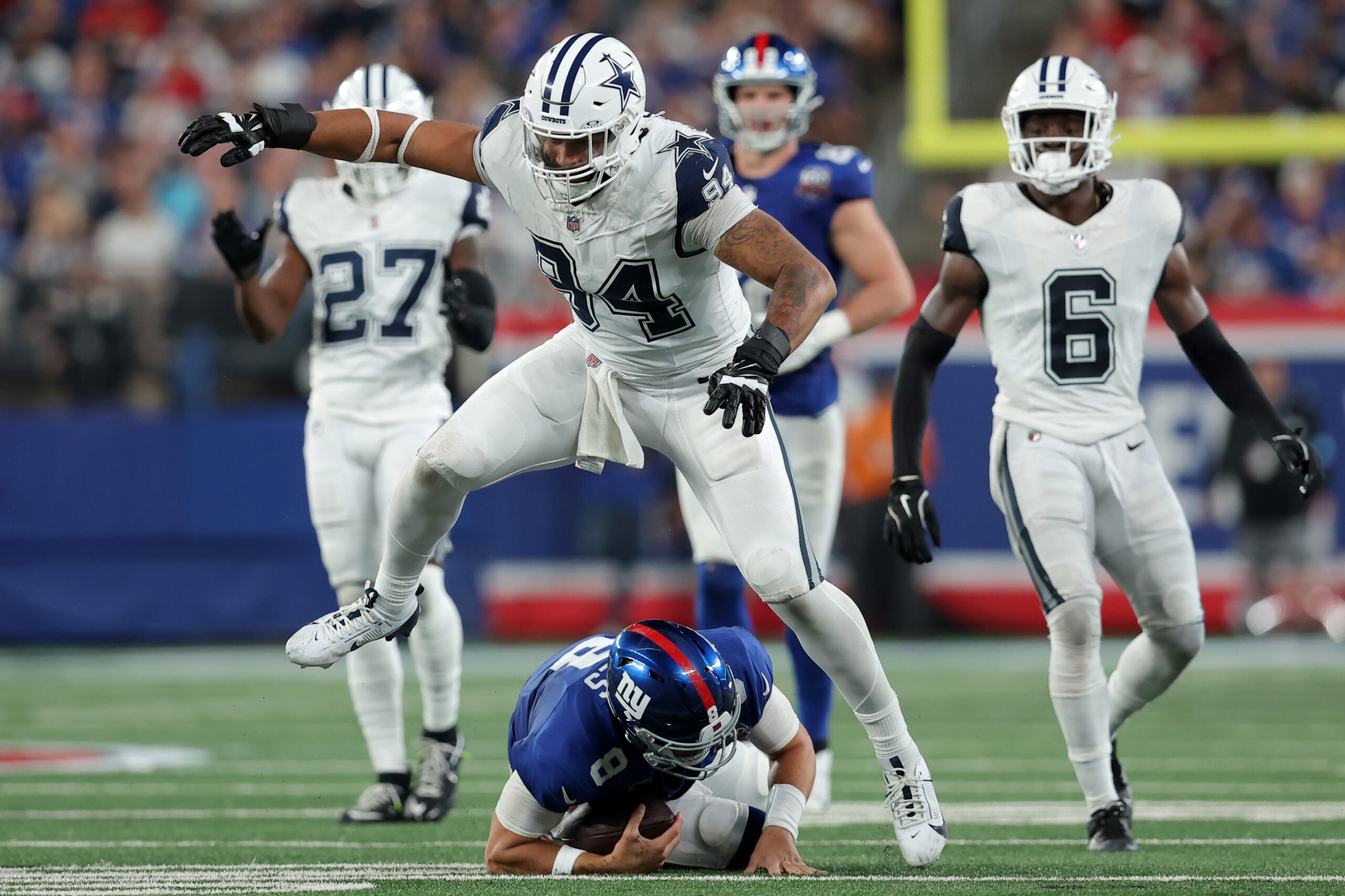
Months after former Marshawn Kneeland—the former Dallas Cowboys defensive end—died by suicide, new information is coming to light surrounding his tragic death at 24 years old.
Through the Concussion & CTE Foundation, Kneeland’s family is releasing the results found by researchers at the Boston University CTE Center. Researchers diagnosed Kneeland with stage 1 (of 4) chronic traumatic encephalopathy (CTE).
What the doctors are saying
Per the Concussion & CTE’s statement, Kneeland’s diagnosis fits the statistics of young athletes who have died.
“Unfortunately, I was not surprised to find CTE in the brain of Mr. Kneeland, because we have found this progressive brain disease in nearly half of the athletes we’ve studied who have died before the age of 30,” said Dr. Ann McKee, director of the Boston University CTE Center and chief of neuropathology for the VA Boston Healthcare System.
The statement adds researchers are getting closer to diagnosing CTE during life. The foundation thanks brain donor families for getting it closer to such goal.
“Mr. Kneeland played in the modern era of concussion protocols and better helmets, and yet he still developed CTE,” said Dr. Chris Nowinski, Concussion & CTE Foundation CEO. “We have no reason to believe the current generation is at a lower risk of CTE than previous generations. Concussion protocols do not prevent CTE, because CTE is caused by repeated head impacts, not just concussions. If we want to reduce CTE risk, we must implement CTE prevention protocols and aggressively reduce the number and strength of head impacts at every level of the game.”
A highly important note from the statement reads: “Suicide is complex and multifactorial. A post-mortem CTE diagnosis should not be considered the cause of a suicide and is not known to be a risk factor for suicide.”
Kneeland’s girlfriend shares passionate statement
As part of the full statement, Kneeland’s girlfriend Catalina Mancera sent an important message about the diagnosis and why they’re releasing the information.
“While this diagnosis does not change the tragedy of his passing, it provides important context about some of the struggles he may have been facing. We share this information to help people understand what NFL and other high contact sport athletes might be struggling with. Raising awareness is important to us. We continue to remember Marshawn with compassion for the person he was, rather than defining him by the final moments of his life. One Love.”
The Concussion & CTE Foundation is a non-profit organization founded in 2007 by Chris Nowinski, PhD and Robert Cantu, MD.
“Our vision is a world without CTE, and concussion safety without compromise,” reads the foundation’s website.
Kneeland was a second-round pick for the Cowboys in 2024. He played 18 games in two years in the NFL before his tragic death in November of last year.
