
Packers’ defense under Jeff Hafley sets complicated baseline for Jonathan Gannon’s success in 2026
The new defensive coordinator comes in to compete against the perception of a theoretical success that was fully applicable in reality.


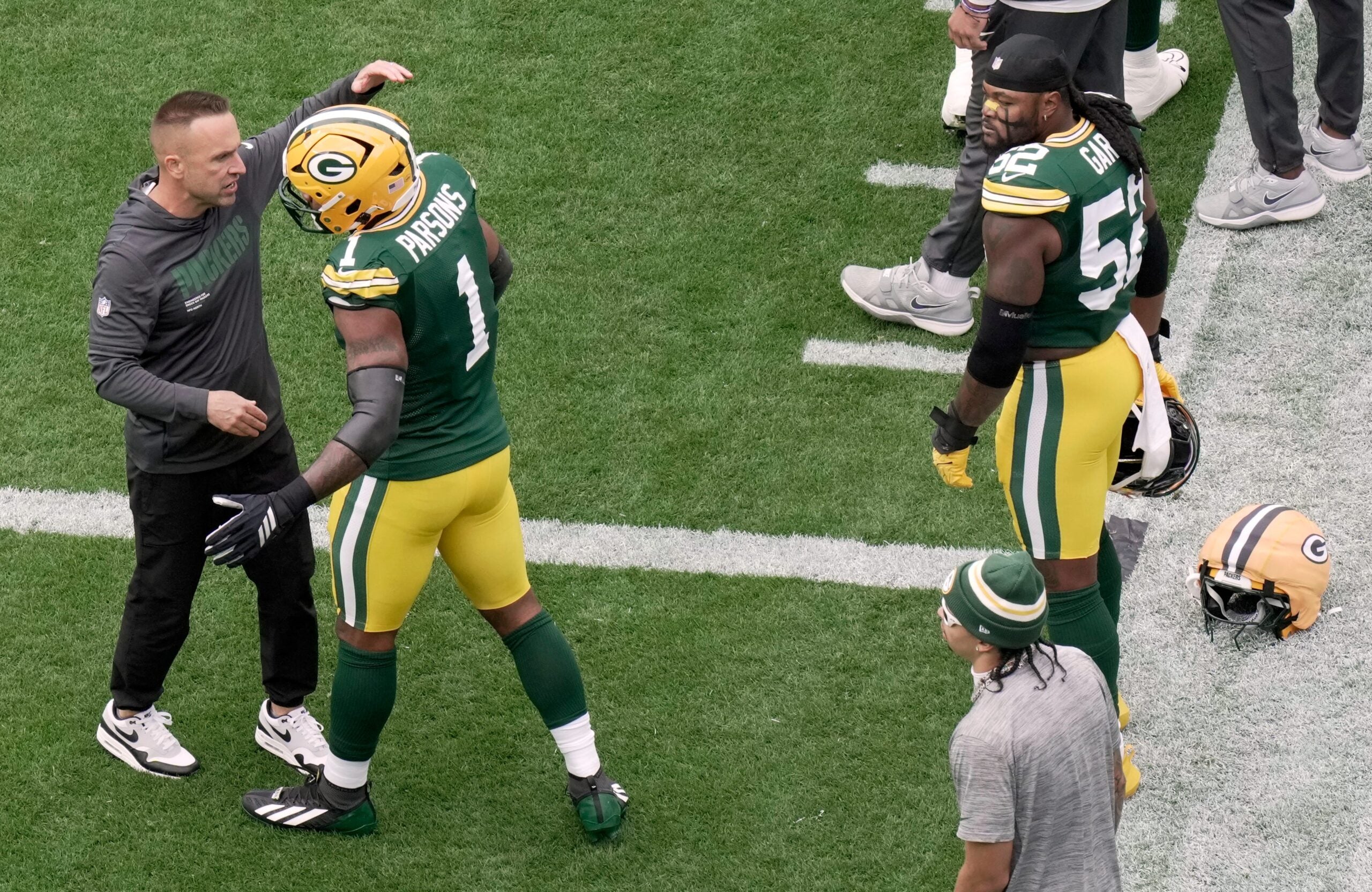
The Green Bay Packers hired Jonathan Gannon to replace Jeff Hafley as defensive coordinator, and the expectations surrounding the new Packers DC require a more nuanced evaluation than most fans realize. Hafley left Green Bay to become the Miami Dolphins head coach after two seasons running the Packers’ defense, and his tenure created a perception that may not fully align with what happened on the field.
Gannon, the former Philadelphia Eagles defensive coordinator and Arizona Cardinals head coach, steps into a role where the standard he’s measured against could be misleading. So, let’s discuss what that standard actually looks like.
Hafley’s 2024 was driven by unsustainable turnovers
In 2024, the Packers ranked fourth in EPA per play and seventh in DVOA on defense. Those numbers earned Hafley universal praise, and deservedly so. But there was a significant caveat buried underneath those rankings. Green Bay was 21st in success rate, meaning the defense struggled to some extent on a down-to-down basis.
The difference between those metrics tells a clear story. The Packers relied heavily on big plays, particularly turnovers, to produce elite efficiency numbers. Green Bay had 17 interceptions and 14 fumbles for 31 total takeaways, which ranked fourth in the NFL. That volume of turnovers inflated the EPA per play numbers while the success rate revealed a defense that wasn’t consistently winning individual snaps. That combination was not sustainable, and 2025 proved it.
The 2025 regression revealed a different baseline
Last season, the Packers fell to 22nd in EPA per play and 19th in DVOA. The success rate ticked up slightly to 19th, but the overall defensive performance declined. The reason was obvious: Green Bay had only seven interceptions and seven fumbles, ranking 27th in takeaways.
Beyond the turnover drop, there was a schematic issue. In 2024, Hafley was creative in adapting his scheme to a roster that lacked talent and dealt with injuries throughout the year. He deployed simulated pressures and disguised coverages to maximize what limited pieces he had available. That creativity allowed the Packers to punch above their weight.
After the Packers acquired Micah Parsons, the expectation was that Hafley would build an even more dynamic defense around such a high-level player. Instead, Hafley appeared more comfortable running his base scheme because he had Parsons as a talent crutch. The Packers were less creative in their defensive play-calling, and the combination of fewer turnovers and reduced schematic variety caused the defense to regress even with a player of Parsons’ caliber on the field.
The complicated measuring stick for Gannon
This is where the evaluation gets tricky. Hafley was an obvious upgrade over the final years of Dom Capers, then what the defense produced with Mike Pettine and Joe Barry. After so many years of poor defensive coordinator work in Green Bay, it was easy for fans to be excited about Hafley. And that’s because his 2024 numbers looked elite on the surface.
But 2025 painted a different picture. What Hafley showed in his final season was not that good, and the context matters when setting expectations for Gannon.
It’s reasonable to project the Packers’ defense to improve in 2026 compared to last year, especially if Parsons returns to the field relatively early in the season. Gannon brings a schematic background rooted in creativity and versatility from his time with the Eagles and Cardinals.
The risk is to compare Gannon against the theoretical best version of Hafley rather than the actual 2025 product. If the standard is Hafley’s turnover-fueled 2024, Gannon could deliver a genuinely improved defense and still face skepticism. That’s the tough challenge for both Gannon and the organization.
Gannon was a creative play-caller and scheme designer in Philadelphia, and even his time in Arizona showcased his ability to build interchangeable defensive structures, despite him not calling plays. The Packers want that creativity and that ability to deploy players in varied roles. Gannon can offer that, and the 2025 baseline suggests the bar to clear is lower than most people think.
