
J.J. McCarthy’s struggles with the Minnesota Vikings is a cautionary tale to young quarterbacks everywhere
There was a lot of excitement when it came to J.J. McCarthy as the starting quarterback in Minnesota, but it hasn’t worked out.

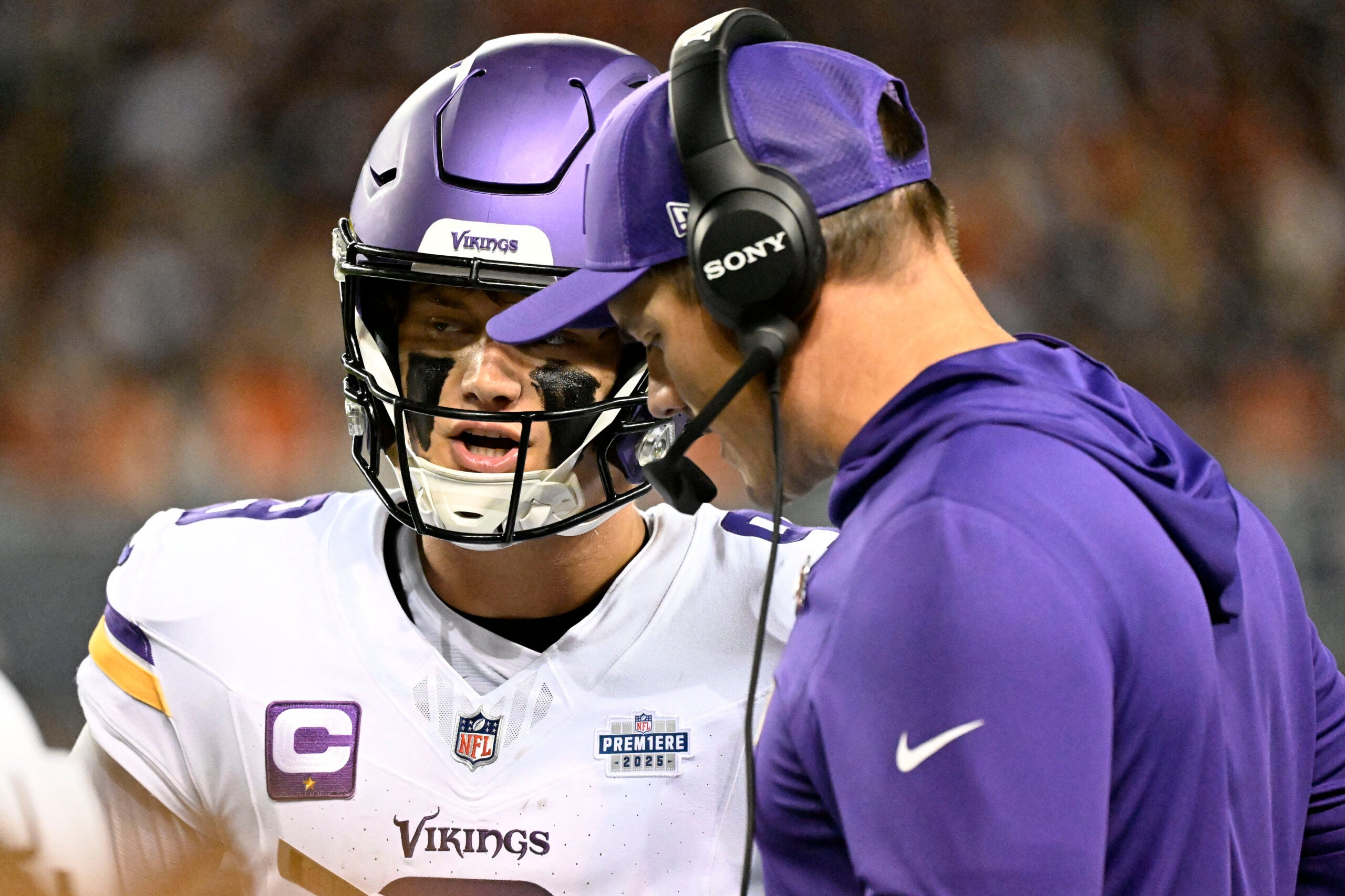
The Minnesota Vikings named Kyler Murray their starting quarterback on Tuesday morning, and it wasn’t much of a surprise. J.J. McCarthy’s time as the Vikings’ potential franchise quarterback has been ticking down since Minnesota added Murray during the offseason.
The decision came down to one critical factor: processing. McCarthy, entering Year 3, has not shown he can process at an NFL level with any consistency. Murray, with years of NFL experience, gave the Vikings a better chance to win football games right now. That reality made the decision significantly easier for Minnesota.
Does this mean McCarthy’s time in Minnesota is completely over? Only time will give us that answer, and a trade could happen down the line. But the bigger conversation here extends well beyond the Vikings.
The processing problem was always there
One of the tough parts about bringing in a veteran starter is the built-in advantage that player carries. Coaching staffs and scouting departments have years of knowledge about a player like Murray. Is that necessarily fair to McCarthy when it comes to a competition? No, but fair doesn’t matter. It wasn’t necessarily fair to Murray that McCarthy had a two-year advantage in the offense, but you can only deal with what’s in front of you. What really matters is wins and losses.
McCarthy had 713 total passing attempts at the University of Michigan across two years as a starter, with some sparing playing time as the main backup during his true freshman season. When I broke him down as a college prospect, the evaluation was littered with questions. The biggest one was his inability to process information with any kind of consistency, and that has manifested at the NFL level. People were also criticizing McCarthy for running a Jim Harbaugh offense where Michigan didn’t trust him with much responsibility. That was the crux of a lot of draft evaluations.
The idea made sense on paper: send him to a Kevin O’Connell system, develop him over the course of a few years, and you could get a starting-caliber quarterback. But McCarthy hasn’t been able to piece it together. He kept getting hurt, struggled when he did play, leading to the idea that there’s just a chance that he’s not very good.
That’s not something people want to admit about a 23-year-old, but the fit with the Vikings right now isn’t there. Minnesota has a win-now team and needs a win-now quarterback. Unfortunately, McCarthy is currently not that guy. Is that all on him? It’s hard to say who is more to blame between the player and how he was developed, but both sides are certainly culpable in some way.
Even though McCarthy had only 10 starts across two seasons, there is a fair argument to be made about moving on. It’s especially evident when looking at his poor numbers last season.
O’Connell’s own words tell the story
Kevin O’Connell’s famous quote about organizations failing young quarterbacks has been a constant talking point. The reality is both sides share culpability here. But the second part of that quote, from September 2024 on The Rich Eisen Show after McCarthy’s meniscus injury, is incredibly important.
“I think it’s important to understand that every single one of these guys is on a journey, a very difficult journey, that they need the support, they need the teammates around them. They need the systems in place to ultimately try to maximize who they are and what their potential is, because you’re still drafting players rich off of potential. And then everything that happens from that moment to when that potential becomes is really on the organization, if you’ve got the right guy that you’re bringing in,” said O’Connell.
That phrase, “if you’ve got the right guy,” tells you everything. O’Connell is acknowledging that you can go through all the right processes and it doesn’t matter if the player isn’t the right fit. Maybe that’s the case for McCarthy.
O’Connell continued, referencing players like Sam Darnold:
“I do believe there’s some times where things just don’t work out, and then getting a chance to kind of wipe the slate clean and get a restart, while still using your previous experiences to kind of shape you know how you’re going to work, why you’re going to work, why things are important to you, will only make guys better in the end, and I’ve seen some examples of that in our league as well over the last few years.”
You can reasonably conclude O’Connell was talking about players like Darnold, Baker Mayfield, and Geno Smith, guys who didn’t succeed at their first or second stop but eventually found a way to be successful, especially Darnold being the starting quarterback on the roster at the time. Maybe McCarthy needs that same kind of fresh start. It feels absurd given that he landed with a “quarterback whisperer” and a loaded group of weapons, but sometimes it’s an oil-and-water situation you don’t recognize until the player is in the building.
This element is especially frustrating here, as McCarthy walked into as good of a situation as you’d ever have for a first-time starting quarterback. He was surrounded with a top-five defense, Justin Jefferson, Jordan Addison, and a top-tier play caller in O’Connell.
Young quarterbacks keep making the same mistake
McCarthy isn’t alone in struggling after limited college experience. Anthony Richardson and Trey Lance both had fewer passing attempts in college than McCarthy. Lance won an FCS national championship, but he certainly could have used another full year of college football. Lance has fewer than 1,000 passing attempts since high school. So does Richardson. How is that doing either of them any favors for development? It’s not.
With the new 5-for-5 rule in college football along with quarterbacks making millions in NIL and revenue sharing, McCarthy could have stayed and entered this past April’s draft with roughly 1,400 to 1,500 passing attempts. That would have given evaluators a much more complete picture of who he is. Instead, he came out as a 21-year-old junior after winning a national championship, and now he, Richardson, and Lance are all running out of options for development, sitting as second- and third-string players without the ability to get on the field.
As I wrote about for A to Z Sports in November of 2024, there is no minor league system that allows these players to get reps. The practice squad isn’t 40 players deep, allowing games every single week during the regular season. If you don’t like the way your program is treating you, go to a different one. DJ Lagway just went from Florida to Baylor, and all reports are that he is performing well in camp. The options are available, and it should be a cautionary tale for quarterbacks moving forward.
The reality is simple
If McCarthy had stayed in college, we would have a better understanding of what he could be. He has now missed 25 of his first 35 games and has shown he can’t process at an NFL level. We may never know that answer in Minnesota, and that’s unfortunate for a multitude of reasons.
McCarthy’s story should serve as a lesson for young quarterbacks across the country. Stay in school. Get your reps and more development, then come to the NFL. It will be fascinating to see if the league starts viewing prospects through that lens.

