
NFL drops the hammer on 4 Giants players, and the decision on Cam Skattebo is particularly troubling
The Giants running back was not penalized on the play against the Tennessee Titans, but he and three of his teammates were punished.


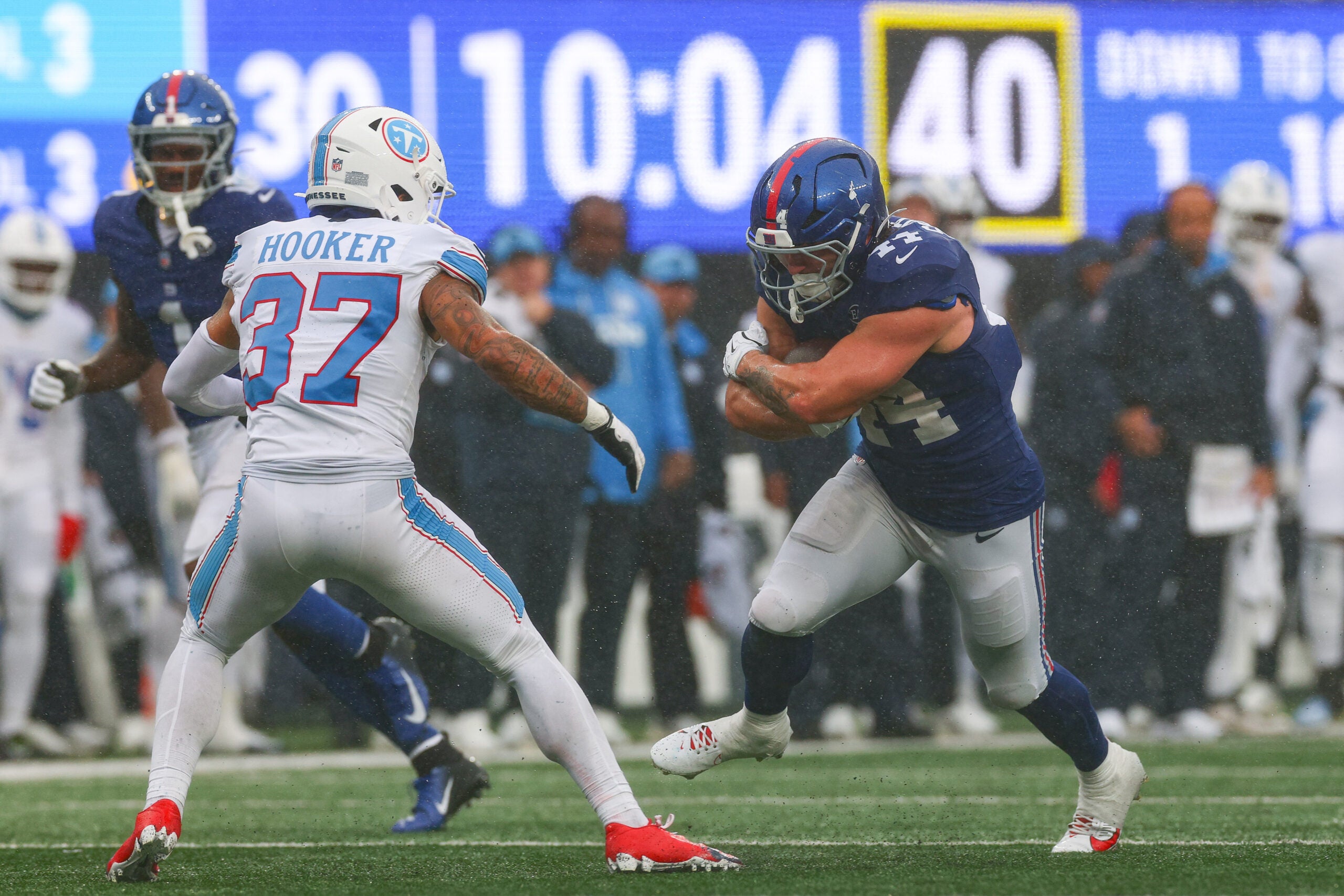
The NFL fined New York Giants running back Cam Skattebo for a first quarter play in the Giants’ game against the Tennessee Titans. That’s a questionable decision by the league, even though that’s where things are trending. Skattebo was fined $7,073 for unnecessary roughness (use of the helmet), even though the play looked like a normal part of football.
Skattebo wasn’t the only Giants player to hear from the league office. Four New York players were fined for plays in the game against Tennessee, and the running back’s fine was the smallest of the group.
A football play turned into a fine
The play itself didn’t stand out at the time. Skattebo took the handoff, lowered his helmet before the contact, and led with it into the defender. The NFL considers that an illegal and fineable action. However, officials didn’t throw a flag on the field.
Running backs regularly lower their pads to protect themselves and gain extra yards. Because the play didn’t draw a penalty, the fine came entirely from the league’s review after the game.
Skattebo’s style is built on physicality, so the line between a legal run and a fineable one matters for him more than most. If the league keeps reviewing this type of contact, it could easily become a recurring issue for the Giants running back.
The other fines were heavier than Skattebo’s, and they came from both sides of the ball. Here’s the full breakdown:
New York Giants fines
Week 3 vs. Tennessee Titans
- TE Isaiah Likely: $17,911 – Unnecessary roughness (blindside block) in the second quarter.
- DT Shelby Harris: $11,941 – Unnecessary roughness (face mask) in the fourth quarter.
- EDGE Abdul Carter: $11,941 – Unsportsmanlike conduct (taunting) in the fourth quarter,
- RB Cam Skattebo: $7,073 – Unnecessary roughness (use of the helmet on offense) in the first quarter.
How the NFL decides on fines
The NFL uses its fine schedule to outline what the league and the NFLPA expect from players. According to the league, the rules are designed to protect players from unnecessary risk and emphasize sportsmanship.
Infractions can reach the league through several channels. The NFL may respond to an official’s call during a game, or to a specific play a team submits for review. Additionally, the league’s officiating department reviews every play from every game and refers potential violations to the Football Operations Compliance Team.
That last step explains Skattebo’s situation. The officials on the field didn’t penalize him, but the review process flagged the play anyway. Therefore, a player can be fined for something that never showed up on the stat sheet as a penalty.
Where the money goes
The fines don’t stay with the league. The NFL donates the money to the Professional Athletes Foundation to support legends in need and the NFL Foundation. Those funds support the health and safety of athletes at all levels, including youth football and the communities that support the game. Since 2011, about $4 million per year has gone to those causes, according to the league.
