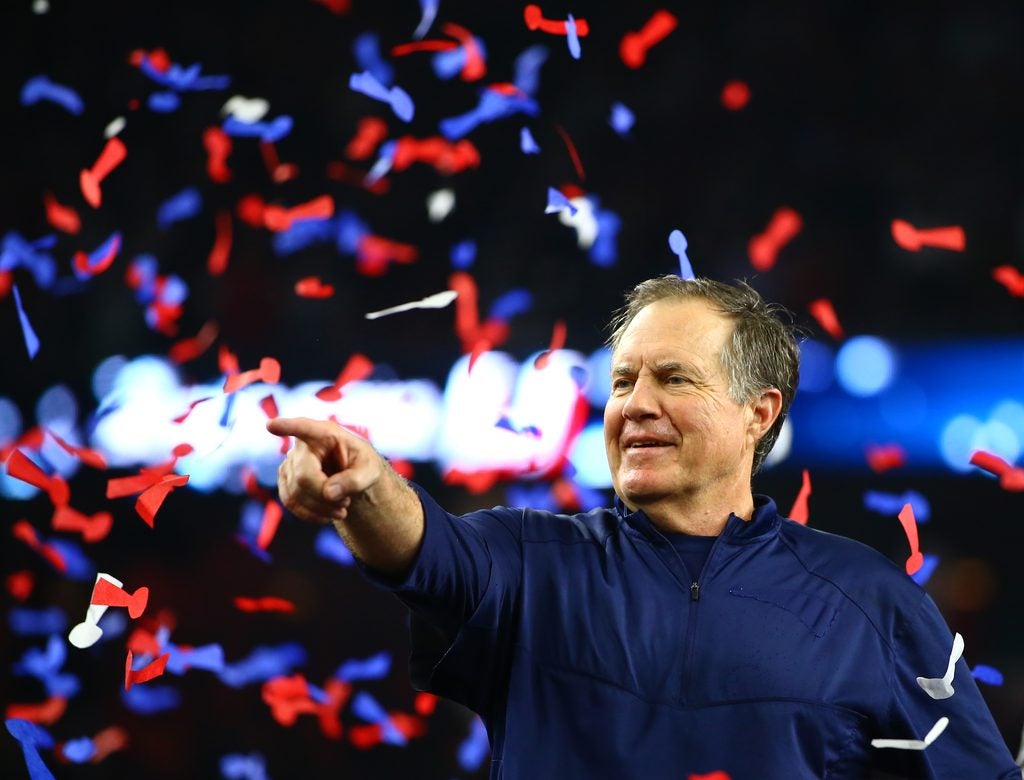
Greatest Choke Jobs in NFL History: Remembering the biggest moments when teams became laughingstocks instead of legends
Winning is everything, but sometimes players and teams are remembered more for blowing an opportunity to win big before anything else. Therefore, we assembled a list of some of the biggest choke jobs in NFL history.


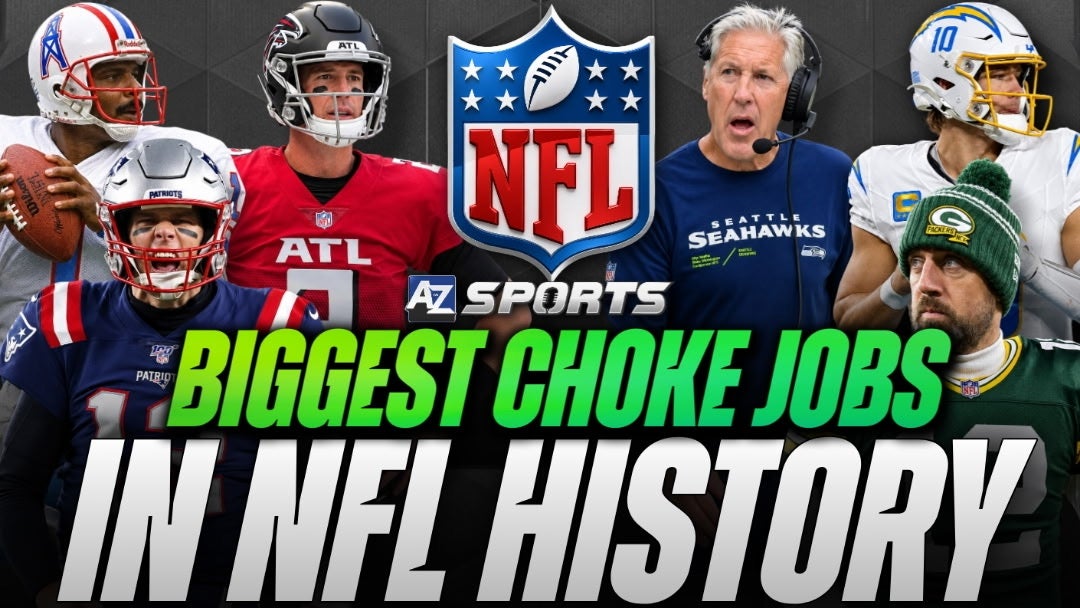
Losing is never fun, but it can quickly become exponentially worse based on how (or why) a team suffers a specfic defeat.
There have been plenty of mind-numbing, heartbreaking, befuddling losses over the course of the NFL’s history. So, establishing a list of the biggest choke jobs seemed like a good, and fun, idea that will stir up some fun conversation and bad memories at the same time.
Depending on which side you’re on, of course. Below is the list of some of the biggest choke jobs in NFL history.
15. Cowboys author historic no-show after 12-win season
Some playoff collapses come down to one play. A dropped pass, a missed kick, or a turnover with the game on the line.
The Dallas Cowboys’ loss to the Green Bay Packers in the 2023 NFC Wild Card game wasn’t that. It was a team that exceeded expectations, won 12 games for the third consecutive season, and was finally supposed to make a statement in the playoffs.
Instead, Dallas fell behind by four touchdowns at home and never recovered.
Cowboys’ playoff loss was historic for the wrong reasons
Dallas hosted Green Bay as the No. 7 seed, and at that point no No. 7 seed in NFL history had won a playoff game. The Packers were on the rise, but they were young. Quarterback Jordan Love was making his first career playoff start.
On the other sideline stood quarterback Dak Prescott, wide receiver CeeDee Lamb, and coach Mike McCarthy. Prescott played at an MVP level and finished as the runner-up to Lamar Jackson in the voting. The Cowboys were supposed to win this game, and win it comfortably.
Instead, they watched Green Bay amass a 27-0 lead in the first half, the product of problems all over the Cowboys’ roster.
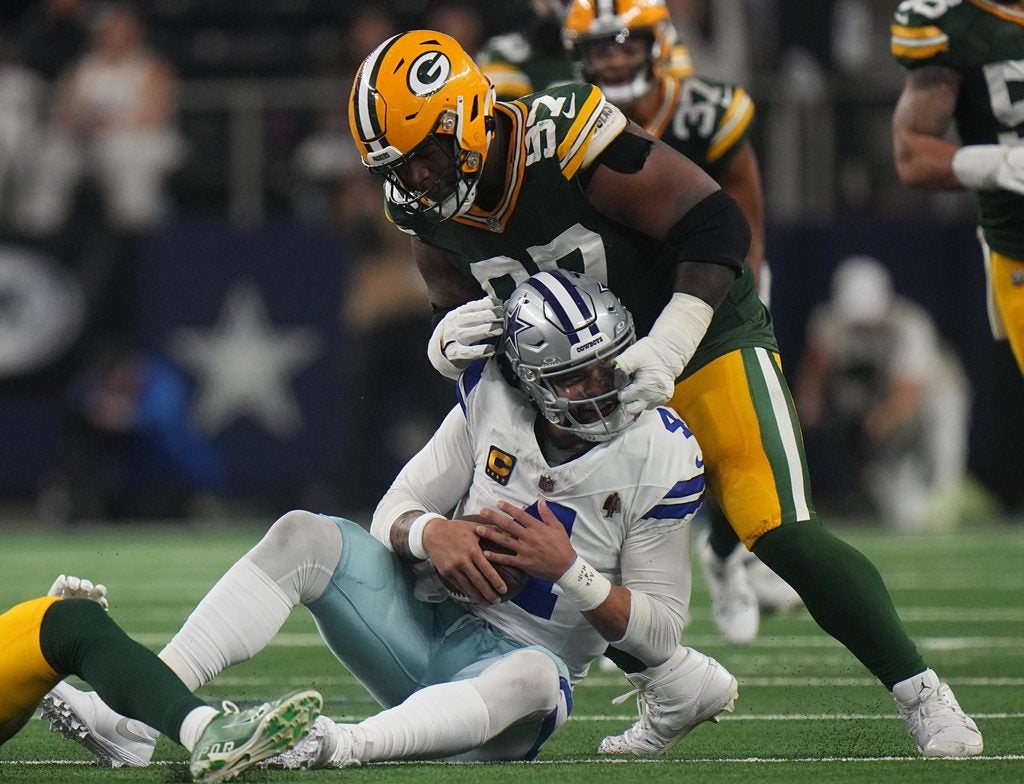
Prescott made things worse. He threw two interceptions before halftime, including a 64-yard pick-six by Darnell Savage. Mistakes like that are hard to explain from a quarterback who spent the entire regular season in the MVP conversation.
The defense was no better. It couldn’t stop anyone. Love played a nearly perfect game, throwing for 272 yards and three touchdown passes with a 157.2 passer rating. Running back Aaron Jones gashed Dallas for 118 rushing yards and totaled three touchdowns.
The final score was 48-32. That margin barely captures the game because the Cowboys simply did not show up. The late points came long after the outcome was decided. The Cowboys are still looking for their first winning season since 2023. – Mauricio Rodriguez
14. Buccaneers blow historic lead vs. Colts that ruins their Super Bowl defense
The Buccaneers were 2-1 and coming off both a huge win over the Falcons and the subsequent bye week, so things were off to a good start during what was their 2003 Super Bowl defense.
Things then got off to an excellent start on Monday Night Football against the Indianapolis Colts. The Buccaneers built a 21-0 halftime lead and later went up 35-14 with just a little more than five minutes to play after Ronde Barber picked off Peyton Manning and it took it to the house.
Ronde Barber’s interception awoke a sleeping giant
The good times quickly faded, however. Brad Pyatt immediately provided the spark the Colts needed by taking the ensuing kickoff 90 yards to the Buccaneers 12-yard line. Manning and the Colts offense punched it in three plays later to make it a 35-21 game with under four minutes to go.
The kick return was already bad enough, but the Buccaneers special teams then allowed the Colts to recover the onside kick, giving them back-to-back possessions late in the contest.
All of a sudden, it was game on with 3:37 to go.
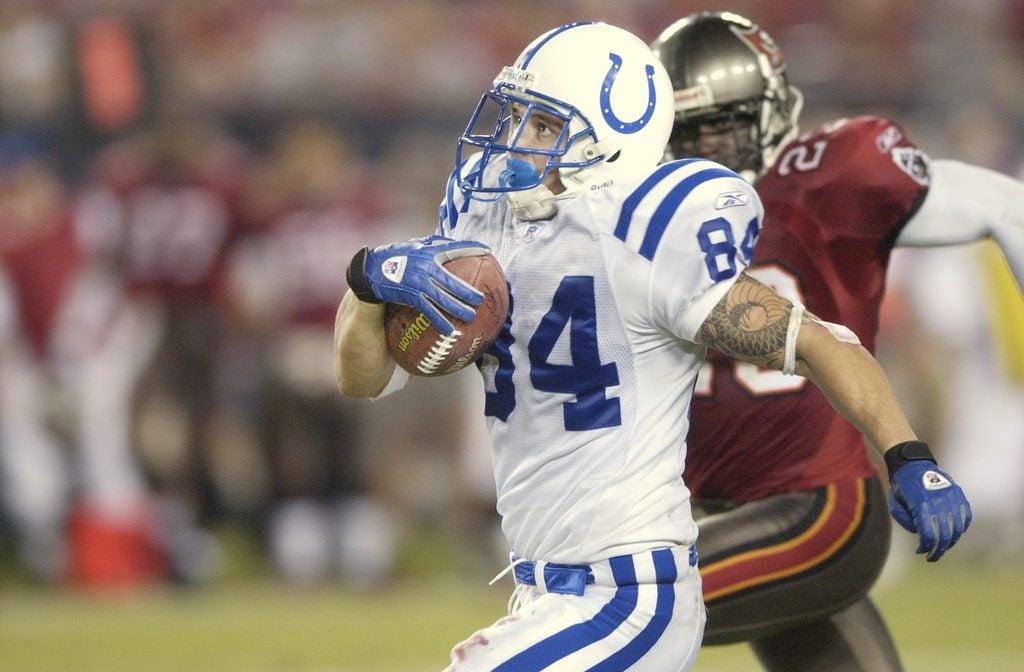
The ensuing defensive collapse is one the Buccaneers will remember forever
Manning found Marvin Harrison for a 28-yard touchdown on a 4th down throw a few plays later to make it a 35-28 game. Kenyatta Walker’s unnecessary roughness killed the Bucs’ next drive. Warren Sapp was called for roughing the passer on Indianapolis’ subsequent possession and then Manning found Harrison for a 58-yarder to get the Colts to the Buccaneers’ six-yard line.
Two plays later, the game was tied at 35 apiece. That’s right – the storied Buccaneers defense allowed 21 straight points with a little more than five minutes in the game and 28 points overall in the fourth quarter, alone.
It didn’t stop there, either. The Buccaneers couldn’t do anything with their overtime possession, setting the Colts up with a chance to win the game.
Manning drove the Colts into scoring position, but Mike Vanderjagt missed his 40-yard game-winning attempt. It looked like the Bucs were gonna get one last shot to survive the comeback, but Simeon Rice was flagged for leaping, giving Vanderjagt another chance to win the game.
He didn’t miss the second time around. It was about a bad a loss that any team could suffer and it sent the Buccaneers to 2-2 on the year instead of 3-1. Jon Gruden and Co. then went 2-4 over the next seven games and never dug themselves out of the hole, eventually missing the playoffs.
It’s fair to say this loss to the Colts was a big enough gut punch that ultimately derailed the Super Bowl defense, even if it was just a Week 5 matchup. – Evan Winter
13. Chiefs blow a 21–3 lead to Bengals as Patrick Mahomes unravels in second half
The Kansas City Chiefs were on track for their third consecutive Super Bowl appearance during the 2021 NFL playoffs. They advanced to the AFC Championship Game against the Cincinnati Bengals, and for a full half, everything went according to plan.
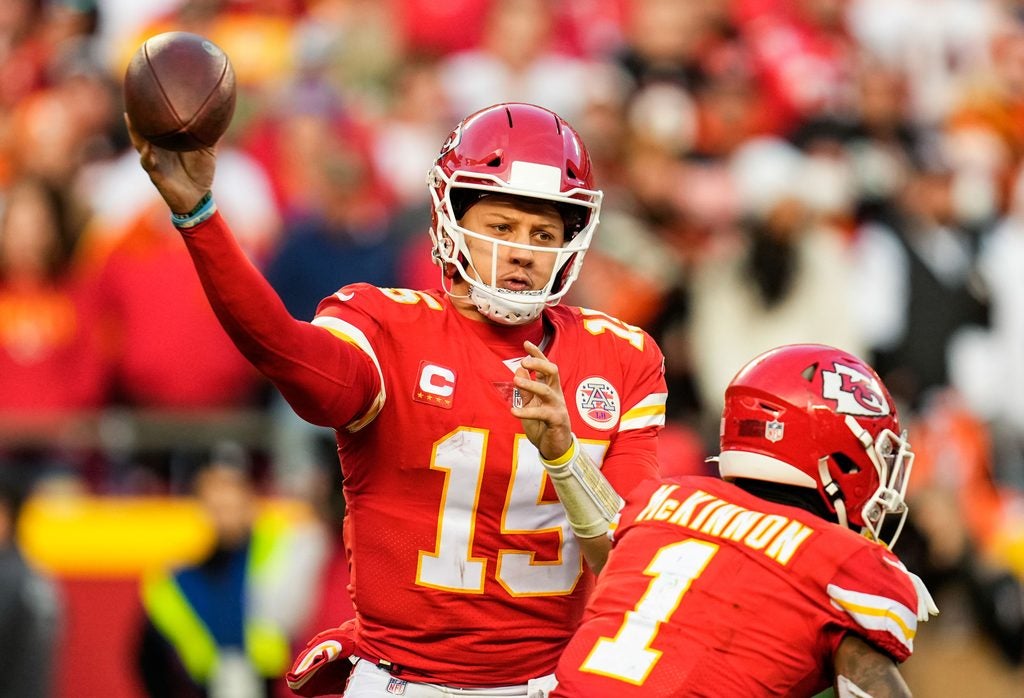
Kansas City jumped out to a 21-3 lead in the first half. Chiefs QB Patrick Mahomes was surgical, completing 18 of 21 passes for 220 yards. He threw touchdown passes to WR Tyreek Hill, TE Travis Kelce, and WR Mecole Hardman. Arrowhead had every reason to start planning another trip to the Super Bowl.
Chiefs’ AFC Championship Game loss to Bengals was a tale of two halves
Then the second half told a completely different story.
The trouble started when the Chiefs couldn’t punch it in from the 1-yard line. Momentum is tricky in the NFL, and that missed opportunity seemed to flip a switch for both sides. From there, Mahomes looked like a different quarterback. He threw an interception to Bengals DT B.J. Hill, which handed Cincinnati another opening. The most damaging mistake came when Mahomes fired a pass into double coverage; the ball popped off of Tyreek Hill’s hands, and Bengals S Vonn Bell came down with the interception.
Mahomes’ second-half numbers show just how far things fell apart. After halftime and into overtime, he went just 8-of-18 for 55 yards with two interceptions. That’s a stunning drop-off from the quarterback who had picked apart the Bengals’ defense in the first two quarters.
The Chiefs’ second-half production amounted to four punts, two interceptions, and a game-tying field goal. That was it. The offense had stalled, and Cincinnati had clearly figured something out. The result was a trip to the Super Bowl for the Bengals, while the Chiefs went home with a sour taste in their mouths.
You can’t just blame Mahomes for the loss, though
Mahomes’ second-half performance was a big problem, but it would be unfair to put this one entirely on the quarterback.
Kansas City’s defense also bears some blame for letting the Bengals claw back after building a big first-half lead. An 18-point lead in a conference championship game should be enough cushion for most teams. The Chiefs’ defense couldn’t get the stops needed to buy the offense time to find its footing again. When the offense sputtered, the defense didn’t step up to close the door. – Charles Goldman
12. Tony Romo –the holder– ruins it for the Cowboys
For the entire Tony Romo era, people argued about whether the Dallas Cowboys quarterback could get the job done. A lot of them accused him of being a player who choked in big moments, and plenty of those accusations were flat-out wrong.
But one of the most tragic chapters of his career came when he did choke. It just wasn’t at quarterbacking, either. It was at handling a snap.
The Cowboys trailed the Seattle Seahawks 21-20 with just over a minute left in the wild card round. All Dallas needed to take the lead was a 19-yard field goal. Oddly enough, Romo was both the starting quarterback and the holder. It was his first season as the Cowboys’ starter, and the playoff spotlight in Seattle was about as bright as it gets.
Romo mishandled the snap. He scooped up the ball and took off, trying to run for either the first down or the touchdown. Seahawks safety Jordan Babineaux tackled him at the 2-yard line, short of the goal line. Seattle took over and ran out the clock. Season over.
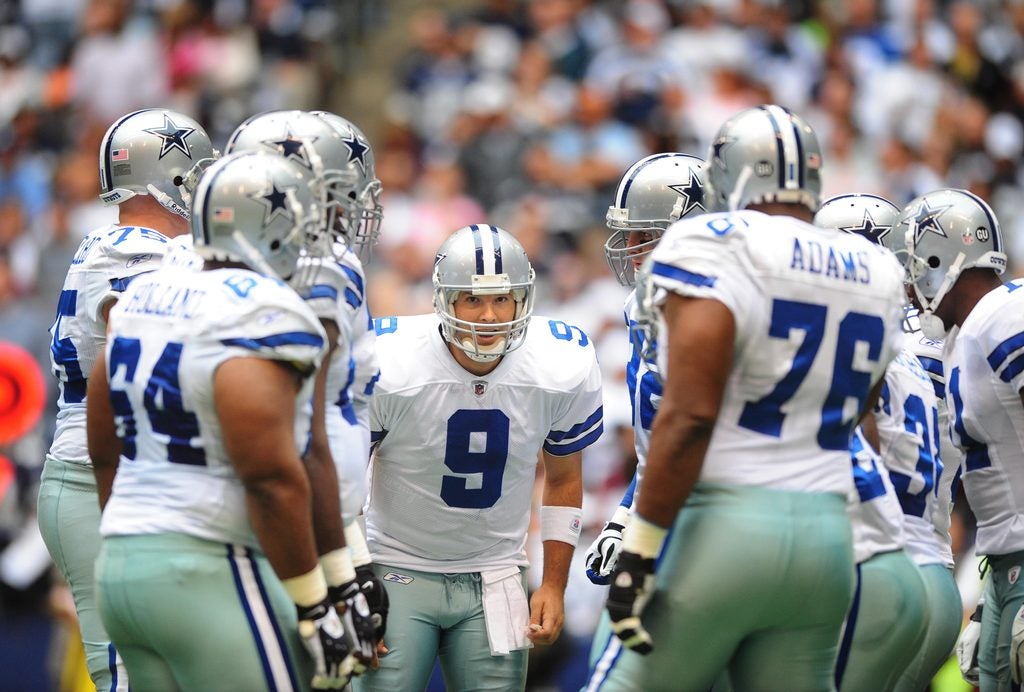
Any Cowboys fan can see it if they close their eyes: Romo sitting on the field, holding his facemask, knowing he would never escape that moment. He never did.
To be fair, a made kick wouldn’t have automatically ended the game. Seattle would have had about a minute left for one final possession. And Cowboys Nation knows exactly how much can happen in a minute, because Dallas has learned that the hard way more than once over the years. – Mauricio Rodriguez
11. One of NFL’s biggest choke jobs came from Vikings player nobody expected to fail with Super Bowl trip on the line
In 1998, the Minnesota Vikings had one of the best teams in football, if not the very best. They finished 15-1 in the regular season, won the NFC Central, and earned the No. 1 seed in the NFC.
After a 41-21 win over the Arizona Cardinals in the divisional round, the Vikings were close to beating the Atlanta Falcons in the NFC Championship Game. Then kicker Gary Anderson, coming off a historic season, missed a 38-yard field goal. Atlanta won 30-27 in overtime and went on to lose to the Denver Broncos in the Super Bowl.
Minnesota is still chasing its first Super Bowl title, and that roster was one of its best chances.
A perfect kicker misses the big one
The most brutal part of the story is who missed the kick. Anderson was a veteran kicker, and his 1998 season set a record. He converted 35 of 35 field goals and 59 of 59 extra points in the regular season, a perfect year.
He was a first-team All-Pro and a Pro Bowler, and he led the NFL in scoring. Anderson also made both the 1980s and the 1990s All-Decade Teams, so he was an elite kicker by any measure.
In the playoffs that season, he went 4-of-5 on field goals and 8-of-8 on extra points. Anderson was essentially flawless across the whole year, except for one 38-yarder that cost the Vikings a trip to the Super Bowl.
How the NFC Championship Game slipped away
For much of the afternoon, Minnesota appeared to be in control. The Vikings led 20-7 in the second quarter and extended the advantage to 27-17 with 13:41 remaining in regulation.
The offense had the firepower to close it out. Randall Cunningham was the quarterback, and he had rookie Randy Moss, Cris Carter, and running back Robert Smith around him. It was a highly explosive and efficient unit.
Atlanta chipped away in the fourth quarter, though. With about two minutes left, Minnesota moved the ball into Falcons territory, and Anderson lined up for the 38-yard field goal. A make would have given the Vikings 30 points, and the Falcons finished regulation with 27. Anderson missed wide left.
Atlanta took advantage and tied the game with 49 seconds remaining. The Vikings even won the overtime coin toss, but they didn’t score. The Falcons then drove downfield, and kicker Morten Andersen hit a 38-yard field goal of his own to send Atlanta to the Super Bowl.
The season that made it hurt more
That loss stings even more because of how special the 1998 season had been for the Vikings. Cunningham replaced Brad Johnson as the starting quarterback earlier in the year, and he put together a career resurgence.
After playing a full decade with the Philadelphia Eagles, Cunningham initially signed with Minnesota in 1997. He became the full-time starter in 1998 and started 14 games. He posted a career-high 106.0 passer rating, led the NFL in that category, and earned first-team All-Pro and Pro Bowl honors.
That context makes the NFC Championship Game even more heartbreaking for Vikings fans. Minnesota had reached the Super Bowl four times before and lost all of them. The 1998 team was certainly the franchise’s best opportunity to win its first title since those trips.
With that much offensive talent, the Vikings looked built to finish the job. Instead, they lost their shot at the Super Bowl on a special teams play. Because Anderson was such an elite kicker, nobody would have expected the decisive mistake to come from him. – Wendell Ferreira
10. Texans’ Bill O’Brien turned a 24–0 lead into a 51–31 playoff defeat to the Chiefs
The Houston Texans had a 24-0 lead over the Kansas City Chiefs in the AFC Divisional Round and still lost by 20 points.
That kind of collapse earns a spot on any list of the top NFL choke jobs. The 51-31 defeat came during the 2019-20 NFL season and it also became a defining moment of the Chiefs’ dynasty under quarterback Patrick Mahomes. Kansas City climbed out of a 24-0 hole in the first half, and the game became known as one of the fastest and most spectacular momentum swings in NFL history.
Bill O’Brien’s questionable fourth down calls still loom large today
Houston didn’t stumble into its lead. Quarterback Deshaun Watson and the Texans were up 24-0 in the second quarter. For a stretch, the visitors looked like the better team, and Kansas City looked headed for another early playoff exit.
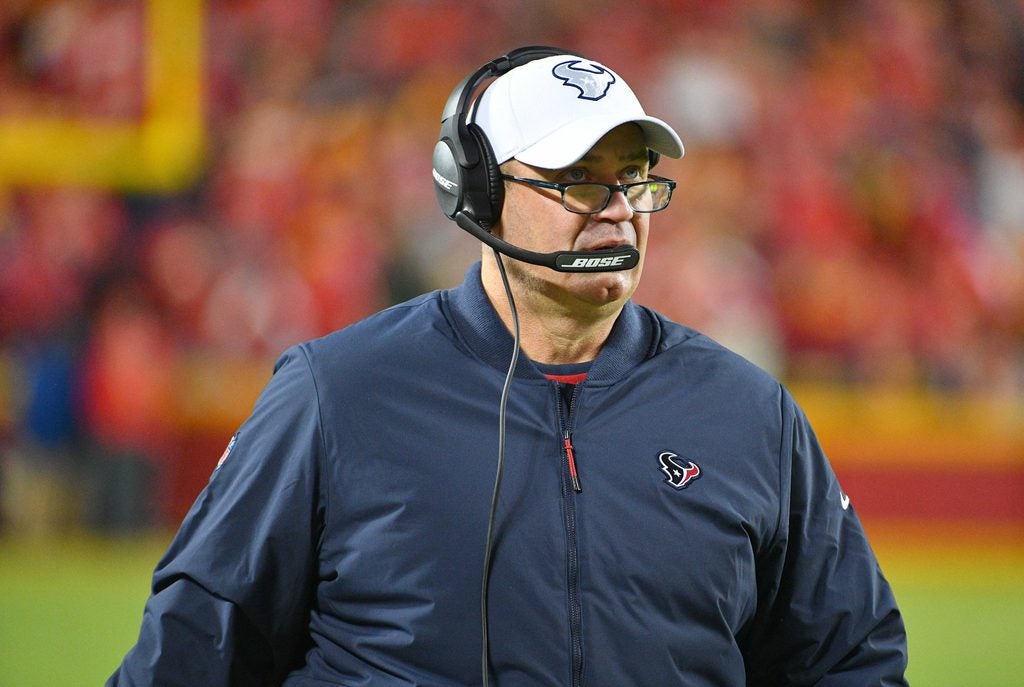
Even so, a few cracks were already showing. Then-Texans coach Bill O’Brien made a couple of questionable decisions that left points and momentum on the table. The first came on fourth-and-1 while Houston led 21-0. Instead of trying to put the game away, O’Brien sent out the field goal unit. The kick made it 24-0, but it also gave the Chiefs a reprieve when the Texans had a chance to keep their foot on the gas.
The second decision hurt even more. Houston dialed up a fake punt from its own territory, and former Chiefs safety Daniel Sorensen sniffed it out. Sorensen tackled Texans safety Justin Reid for a loss, which handed Kansas City the ball in prime field position. From there, the Chiefs seemed unstoppable.
Mahomes and Co. take the reins from there
Kansas City scored 41 unanswered points after falling behind 24-0. Mahomes simply wouldn’t be denied. Every time the Texans tried to settle things down, the Chiefs had another answer, and Houston never found its footing again.
The scoring came from several directions, with Damien Williams and Travis Kelce each scoring a hat trick. Tight end Blake Bell found the end zone once. Even Harrison Butker got involved with a late field goal.
By the time the dust settled, Kansas City had 51 points on the scoreboard. The Texans went from controlling the game to watching it slip away in minutes.
The speed of the Texans’ downfall is why the game still stands out years later: Plenty of teams have blown leads in the playoffs, but very few have watched one disappear the way Houston’s did.
The comeback mattered for more than the box score, as well. This was Kansas City’s first playoff victory on its way to Super Bowl LIV. It marked the beginning of a special run for the Chiefs and Mahomes, one that has since become the standard for the rest of the league. The win also showed the AFC what it would be up against for years to come. – Charles Goldman
9. Chiefs squander a 38–10 playoff lead to Andrew Luck’s Colts
Some playoff losses fade with time. Others stick with a fan base for good.
For the Kansas City Chiefs, a 45-44 wild card loss to Andrew Luck and the Indianapolis Colts falls into the second category. It’s one of the biggest choke jobs in NFL playoff history, as Kansas City built a 38-10 lead and appeared to have the game in hand.
Instead, Indianapolis stormed back for one of the most stunning postseason comebacks the league has ever seen.
Andy Reid’s immediate success turns into a playoff nightmare
When Chiefs head coach Andy Reid arrived in Kansas City, he took over a team coming off a 2-14 season. He completely turned the program around in short order. Reid’s first season with the Chiefs, 2013, ended with a trip to the playoffs as a wild card team.
It was their first postseason berth since 2010. Expectations were modest coming into the year, so even reaching the postseason felt like a win for Chiefs Kingdom. Regardless, a dominant first-half performance helped Kansas City build its 38-10 lead over the Colts.
The franchise was on track for its first playoff victory since the 1993 NFL season. Then everything unraveled.
Injuries and the Chiefs defense were the catalysts to the Colts’ comeback
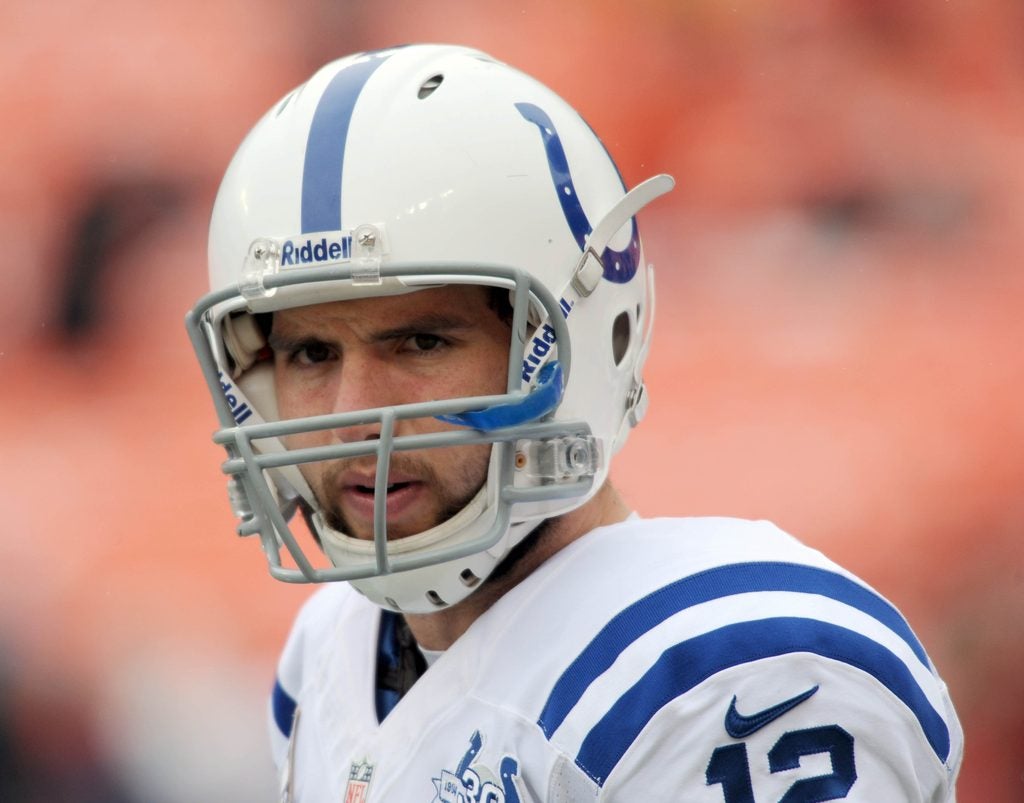
The biggest problem in this game was defensive coordinator Bob Sutton’s unit and its inability to stop Colts quarterback Andrew Luck. However, a long list of injuries also played a major role, particularly on offense.
The mounting losses slowed the Chiefs’ ability to keep scoring against the Indianapolis defense. The injury problems started immediately as RB Jamaal Charles suffered a concussion on the opening drive of the second half and missed the rest of the game. RB Knile Davis scored two touchdowns in relief of Charles before suffering a knee injury in the fourth quarter. WR Donnie Avery also suffered a concussion that forced him out of the game. CB Brandon Flowers, one of the Chiefs’ star defenders, suffered a concussion just as the Colts began mounting their comeback.
Luck delivered two signature plays in the second half. He scored a touchdown himself after recovering a teammate’s fumble. Later, he connected with wide receiver T.Y. Hilton on a 64-yard touchdown pass to complete the comeback. At the time, the 28-point rally was the second-largest postseason comeback in NFL history. – Charles Goldman
8. Seahawks QB Matt Hasselbeck guarantees a playoff win but loses the game for Seattle, instead
Very few choke jobs can be squarely placed on person’s shoulders, but this one is certainly one of those rare instances.
Hasselbeck and the Seahawks watched the Packers score straight points in the fourth quarter to go up, 27-20, with under three minutes left in the game.
The Seahawks offense responded in the exact manner needed and marched 67 yards down the field in seven plays that resulted in Shaun Alexander’s game-tying one-yard touchdown run.
Maybe it was the momentum obtained by the Seahawks on that drive, but for whatever reason, Hasselbeck thought it would be a good idea to say, “We want the ball and we’re going to score!” after Seattle won the overtime coin toss.
This was 2004, so overtime was still sudden death. If the Seahawks did in fact drive down the field and score –whether it’s a field goal or touchdown– it would’ve put the Packers on ice.
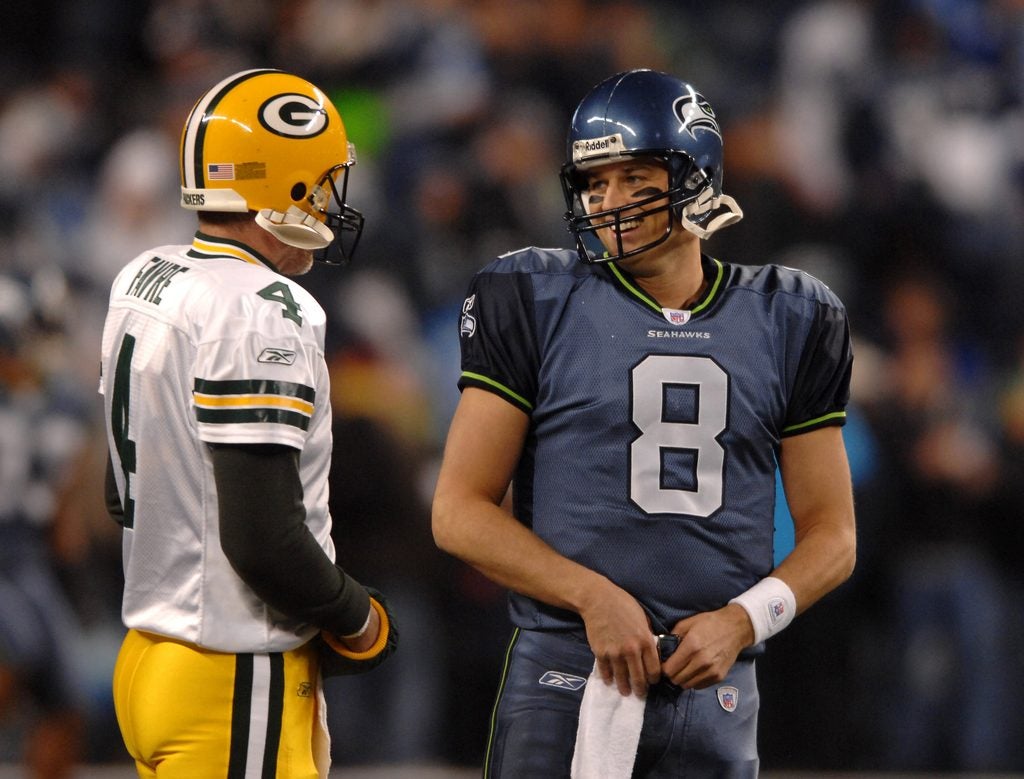
Each team traded a possession, but on the third possession of the game, Hasselbeck threw an awful interception on the left sideline to veteran cornerback Al Harris, who then proceeded to take it 52 yards for the game-winning touchdown.
Hasselbeck went 3/7 for 20 yards and the interception in overtime and ironically enough, was the last man standing between Harris and the end zone, but had no shot of making the tackle.
It’s easily one of the most humbling moments in both NFL, and human, history and should be a reminder to everyone that actions and results mean so much more than words. – Evan Winter
7. Colts watch the Vikings make NFL history in the worst possible way
Thirty-three to nothing. That’s the lead the Indianapolis Colts held at halftime against the Minnesota Vikings in December 2022. And somehow, the Colts lost.
It remains the biggest comeback in NFL history. The more you dig into how Minnesota erased a 33-point deficit, the stranger the story gets. One detail in particular involves a familiar name in Indianapolis.
How the Colts built a 33-0 halftime lead over the Vikings
Indianapolis entered the game with a 4-8-1 record under interim coach Jeff Saturday. That’s not the profile of a team you’d expect to run anyone out of the building. But for 30 minutes, the Colts looked unstoppable.
They scored on offense, defense, AND special teams. Linebacker JoJo Domann found the end zone on a blocked punt. Safety Julian Blackmon picked off Vikings quarterback Kirk Cousins and returned the interception for a touchdown. Kicker Chase McLaughlin chipped in four first-half field goals, too.
By halftime, Indianapolis led 33-0. For perspective, no team had ever overcome a 33-point deficit in league history. You’d be forgiven for changing the channel.
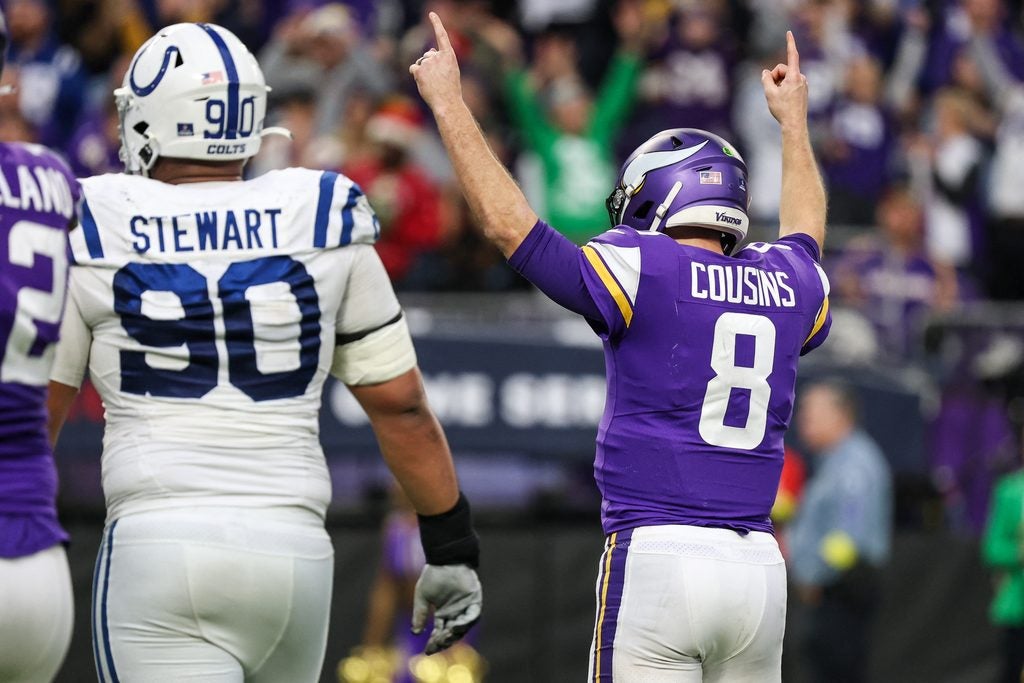
Minnesota’s comeback started slow and then caught fire
The problem for the Colts? Minnesota still had Cousins, wide receiver Justin Jefferson, and a passing attack that was about to explode.
Cousins found wide receiver K.J. Osborn for the Vikings’ first touchdown. Fullback C.J. Ham added another score. Then, in the fourth quarter, Cousins hit Jefferson and wide receiver Adam Thielen for touchdowns. Meanwhile, the Colts’ offense had completely disappeared.
Even so, Indianapolis still had a chance to slam the door. Late in the fourth quarter, the Colts faced fourth-and-1 and called a quarterback sneak. Quarterback Matt Ryan was stopped short.
On Minnesota’s very next play, running back Dalvin Cook took a screen pass 64 yards for a touchdown. A two-point conversion tied the game at 36. The Colts had officially blown a 33-point lead.
Overtime was a formality at that point, at least emotionally. Vikings kicker Greg Joseph drilled a 40-yard field goal to complete the comeback. Final score: Vikings 39, Colts 36. – Kyle Crabbs
6. Justin Herbert and the Chargers blow one of the biggest leads in NFL playoff history
The term “Chargering” exists for a reason and Justin Herbert and the 2022 Chargers not only added to the term’s resume – they all somehow found a way to add even more weight to the verb.
Chargers dominate the first half only to fall part in the second half
The Chargers defense absolutely destroyed Trevor Lawrence and the Jags offense over the first 30 minutes of play. Lawrence through four picks and Herbert and Co. took advantage by racking up 27 points.
They built a 27-0 lead with a little over five minutes to go in the first half. Lawrence was able to get his offense into the end zone to make it a 27-7 game before halftime, but he basically had no more room for error if he wanted to pull off the comeback.
Well, Lawrence and the Jags weren’t perfect by any means, but they were certainly good enough to pull off the comeback. Lawrence threw three touchdowns in the second half and the Chargers offense only mustered three points over the final 30 minutes of the game.
Their biggest mistake was a missed field goal attempt by Cameron Dicker. It would have put the Chargers up 33-20 and that may have made the difference in a win.
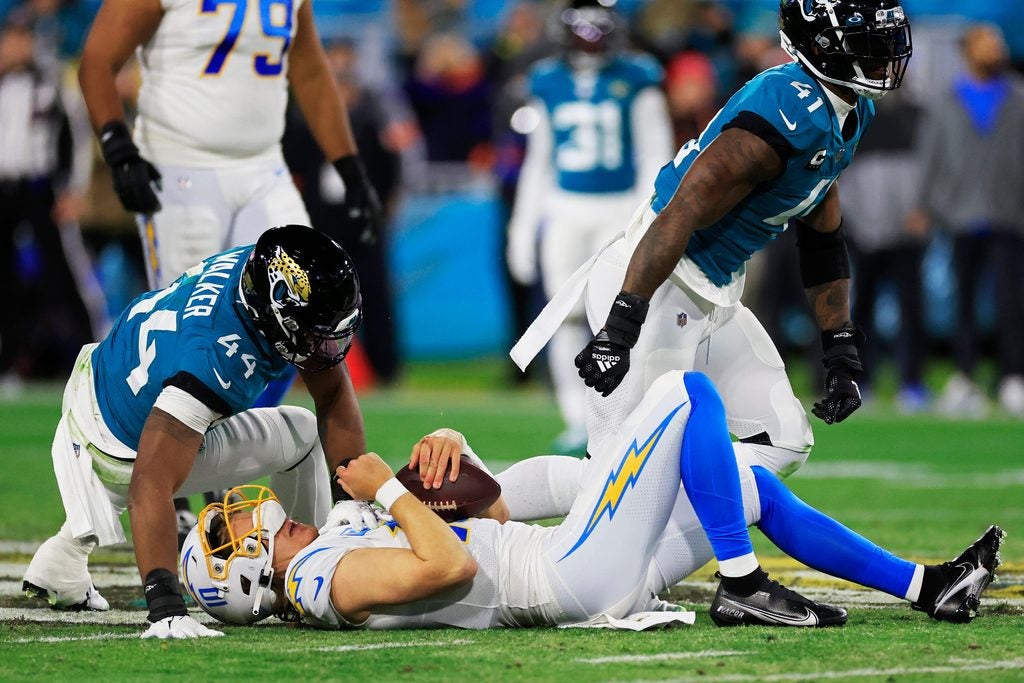
Travis Etienne’s big run puts the Jags in a spot to win
Etienne only had to 37 rushing yards in the first half and nearly matched that on his 25-yard run in the fourth quarter that put the Jags in position to make the game-winning kick.
Riley Patterson went on to drill the 36-yard attempt, pushing the Jags to a 31-30 win over the Chargers in the Wild Card round of the playoffs.
It’s easily one of the biggest choke jobs in NFL history when considering the fact the Chargers had a 20-point lead at the start of the third quarter, yet couldn’t put the Jags away in effective fashion. – Evan Winter
5. Packers’ 2014 NFC Championship collapse remains franchise’s most painful choke because every disaster had to happen at once
Any list of all-time NFL choke jobs has to include the Green Bay Packers’ loss to the Seattle Seahawks in the 2014 NFC Championship Game. The Packers came within minutes of reaching Super Bowl XLIX, which would have been the second Super Bowl appearance for quarterback Aaron Rodgers. Instead, they suffered one of the most devastating collapses in NFL playoff history.
Green Bay dominated the defending Super Bowl champions in Seattle for most of the afternoon. The Packers built a 16-0 halftime lead and still held a 19-7 advantage late in the fourth quarter. Seahawks quarterback Russell Wilson threw four interceptions, and Seattle won the game anyway.
How it all fell apart
Seattle scored a touchdown to cut the deficit to 19-14 with 2:09 remaining. Then came one of the most infamous plays in Packers history.
Backup tight end Brandon Bostick abandoned his blocking assignment and attempted to catch Seattle’s onside kick. The ball bounced off his hands and his helmet, and Seahawks receiver Chris Matthews recovered it. Running back Marshawn Lynch then broke free for a 24-yard touchdown, and Wilson completed a miraculous two-point conversion to tight end Luke Willson. Suddenly, Seattle held a 22-19 lead with 1:25 left.
The Packers still forced overtime when kicker Mason Crosby connected on a field goal. But the Seahawks won the coin toss, and Wilson found receiver Jermaine Kearse for a 35-yard touchdown on the opening drive of overtime. Under the overtime rules at the time, a touchdown on the first possession ended the game. Rodgers never even had the opportunity to touch the ball, and Seattle went to the Super Bowl.
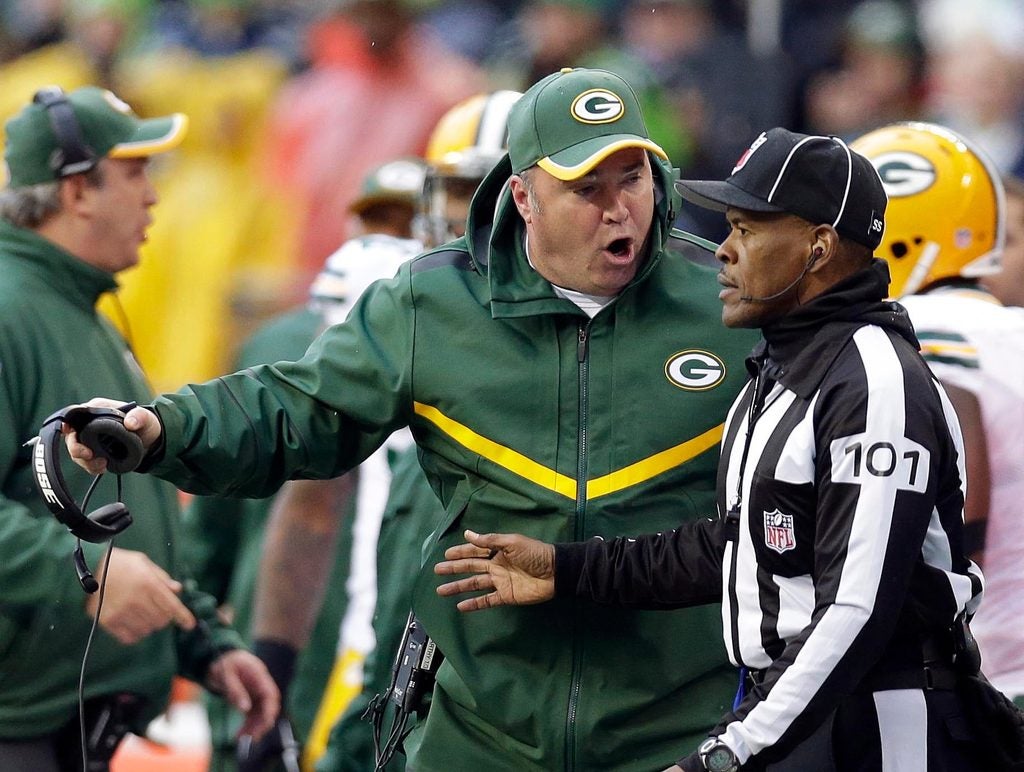
A chain of mistakes
What makes this collapse so remarkable is the sheer number of plays that had to go wrong. If any one of them goes differently, the Packers probably play in the Super Bowl. Instead, all of them happened in the same game.
First, Green Bay failed to capitalize on five Seattle turnovers. That includes two first-half opportunities inside the one-yard line, where the offense settled for less than it should have.
Then safety Ha Ha Clinton-Dix dropped what could have been his third interception of the game. With Seattle attempting to rally, safety Morgan Burnett did intercept Wilson with about five minutes remaining. However, he slid down after edge defender Julius Peppers signaled him to secure the possession instead of trying to return it.
The Packers followed that with a three-and-out, burning only a minute off the clock. After that came Bostick’s mistake on the onside kick. And on the two-point conversion, Clinton-Dix had a chance to at least break up Wilson’s pass, but that didn’t happen either.
Any single one of those moments would be frustrating on its own. Stacked together, they turned a comfortable win into a franchise-defining loss.
The Super Bowl that never came
The loss cost the Packers their biggest opportunity to reach a Super Bowl after their 2010 championship. As it turned out, the combination of head coach Mike McCarthy and Rodgers would never go to the Super Bowl again.
Green Bay remained competitive for years. The Packers reached the NFC Championship Game with Rodgers and McCarthy after the 2016 season, and then again with Rodgers and Matt LaFleur after the 2019 and 2020 seasons. They never made it past that round.
The difference between this loss and the later NFC title game defeats is how good that 2014 team was, and how clear its path looked. Green Bay would have faced the New England Patriots in the Super Bowl, a team it had already beaten during that same season. That game was at Lambeau Field, so the setting would have been different. Still, the Packers had a strong enough roster to compete for a championship.
That’s why the game in Seattle remains one of the most heartbreaking memories for any Packers fan. It was a full sequence of failures, each of them avoidable, arriving at the worst possible moment. – Wendell Ferreira
4. Patriots blow the opportunity to be labeled as the best team in NFL history
The 2007 New England Patriots were supposed to be the greatest football team ever assembled. And for 18 straight games, they looked the part.
Quarterback Tom Brady threw an NFL-record 50 touchdown passes. Wide receiver Randy Moss caught a record 23 of them. The Patriots averaged nearly 37 points per game, ran the table at 16-0 in the regular season, and walked into Super Bowl XLII with an 18-0 record and history within arm’s reach.
Standing between New England and perfection? The 10-6 New York Giants.
This was a wild card team the Patriots had already beaten in the regular season. New England entered the game as a 12.5-point favorite, and it’s hard to blame anyone for setting the line there. On paper, this matchup didn’t look like a fair fight. That’s why they play the games.
The New York Giants dragged Super Bowl XLII into their kind of fight
From the opening possession, this game looked nothing like the one New England expected. The Giants controlled the clock and kept the most explosive offense in football standing on the sideline. When the Patriots did get the ball, New York’s relentless pass rush made Brady uncomfortable all night.
Defensive ends Michael Strahan and Justin Tuck led a Giants front that overwhelmed the Patriots’ offensive line. New York sacked Brady five times. For a quarterback who had spent the entire season picking defenses apart from a clean pocket, that kind of pressure changed everything.
The results showed up on the scoreboard. An offense that had averaged nearly 37 points per game managed just seven through three quarters. You don’t beat an offense like that by covering everybody. You beat it by making sure the quarterback never gets comfortable, and New York did exactly that for most of the night.
Still, great teams find a way, and the Patriots nearly did. With 2:42 remaining, Brady found Moss for a touchdown to give New England a 14-10 lead. The perfect season was just one defensive stop away.
Eli Manning, David Tyree, and the play that changed everything
But Giants quarterback Eli Manning had other plans.
Facing third-and-5, Manning somehow escaped the grasp of multiple Patriots defenders and launched a desperate pass downfield. Giants wide receiver David Tyree went up for it and pinned the football against his helmet while Patriots safety Rodney Harrison fought to break it up. Tyree held on. The 32-yard completion is still hard to believe, no matter how many times you watch it.
It also kept the drive alive at the exact moment New England needed to end it. Moments later, Manning found wide receiver Plaxico Burress for the winning touchdown with just 35 seconds remaining.
Giants 17. Patriots 14.
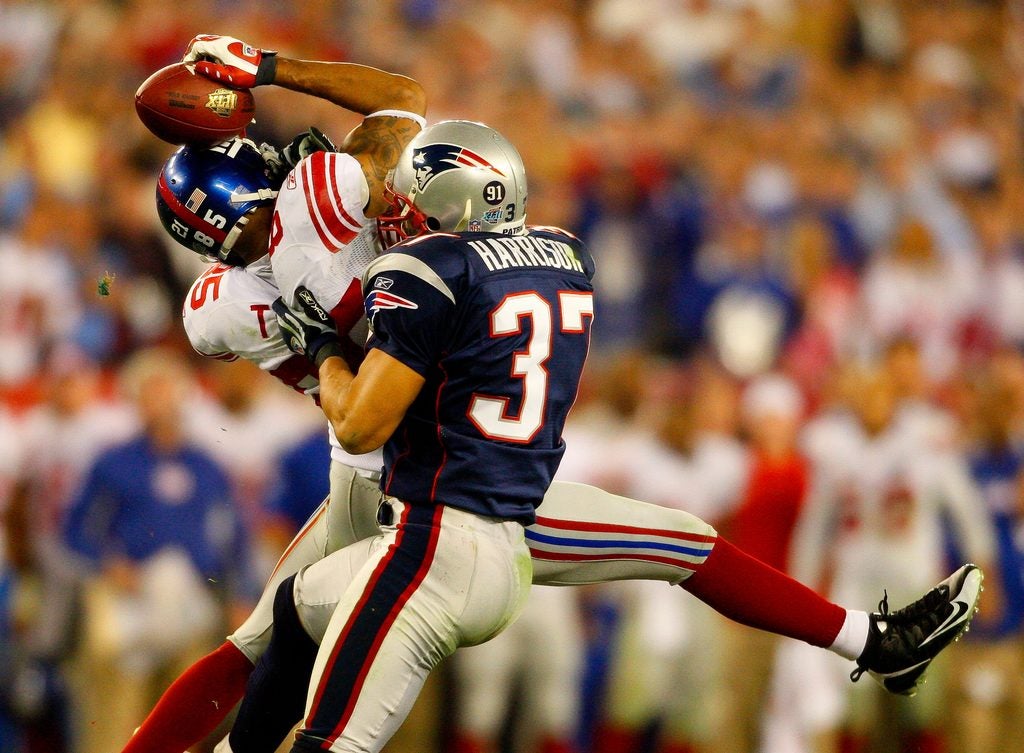
What the 18-1 finish cost the New England Patriots
New England finished 18-1. Let that sink in for a minute. The most prolific offense in NFL history at the time scored just 14 points on the biggest stage in the sport.
That’s the part of this game that stays with you all these years later. The Patriots weren’t undone by a fluke turnover or a missed kick. They were beaten up front by a defensive line that refused to let Brady settle in, and then they were beaten by a quarterback who refused to go down when he had every reason to.
The stakes made the fall that much steeper. A win would have put New England alongside the 1972 Dolphins as the only undefeated Super Bowl champions. Instead, that chance vanished in one unforgettable night in Super Bowl XLII.
The 1972 Dolphins still stand alone. And the 2007 Patriots, for all of their records, are remembered just as much for the one game they didn’t win. – Kyle Crabbs
3. Seahawks’ controversial goal-line call against Patriots still stands as one of the most costly decisions in NFL history
The Seattle Seahawks’ loss to the New England Patriots in Super Bowl XLIX stands out for a specific reason. Seattle had the ball at the one-yard line with a chance to win, and quarterback Russell Wilson threw an interception instead of handing off to running back Marshawn Lynch. The Patriots won 28-24 on one of the most controversial play-calls the league has ever seen.
The irony makes it more painful. The Seahawks only reached that Super Bowl because the Green Bay Packers collapsed in the NFC Championship Game. Seattle was also the defending champion after beating the Denver Broncos the year before. The Seahawks were 26 seconds away from becoming the first team in a decade to win back-to-back titles.
How the game got there
Seattle controlled most of the second half. Wilson found wide receiver Chris Matthews for a touchdown, Lynch had already scored on a short run, and the Seahawks built a 24-14 lead heading into the fourth quarter.
New England had Tom Brady, though. He threw two fourth-quarter touchdown passes, one to Danny Amendola and one to Julian Edelman, and gave the Patriots a 28-24 lead with a little more than two minutes remaining.
Wilson answered with a remarkable final drive. Seattle reached the Patriots’ one-yard line with Lynch in the backfield and a chance to retake the lead and likely secure a second consecutive championship.
The play call
At that point, Lynch was one of the most efficient and explosive offensive players in football. He was also one of the league’s most powerful short-yardage runners, and he had already found the end zone earlier in the game.
Offensive coordinator Darrell Bevell called a run-pass option anyway. Wilson tried a quick slant to wide receiver Ricardo Lockette, and Patriots cornerback Malcolm Butler read the route, jumped in front of the receiver, and intercepted the pass. New England took possession and ran out the clock.
The interception became the defining image of the game. And that’s because the alternative looked so simple from the outside: hand the ball to the best goal-line runner in the league and let him finish the job.
The Seahawks’ reasoning was tied to the clock. With 26 seconds left, Seattle didn’t see a run on that down as the only path to the end zone, and the coaching staff believed a pass option gave them a way to manage the situation without burning their chance at another play. In theory, it was a calculated decision. In practice, Butler made it the wrong one.
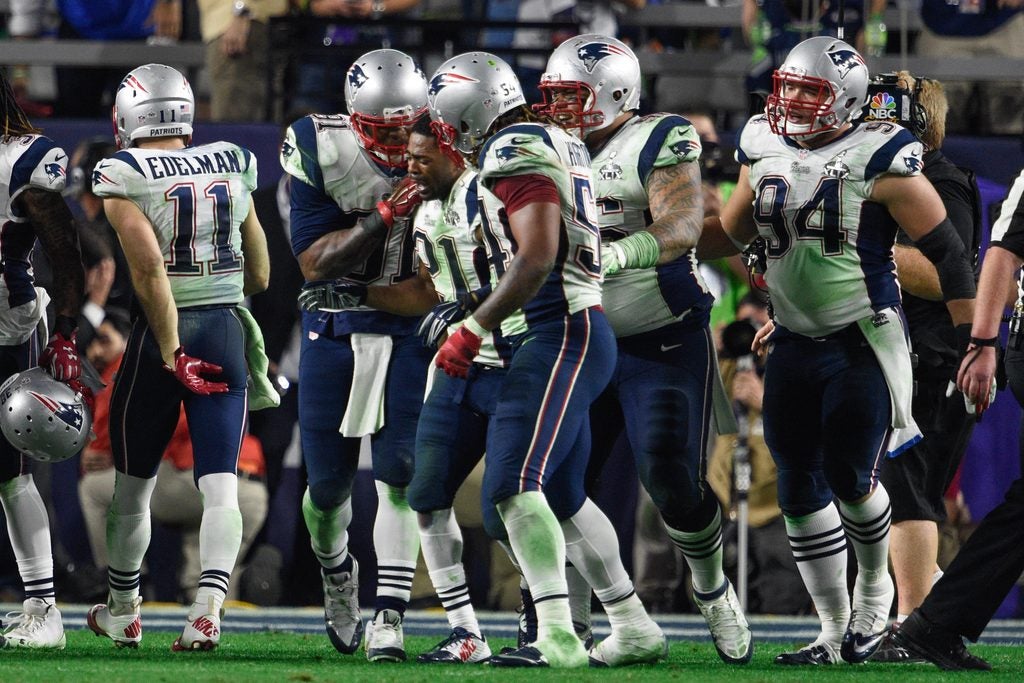
What it meant for both franchises
For New England, the win ended a drought. The Patriots hadn’t won a Super Bowl in 10 years, and the victory gave Brady his fourth championship ring.
For Seattle, the consequences lasted much longer. That Legion of Boom team had every ingredient to build a dynasty, and the loss marked a turning point. The Seahawks returned to the playoffs in 2015 and remained competitive, but that version of the team, with head coach Pete Carroll on the sideline and Wilson at quarterback, never reached the Super Bowl again.
The core eventually aged. Key players from the Legion of Boom retired or left to play elsewhere, and the window closed without a second title. Seattle wouldn’t win another Super Bowl until the 2025 season, several years and an entirely different roster later.
There are plenty of collapses in NFL history built on blown leads or late-game breakdowns. This one is different because a single decision at the one-yard line separated a dynasty from a missed opportunity. Seattle had the player, the yardage, and the moment, and it still walked away without the trophy. – Wendell Ferreira
2. Oilers’ epic playoff collapse remains one of the biggest choke jobs in all of sports
Leading an NFL playoff game by 32 points should be the end of the conversation. For the Houston Oilers in January 1993, it was only the beginning of one of the most stunning collapses the league has ever seen.
Houston traveled to Buffalo for a wild card matchup with the Bills. On paper, the Oilers caught the Bills at the perfect time. Buffalo was without starting quarterback Jim Kelly and star running back Thurman Thomas, two of the biggest pieces of its offense.
For two and a half quarters, the game went exactly as expected.
The Houston Oilers had the Buffalo Bills buried
Oilers quarterback Warren Moon was surgical in the first half. He completed 19 of his first 22 passes and threw four first-half touchdown passes. Houston carried a 28-3 lead into the locker room at halftime.
And somehow, it got worse for Buffalo.
Early in the third quarter, Oilers defensive back Bubba McDowell intercepted backup quarterback Frank Reich and returned it 58 yards for a touchdown. That made it 35-3. Bills fans started heading for the exits, and nobody could blame them. By any reasonable measure, the game was over.
Except nobody told Reich.
Frank Reich and the Bills started chipping away
The comeback started modestly. Running back Kenneth Davis punched in a short touchdown, which on its own did little more than make the final score look a bit more respectable. But then Buffalo recovered the ensuing onside kick, and the momentum began to shift.
Reich immediately connected with wide receiver Don Beebe for a 38-yard touchdown. Then he found wide receiver Andre Reed for another score. When Moon threw an interception, Reich went right back to Reed on fourth down for another touchdown.
Suddenly, the 32-point cushion had shrunk to 35-31.
The Oilers’ offense, which had looked unstoppable in the first half, had completely fallen apart. Reich wasn’t finished, either. His third touchdown pass to Reed gave Buffalo a 38-35 lead, capping a run that seemed impossible less than a quarter earlier.
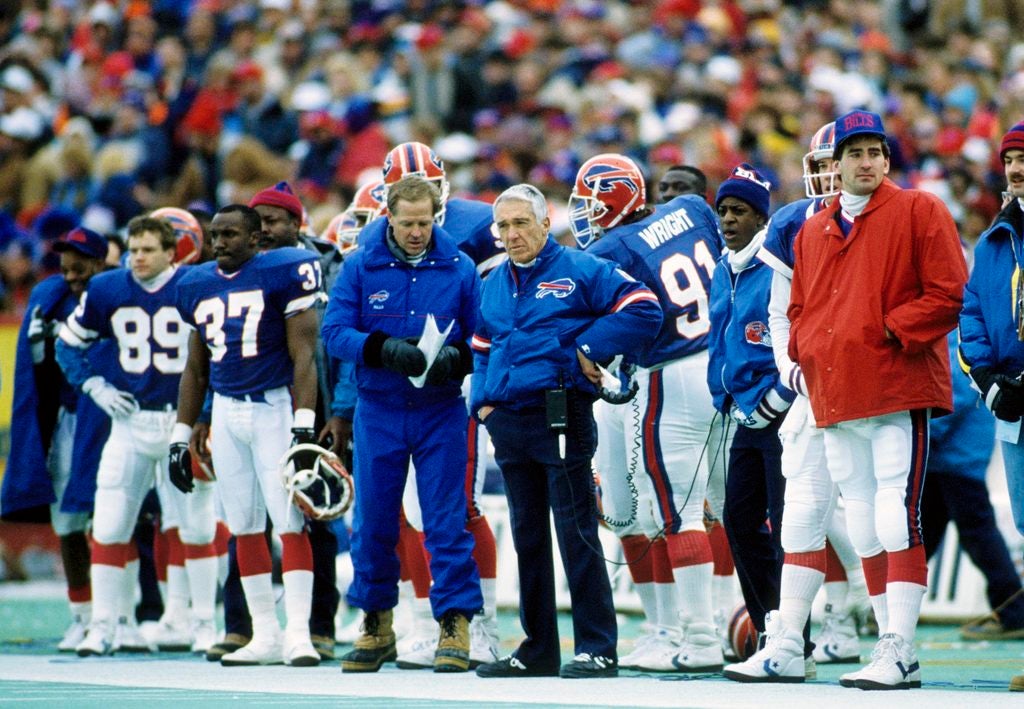
Houston’s last stand fell short in overtime
To Houston’s credit, it managed to steady itself long enough to force overtime. But the extra period offered no relief. Moon threw another interception, and Bills kicker Steve Christie made the most of it with the game-winning field goal.
Final score: Buffalo 41, Houston 38.
Let this sink in for a minute. The Oilers surrendered five consecutive touchdowns and blew a 32-point advantage in a playoff game against a team missing its starting quarterback and its best running back. It doesn’t make any sense. And yet, that is exactly what unfolded.
The Bills’ rally stood as the largest comeback in NFL history for nearly 30 years. For Buffalo, Reich’s performance became the stuff of legend, the kind of backup quarterback story that gets retold every time a team falls behind early in January.
For Houston, the legacy was far less kind. The Oilers had to spend the entire offseason wondering how a playoff game that was effectively over had slipped through their fingers. A 35-3 lead is supposed to be the safest position in football. The Oilers found out the hard way that no lead is safe until the clock reads zero. – Kyle Crabbs
1. 28-3
For anyone who is even remotely caught up with recent NFL history, 28-3 is about as universal a language gets.
Like McDonald’s, or Starbucks, or Amazon, the vast majority people know what that score means and the weight that comes with it when they see it. You don’t have to explain much. If anything, at all.
For those unfamiliar, however, it was the score of Super Bowl LI before the Patriots started their epic comeback against the Falcons. It’s a moment that will literally live in football fans’ minds as long as they live and a story that will be passed down through generations to come.
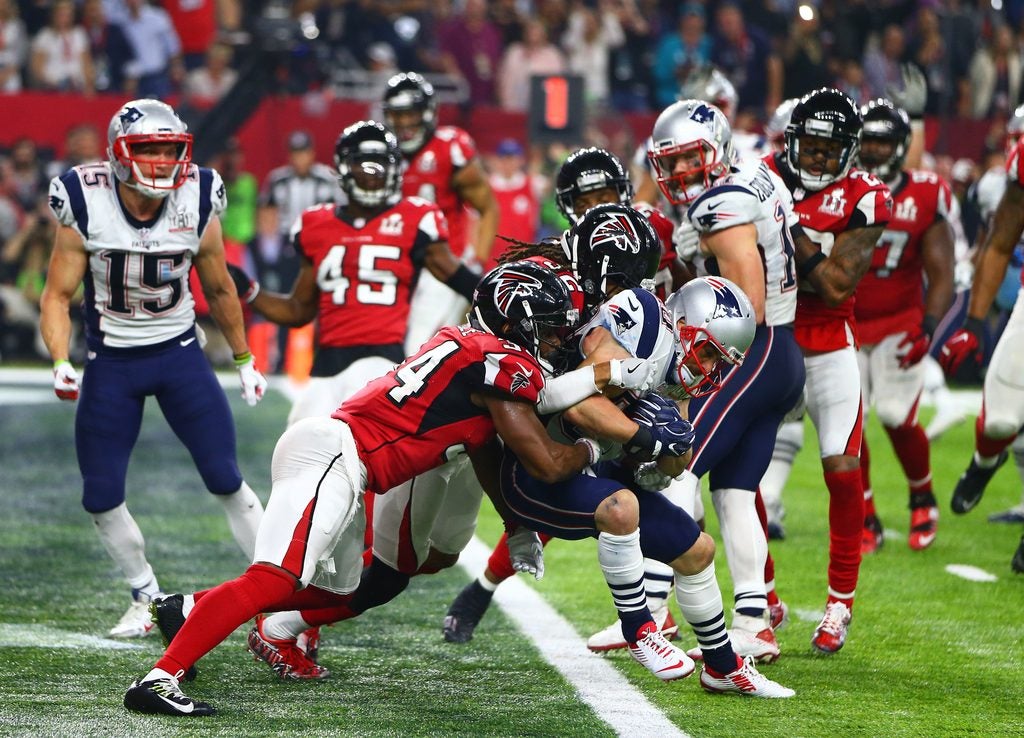
The Falcons will remain atop the list of the NFL’s biggest choke jobs for a very long time
At 28-3 with 8:31 left in the third quarter, the Falcons had a 99.7% win probability. You just don’t lose games like that in the NFL. Not in the regular season, not in the playoffs, and certainly not with a Lombardi Trophy on the line.
Most retellings of that night center on New England. Tom Brady’s heroics. Julian Edelman’s insane catch. Bill Belichick and his defense putting together a master class late in the game. All of that deserves its credit. But when we talk about the choke itself, people remember 28-3 and stop there.
Julio Jones made a 27-yard toe-tap catch that put the Falcons at the Patriots’ 22-yard line. Atlanta led 28-20 with 4:40 left and sat in field goal range.
It wasn’t enough, though
At that point, the Patriots’ push for a comeback felt like it was fading away. All of that effort was about to be for naught. Even Dont’a Hightower’s strip sack of Matt Ryan in the fourth quarter, the play that gave New England a short field and the momentum to win the game, was suddenly going to be meaningless. A field goal would have made it a two-score game. That’s all the Falcons needed.
What happened next? Atlanta ran for a loss. Ryan took a 12-yard sack. Then offensive tackle Jake Matthews committed a holding penalty that pushed the Falcons back another 10 yards. Just like that, a team sitting at the 22-yard line was out of field goal range and forced to punt.
And the rest is history. – Mauricio Rodriguez