
With help from McCombs, Texas women’s basketball using NBA science to sharpen Final Four analytical edge
Researchers from the McCombs Business of Sports Institute give Longhorns an analytical edge unique to anyone in the SEC

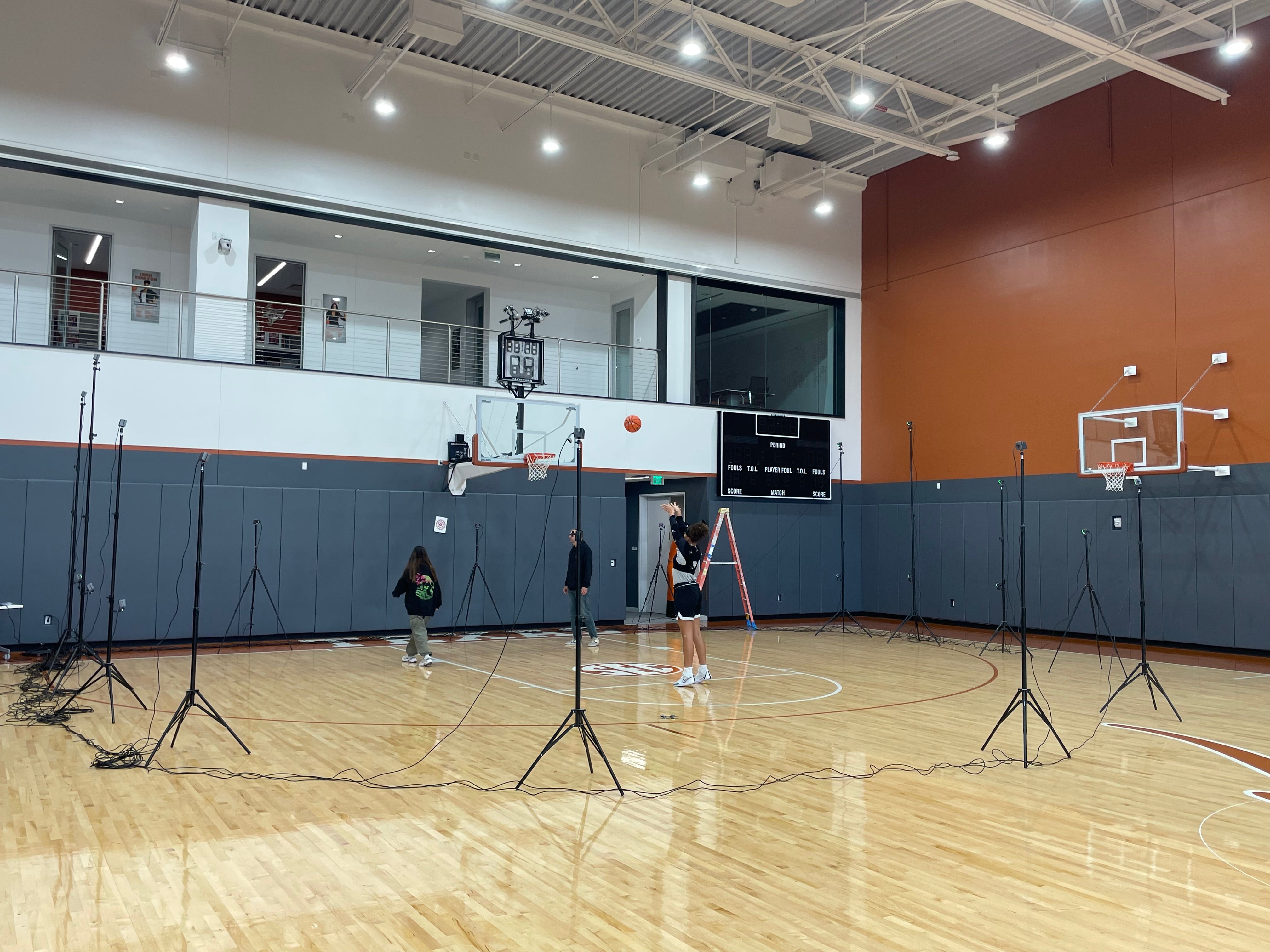
Texas freshman Justice Carlton stood ramrod straight as Kait Jackson applied retroreflective markers to her legs and shoes. Twelve more were attached to a basketball. The vest fit snug, as did this thingamajig on her head.
Fourteen tripods circled the basket, all equipped with infrared cameras. The scientists were ready to start collecting data.
OK, Justice. Now get out there and shoot from free throws. Asked if she could shoot naturally, the skeptical McDonald’s All-American from Katy said, “I hope so.”
Texas women’s basketball coach Vic Schaefer is looking for anything — even highly-advanced, NBA-level analytics on shooting form — to push his Longhorns over the hump and into the Final Four. Three trips to the Elite Eight in four years are more than enough.
“If you want me to explain it,” Schaefer said of the science, “we’re in trouble.”
The scene inside Texas’ practice gym on Tuesday looked like the staging of a Hollywood CGI-driven blockbuster. Not science-fiction, per se, just actual science.
Jackson, a biomechanist who has done incredible and extensive research in body movement, called the idea “a COVID passion project that just really took off.”
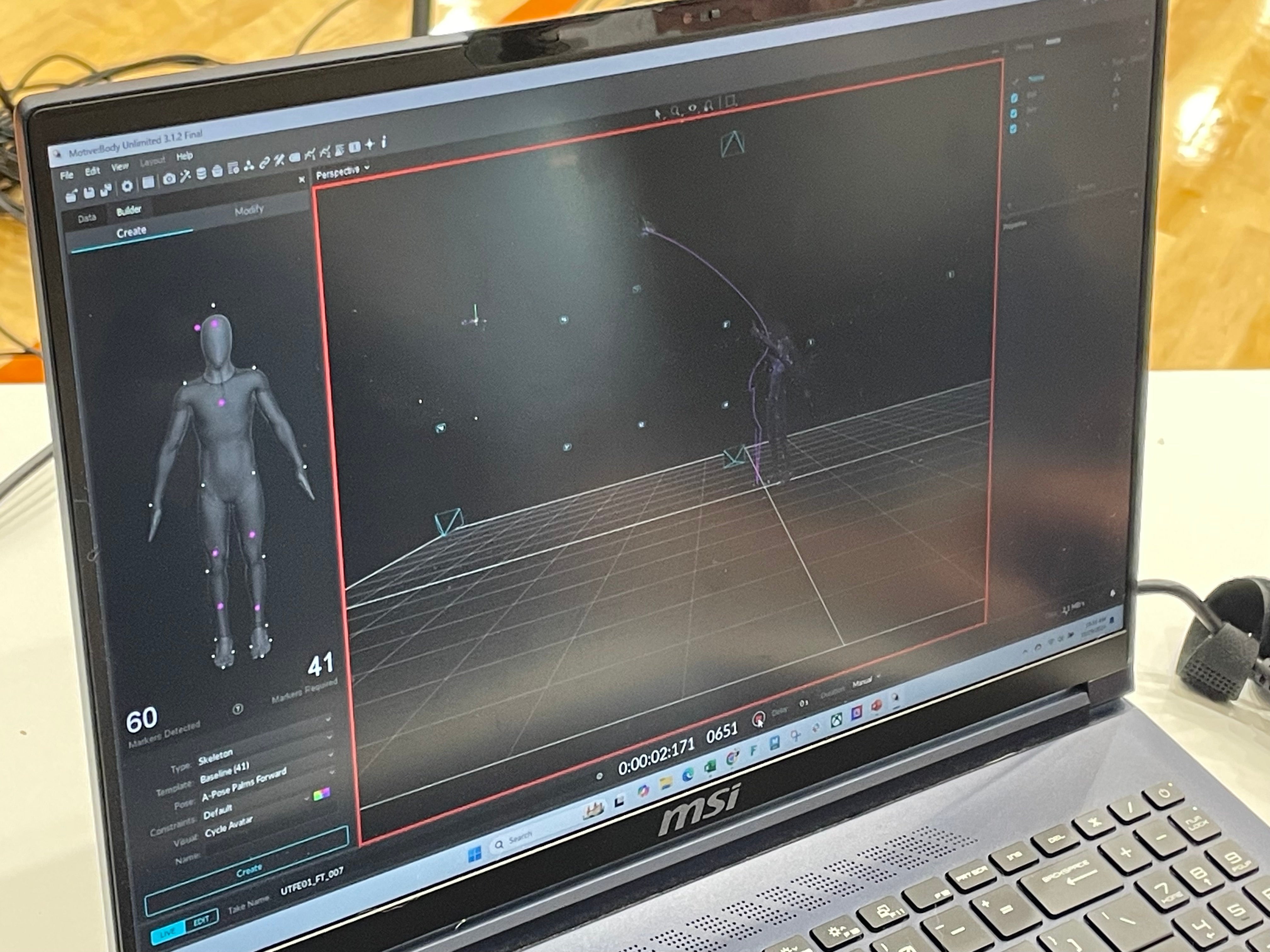
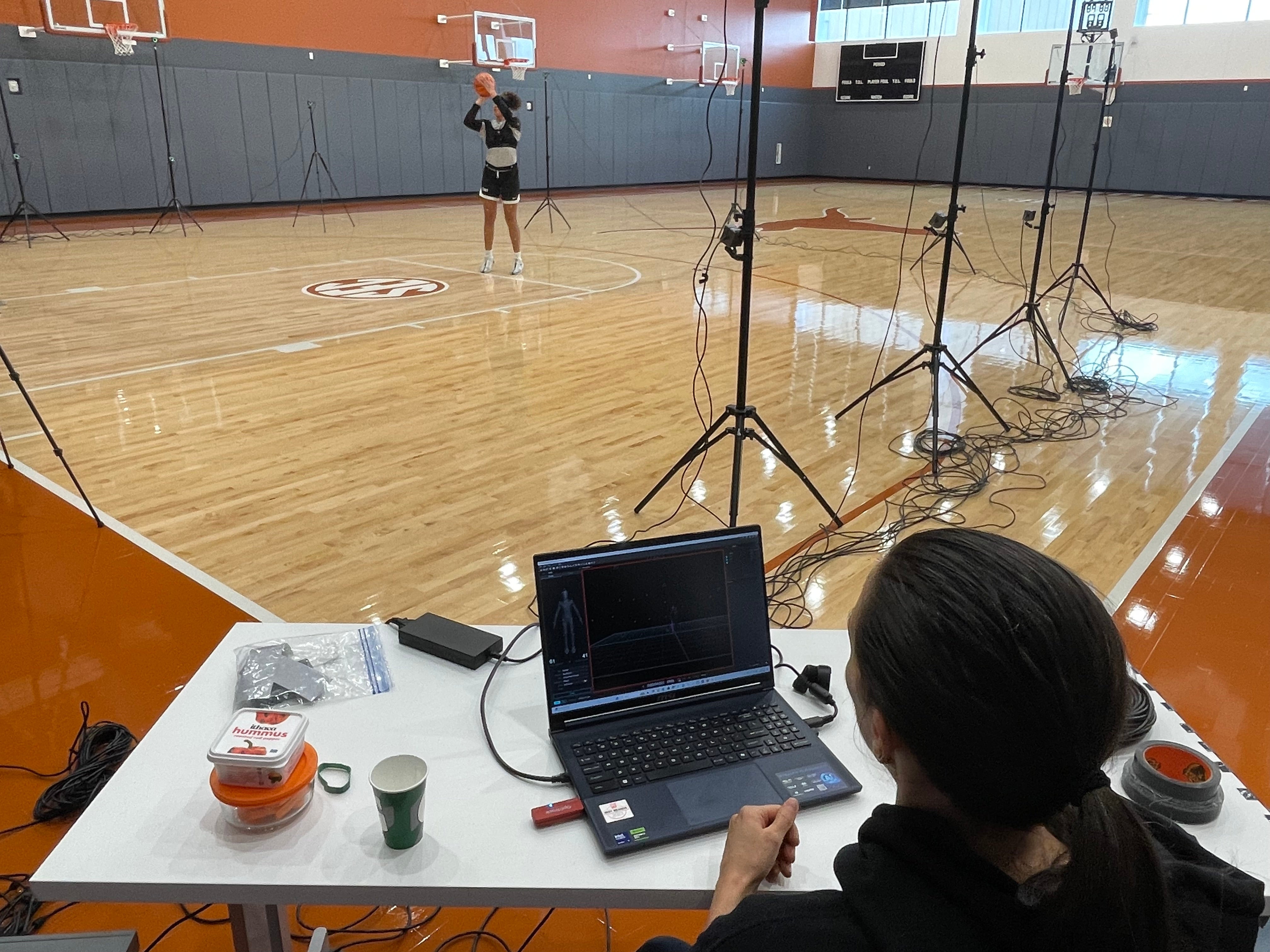
All these infrared cameras “triangulates the location of all the markers in space. So then we take all that information and build a scalable model and do all of our analysis down from there,” Jackson said.
McCombs Business of Sports Institute helping UT
Don’t laugh. Sports analytics are every bit as critical these days as 3-pointers and rebounds. And fortunately for Schaefer’s team, one of sport’s analytical pioneers now works for the McCombs School of Business.
Kirk Goldsberry spent most of the 2010s studying sports analytics and eventually became head analyst for Team USA and Vice President of Strategic Research for the San Antonio Spurs. Now, the longtime academic holds the title of director in the McCombs Business of Sports Institute.
Goldsberry and Jackson planned on getting every Longhorn fitted with the retroreflective markers to study their jump shots and how they move around the court. How does one’s body movement correlate with good shooting performances?
“Shots are made or missed before they hit the rim,” Goldsberry said. “We’re trying to understand what good shooters do and what struggling shooters do.”
How many NBA teams have this kind of setup? “Not as many as they should. A handful,” Goldsberry said. “The Spurs are up there. The Spurs have one of the most impressive, dedicated shooting labs.”
Scientists have already infiltrated baseball, taking the “Moneyball” dynamics of roster management to incredible new sci-fi heights. Maybe that’s why the Los Angeles Dodgers had a 3-0 World Series lead on the New York Yankees going into Tuesday’s game. Perhaps they have better scientists.
“This stuff has already changed baseball,” Goldsberry said. “If you go to the Astros, go to the Rangers or you go to the Yankees or Dodges, they have this exact setup for their athletes. Basketball is a few years away. We’re trying to understand how this applies to shooting a basketball at the University of Texas.”
Noah systems dissecting Horns' shot analytics
It’s not just the retroreflective markers and infrared cameras. Attached the walls inside the Texas practice gym are two black boxes equipped with speakers. No, it’s not for Bluetooth music.
The Noah basketball system captures shooting metrics like the arc of the basketball in flight. A disembodied voice then alerts the gym numbers like “39” or “41.” Facial-recognition cameras fixed atop the backboard track each player and their shots.
A huge TV is affixed to the wall giving instant feedback — the so-called “splash board.” Texas is the only team in women’s college basketball with a splash board, Goldsberry said.

“The optimal mark is 43 to 47, and there’s a voice on there that immediately tells you when you shoot what your arc is, so you get instant feedback on it,” Schaefer said.
At age 63, Schaefer doesn’t need Star Trek to tell him a shooter needs to improve. “When you’ve seen what I’ve seen, like my eye, I trust my eye more than I trust a piece of paper.”
If you need 500 shots to get better, better to get instant feedback, Schaefer said.
“You know, the Denver Nuggets gave credit to their world championship two years ago to this Noah that we have on the walls in here,” Schaefer said. That’s good enough for him.
But will all this help the Longhorns? Schaefer doesn’t need a scientist to tell him having a healthy Rori Harmon on the floor is better than not. Or how about having the SEC preseason player of the year Madison Booker back at her comfortable forward spot? Or how about a possible four-guard rotation that will really cause problems for bigger teams?
Hey, science can’t hurt.
Longhorns see huge jump in season ticket sales
A team official reported that Texas has sold about 1,700 new season tickets this season, a figure that more than doubled the 810 sold prior to last season. The Longhorns now have more than 4,000 season tickets sold for the upcoming season, a high-water mark for the Schaefer era.
“I'm still not satisfied with that,” Schaefer said of the 4,000 number. “I think our fans, once they come, they’ll keep coming. This team will be great. They’ll be fun to watch.
“The thing that I would want our fans to understand, the people in our community, you’ve got some of the best players in the country here playing right now at Texas. And you think, OK, well, we’re always going to get somebody, or we’re always going to have that next one.
“But there's no guarantee. And that’s true in any sport that when you get those special talents, special kids, you really need to take advantage and enjoy the that.”
Texas hosts a preseason exhibition against UT-Tyler at 7 p.m. Thursday at Moody Center. The season opener is Nov. 10 against Southeast Missouri State.