
Tennessee’s loss to Texas exposed a weird college football rule that needs to be changed
The Tennessee Volunteers were on the wrong side of a rule that doesn’t make sense during loss to the Texas Longhorns.


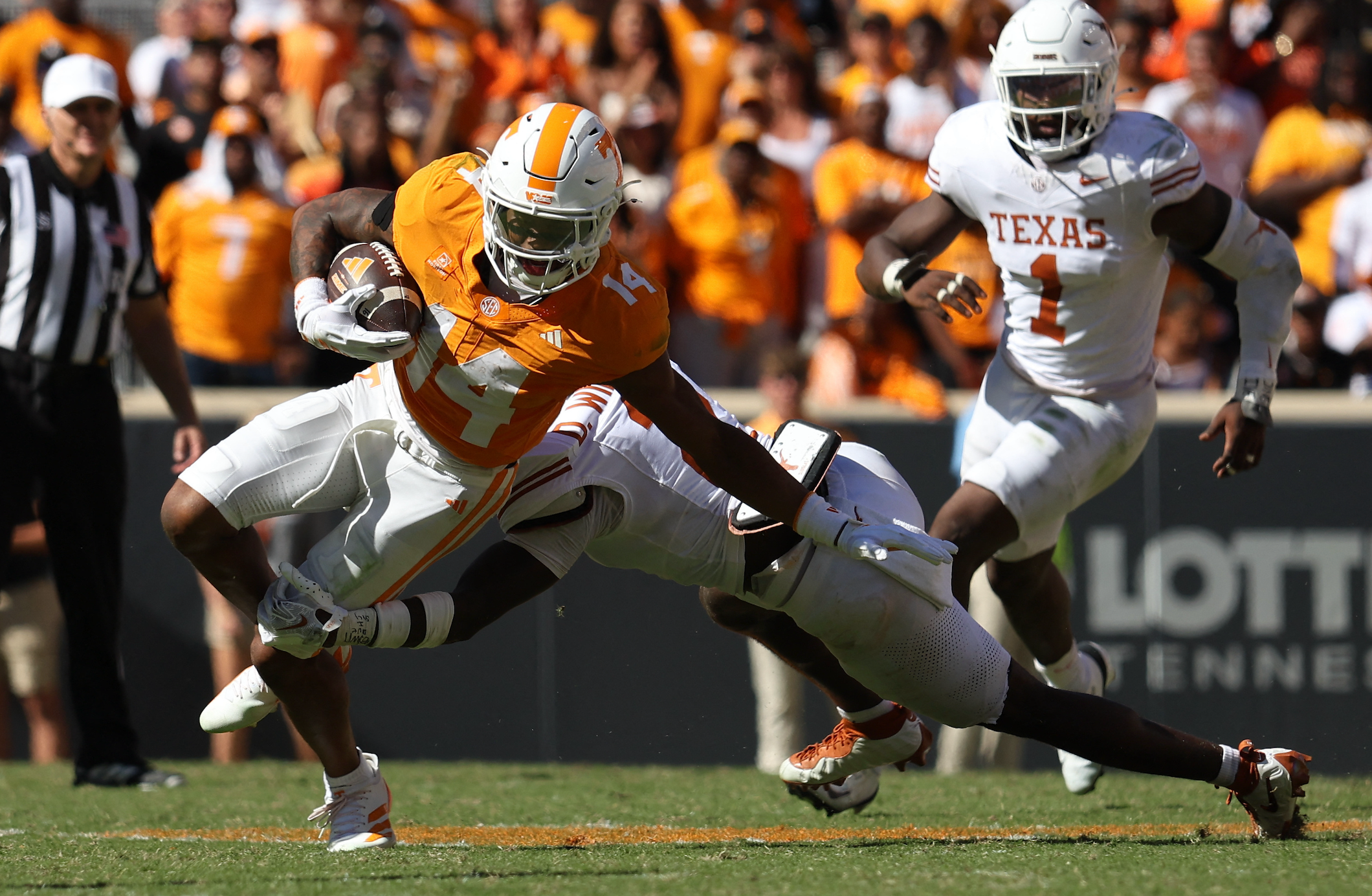
A weird rule popped up at the end of Tennessee’s loss to Texas that just doesn’t make any sense.
On the Vols’ final drive of the game — after Tennessee recovered an onside kick that has since been deemed illegal — wide receiver Braylon Staley caught a short pass and appeared to gain enough yards for a first down.
Officials, however, stopped the play for a replay review and it was determined that Staley’s knee hit the ground.
Because the play was stopped for a review, a 10-second runoff was enforced and Tennessee lost precious seconds on the clock.
Initially, before the play was overturned, Staley gained the first down and the clock stopped with 1:13 left to move the chains (the clock only stops to move the chains in the final two minutes of each half).
After the replay, the clock was reset to 1:09 (Tennessee only lost four seconds on the game clock because it was determined that Staley’s knee was down with 1:19 left).
This bizarre rule didn’t hurt the Vols too much, but it’s still a rule that makes no sense.
I understand the 10-second runoff for an offensive penalty or an injury. That rule is in place to prevent teams from stopping the clock when they have no timeouts left.
But implementing a 10-second runoff because the officials made the wrong call on the field? That doesn’t add up. The 10-second runoff is supposed to prevent offenses from manufacturing a timeout. But the offense has no control over a replay review being initiated. Why should the offense be punished with a 10-second runoff because the officials didn’t get the call right on the field?
I’m sure there are plenty of folks who don’t think this is a big deal. But what if this situation pops up when there’s less than 10 seconds remaining on the game clock? That’s a scenario where the game would end without the offense getting to run a final play.
That’s a scenario that shouldn’t happen. The NCAA rules committee needs to take a look at this clock rule next offseason.
