
Tennessee CBs coach Derek Jones reveals what he told DB Tim Merritt after he committed 3 penalties on one drive and it’s incredible
Tennessee Volunteers sophomore cornerback Tim Merritt had a rough drive against the Georgia Tech Yellow Jackets this past weekend.


The Tennessee Vols committed 14 penalties for 142 yards in their 45-24 win over the Georgia Tech Yellow Jackets in Atlanta this past weekend.
Vols sophomore cornerback Tim Merritt was responsible for three of those penalties when he was called for defensive pass interference three times on Georgia Tech’s next-to-last possession in the game.
It was a rough series for Merritt, one of the team’s top backup cornerbacks, who was receiving some important game reps.
But it was also a key learning moment for the young defensive back.
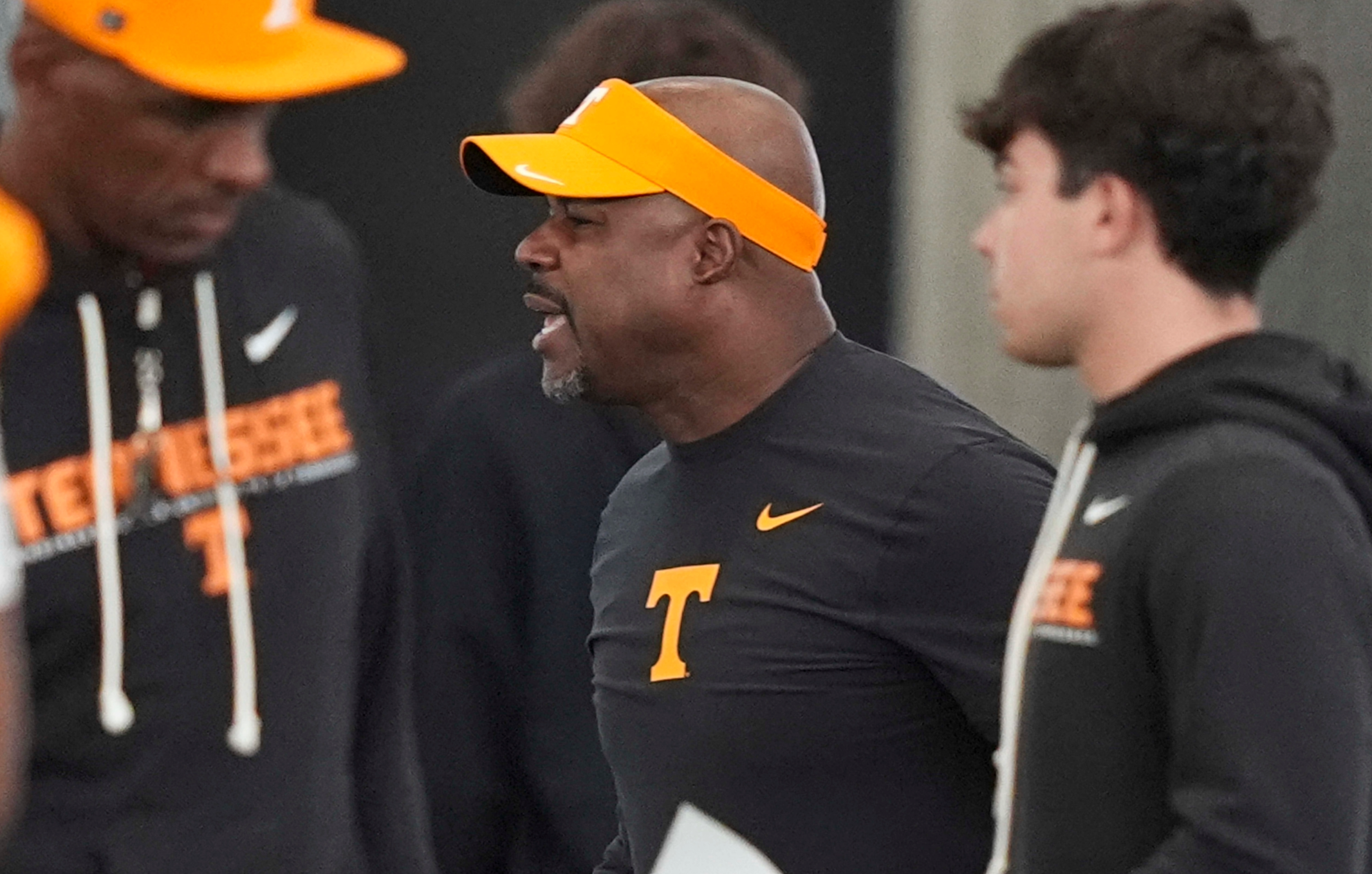
And Tennessee cornerbacks coach Derek Jones couldn’t have handled Merritt’s miscues any better.
Derek Jones put on a clinic on how to coach during the Georgia Tech game
Instead of yanking Merritt from the game, or screaming at him on the sideline, Jones did what a coach is supposed to do — he coached Merritt.
Jones told reporters on Tuesday that his main objective in the moment was to make sure Merritt didn’t lose his confidence.
“I truly feel it’s the hardest position on the football field to play just because every mistake you make is a glaring mistake,” said Jones. “Everybody on the field sees it. Everybody in the stands sees it. In the world we live in of social media and podcast criticism, you know that’s going on. But you’ve got to be mentally tough enough to move on to the next play.
“What I told him on the sideline the other night is we can correct those things. That’s my job to get that corrected. We’ve got to go look at it. But I think in that moment, as a coach, you’ve got to know how to handle it. The worst thing you can do to a young player in that situation is yank him out and take the confidence away. And when you get your hands on him, you’ve got to make him understand that if you don’t do this, then it goes from a pass interference (penalty) to maybe an interception. But I think you have to coach guys like that all the time. And I’ve been coaching those guys like that since the first day I walked on campus because the last thing you want as a cornerback coach is for your guys to come to the sideline in fear coming to face you. I don’t think that’s coaching. It’s just like parenting. You don’t want your kids to come tell you things. You don’t want your kids to be afraid when they make mistakes. Just like you have to parent, you have to coach.”
The only way that style of coaching works, though, is if coaches are consistent in their approach. They have to be that same voice every day to truly gain a player’s trust.
“It’s a trust between player and coach that enables guys to be able to say, ‘Okay, I trust you, Coach,’” noted Jones. “… I’ve learned through coaching that you have to be the source of peace for guys in those situations.”
Mistakes are going to happen — no one plays perfect. But the most important job a coach has is making sure a player is confident when they go on the field. If a player is afraid of making a mistake, they’re not going to play with confidence.
Merritt’s penalties obviously have to get cleaned up, but those corrections will happen in the film room and on the practice field. Jones couldn’t have handled the in-game part of Merritt’s tough drive any better.
