The 24 Craziest Trades In NFL History: Which moves are considered to be the wildest of all-time?
The NFL has a rich history and certain transactions have helped shaped the league we know today. But which trades rank as the craziest of all-time?


There are plenty of moves that have changed the landscape of the NFL throughout the league’s history, for good or bad.
And some of said moves have been downright crazy, surprising, or whatever related word you want to use.
Therefore, we here at A to Z Sports figured it would be a good –and fun– idea to go ahead and list the 24 craziest trades in NFL history.
So, let’s not waste any more time and dive right in.
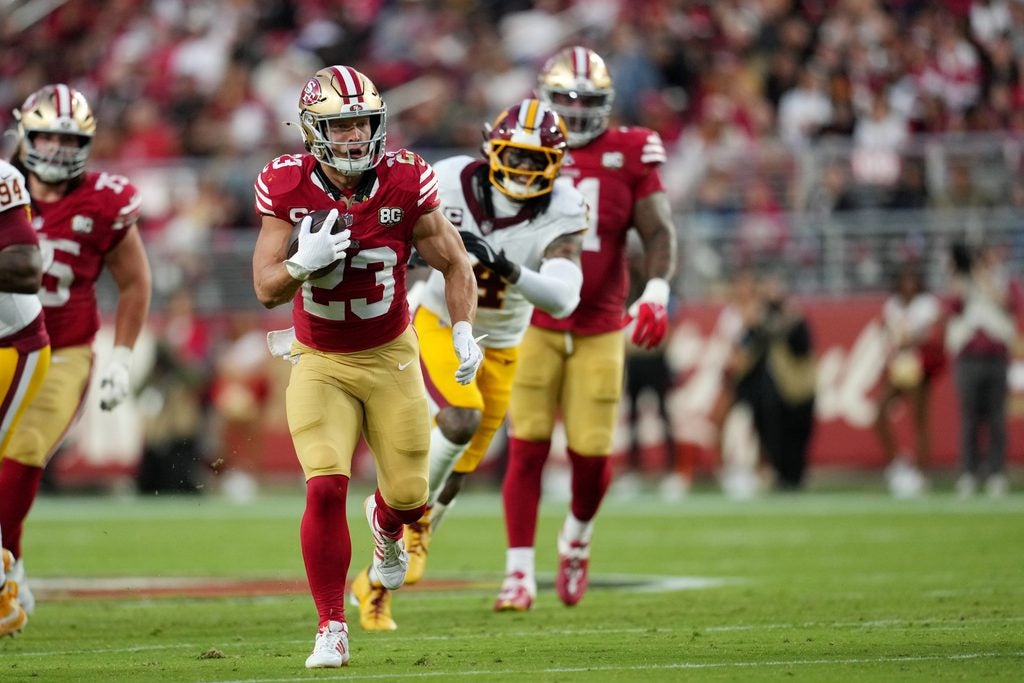
24. Christian McCaffrey trade looks even more lopsided years later with 49ers and Panthers headed in opposite directions
The Christian McCaffrey trade between the Carolina Panthers and the San Francisco 49ers stands as one of the wilder deals in NFL history. It changed the direction of both franchises, and with a few years of hindsight, it is now fair to judge who came out ahead.
Just ahead of the trade deadline on Oct. 20, 2022, the 49ers acquired McCaffrey from Carolina for second-, third-, and fourth-round picks in 2023 and a fifth-round pick in 2024. The deal was stunning the moment it hit. Everyone knew McCaffrey was one of the best running backs in football, and moving a player of that caliber at the midseason point was rare in itself.
Why the McCaffrey trade drew so much criticism
Plenty of people weren’t sure San Francisco was making the right move. When McCaffrey was on the field, he was arguably the best back in the NFL. However, he wasn’t on the field nearly enough, and he carried real durability concerns into the deal.
There was another layer to the skepticism. Kyle Shanahan’s system has a reputation for being brilliant on its own. The 49ers have plugged in different quarterbacks and different running backs over the years, and the offense just works. So why would a team that already produces at the position give up draft capital for a back with an injury history?
That was a fair question at the time. It just hasn’t held up.
How the trade panned out for both teams
Well, in the short term, the 49ers landed one of the premier running backs in the league. McCaffrey helped propel San Francisco to NFC Championship Games and onto the Super Bowl stage.
The long-term returns have been even bigger. McCaffrey reset the running back market multiple times, came close to shattering NFL receiving records for the position, and won Offensive Player of the Year. He has gone from a talented player with health questions to one of the better running backs in NFL history.
On the other side, the Panthers packaged some of those picks to trade up for Bryce Young. When you add it all up, Carolina’s haul from the deal was Young, DJ Johnson, and Chau Smith-Waite.
To be fair to the Panthers, Young is having a great season right now. Even if he develops into an incredible quarterback, though, the other two pieces don’t really move the needle. That’s a thin return for a player who became the engine of a perennial contender.
The 49ers won this trade, and it isn’t close
I think it’s easy to say San Francisco won this trade in both the short term and the long term. The 49ers have made multiple runs at a Super Bowl with McCaffrey in the backfield, and he has taken that franchise, that offense, and that team to another level.
Look at where both teams stand in the NFC right now. The 49ers sit atop the conference, while the Panthers are battling, and Carolina deserves credit for that fight. Even so, I don’t believe many people view the Panthers the same way they view San Francisco.
The way I see it, the critics who asked why the 49ers would ever give up picks for McCaffrey have their answer. The draft capital was a small price for a player who changed the ceiling of an entire organization, and the Panthers are still waiting to see if their side of the deal can come anywhere close to matching it. – Rob Gregson
23. The Champ Bailey-Clinton Portis trade was a blockbuster move over 20 years ago and is still considered as one of the biggest NFL trades of all-time
The NFL rarely traded elite players for elite players in the early years, which is why the decision to trade Champ Bailey for Clinton Portis (or the other way around if you prefer) was a monumental move and is still considered as such to this day.
At the time, it shocked everyone around the league, as well as those who followed it. That kind of move just didn’t happen, especially when considering the caliber of players involved.
So without further ado, let’s dive in and rehash one of the biggest trades in NFL history.
Why both teams were in on each player
It’s pretty simple: The then-Redskins head coach Joe Gibbs wanted a dynamic running back after having guys like John Riggins and Ernest Byner leading the rushing attack during his first stint as head coach of Washington. In case you forgot, Gibbs won three Super Bowls during that span.
Gibbs returned to Washington in 2004 and Portis was coming off back-to-back 1,500+ yard seasons that also included 29 rushing touchdowns. He also showcased ability in the passing game, recording nearly 700 receiving yards and two touchdowns in his first two years.
Portis won Rookie of the Year in 2002 and then earned a Pro Bowl nod the following season. It was obvious why he caught Washington’s eye at the time.
Bailey was no slouch heading into 2004. He already had 18 interceptions over the course of his five-year career. He was runner-up in Defensive Rookie of the Year voting in 1999 and made four-straight Pro Bowls, plus a second-team All-Pro, from 2000-2003.
After a lot of dialogue, Washington eventually sent Bailey, plus a second-round pick, to Denver in exchange for Portis. The Broncos used that second-rounder on Tatum Bell, who amassed one 1,000-yard season in three years with Denver.
Who won the trade?
This is a tough call because it’s a trade for two players at vastly different positions that impact the game in completely different ways.
Portis had a good run with Washington. He earned a Pro Bowl nod and eventually became the franchise’s second-leading rusher of all-time behind none other than Riggins, himself. He had four seasons with at least 1,200 rushing yards from 2004-2010 and scored 46 rushing touchdowns.
The Broncos never truly replaced Portis, either. However, Mike Shanahan’s system could make chicken salad out of any running back situation and it did. That adds more value on the Broncos’ side of the trade.
Bailey went on to make eight Pro Bowls, three first-team All-Pros, and a second-team All-Pro from 2004-2013 with Denver. He helped the team reach the AFC Championship Game in 2005 and snagged a league-leading 10 interceptions the following season. He also holds the record for the most career pass deflections with 203.
And, of course, he was eventually voted into the Hall of Fame.
You don’t have to win by a lot to be considered a winner in life and that’s the exact case, here. Neither team lost this trade, so to speak, but it’s clear the Broncos won the trade as it received more team- and individual-based success from Bailey in the long run. – Evan Winter
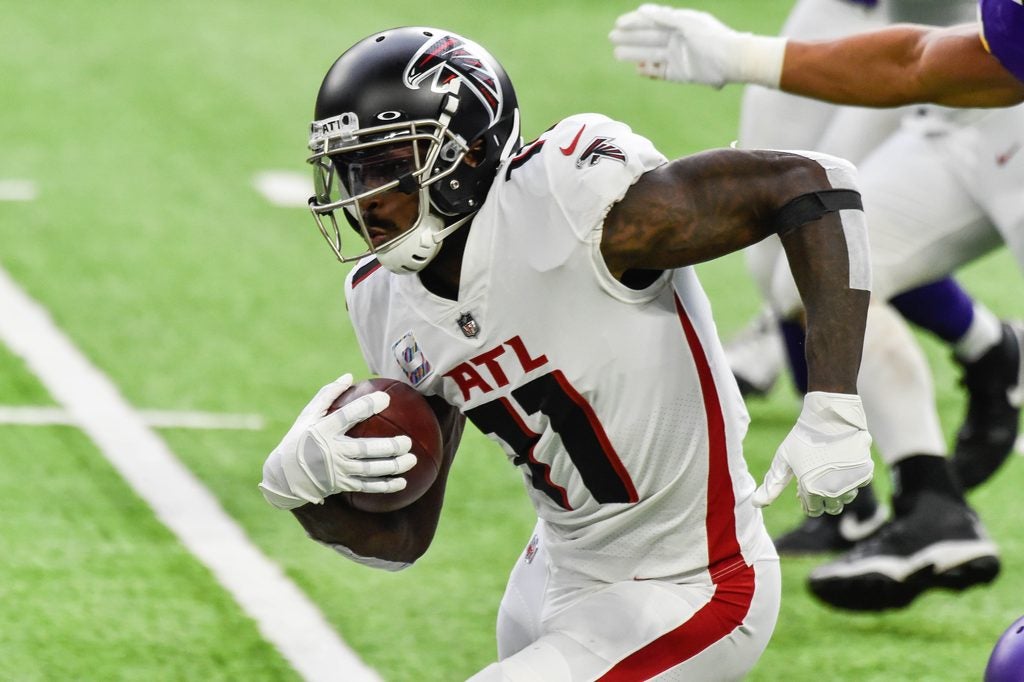
22. Falcons’ blockbuster draft move for Julio Jones
The Atlanta Falcons made one of the most aggressive draft trades in NFL history back in 2011, giving up a massive haul to the Cleveland Browns to move up for wide receiver Julio Jones with the sixth overall pick. This trade stands out because draft-day deals of this size rarely happen, and they almost never happen for a non-quarterback.
Teams usually reserve this type of investment for signal-callers. When a front office sends away multiple first-round picks to climb the board, the target is almost always a franchise passer. The Falcons broke that pattern, moving from the 27th overall pick all the way up to No. 6 for a receiver.
Two elite receivers, one left on the board
The 2011 class had two sensational wide receivers, and Atlanta liked both of them. However, the Cincinnati Bengals took AJ Green with the fourth overall pick, so Jones was the only one of the two still available when the Falcons’ turn came at No. 6.
To get there, Atlanta traded up 21 spots and sent the following picks to the Browns:
- The 27th overall pick in 2011
- A second-round pick in 2011
- A fourth-round pick in 2011
- A first-round pick in 2012
- A fourth-round pick in 2012
That’s a lot of draft capital. By today’s standards, though, it doesn’t look like an unreasonable price to move up so many spots in the first round. It was a different era of football. That draft was the first under the new collective bargaining agreement that created the rookie scale contract, so teams were still adapting to the new circumstances.
Atlanta ended up on the right side of history. The Falcons were aggressive, and it paid off.
Atlanta landed a future Hall of Famer
Jones became one of the best wide receivers in football, if not the best, for several years. His résumé speaks for itself:
- Two-time first-team All-Pro
- Three-time second-team All-Pro
- Seven-time Pro Bowler
- Two-time NFL receiving yards leader
- Member of the NFL 2010s All-Decade Team
He also posted seven seasons with more than 1,000 receiving yards. After his run in Atlanta, Jones played for the Tennessee Titans, Tampa Bay Buccaneers, and Philadelphia Eagles, finishing his career with 13,703 receiving yards and 66 touchdowns. He isn’t eligible for the Pro Football Hall of Fame yet, but there’s no doubt he will eventually be enshrined as one of the most impactful receivers of his generation.
Cleveland’s picks never paid off
Meanwhile, the Browns didn’t get much out of their collection of draft picks. Cleveland used part of the haul to move from No. 27 to No. 21, selecting defensive tackle Phil Taylor from Baylor. Taylor made the All-Rookie Team in 2011, but he never lived up to the expectations of a first-round pick. He played only his rookie contract with the Browns and, despite later signing with the Denver Broncos and Washington, didn’t carry much of a career beyond that.
The extra first-rounder in 2012 went to quarterback Brandon Weeden, an older prospect at the time. That pick didn’t pan out either. Weeden started 15 games as a rookie and threw 14 touchdown passes with 17 interceptions. He started five more games in 2013, throwing nine touchdown passes and nine interceptions. After two seasons in Cleveland, he spent most of his career as a backup around the league.
The difference between the two sides is stark. Atlanta got a perennial All-Pro and a likely Hall of Famer, while the Browns turned a pile of picks into a short-lived defensive tackle and a quarterback who couldn’t hold the job.
It was a rare move, especially for a wide receiver, and it came during a unique moment for the league’s rookie economics. Nonetheless, there’s no debate about the outcome. The Falcons got the best side of the deal, and it wasn’t particularly close. – Wendell Ferreia
21. Buccaneers’ decision to trade Steve Young may look bad in hindsight, but it’s actually not as tough as it seems
The Tampa Bay Buccaneers have the NFL’s worst winning percentage and a big reason why is because it’s rarely figured out the quarterback position.
Sure, Tom Brady came to town as a free agent and there were some decent success stories in Doug Williams, Brad Johnson, and a couple others. However, those guys are years apart when it comes to their respective Buccaneers tenures and the signal-callers in-between definitely didn’t help keep the team afloat.
One definite miss is Steve Young. The Buccaneers once had the Hall of Famer on their roster, but the two parties eventually split via trade, making it one of the more interesting trades in NFL history.
Why the Buccaneers weren’t in on Steve Young
The Bucs snagged Young with the first pick in the 1984 supplemental draft. He lasted two years, rotating QB duties with Steve DeBerg. Overall, Young was 3-16 as a starter while the team struggled as a whole.
Overall, it simply wasn’t a good position for either side to be in. That pushed the Buccaneers to look elsewhere at quarterback, even if they know the overall team wasn’t in a great spot to really support any QB at that point.
Tampa Bay eventually “earned” the first overall pick in the 1987 NFL Draft and wanted Vinny Testaverde. That desire pushed them to trade Young, who surprisingly fetched a second- and fourth-rounder in the ‘87 draft. Plus, a $1 million reimbursement for part of Young’s signing bonus. The return was pretty significant considering his resume at that point, but it also showcased the potential he had.
Perhaps that should’ve caught the Buccaneers attention, but hey, history is history.
The Buccaneers turned those picks into linebacker Winston Moss and wide receiver Bruce Hill, who turned out to be pretty good players, but nowhere close to Hall of Famers like Young.
Still, even in hindsight, it’s not as big a mistake as it may seem.
Who won the Steve Young trade?
Even after the trade, Young had to wait five years before replacing another Hall of Famer, Joe Montana. Moss and Hill were solid players, but they definitely didn’t elevate the Tampa Bay franchise. Therefore, no one won in the short-term.
The long-term is a different story, though. Young went on to become one of the best quarterbacks of his era and the NFL, as a whole. He set records with the San Francisco 49ers and became a key part of its success in the 90s and early 00s.
It’s hard to blame the Buccaneers for wanting to go in a different direction at the time, however, it’s also fair to say they should’ve been more patient. But a flailing franchise typically doesn’t have patience, especially when it had just two winning seasons out of 11 heading into the 1987 draft.
It’s certainly a mixed bag of intriguing circumstances, but also easy to see the 49ers clearly won the trade in the big picture. At the same time, the Buccaneers shouldn’t be docked too many points for refusing to hold onto a quarterback who didn’t make a real impact until five years after they traded him. – Evan Winter
20. How the Colts handed the Rams a Hall of Fame weapon for 2 mid-round picks and helped build the Greatest Show on Turf
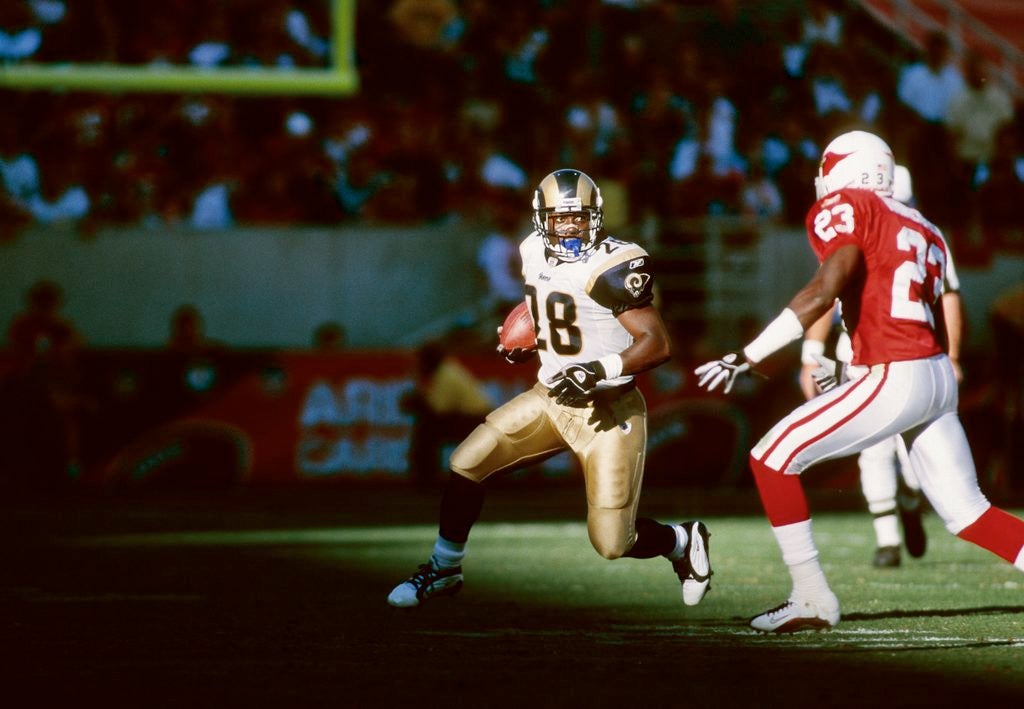
The Indianapolis Colts traded Marshall Faulk to the St. Louis Rams on April 15, 1999. Two days later, the 1999 NFL draft kicked off, and Indianapolis used the 4th overall pick on running back Edgerrin James. On paper, the Colts executed a tidy succession plan built around a young quarterback named Peyton Manning. But the Rams walked away with the player who would become the centerpiece of the Greatest Show on Turf.
That trade still deserves a closer look. Indianapolis didn’t botch the aftermath, and that’s part of what makes the deal worth revisiting. The Colts did plenty right and still lost the trade.
Why the Indianapolis Colts were willing to move Marshall Faulk
Context matters here. Manning had just wrapped up his rookie season, and the Colts were preparing to pick 4th overall in the upcoming draft. That left Indianapolis with an unusual decision because it already had one of the best running backs in football.
Faulk was coming off a tremendous 1998 season. He ran for 1,319 yards, caught 86 passes, and piled up more than 2,200 yards from scrimmage. He was 26 years old and had already established himself as one of the NFL’s premier all-purpose weapons.
He also wanted a new contract. With a top-5 pick in hand, the Colts weighed their options at running back in the draft and decided to move on.
In exchange for Faulk, the Rams sent Indianapolis a second-round pick (36th overall) and a fifth-round pick (138th overall). Those selections became linebacker Mike Peterson and defensive lineman Brad Scioli.
The Colts weren’t dumping an aging or ineffective player. They moved a 26-year-old superstar coming off one of the best seasons of his career, and they got two draft picks for him. Neither one came in the first round.
Indianapolis got the succession plan right
Here’s where this trade separates itself from the typical lopsided deal. Indianapolis actually landed on a reasonable plan for life after Faulk.
James became a star immediately. He won NFL Offensive Rookie of the Year in 1999 and led the league in rushing in each of his first two seasons. Peterson also developed into a productive NFL linebacker.
With Manning, James, and wide receiver Marvin Harrison as the foundation of the offense, the Colts had a clear direction. By most measures, they handled the departure of a franchise player about as well as anyone could have asked.
The problem? Faulk was about to become the engine of one of the most explosive offenses in NFL history.
Marshall Faulk turned the Rams into a Super Bowl champion
In his first season with St. Louis, Faulk ran for 1,381 yards. He also became just the second player in NFL history to record at least 1,000 rushing yards and 1,000 receiving yards in the same season. His 2,429 yards from scrimmage set an NFL single-season record at the time.
Pair that with quarterback Kurt Warner, plus wide receivers Isaac Bruce and Torry Holt, and the Rams unleashed the Greatest Show on Turf. Faulk’s ability to beat defenses as a runner and a receiver made the whole operation go. St. Louis won Super Bowl XXXIV following the 1999 season.
The individual hardware piled up, too. Faulk was named NFL Offensive Player of the Year in 1999, 2000, and 2001, and he won league MVP in 2000. The Rams reached another Super Bowl after the 2001 season, cementing their place as one of the defining offenses of the era.
Meanwhile, the Colts became a perennial contender with Manning and James. But Indianapolis’ first Super Bowl title of that era didn’t arrive until the 2006 season, long after Faulk had left town.
Who won the Marshall Faulk trade?
The St. Louis Rams, and it isn’t particularly close.
Indianapolis deserves credit for navigating Faulk’s departure surprisingly well. James was a home run, and the Colts eventually got their ring. That track record makes it hard to ignore how well Indianapolis recovered.
But St. Louis acquired a Hall of Fame playmaker for two mid-round selections. Then it immediately turned him into the centerpiece of a Super Bowl championship team. For the price of a second- and a fifth-round pick, that’s about as good as a trade gets. – Kyle Crabbs
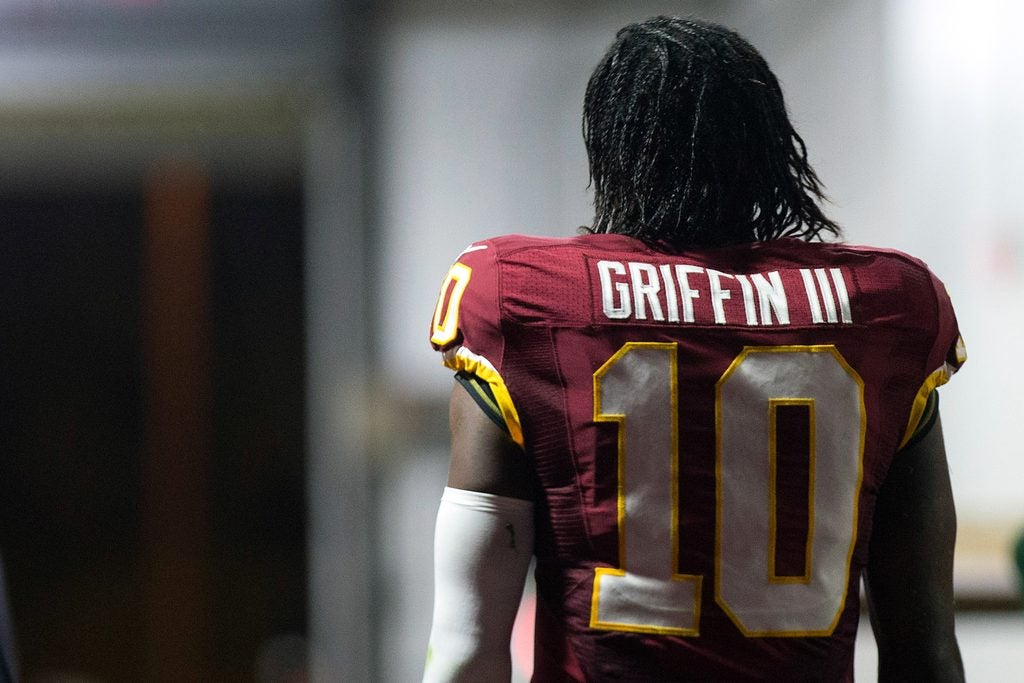
19. Washington’s Robert Griffin III trade still stands as one of the craziest quarterback gambles in NFL draft history
It’s hard to talk about the craziest trades in NFL history without bringing up quarterback trades. Few quarterback trades carry the magnitude of the one Washington made to select Robert Griffin III in the 2012 NFL Draft.
In March 2012, Washington knew Andrew Luck was going first overall. There was no shot at getting him, and the franchise still needed a quarterback it could build around. It liked Griffin. The only problem was that Washington was picking at No. 6, and it needed to get up to No. 2, where the St. Louis Rams were sitting.
So Washington paid whatever it took.
Robert Griffin III trade facts
The RGIII trade is one of the biggest trades in NFL history when considering the cost of the move.
- Washington sent three first-round picks and a second-round pick to St. Louis.
- Washington received the No. 2 overall pick and used it on Griffin.
- Griffin won NFL Offensive Rookie of the Year in 2012.
Why the RG3 trade was so crazy
Washington made it clear it was going to spend all of its draft capital to land Griffin. Questions about the system he played in college didn’t stop it. Concerns about how durable he would be at the next level didn’t stop it either. Washington wanted Griffin, so it sent three first-round picks and a second-round pick to the Rams and went and got him.
That alone makes the deal wild. What makes it even crazier is how much teams valued those picks at the time.
The league looks different now. Teams have become more gun-shy about trading away picks because free-agent misses are piling up, and they know they might need those selections to fill the roster. In 2012, teams prized their draft picks every bit as much. Washington didn’t care. It wanted its quarterback, and that move changed the complexion of future trades.
How an injury derailed everything for Washington
The start could not have gone much better. Griffin was the NFL Offensive Rookie of the Year, the Shanahans were calling plays, and Washington looked like it had found a star who would carry the franchise for a decade.
Then Griffin hurt his knee in a playoff game after his rookie season. It’s tough to say, but he was never the same player again, and that injury ruined his career.
Griffin spent 2012-15 with Washington before landing with the Cleveland Browns in 2016. He was out of the league in 2017, and he finished his career as a backup with the Baltimore Ravens from 2018-20.
So in the short term, Washington won the trade without question. It had the Rookie of the Year and a dynamic young quarterback. Over the long haul, though, one injury unraveled the entire deal.
The Rams clearly won the long game
St. Louis turned that haul into a long list of contributors. The Rams’ return included:
- DL Michael Brockers
- CB Janoris Jenkins
- LB Alec Ogletree
- WR Stedman Bailey
- RB Zac Stacey
- OL Greg Robinson
Whether the Rams used those picks themselves or packaged them to create even more draft capital, they came out ahead. St. Louis got exactly what it was looking for out of the trade, while Washington was left without the franchise quarterback it gave everything up to get.
The bottom line is that Washington’s gamble left a mark on the entire league. After Griffin’s 2012 season, a lot of teams started asking whether moving up in the NFL draft is ever really worth the price, and plenty of front offices still ask that question every spring. – Rob Gregson
18. Patriots’ 4th-round gamble on Randy Moss still stands as one of the most lopsided trades in NFL history
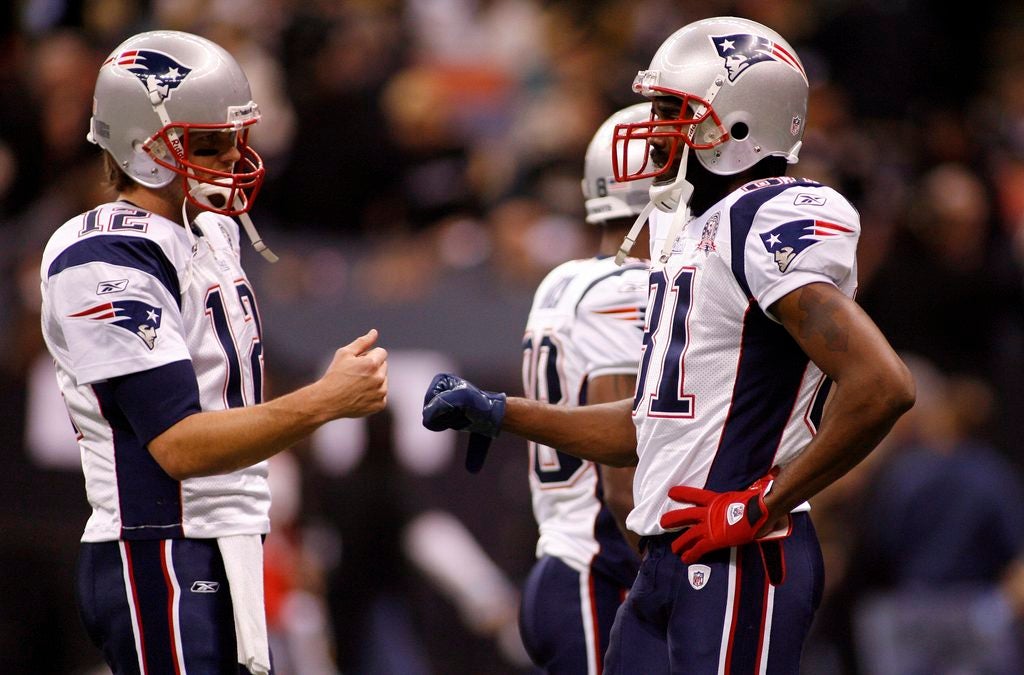
Three years before his disastrous reunion with the Minnesota Vikings, Randy Moss was part of another trade that looked almost too good to be true. Only this time, the New England Patriots were the team acquiring him. On April 29, 2007, during the NFL draft, the Patriots sent the Oakland Raiders a fourth-round pick, the 110th overall selection, in exchange for Moss.
That’s it. One fourth-round pick.
Oakland used that selection on Cincinnati cornerback John Bowie. New England walked away with one of the most talented receivers to ever play football. There’s no shortage of lopsided trades in NFL history, but few of them look quite like this one in hindsight.
Why the Raiders let Randy Moss go for so little
The price tag only makes sense when you remember where Moss was at the time. His two-year tenure in Oakland had been a disaster. The Raiders were a struggling franchise, and Moss had grown increasingly frustrated with the organization.
The production reflected it. Moss caught just 42 passes for 553 yards and three touchdowns in 2006. For a receiver of his caliber, those numbers were jarring. They also raised legitimate questions about whether his best football was already behind him.
That’s the kind of question that tanks a player’s trade value. But Bill Belichick and the Patriots saw an opportunity where others saw risk.
Consider what New England could offer. Moss would have a chance to play with Tom Brady, compete for a championship, and repair his reputation with a franchise already established as one of the NFL’s best. A change of scenery is a common talking point for struggling veterans. This one happened to come with a future Hall of Fame quarterback and a proven winning culture attached.
What Moss did with Tom Brady in 2007
What happened next was historic.
During the 2007 season, Moss caught 98 passes for 1,493 yards. He also set the NFL’s single-season receiving touchdown record with 23 scores. Brady threw a then-record 50 touchdown passes, and nearly half of them went to Moss.
The team results were just as staggering. New England became the first team to finish a 16-game regular season undefeated. The Patriots reached Super Bowl XLII with an 18-0 record before losing to the New York Giants in one of the biggest upsets in NFL history.
That loss stings for Patriots fans to this day. But it doesn’t change what Moss meant to that offense. Even without a championship, he completely transformed New England’s attack and raised its ceiling overnight.
And the production didn’t stop after one magical season. Moss recorded another 1,000-yard season in 2008. He followed that up with 1,264 yards and 13 touchdowns in 2009. For a player some wondered had peaked, that’s a remarkable stretch of sustained excellence.
Who won the Randy Moss trade?
The New England Patriots, by an extraordinary margin.
On the other side of the ledger, Bowie made little impact for Oakland and never developed into a significant contributor. The Raiders traded a future Hall of Famer for a fourth-round draft pick and got next to nothing in return.
The Patriots, meanwhile, received multiple seasons of elite production from a player who instantly changed what their offense could be. For the price of a fourth-round selection, New England acquired a receiver who immediately produced one of the greatest individual seasons in NFL history.
Teams make bets on bounce-back candidates every offseason. Most of them fizzle out. This one turned a 110th overall pick into a record-breaking season, an undefeated regular season, and a trade that still serves as the gold standard for buying low on elite talent. – Kyle Crabbs
17. Packers’ trade that looked like a costly blunder at the time ended up reshaping two franchises for decades
In the 1992 offseason, the Atlanta Falcons traded quarterback Brett Favre to the Green Bay Packers, and the deal ended up shaping both franchises for a very long time.
If a trade like this happened today, the Packers would probably take heavy criticism for it. Atlanta drafted Favre in the second round of the 1991 NFL draft with the 33rd overall pick, and he barely saw the field as a rookie. He appeared in two games and threw four passes. He completed none of them, threw two interceptions, and took one sack.
Even so, the Falcons still got a first-round pick from Green Bay the next offseason. Think about how that would look now. A team drafts a quarterback in the second round, he barely plays, he throws two interceptions on four attempts, and the team still lands a first-rounder for him a year later. At the time, you could easily argue the Falcons had fleeced the Packers.
What Atlanta got in return
The price was the 17th pick in the 1992 NFL draft. Green Bay had two first-round picks that year and sent that one to Atlanta.
The Falcons then traded down from the 17th pick to the 19th and selected running back Tony Smith. He played three seasons in Atlanta, then two more with the Carolina Panthers, and had a short stint with the Philadelphia Eagles. He also spent one season in Canada with the Toronto Argonauts. Smith was never a successful running back in the NFL.
On paper, the Falcons had turned a seldom-used backup with ugly numbers into a first-round pick. The outcome turned out to be very different.
A dormant franchise comes back to life
Favre became one of the greatest quarterbacks of all time and one of the best in Packers history. Beyond that, he rebuilt a franchise that had been dormant for decades. With him under center, Green Bay climbed back into the group of premier NFL franchises, winning three consecutive MVP awards and the Super Bowl after the 1996 season.
He didn’t open the 1992 season as the starter. Don Majkowski held the job in the first few games, but Majkowski got hurt, Favre entered the game, and the job was his from that point on. From 1993 through 2007, he started every single game for the Packers, an impressive run of durability at the most demanding position in the sport.
Green Bay eventually traded Favre to the New York Jets in 2008. He also spent two seasons with the Minnesota Vikings late in his career, and he is now in the Hall of Fame.
Atlanta’s long search at quarterback
The trade package is only part of the story. The bigger aspect is how many quarterbacks the Falcons started while Favre was taking every snap in Green Bay.
These are the quarterbacks who started games for Atlanta from 1992 through 2007:
- Chris Miller
- Billy Joe Tolliver
- Wade Wilson
- Bobby Hebert
- Jeff George
- Chris Chandler
- Tony Graziani
- Steve DeBerg
- Danny Kanell
- Doug Johnson
- Michael Vick
- Kurt Kittner
- Matt Schaub
- Joey Harrington
- Chris Redman
- Byron Leftwich
Atlanta used 16 different starters in that span, and none of them gave the franchise lasting stability. The Falcons didn’t settle the position until they drafted Matt Ryan, who started as a rookie in 2008. From 1993 through 2007, Green Bay needed exactly one quarterback.
Process and outcome don’t always line up in the NFL, and this trade is a perfect example. By the standards of the time, the Falcons got what looked like great value for a quarterback who hadn’t completed a pass. They lost the trade anyway, and the Packers got a franchise-defining player for the 17th pick. – Wendell Ferreira
16. Brock Purdy saved Kyle Shanahan and John Lynch from the 49ers’ massive Trey Lance trade blunder with the Dolphins
The San Francisco 49ers are one of the best teams in the NFL, and a big reason why is a quarterback they drafted. Only it wasn’t the quarterback they meant to build around. The 49ers’ 2021 trade with the Miami Dolphins to select Trey Lance stands as one of the wildest trades in NFL history, and San Francisco essentially leveraged its future on a player who never panned out.
Brock Purdy is the only reason that trade isn’t remembered as a franchise-altering disaster.
What the 49ers gave up for Trey Lance
Let me bring you up to speed. Ahead of the 2021 NFL Draft, the 49ers moved up to the 3rd overall pick in a trade with the Dolphins. To get there, San Francisco sent Miami the following:
- The 12th overall pick in the 2021 NFL draft
- A 2022 first-round pick
- A 2022 third-round pick
- A 2023 first-round pick
That’s two future first-round picks and a third-round pick on top of a top-15 selection, all for the chance to draft quarterback Trey Lance.
Miami didn’t waste the haul. Through multiple moves built on that draft capital, the Dolphins came away with wide receiver Jaylen Waddle, wide receiver Tyreek Hill, and edge rusher Bradley Chubb. Meanwhile, the 49ers walked away with Lance.
Why the move never fit Kyle Shanahan’s offense
Here’s my main issue with the whole thing. The 49ers’ offense goes the way coach Kyle Shanahan goes. His system doesn’t need a game-changing quarterback to function. It needs a quarterback who can distribute the ball to the right playmakers at the right time.
That’s exactly what Brock Purdy has done since San Francisco drafted him as Mr. Irrelevant, the final pick of the draft. Purdy has become one of the better quarterbacks in the NFL, and he fits Shanahan’s offense like a glove.
Lance, on the other hand, isn’t even with the 49ers anymore. Just a few years into his career, it became clear he wouldn’t even hold down the backup job. So San Francisco traded Lance to the Dallas Cowboys before his rookie deal was even over.
Think about that for a second. The 49ers spent two first-round picks, a third-round pick, and the 12th overall pick on a quarterback they couldn’t play, who dealt with injuries, and who they had to move before his first contract expired.
The Dolphins won this trade in the short and long term
When you line everything up, Miami won this trade in both the short term and the long term. The Dolphins may no longer be the same team they were with Hill, Waddle, and Chubb leading the way. But they made the playoffs, and they fielded one of the most explosive offenses in the NFL during that stretch.
San Francisco can’t point to anything similar from Lance. All the facts and all the numbers point to a massive loss for the 49ers.
It just so happened that the 49ers landed another franchise quarterback, one they essentially stumbled into as insurance. Sometimes that’s just how it goes in the NFL. A team can miss badly on a premium investment and still come out fine because of a pick nobody expected to matter.
Shanahan, general manager John Lynch, and the 49ers are OK today because of Purdy. But if not for Purdy, there’s a real chance neither Shanahan nor Lynch would still be in San Francisco after the Trey Lance trade. – Rob Gregson
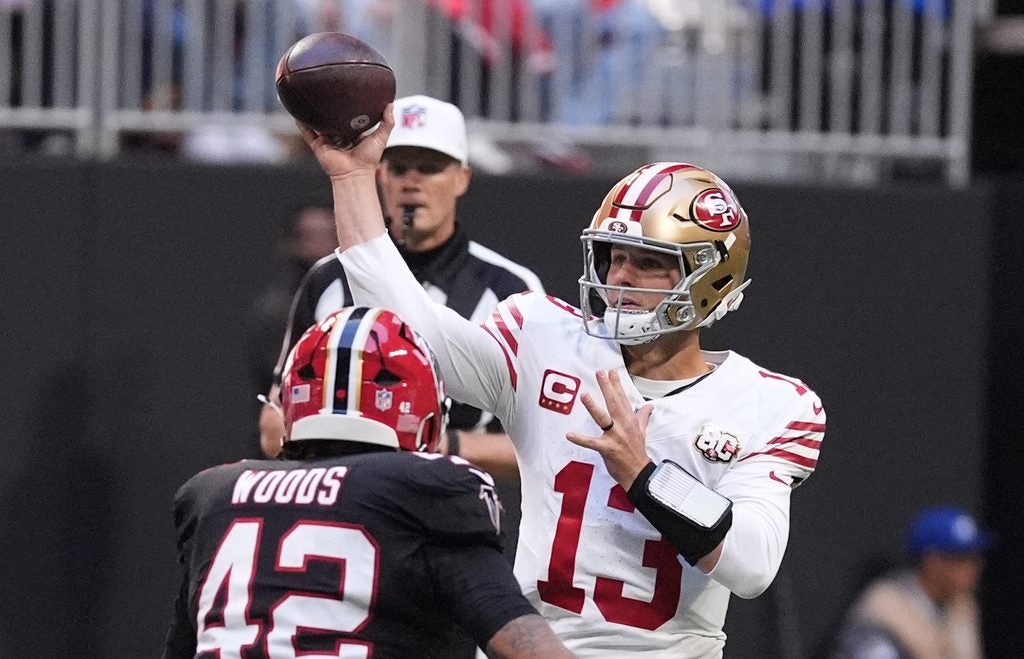
15. The Titans’ decision to trade A.J. Brown to the Eagles is one that will go down in history for all of the right and wrong reasons
It’s always unexpected when a team willing trades away one of its best players, especially considering the trajectory A.J. Brown was on when the Tennessee Titans decided to ship him off to the Philadelphia Eagles.
In hindsight, it’s even worse for the Titans and better for the Eagles. But in order to avoid spoilers, let’s go ahead and dig into the decision and the final outcome for both teams.
Why did the Titans decide to trade A.J. Brown?
Well, the decision was two-fold: Jon Robinson, the Titans GM at the time, was comfortable paying Brown the money he sought on a new deal. The two sides were very far apart in terms of what they were looking for, which was creating tension around Brown’s future in Tennessee.
On top of that, Robinson and Co. really like Treylon Burks, a rookie receiver out of Arkansas. Robinson was seeking value more than anything in this situation and figured a rookie with a promising ceiling and cheap contract was a better deal than the already-proven Brown, who logged 185 receptions, 2,995 receiving yards, and 24 touchdowns in three seasons with the Titans.
Therefore, the Titans traded Brown for Philadelphia’s 18th overall pick and its 101st overall pick (Round 3) in the 2022 NFL Draft. The Titans took Burks at No. 18 and used the 101st overall pick in a package that helped acquire extra selections that eventually landed cornerback Roger McCreary, tackle Nicholas Petite-Frere, and wide receiver Kyle Phillips.
Who won the A.J. Brown trade?
The Eagles were both immediate and big picture winners in this trade and the Titans were major losers in both facets. Brown made an instant impact, recording nearly 3,000 receiving yards and 18 receiving touchdowns in his first two seasons with the Eagles. He was also key in the Eagles’ Super Bowl LIX run, where he caught 12 passes for 163 yards and two touchdowns on 23 targets over the course of four playoff games.
In all, he recorded at least 1,000 yards in each of his four seasons with the Eagles before he was shipped off to the New England Patriots during the 2026 offseason.
Burks, on the other hand, never found his footing. He was a bust with the Titans.
Just put it this way: Brown had more Super Bowl appearances with the Eagles (2) than Burks had receiving touchdowns with the Titans in three seasons (1).
Injuries, an inability to figure out NFL life, and other factors keyed the disappointing tenure. To make matters worse, the three aforementioned acquired players didn’t really pan out, either.
The decision to trade Brown also led to Robinson’s firing and the Titans franchise has fallen apart ever since. The trade isn’t the whole reason, by any means, but definitely played a part.
This is an easy winner to declare, as the Eagles completely won in both the short- and long-term. They totally made the right call to trade for Brown and the Titans’ decision to get rid of him will go down as one of the worst of all-time. – Evan Winter
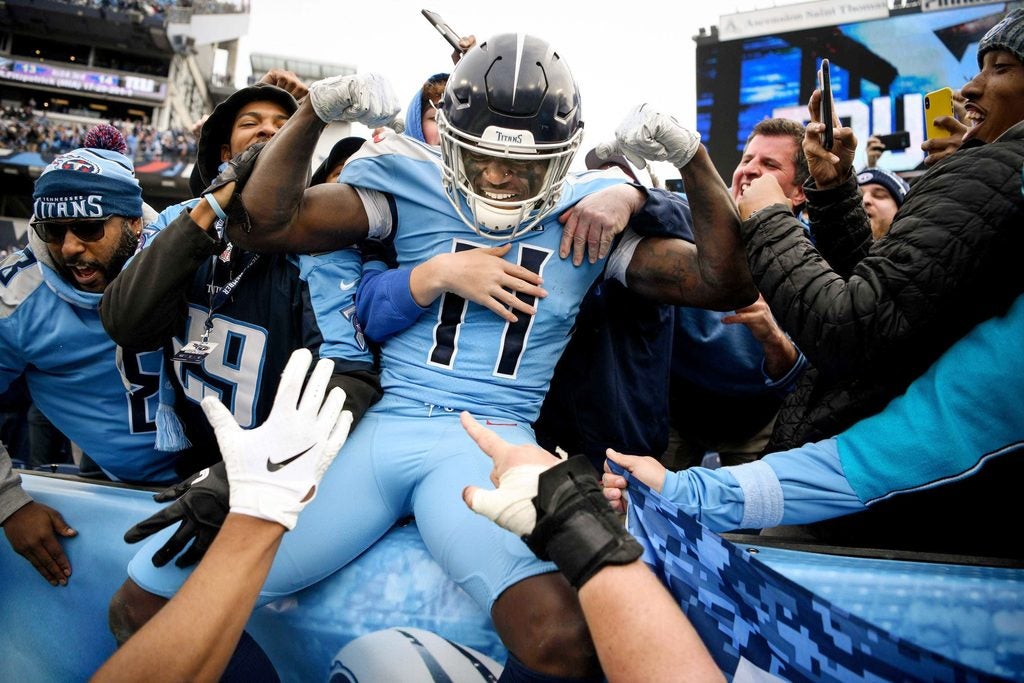
14. Vikings’ 2010 blockbuster Randy Moss reunion lasted less than a month, and the winner of the trade was never in doubt
The Minnesota Vikings entered the 2010 NFL season trying to bottle the same magic from the year before. Quarterback Brett Favre was back for another run after leading Minnesota to the NFC Championship Game in 2009. But the Vikings stumbled out of the gate, and the passing game needed a jolt.
So Minnesota went back to its past for help. On Oct. 6, 2010, the Vikings acquired wide receiver Randy Moss from the New England Patriots and sent New England a third-round pick in the 2011 NFL draft. The Patriots also included a seventh-round pick in the 2012 draft as part of the deal.
The appeal wasn’t hard to see. Moss is one of the greatest receivers in NFL history, and he spent the first seven seasons of his career in Minnesota. Now he’d be catching passes from Favre in the twilight of a Hall of Fame career. It sounded like a perfect reunion.
Randy Moss’ second stint with the Minnesota Vikings unraveled in a hurry
This is where the story goes off the rails.
Moss played just four games for the Vikings. He caught 13 passes for 174 yards and two touchdowns in that span, which isn’t nothing. But the production never had a chance to matter, because the relationship fell apart almost as quickly as it came together.
Minnesota lost to New England in Week 8. After the game, Moss publicly praised his former organization while criticizing elements of the Vikings’ preparation. For a team that had just spent draft capital to bring him home, that’s not exactly the welcome-back gift anyone was hoping for.
Vikings coach Brad Childress had seen enough. On Nov. 1, less than four weeks after the trade, Childress informed the team that Moss was being waived. The move became official the following day.
Let this sink in for a minute. Minnesota had effectively spent a third-round pick to rent a future Hall of Fame receiver for four games.
The fallout from the Randy Moss trade touched three franchises
The Moss saga didn’t end in Minnesota, either. The Tennessee Titans claimed him off waivers, which made Tennessee his third organization of the 2010 season. The change of scenery didn’t spark much. Moss caught just six passes for 80 yards during the rest of the year.
Meanwhile, the Patriots didn’t miss a beat without him. New England finished the regular season 14-2.
The third-round pick the Patriots pried away from the Vikings became the 74th pick in the 2011 NFL draft. New England used it to select quarterback Ryan Mallett out of Arkansas. Mallett never developed into a starting quarterback for the Patriots. That being said, New England still turned a player it was ready to move into another developmental asset. That’s a win in any front office.
Minnesota didn’t fare nearly as well. The Vikings finished 6-10, and Childress was fired later that November. A season that started with NFC Championship hangover expectations ended with a coaching change and a roster in need of an overhaul.
Who won the Randy Moss trade between the Vikings and Patriots?
The New England Patriots, and it isn’t particularly close.
One thing is for certain: Bill Belichick’s front office had already decided Moss was a player it was prepared to part with. And instead of simply cutting ties, New England extracted a third-round pick from a division-leading hopeful in desperate need of a spark. Then the Patriots went out and won 14 games without him.
Minnesota, on the other hand, sacrificed draft capital for nostalgia. The idea of Moss and Favre together was too tempting to pass up for a team chasing one more shot at a Super Bowl. But the reunion lasted less than a month, cost the Vikings a premium pick, and became one of the defining images of a lost season.
It’s a reminder that the best stories on paper don’t always survive contact with reality. Sometimes the team selling the player knows exactly what it’s doing. – Kyle Crabbs
13. Carson Palmer’s retirement threat sparked a weird deal
The Cincinnati Bengals and Oakland Raiders pulled off one of the wildest trades in NFL history in 2011, when quarterback Carson Palmer moved to Oakland in the middle of the season. This deal stands out because of the standoff that came before it and the way the leverage flipped overnight.
At the time, Palmer was 31 years old. The Bengals made him the No. 1 overall pick in 2003, and he became a solid starter, but not a spectacular one. Palmer earned Pro Bowl nods in 2005 and 2006, and he led the NFL in passing touchdowns and completion percentage in 2005. Even so, he never quite established himself as a top-end quarterback in Cincinnati.
A standoff in Cincinnati
After a 4-12 season in 2010, Palmer requested a trade. The Bengals refused, and what followed was one of the most shocking sequences of that era.
Palmer said he would retire rather than play for Cincinnati again. Bengals head coach Marvin Lewis responded by saying the organization had counted on Palmer’s commitment, since the quarterback had given his word. Then Palmer simply stopped playing for the team.
The Bengals held on to his rights anyway. Palmer landed on the reserve/did not report list after failing to report to training camp, and Cincinnati moved on with rookie second-rounder Andy Dalton under center. Dalton played reasonably well, which gave the front office no urgency to deal its former franchise quarterback for less than it wanted.
An injury changes everything
The situation shifted midway through the 2011 season. The Raiders lost starting quarterback Jason Campbell to an injury, and Oakland believed it could still compete. Raiders coach Hue Jackson had connections with Palmer and a good relationship with the Bengals’ front office, so he was able to get the deal done.
Cincinnati received a first-round pick in 2012 and a conditional second-round pick in 2013. That second-rounder would have become a first-round pick if the Raiders had reached the AFC Championship Game in 2011, which did not happen. The Bengals used those selections on cornerback Dre Kirkpatrick in 2012 and running back Gio Bernard in 2013.
The trade remains a striking example of how a contender’s sudden quarterback injury can radically change a seller’s leverage. Nobody was willing to pay what the Bengals thought Palmer was worth. Then Campbell went down, Oakland saw a path to contention, and the Raiders gave Cincinnati what it wanted to acquire the veteran.
Who won the trade?
Palmer started the rest of the 2011 season and almost all of the 2012 season for the Raiders. In 2011, his numbers weren’t great: 13 touchdown passes, 16 interceptions, and an 80.5 passer rating. He was more competent in 2012, but never more than that.
Oakland then traded Palmer to the Arizona Cardinals in 2013 for a pair of late-round picks. Arizona turned out to be a better fit. Palmer had some tough moments there too, but he eventually became a sensational quarterback, especially in 2015.
That year, Palmer threw for 4,671 yards, 35 touchdown passes, and 11 interceptions, with a 104.6 passer rating. He led the Cardinals to the NFC Championship Game, and the only reason he didn’t win MVP was Cam Newton’s magical season with the Carolina Panthers. Palmer retired after the 2017 season.
In terms of results, the trade was underwhelming for both sides. The Raiders gave up premium draft capital and didn’t get what they wanted from Palmer at the time. The Bengals, on the other hand, landed pieces that were useful for a while.
The complicating factor is that Palmer did turn into a high-level quarterback, just not in Oakland or Cincinnati. Still, the Bengals had their own good quarterback in Dalton for several years, plus the return from the trade. It’s fair to say Cincinnati won the deal, even if the player it refused to accommodate ended up having the best stretch of his career somewhere else. – Wendell Ferreira
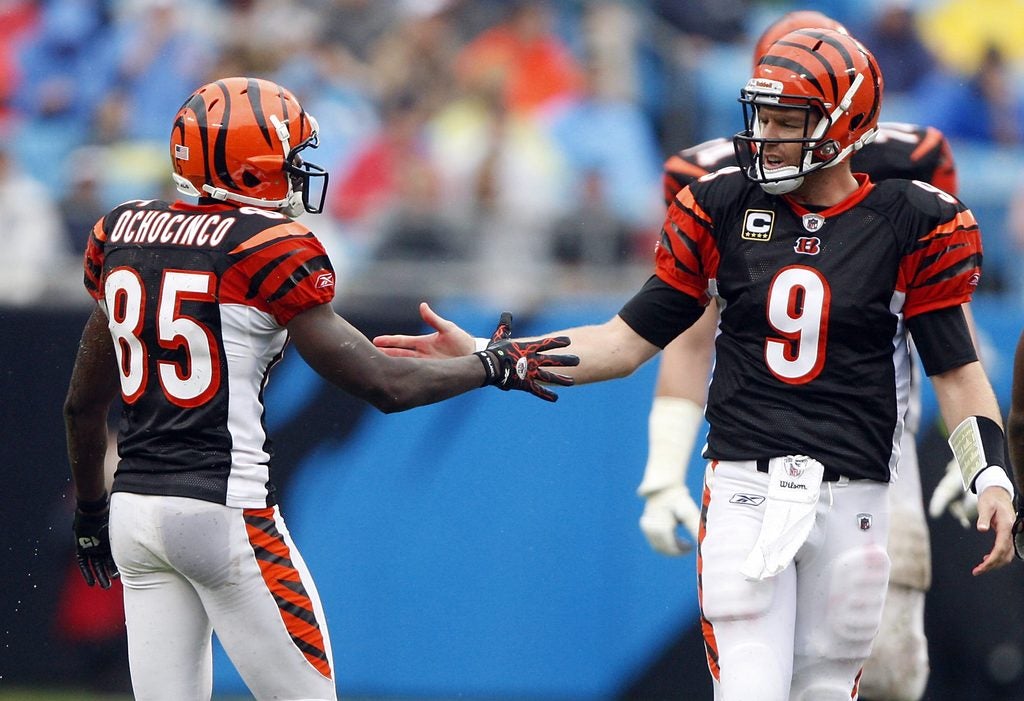
12. Khalil Mack blockbuster still stands as one of the wildest trades in NFL history, and the fallout should haunt both franchises
You can’t talk about the wildest trades in NFL history without bringing up what the then-Oakland Raiders did with Khalil Mack. Just as the 2018 NFL season was about to kick off, the Raiders sent their All-Pro pass rusher to the Chicago Bears for a massive package of draft picks. It immediately became the biggest trade of the year and one of the biggest trades the league had ever seen.
Khalil Mack trade details
The Khalil Mack-Raiders trade made major headlines at the time, as it was considered one of the biggest trades. Here’s how it broke down:
- Raiders send: Khalil Mack, a 2020 second-round pick, and a conditional 2020 fifth-round pick
- Bears send: 2019 and 2020 first-round picks, a 2020 third-round pick, and a 2019 sixth-round pick
How the Raiders and Khalil Mack got to this point
The circumstances that led to the trade are what made it so wild. Mack was in the prime of his career at 27 years old, and he was arguably the best pass rusher in football. Most franchises would do whatever it takes to lock up a player like that for the long haul.
Jon Gruden and the Raiders’ front office didn’t see it that way. The two sides hit a contract standoff, and it became clear that Oakland didn’t want to pay Mack what he was asking for. Without a new deal, Mack wasn’t going to play for the Raiders.
Once that became abundantly clear, Oakland pulled the trigger and landed one of the biggest returns in league history. On paper, it looked like a franchise-altering haul.
Why the Khalil Mack trade might be a lose-lose
It’s rare that an NFL trade ends up as a lose-lose for both sides. I have to be honest, though. This might be one of them.
For one, the Bears came away with good players. Chicago landed Mack, and that 2020 second-round pick turned into tight end Cole Kmet. Mack was excellent with the Bears, and he was still productive after he moved on to the Los Angeles Chargers.
The problem is that Chicago didn’t win anything with him. The Bears made the trade to chase a Super Bowl, and they never came close to winning one. A big reason why is that the rest of the roster wasn’t good enough, and it wasn’t good enough because they sent so much draft capital to Oakland.
So did the Raiders cash in on all those picks? Not exactly.
That draft capital netted the Raiders Josh Jacobs, Damon Arnette, and Bryan Edwards, among others. Jacobs was a legitimate hit, but he isn’t on the team anymore. Outside of him, the Gruden and Mike Mayock era didn’t get much out of that haul. The Raiders botched most, if not all, of those picks outside of Jacobs.
Neither franchise won the deal that mattered
The truth is, I’m not sure either team came out as a winner, whether you look at it in the short term or the long term.
Chicago got one of the best pass rushers in the league, but it gutted the roster around him to do it. Oakland got a historic return, but it whiffed on nearly everything that return was supposed to deliver. When I say neither team got much out of it, I mean winning football games that matter. Neither franchise did.
It’s hard not to look back and think everyone would have been better off if the deal never happened. Mack wanted to be a Raider at the time. He likely would have been better off signing his extension in Oakland, and the Raiders would have been better off keeping their best player instead of turning him into a pile of picks that mostly went bust.
One of the wildest trades in NFL history ended up amounting to very little for the two teams that made it. – Rob Gregson
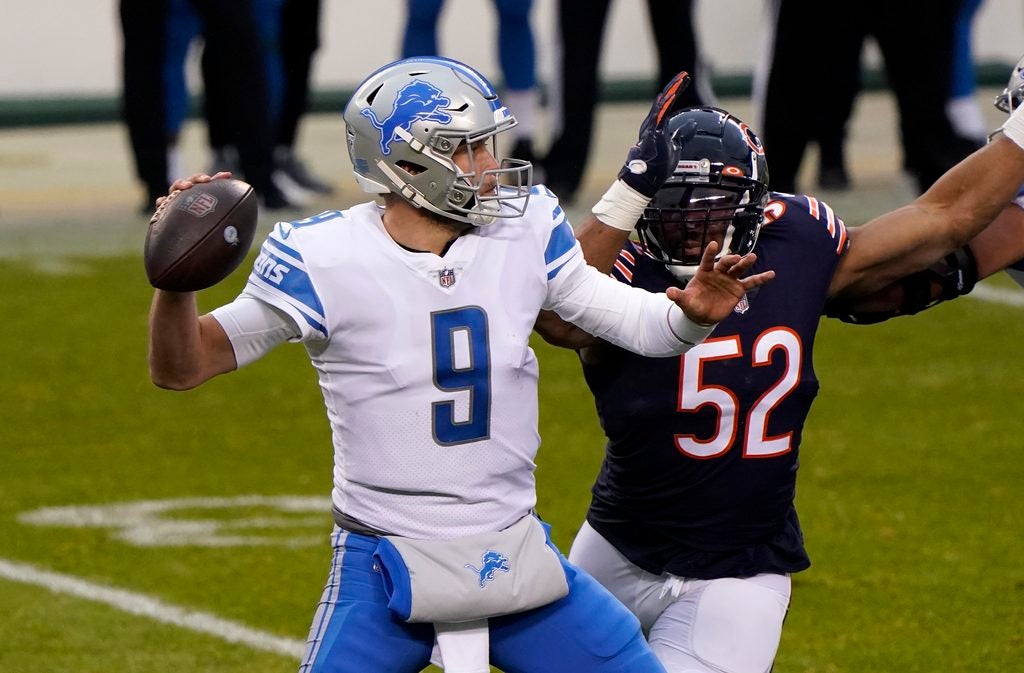
11. Matthew Stafford trade from the Lions to the Rams is a rare true win-win
The Matthew Stafford trade stands out as one of the rarest. A high-level quarterback changing teams is unusual on its own. But more than that, it’s seldom that both sides actually win a trade, and in this instance, both the Los Angeles Rams and the Detroit Lions got exactly what they wanted.
The deal came together on a wild night. The teams agreed to the trade on Jan. 30, 2021, right before the Super Bowl, and the Rams were negotiating with head coach Sean McVay and Stafford himself both on vacation in Mexico. The San Francisco 49ers were also interested in acquiring Stafford, but Los Angeles pulled ahead and got the deal done with Detroit.
The terms were significant. The Rams sent quarterback Jared Goff, a 2021 third-round pick, and first-round picks in 2022 and 2023 to the Lions. In return, Los Angeles received Stafford.
The Rams got their quarterback
In the short term, and even in the midterm, the Rams landed a much higher level of quarterback in Stafford. The results came quickly: Los Angeles won the Super Bowl in the 2021 season. Stafford was also named MVP in 2025.
Since acquiring Stafford, the Rams have always been competing for championships, except for the 2022 season. That’s the type of sustained window every team hopes for when trading premium draft capital for a veteran passer.
It’s hard to say for sure, but the most likely scenario is that the offense wouldn’t have reached the same level with Goff, who was a much more limited passer. Stafford was the type of quarterback McVay wanted. Potentially, Los Angeles wouldn’t have won the Super Bowl with Goff, since the team had opportunities before and couldn’t get it done.
Detroit built a foundation
On the other side, the Lions came out of the trade in great shape too. Initially perceived as a salary dump and a bridge option, Goff ended up being a high-level quarterback for Detroit. He was very solid and has statistically been one of the best quarterbacks in football since the trade, becoming a foundational piece for the franchise himself.
Additionally, the Lions put those draft picks to good use. Not every pick was a hit, but Detroit acquired impactful pieces like running back Jahmyr Gibbs, tight end Sam LaPorta, and wide receiver Jameson Williams. Those three became high-level players, and they’re still part of the foundation of the Lions’ roster.
Detroit turned a quarterback it was ready to move on from into a starter for the long haul plus a core of young offensive weapons. For a team entering a rebuild, that’s about as good as it gets.
Why both sides won
When you look back in hindsight, trades usually have a clear winner. Here, both teams got out of the deal what they wanted.
There’s still an argument that the Rams are the true winners, simply because they won a Super Bowl and the Lions did not. A championship is the ultimate goal, and Los Angeles got one within a year of making the move.
At the same time, there’s a reasonable case that Detroit wouldn’t have won a Super Bowl with Stafford either. The Lions ended up with better results than they would have otherwise, using Goff and those draft picks to rebuild under general manager Brad Holmes and head coach Dan Campbell. For a franchise that needed a new direction, the trade gave clear answers on how to build it. – Wendell Ferreira
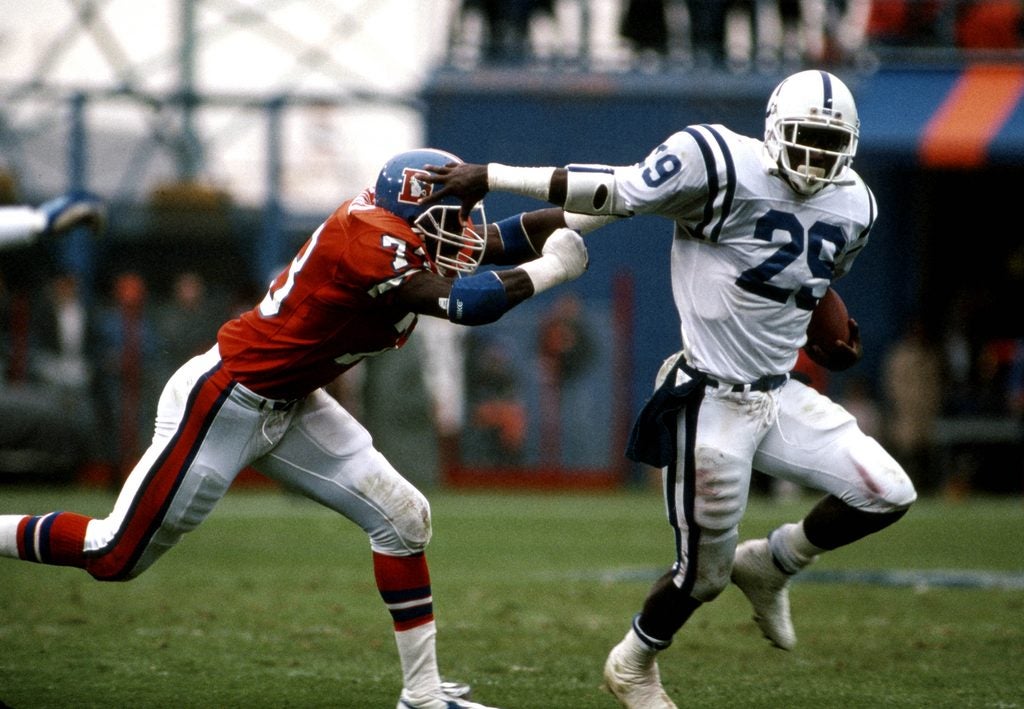
10. Eric Dickerson’s 3-team blockbuster trade to the Colts changed the AFC, and the real winner of the deal wasn’t Indianapolis
Few blockbuster trades in NFL history are as complicated as the deal that sent running back Eric Dickerson from the Los Angeles Rams to the Indianapolis Colts on Oct. 31, 1987. The in-season trade pulled in the Buffalo Bills as a third team. It moved a franchise running back, a 2nd overall pick, and a mountain of draft capital, and it shifted the balance of power in the AFC for years.
The Colts landed the biggest name. But that doesn’t mean they won the trade.
How the Eric Dickerson trade came together
The Rams had arguably the greatest running back in football. Just three years earlier, Dickerson set the single-season rushing record with 2,105 yards. His relationship with Los Angeles had soured over contract disputes, though, and the Rams decided to trade their franchise player.
The Eric Dickerson trade rundown
This wasn’t a simple two-team swap. Here’s how the pieces fit together:
- Indianapolis Colts received: RB Eric Dickerson
- Buffalo Bills received: The rights to LB Cornelius Bennett, the 2nd overall pick in the 1987 NFL Draft
- Los Angeles Rams received: RBs Greg Bell and Owen Gill, plus three first- and three second-round picks spread across the 1988 and 1989 drafts
Bennett is the piece that made the whole thing possible. Indianapolis drafted him but couldn’t reach a contract agreement. So the Colts turned those rights, additional draft capital, and Gill into one of the greatest running backs ever.
Buffalo gave up Bell and three high draft selections to secure Bennett. Meanwhile, Los Angeles traded away a generational offensive weapon for enough resources to rebuild significant portions of its roster.
Every team got something real. The question isn’t whether each side came away with value. It’s which side came away with the value that lasted.
Immediate returns favored Indianapolis
The early results looked great for the Colts. Dickerson ran for 1,011 yards in just nine games with Indianapolis in 1987, and he helped the Colts win the AFC East. The following season, he led the NFL with 1,659 rushing yards.
That’s the kind of production a team dreams about when it pays a premium for a superstar. Dickerson gave Indianapolis a Hall of Fame running back and immediate offensive credibility.
But consider the ceiling. The Colts never advanced deep into the postseason with Dickerson. A superstar at running back can carry an offense, yet he couldn’t carry Indianapolis to the final weekends of January.
The Rams didn’t come away empty-handed, either. Bell ran for 1,212 yards and 16 touchdowns in 1988, then followed up with 1,137 rushing yards and 15 touchdowns in 1989. In other words, Los Angeles got two strong seasons from the running back it acquired to replace Dickerson. The Rams also added multiple players through their draft haul.
Even so, the overall return wasn’t transformative enough to produce a championship. Six premium picks and a productive running back is a strong package on paper. It just didn’t change the Rams’ fate the way a deal of that size should.
Why the Buffalo Bills won the Eric Dickerson trade
So with everything on the table, the long-term winner is Buffalo.
The Bills landed a foundational defensive player in Bennett. He became a five-time Pro Bowler, and he helped Buffalo reach four consecutive Super Bowls. That’s a pillar of four straight AFC championship teams, acquired for Bell and three draft selections.
The Colts got the biggest individual star. Likewise, the Rams accumulated considerable assets. But Buffalo is the team that walked away with the strongest long-term organizational return. Bennett was there at the heart of one of the most successful runs any AFC team has ever put together.
It’s a useful reminder for anyone grading a trade the week it happens. The headline name usually draws the attention, and Dickerson certainly delivered on his end. Still, the team that wins a deal is often the one that adds the player who keeps showing up in February.
Indianapolis got the star, Los Angeles got the haul, and Buffalo got the cornerstone. – Kyle Crabbs
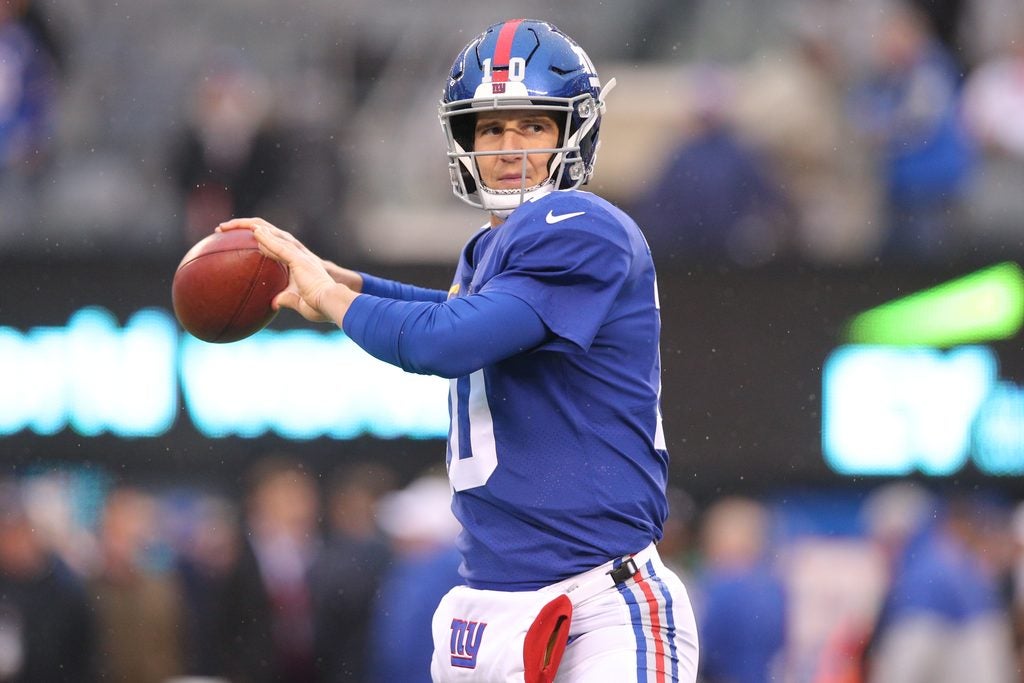
9. Eli Manning draft-day trade remains a complicated one to have a final verdict
This was a deal that shaped two franchises for a decade and a half. The San Diego Chargers selected quarterback Eli Manning with the first overall pick of the 2004 NFL Draft. Minutes later, they traded him to the New York Giants in a quarterback swap that still defines that draft class.
The photos of Manning on stage with a Chargers jersey remain some of the strangest images in draft history. He never played a snap for San Diego, and the trade became one of the most impactful deals the league has ever seen.
The Eli Manning-Philip Rivers trade details
The deal came together during the draft itself. Here’s what each side received:
- Giants received: Quarterback Eli Manning (1st overall pick in 2004)
- Chargers received: Quarterback Philip Rivers (4th overall pick in 2004), a 2004 third-round pick (kicker Nate Kaeding), a 2005 first-round pick (linebacker Shawne Merriman), and a 2005 fifth-round pick (utilized to acquire veteran offensive lineman Roman Oben).
At the time, that was significant compensation for a rookie player, but not as much as it would be in today’s NFL. San Diego walked away with a franchise quarterback, a starting kicker, a pass rusher, and a tackle, all for a player who had made it clear he would not suit up for the team.
Why Manning never played in San Diego
The situation echoed the John Elway saga from roughly 20 years earlier. Before the draft, Manning and his agent, Tom Condon, told the Chargers he did not want to play there. Manning did not view San Diego as the right organization for him, and his father, Archie Manning, was also part of the process to steer him away from the franchise.
Without a deal in place before the draft, the Chargers made the pick anyway. Selecting Manning kept their options open and gave them leverage in trade talks.
The Giants’ side of the story is just as wild. New York had Ben Roethlisberger ahead of Rivers on its board at quarterback. However, with negotiations ongoing, the Giants took Rivers at No. 4 because he was the quarterback the Chargers wanted in the package for Manning. Roethlisberger fell to the 11th overall pick, where the Pittsburgh Steelers selected him, and the Chargers and Giants finalized the trade during the draft.
Who won the trade?
The results make this deal even harder to judge, because both quarterbacks played at a high level for a long time.
Eli Manning became one of the greatest players in Giants history. He made four Pro Bowls and won two Super Bowls with New York after the 2007 and 2011 seasons, earning Super Bowl MVP honors both times. The Giants retired his No. 10, and the franchise had every reason to be happy with the outcome.
Rivers, on the other hand, spent a decade and a half with the Chargers. He played the 2020 season with the Indianapolis Colts and returned to Indianapolis for a few games in 2025. By most metrics, Rivers was the better quarterback. He made eight Pro Bowls, led the NFL in passing yards in 2010, and won Comeback Player of the Year in 2013.
The difference between the two careers comes down to team success. The Chargers never produced the collective results the Giants did, and Rivers never played in a Super Bowl. That perception can also validate Manning’s decision to avoid San Diego. He landed in a much better situation in New York under head coach Tom Coughlin and delivered in the biggest moments of his career.
Nonetheless, calling one side the loser would miss the point. San Diego got arguably the better individual quarterback, plus some other roster pieces. New York got a franchise leader with two championships. Two decades later, this remains one of the rare blockbuster trades where both teams could walk away satisfied, and that’s ultimately why it belongs on this list. – Wendell Ferreira
8. Seattle’s long game delivered a lopsided result after moving on from Russell Wilson
The Seattle Seahawks traded quarterback Russell Wilson to the Denver Broncos in March 2022. Early in that offseason, Seattle sent Wilson and a fourth-round pick to Denver for two first-round picks, two second-round picks, a fifth-round pick, and three players: quarterback Drew Lock, defensive tackle Shelby Harris, and tight end Noah Fant.
Packages that size rarely go to a single player. The trade was even wilder because legendary quarterbacks still playing at a high level are seldom moved, and the Seahawks didn’t necessarily have a replacement plan in place.
Why Denver saw a franchise quarterback
Questions always followed Wilson’s style of play and whether he could carry a team by himself. Still, he remained a high-level player. In 2021, his final season in Seattle, Wilson completed 64.8% of his passes for 25 touchdowns and six interceptions, with a 103.1 passer rating.
He might not have been in his prime anymore, but he was close to it. Wilson also had a phenomenal 2020 season. So at that point, the perception was that the Broncos were acquiring a franchise-altering quarterback.
The surrounding context made the deal stranger. In the same offseason, Denver was also rumored to have interest in Aaron Rodgers, the back-to-back MVP in 2020 and 2021, who had requested a trade from the Green Bay Packers. Green Bay decided to keep Rodgers for one more year, and the Broncos pivoted to Wilson. Few around the league expected that outcome at the time, and it created an intense situation for both franchises.
Wilson’s career regressed in Denver
The results went bad almost immediately. Wilson’s first season in Denver came under coach and offensive play-caller Nathaniel Hackett, and his passer rating dropped from 103.1 in 2021 to 84.4 in 2022, with 16 touchdowns and 11 interceptions. Hackett was fired after 15 games, and Jerry Rosburg finished the season as interim head coach.
In 2023, the Broncos traded for Sean Payton, who was still connected to the New Orleans Saints, and made him head coach. Wilson played better that year, posting a 98.0 passer rating with 26 touchdowns and eight interceptions. Even with that rebound, it was clear he wasn’t the long-term answer for Denver.
The Broncos cut Wilson ahead of the 2024 season, making the five-year, $245 million post-trade extension look impossibly bad. He spent one year with the Pittsburgh Steelers, then essentially served as a backup for the New York Giants in 2025, starting only three games. He is now retired from football.
Seattle won the trade by any measure
The Seahawks turned the draft capital into offensive tackle Charles Cross, edge defender Boye Mafe, cornerback Devon Witherspoon, and edge Derick Hall, plus depth pieces in Tyreke Smith and Dareke Young.
The players acquired in the trade mattered less. Fant, Lock, and Harris all became role players, and none of them turned into an impactful starter. The deal was lopsided in Seattle’s favor mostly because of the draft picks.
The quarterback position worked out, too. In the aftermath of the trade, Seattle held a competition between Lock and Geno Smith, who was already the backup. Smith won the job and started for three seasons as a capable quarterback before Seattle traded him to the Las Vegas Raiders. He is now with the New York Jets. During that three-year span, Smith was a better quarterback than Wilson.
Lock’s path also came full circle. He left Seattle after two years, spent a season with the Giants, and returned to the Seahawks. He won a Super Bowl as the backup quarterback last season.
Russell Wilson’s career regressed, and Seattle eventually moved on from coach Pete Carroll as well. Then, after parting ways with Smith in 2025, the Seahawks won the Super Bowl this past season with a different head coach in Mike Macdonald and a different quarterback in Sam Darnold.
A lot has changed since March 2022, but Seattle clearly ended up with the better outcome of the two teams. – Wendell Ferreira
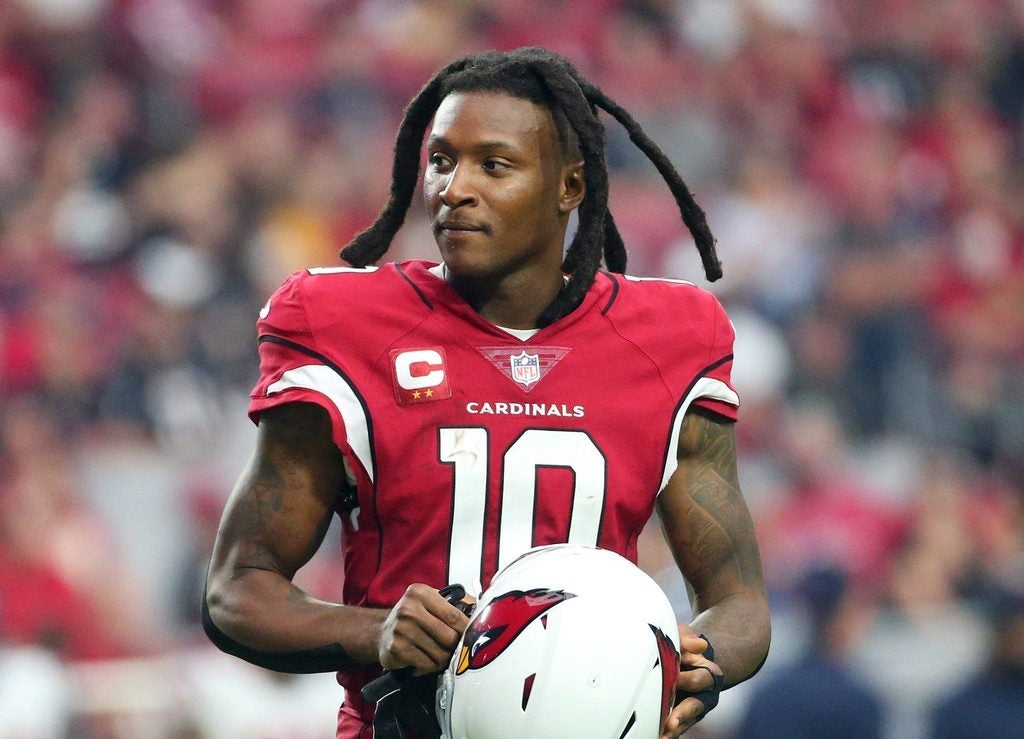
7. Looking back at the DeAndre Hopkins trade that saw the Texans practically give away a superstar receiver to the Cardinals
The Houston Texans had just about everything a franchise could want in March 2020. They had one of the NFL’s most productive wide receivers in DeAndre Hopkins, a young franchise quarterback in Deshaun Watson, and a roster coming off a trip to the divisional round of the playoffs. And somehow, Houston decided the best path forward was to trade Hopkins to the Arizona Cardinals.
It doesn’t make any sense. It didn’t then, and it still doesn’t now.
So let’s revisit the details, the fallout, and who came out ahead in one of the most lopsided wide receiver trades of the last decade.
The details of the DeAndre Hopkins trade
On March 16, 2020, the Texans agreed to send Hopkins and a fourth-round pick in the 2020 NFL Draft to Arizona. In return, Houston received running back David Johnson, a 2020 second-round pick, and a 2021 fourth-round selection.
That second-rounder became defensive tackle Ross Blacklock. The fourth-rounder Arizona acquired in the deal became defensive tackle Rashard Lawrence.
The fact that Hopkins was traded isn’t what made this deal so bizarre. Stars get moved. The real problem was how little the Texans received for him.
Hopkins was coming off three consecutive first-team All-Pro selections. He had produced at least 1,100 receiving yards in five of the previous six seasons, and most around the league viewed him as one of the best receivers in football. You don’t find that kind of résumé lying around.
Johnson, meanwhile, was several years removed from his spectacular 2016 season and carried a substantial contract. Houston surrendered an elite player in his prime and didn’t get a first-round pick back in the process.
Kyler Murray got his playmaker, and the Cardinals got a bargain
The other side of the ledger looks a lot better. Arizona needed a proven playmaker for young quarterback Kyler Murray, and the Cardinals landed one at a remarkably affordable acquisition cost.
Hopkins delivered right away. In his first season with the Cardinals, he caught 115 passes for 1,407 yards and earned another Pro Bowl selection. His signature moment came against the Buffalo Bills, when he hauled in the unforgettable last-second touchdown pass that’s now known as the Hail Murray.
Houston, meanwhile, went 4-12 that season. Johnson provided some production, but Blacklock never developed into a cornerstone piece of the defensive front.
Who won the DeAndre Hopkins trade?
Now, the longer-term picture is slightly more complicated, and I’ll give Houston that much. Injuries and a suspension limited Hopkins over the next two seasons, and Arizona eventually released him in May 2023 without receiving any additional trade compensation. The Cardinals never made a deep playoff run with Hopkins on the roster, either.
But consider what Arizona actually got for its investment: an elite season and multiple years of useful receiving production at a fraction of the acquisition cost typically associated with a player of his caliber. That’s the entire point of a trade like this. You buy a star at a discount and hope the timing works out. The timing didn’t produce a ring, but the value was there.
Houston can’t say the same. Johnson, Blacklock, and a fourth-round pick never came close to replacing what the Texans gave up.
The verdict here is the Arizona Cardinals, and it isn’t especially close. The long-term impact didn’t produce a championship in the desert. But Houston’s return never remotely matched the value of the star it surrendered, and that’s the part of this trade that still stands out years later. – Kyle Crabbs
6. Bryce Young’s breakout is making Panthers fans rethink the controversial trade that handed the Bears Caleb Williams
The Carolina Panthers made one of the most controversial and polarizing pre-draft trades in NFL history when they moved up to select quarterback Bryce Young in the 2023 NFL Draft. Carolina shipped a haul to the Chicago Bears to land the 1st pick, and for most of the last three years, the deal looked like a disaster for the Panthers.
Now Young is playing the best football of his career, and the conversation around that trade is shifting.
What the Panthers gave the Bears for Bryce Young
The deal went down in the spring, just before the draft. To jump from the 9th pick to the 1st pick, the Panthers sent Chicago the following:
- WR DJ Moore
- 2023 first-round pick
- 2023 second-round pick
- 2024 first-round pick
- 2025 second-round pick
In exchange, the Panthers received the 1st pick, which became Young.
Here’s what the Bears did with that package. Chicago used the 2023 first-round pick on Darnell Wright, who has developed into an excellent right tackle and just got paid. The 2023 second-round pick became cornerback Tyrique Stevenson, who has been a little up and down but remains a solid player.
Then came the big one. The Bears used Carolina’s 2024 first-round pick on Caleb Williams, who is arguably a legitimate MVP candidate and one of the best quarterbacks in the league. On top of that, Chicago turned the 2025 second-round pick into Luther Burden, who is well on his way to becoming the No. 1 receiver in the Windy City.
Why the trade looked so lopsided
Why was this trade considered so crazy at the time?
For one, it was the sheer volume. The Panthers walked away with one player, while the Bears turned the package into a starting tackle, a starting corner, a franchise quarterback, a promising young receiver, and a borderline top-10 to top-15 wide receiver in Moore.
Additionally, the compensation alone was staggering when the deal happened. Two first-round picks, two second-round picks, and a high-end receiver to move up eight spots is a steep price. People could not believe Carolina would mortgage its entire future on Young.
And for a while, the skeptics looked right. Young struggled early in his career, and the Panthers even benched him at one point. It looked like his NFL future might be that of a backup quarterback. When you factor in all the draft capital Carolina gave away, and the great players Chicago built with it, this deal was trending toward one of the worst trades in franchise history. Maybe even NFL history.
Bryce Young is playing out of his mind
Then 2026 arrived, and Young flipped the script.
Through the early part of the season, Young ranks as the top starting quarterback in the NFL by PFF grade. I know PFF grades are controversial, and I don’t follow them closely. Even so, the grade backs up what you see on tape.
Young is throwing the football to all areas of the field. Despite a change in play-caller, he looks more comfortable than ever. He has built real chemistry with wide receiver Tetairoa McMillan, and the two have thrived together. Young has turned into one of the better quarterbacks in the league, at least to this point.
So who won the trade?
As of right now, you still have to give it to Chicago. The Bears turned Carolina’s picks into Caleb Williams, Luther Burden, and Darnell Wright, along with Moore and Stevenson. In the short term, the Bears won this trade, no doubt about it.
However, the long term is where things get murky. The outlook for the Bears remains promising, but if Young turns out to be a true franchise quarterback, none of that matters to the Panthers. That’s the whole point of trading up for a quarterback in the first place.
The jury is still out. If Young keeps playing at this level all season, wins an MVP, and brings Carolina back to the playoffs for the second straight year, the Panthers will be thrilled with what they got. – Rob Gregson
5. John Elway’s standoff with the Colts produced one of the 25 craziest trades in NFL history, and its impact lasted 15 years
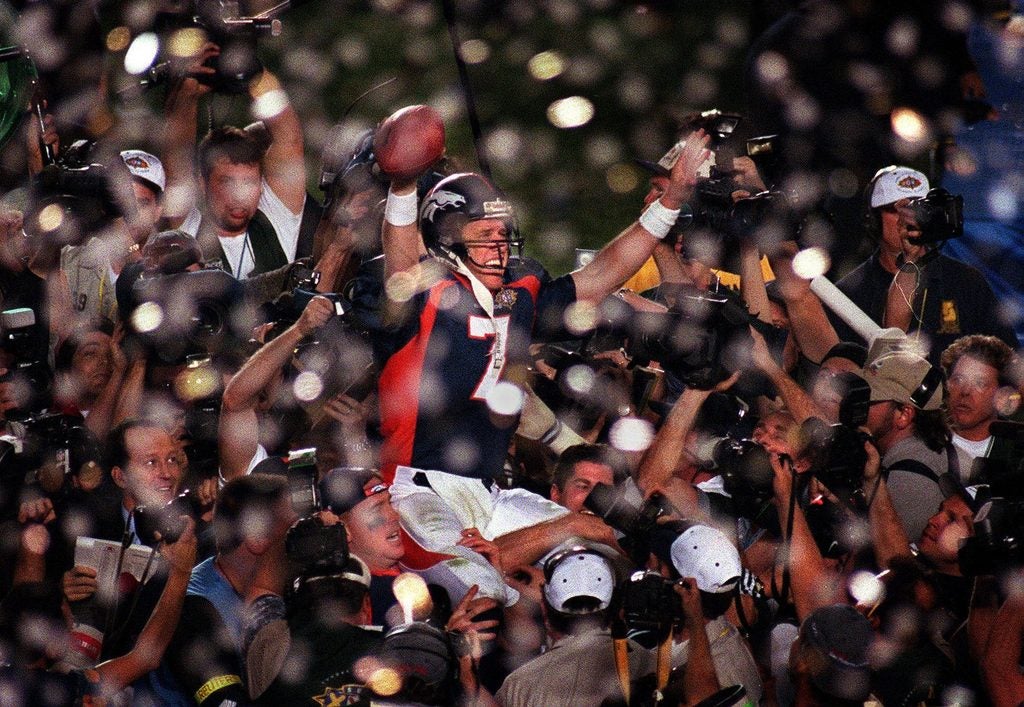
John Elway never played a down for the Baltimore Colts. The Stanford quarterback was the top prospect in the 1983 NFL Draft, but he refused to play for the team holding the first overall pick. He eventually forced a trade to the Denver Broncos that shaped both franchises for more than a decade.
Few deals carry the weight of this one, because it involved a future Hall of Fame quarterback, a baseball contract, and a franchise that moved out of its city a year later.
How Elway forced his way to Denver
Elway didn’t hide his intentions. In December 1982, he told the Colts he did not want to play for the team. Baltimore drafted him with the first overall pick anyway.
The 1983 class was loaded at quarterback. Besides Elway, it included Jim Kelly and Dan Marino, and all three ended up in the Pro Football Hall of Fame. The Colts tried to trade the top pick before the draft, but they couldn’t find a deal in time.
So Elway turned to his leverage. The New York Yankees had selected him in the second round of the 1981 Major League Baseball draft, and he had received a signing bonus to play in their minor league system. He was a better football prospect than a baseball prospect, but the threat was credible. Elway could walk away from the NFL and play professional baseball, and the Colts knew it.
Eventually, Baltimore gave in. The Colts traded Elway to the Broncos for a package that included offensive tackle Chris Hinton, the fourth overall pick in the draft, and quarterback Mark Herrmann. The Colts used the pick to select guard Ron Solt.
Denver won the trade by a wide margin
The verdict here isn’t close. In the short term and the long term, Denver came out far ahead.
Elway became the defining player in Broncos history. He played his entire career in Denver from 1983 through 1998, reaching five Super Bowls and winning two of them. Hinton was a decent return for the Colts, but he was nowhere near a generational player at the most important position in football.
Elway’s influence didn’t end when he retired, either. He returned to the Broncos as general manager and executive vice president of football operations from 2011 through 2020. In that role, he built the roster that won a Super Bowl following the 2015 season. He then served as president of football operations in 2021 and as a consultant in 2022.
That’s four decades of history tied to one trade. Elway is one of the premier faces of the Broncos franchise, as a player and as an executive.
The Colts’ long search for a quarterback
Baltimore didn’t get what it wanted out of the standoff. And that’s because it’s nearly impossible to replace what a franchise quarterback means to a team.
The Colts moved to Indianapolis one year later, becoming the Indianapolis Colts in 1984. The quarterback problem followed them. Indianapolis cycled through a series of starters over the following years. Jeff George filled the role for a stretch, and Jim Harbaugh started for several seasons, but neither was the long-term answer.
The Colts went essentially 15 years without a true franchise quarterback. Their search ended in 1998, when they took another high-level prospect, Peyton Manning, with the first overall pick in the 1998 NFL Draft.
Manning became a legend in Indianapolis, and he fit the same profile Elway did coming out of Stanford. For the Colts, finding the player they missed out on in 1983 took a decade and a half, a relocation, and another trip to the top of the draft. – Wendell Ferreira
4. Browns’ Deshaun Watson trade is one disappointing finish away from going down as the worst deal in NFL history
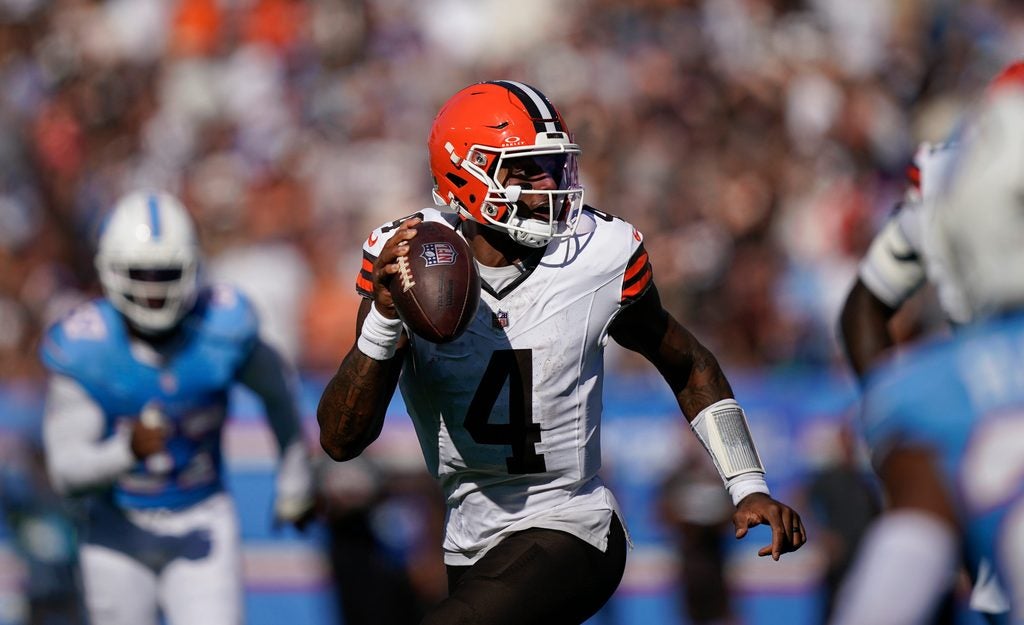
You can’t talk about the craziest trades in NFL history without bringing up what the Cleveland Browns gave the Houston Texans for quarterback Deshaun Watson. The draft picks alone would earn the deal a spot on that list. But Cleveland didn’t stop there. It went on to hand Watson a contract that rewrote the record books.
Four years later, the Texans are thriving with the haul they received. The Browns are still waiting for the return on their investment.
What the Browns gave up for Deshaun Watson
In March 2022, the Browns agreed to send three first-round picks, a third-round pick, and two fourth-round picks to Houston. Here is the full breakdown.
- Browns send: 2022 first-round pick, 2022 fourth-round pick, 2023 first-round pick, 2023 third-round pick, 2024 first-round pick, and a 2024 fourth-round pick
- Texans send: QB Deshaun Watson and a 2024 sixth-round pick
That package is bonkers in its own right. Cleveland essentially gave Houston everything it needed to rebuild its entire franchise, and all the Browns got back besides Watson was a sixth-round pick.
Then came the contract. Cleveland made NFL history when it gave Watson a 5-year, $230 million deal, fully guaranteed. The Browns knew other teams were in the running for Watson, and he wasn’t keen on Cleveland as a destination. That changed at the last minute once the fully guaranteed money hit the table.
How the trade looks as a one-for-one swap
When a team has that many draft selections, it’s going to land plenty of good players. The Texans made a lot of smart picks with that capital. If you want to boil this down to a one-for-one equation, though, it looks like this.
Cleveland got Watson. Houston used one of those picks in a package to land edge rusher Will Anderson Jr., who might be the best edge rusher in the NFL right now.
Prior to the 2026 season, this trade was trending toward the worst in league history. To be fair to Watson, he has played much better this season. He also had a big win on Thursday Night Football a couple of weeks ago against the Pittsburgh Steelers, and his team sits atop the AFC North.
The larger body of work is hard to ignore, though. Watson’s time in Cleveland has included top-5 draft picks, multiple torn Achilles, and being booed by his own fans before calling those fans out. The short term wasn’t pretty, given everything that went on off the field. The long term hasn’t been pretty either, given how much losing the Browns have done since the trade.
Why this season will settle the debate
So the question becomes, what does Cleveland need to see to salvage any part of this deal?
In my opinion, the bar is clear. The Browns have to make the playoffs this season, and they have to win a playoff game once they get there. Anything less, and the picture is complete.
Houston turned that draft haul into a foundation, and Anderson is the crown jewel of it. Cleveland turned its draft haul and $230 million in guaranteed money into a player who is only now showing signs of the quarterback it thought it was getting.
A few good weeks in October don’t erase four years of losing. If Cleveland comes up short in January, you have to argue that the Texans didn’t just win this trade. They fleeced the Browns into the worst trade in NFL history. – Rob Gregson
3. The Buccaneers changed history with the Jon Gruden trade and sent two franchises in completely different directions
The Tampa Bay Buccaneers are one of 17 NFL franchises with at least two Super Bowl wins on paper and one of said Lombardi Trophies came on the heels of a trade that both made and changed history for the teams involved.
At the time, only four head coaches had been traded to different teams. The haul for Gruden vastly outpaced those deals, however, as he was one of the hottest names in football at the time.
The move also created two completely different pathways for the franchises that were involved, which creates an easy declaration when it comes to deciding who won the trade.
Why the Buccaneers were in on Jon Gruden
It was a perfect storm of circumstances: It was the 2002 offseason and the Bucs had just fired Tony Dungy, while Gruden and the Raiders were having issues finding cohesiveness in contract extension talks.
At the time, Gruden was 38-26 as head coach of the Raiders and was coming off back-to-back playoff appearances that included an AFC Championship Game appearance and a very questionable loss to the New England Patriots in the divisional round (the famous Tuck Rule game for those who may not remember).
Gruden was seen as one of the fastest-rising coaches and for good reason. Eventually, extension talks broke down between him and former Raiders owner Al Davis, which opened the door for the Buccaneers.
Gruden’s dad worked for the Bucs when he was a kid, so ties to the franchise already existed. Davis brought up the idea of a trade, Gruden accepted, and the rest is history.
Jon Gruden gave the Buccaneers their first-ever Super Bowl in immediate fashion
It’s a rich history, too. The Buccaneers gave up first-round picks in the 2022 and 2003 drafts, plus second-rounders in the’02 and ‘04 drafts, as well. They also sent the Raiders $8 million in cash. It’s an insane deal for a coach that registers up there with deals teams make for franchise-caliber quarterbacks, these days.
Gruden immediately led the Bucs to a Super Bowl victory over none other than the Raiders in 2002 and it was a dominating defeat that featured what is still a record five interceptions. The Bucs already had an excellent defense in place, but lacked on offense. Gruden didn’t turn the offense into a machine by any means, but sparked it enough to where it complemented the defense enough to win it all.
Gruden eventually led the Buccaneers to two more division titles, but zero playoff wins. He was eventually fired after the 2008 season following an 0-4 finish to the year that booted the Buccaneers out of the playoffs.
Still, the Lombardi Trophy and three division titles held the key to the trade’s final evaluation. On top of the fact the Raiders couldn’t even work their way to a winning season from 2003 all the way up until 2016. They’ve yet to win a playoff game since the trade, as well.
Who won the Jon Gruden trade?
This is as easy as it gets. The Buccaneers are the clear winners here. The draft capital they sent didn’t stop them from winning games (albeit maybe they could’ve won more games, but I digress) and they won the Super Bowl with Gruden at the helm.
The Raiders quickly sank into futility and remained there for years. They didn’t do much with the extra draft picks they received either. And, they’re still struggling to this day. Who knows where they’d be if they just paid Gruden the money he wanted.
The Buccaneers won this in both the short- and long-term. Honestly, it’s one of the most lopsided trades in NFL history. – Evan Winter
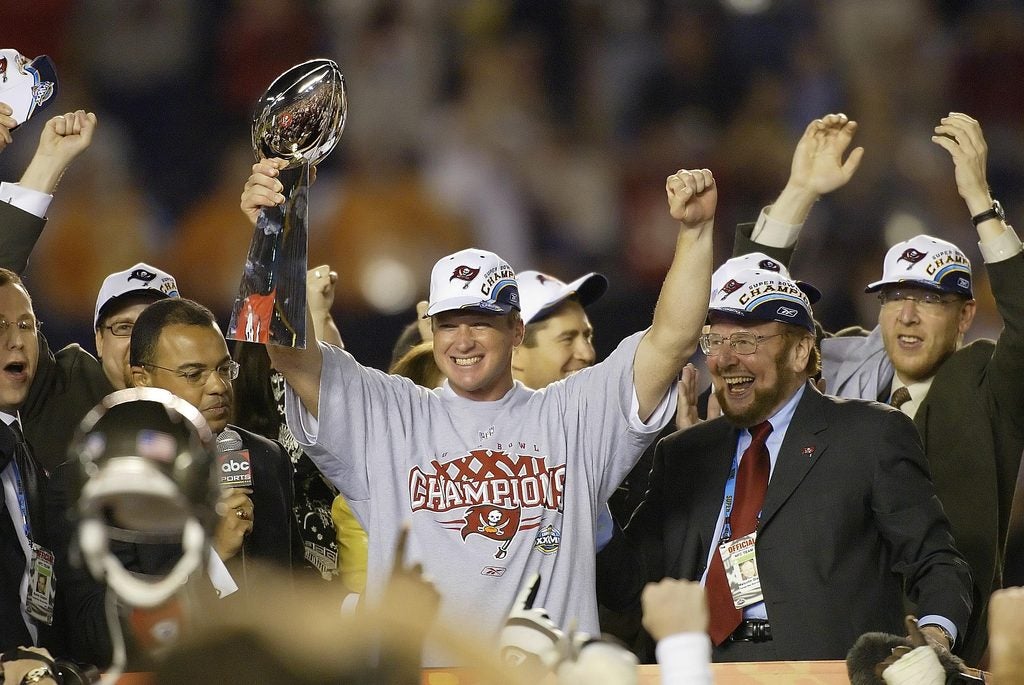
2. Mike Ditka’s decision to sell the farm for Ricky Williams remains both one of the craziest and dumbest NFL trades of all-time
Man, there have been some wild, and stupid, trades in the NFL’s long history, but Mike Ditka’s decision to go all-out for Ricky Williams remains at the top of the list in both categories.
It doesn’t take hindsight to make that judgement, either. People went nuts at the time and rightfully so, as that kind of move is only reserved for elite, franchise players. Instead, Ditka chose to gamble on a rookie.
Let’s go ahead and dive in before we hash out any more details.
Why Mike Ditka was so sold on Ricky Williams
Ditka was very open about his love for Williams and he made that clear with his public comparisons to Walter Payton, the legendary running back who helped Ditka win the first –and only– Super Bowl in Chicago Bears history.
Williams was also coming off a historic run with the Texas Longhorns. He won the Heisman Trophy in 1998 after rushing for 2,124 yards, which was fifth-most at the time. He also rushed for 27 touchdowns that year, which was fourth-most at the time.
Therefore, in 1999, Ditka decided to send all six of the Saints’ draft picks in that year’s draft (first, third, fourth, fifth, sixth, and seventh round selections), plus New Orlean’s first- and third-round picks in the 2000 draft to the then-Washington Redskins.
Ditka literally shipped off every single one of the Saints’ 1999 draft selections. Then, he doubled down and sent two more high-standing picks in the following year’s draft for a total of eight picks just to move up from No. 12 to No. 5 so he could take Williams in the ‘99 draft.
That’s just pure insanity and there was plenty of publicity surrounding that thought afterward. To this day, it remains as such.
Who won the Ricky Williams trade?
Ditka went 3-13 in 1999, which was enough for him to get fired after back-to-back 6-10 seasons, plus the haul to acquire Williams. Williams lasted just three seasons in New Orleans, recording 3,129 rushing yards and 16 touchdowns during that span.
Washington, on the other hand, used the Saints’ picks to draft guys like Champ Bailey and LaVar Arrington, two of the better players in franchise history. Bailey went on to become a Hall of Famer, even if he played the majority of his career with the Denver Broncos. That didn’t stop him from becoming one of the best players at his position with Washington, however, as he snagged 18 interceptions and four Pro Bowl nods in five seasons with the team.
And, in an ironic twist, Washington made the playoffs with a 10-6 record in 1999, its first playoff appearance since the 1992 season.
It’s safe to say Washington won this trade, easily. – Evan Winter
1. Herschel Walker trade shows how 1 blockbuster deal handed the Cowboys a dynasty and left the Vikings with regret
The Herschel Walker trade is the gold standard for lopsided deals in NFL history. Few blockbuster trades have shaped two franchises so differently.
In October 1989, the Dallas Cowboys were a mess. Jerry Jones had just purchased the franchise, Jimmy Johnson was in his first season as head coach, and the Cowboys hadn’t won a game through five weeks. Dallas had one asset of real value on the roster: running back Herschel Walker.
On Oct. 12, 1989, Johnson and Jones made the in-season trade that would become perhaps the most consequential player trade the league has ever seen.
Why the Minnesota Vikings bought in on Herschel Walker
The Minnesota Vikings believed they were one superstar away from competing for a Super Bowl. Walker was supposed to be that superstar. Minnesota paid the price you’d expect for a franchise-altering talent, and then some.
The deal sent Walker to the Vikings. In return, Dallas received five Minnesota players: Jesse Solomon, David Howard, Issiac Holt, Alex Stewart, and Darrin Nelson. The Cowboys also got conditional draft compensation that could deliver multiple first-, second-, and third-round picks.
That alone would have been a significant haul. But the structure of the trade is what makes it so outrageous, even all these years later.
Johnson didn’t want most of those players. He wanted the draft picks.
The Cowboys had negotiated conditions that let them release certain players and receive draft compensation in their place. Johnson deliberately exercised those conditions. He took Minnesota’s offer, a package built around veteran players, and turned it into a massive stockpile of draft assets.
Call me crazy, but that’s the part of this deal that still stands out the most. Plenty of teams have overpaid for a star. Not many have handed the other side the keys to rebuild on its own terms.
How Dallas turned a winless season into three Super Bowls
In the short term, the trade didn’t look like a win for anyone. Walker never delivered the superstar production the Vikings expected. He rushed for just 2,264 yards across three seasons in Minnesota, and the Vikings never reached a Super Bowl with him. Minnesota released Walker in 1992.
The Cowboys’ short-term outlook was even uglier. Dallas finished 1-15 in 1989.
But the long-term outcome was extraordinary. Through the draft picks and the trades that followed, the Cowboys acquired the resources that helped them select Emmitt Smith, Russell Maryland, Kevin Smith, and Darren Woodson. Each became a foundational piece of a Dallas dynasty that won three Super Bowls in four seasons.
That’s the long game playing out the way it’s supposed to. Johnson accepted the pain of a 1-15 season because he saw what the picks could become. Minnesota operated on the opposite timeline. The Vikings wanted to win right away, and they paid for the present with the future.
Who won the Herschel Walker trade?
This one isn’t close. The Cowboys won the trade overwhelmingly.
Minnesota traded for the player it believed could put the franchise over the top. Instead, it supplied another franchise with the resources to dominate the decade. Few transactions in NFL history have produced a more dramatic difference in long-term organizational outcomes.
The lesson still applies to every front office weighing an all-in move. Draft capital is only as valuable as the people using it, and Dallas had a coach who knew exactly what he wanted to do with it. Johnson didn’t just collect picks. He built the conditions of the deal to his advantage and then cashed them in.
Minnesota’s mistake wasn’t wanting a star. It was believing one player could close the gap, and giving up a collection of assets that allowed a rival to build something far bigger than any single running back. More than three decades later, the Herschel Walker trade remains the measuring stick for every blockbuster that follows. – Kyle Crabbs