
NFL Draft analyst proposes chaotic 2027 NFL Draft hypothetical for the Cleveland Browns QB room
Who is the future at quarterback for the Cleveland Browns? Their eyes should quickly turn to the 2027 NFL Draft class.

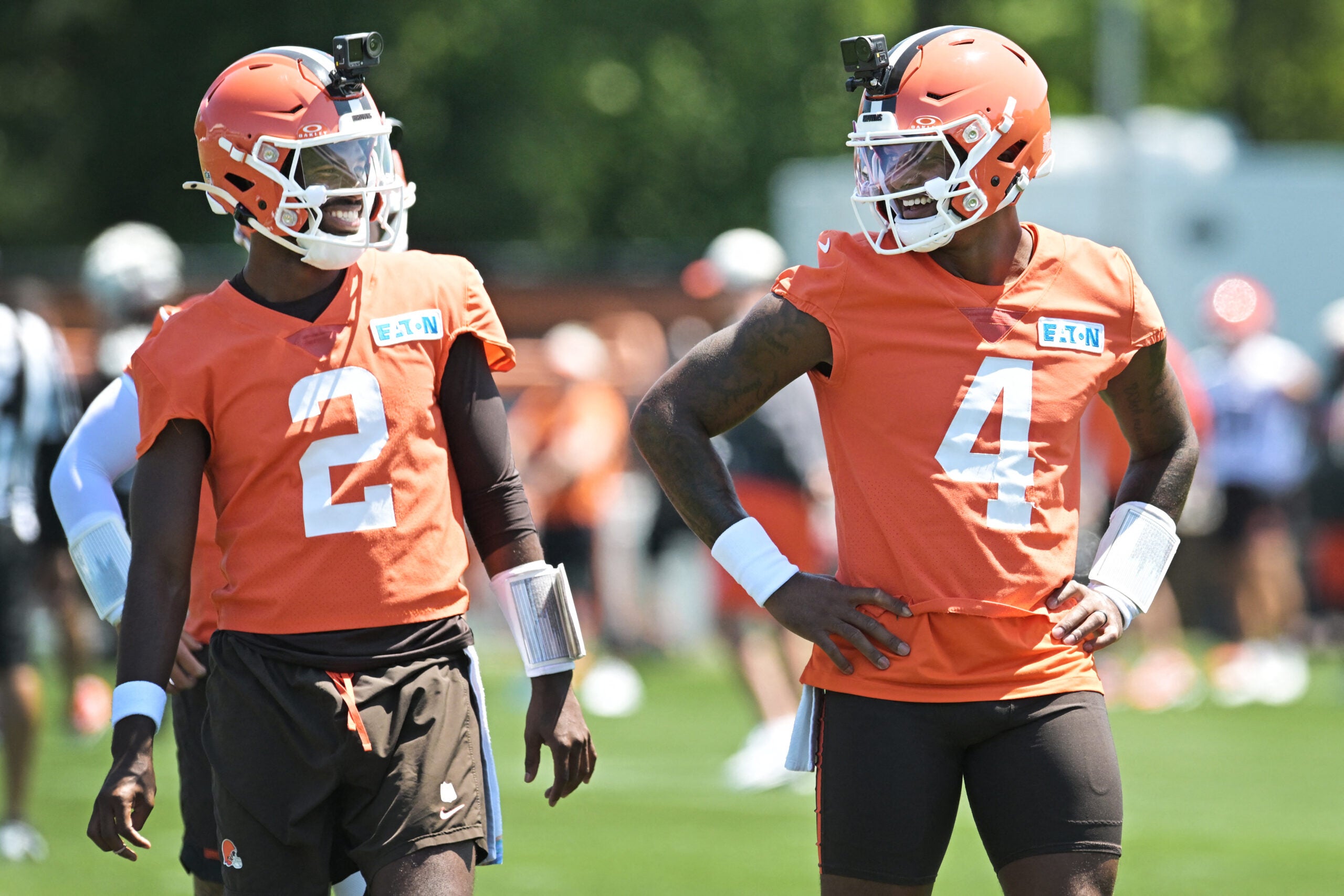
The Cleveland Browns have a long, painful history of quarterback misses in the NFL Draft. From Tim Couch in 1999 to Brandon Weeden, Johnny Manziel, and Brady Quinn, the franchise has become synonymous with high-profile quarterback selections that never pan out.
On a recent episode of the 13 Personnel Show, NFL Draft analyst Ryan Roberts tackled a question tailor-made for that legacy: which 2027 NFL Draft quarterback prospect is the most “pre-Browns” pick? That is, of course, assuming the team opts for a new quarterback after naming Deshaun Watson the starting signal caller over Shedeur Sanders.
Roberts, who also co-hosts the Best Pod Available podcast with Joe DeLeone, worked through the exercise by first eliminating the top-tier names. Arch Manning (Texas) and Dante Moore (Oregon) were taken off the board immediately, deemed too talented and too high-profile for the kind of reach-and-miss selection the Browns have become known for.
That led to a fascinating follow-up question from the show: how many quarterbacks in this class have the juice to simply say no to Cleveland?
Roberts acknowledged that Manning would be the one prospect who could realistically pull that off. He also pointed to Moore’s situation from the previous year, when the signal caller expressed reluctance about being drafted by the New York Jets and returned to school.
The irony now is that Moore could still end up in a similarly undesirable landing spot with either the Browns or the Jets.
Julian Sayin emerges as the perfect Browns pick
Roberts landed on his answer quickly, and it came with a very specific scenario attached. He envisions Cleveland as a team that will win a few games it shouldn’t, push itself out of range for Manning or Moore, and end up picking around No. 6 overall.
That’s where Ohio State quarterback Julian Sayin enters the picture.
“With the 6th overall selection in the 2027 NFL Draft, the Cleveland Browns select the hometown hero Julian Sayin from Ohio State to come save the day,” Roberts said, painting the exact kind of narrative the Browns front office would fall for, in a joking manner.
Roberts was careful to distinguish between Sayin’s college value and his draft stock. He called Sayin a good college player but not a prospect who should be drafted nearly that high from a pure evaluation standpoint.
That gap between college production and draft-day reach is precisely what makes him a Browns-type pick in Roberts’ eyes.
He also floated CJ Carr as a name that “kind of feels like Cleveland Brown,” though he offered no shade with the comparison. Carr simply fit the mold of a Midwest quarterback some evaluators have high opinions of, which tends to be the profile Cleveland gravitates toward.
Brendan Sorsby takes the chaos crown
The conversation took a sharp turn when Roberts brought up former Cincinnati and Texas Tech quarterback Brendan Sorsby. The show’s hosts immediately ran with the chaotic energy of the suggestion, connecting Sorsby’s off-field headlines to the Browns’ long history of acquiring players with complicated backgrounds.
Between past roster additions the hosts described in colorful terms, the idea of adding Sorsby to the mix struck a nerve.
Roberts laughed through the segment but stood by the suggestion. When pressed on whether Sorsby was his final answer, he confirmed it. He even teased that he is scheduled to publish a mock draft for A to Z Sports this week and hinted he might slot Sorsby to Cleveland in that exercise.
The entire segment captured what makes quarterback evaluation in the 2027 class so compelling. There is a clear tier of elite prospects at the top, and then a group of signal callers whose draft range will depend heavily on which teams are picking and how desperate those franchises are for a quarterback.
For the Browns, desperation has historically been the driving force behind their selections at the position — and Roberts’ analysis suggests this cycle will be no different.
