
What the box score didn’t tell you: Jahmyr Gibbs’ negative runs are hurting the Lions — just not as much as it feels
Four Gibbs runs lost yardage against Minnesota, and none of those drives produced a touchdown. But over the full season, Detroit has recovered from those setbacks far more often than it seemed.


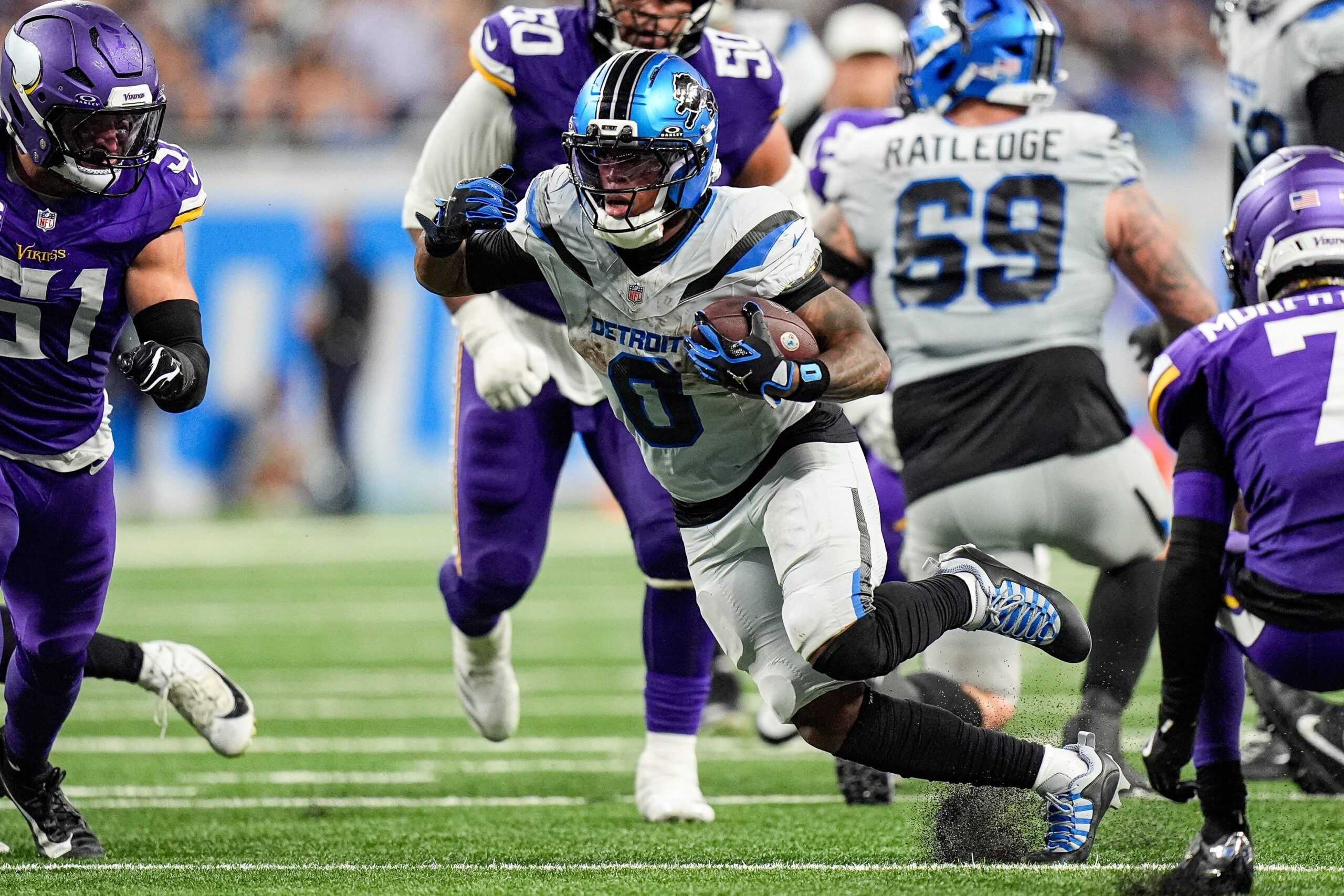
The Detroit Lions beat the Minnesota Vikings 19-15 on Sunday. If you only look at the box score, you’re going to feel pretty good about what Detroit did on the ground. Running back Jahmyr Gibbs rushed for 153 yards and a 30-yard touchdown. As a team, the Lions ran for 230 yards against a Minnesota defense that has been playing good football. That’s the second-most rushing yards a Brian Flores-led defense has ever allowed.
So what’s there to complain about? Something I’ve been watching with Gibbs all season showed up against the Vikings: negative runs. I’m not talking about carries that go for a yard or two. I’m talking about plays where Gibbs loses yardage.
I wanted to answer two questions. How often is this happening? More importantly, what happens to the Lions’ offense when it does? We’ve all watched this offense get behind the chains and felt like the drive was over. After going through the numbers, the answer surprised me. It’s causing problems, just maybe not as many as we thought. Welcome to this week’s What the Box Score Didn’t Tell Us.
4 negative runs, zero touchdowns against Minnesota
Gibbs had four carries against the Vikings that went for negative yardage. Those plays lost a combined 10 yards, and none of the four drives that featured one ended in a touchdown. Detroit got one field goal, punted twice, and missed another field goal.
I’m not going to sit here and tell you Gibbs is the reason those drives failed. He’s arguably the best running back in the league. However, the Lions keep handing him the ball what feels like 10 yards behind the line of scrimmage. That limits what he can do, especially against a defense as good as Minnesota’s. Let’s break it down.
The first came in the first quarter. Detroit had second-and-2 at the Minnesota 4-yard line. You’ve got Gibbs and an offensive line capable of moving people. Instead, Gibbs lost three yards, setting up third-and-5 from the 7. Quarterback Jared Goff threw incomplete to Gibbs on the next snap, and kicker Jake Bates hit a 25-yard field goal. That’s four points left on the field. You can’t automatically pin them on one run, but they were there if the drive finished.
The second came in the second quarter on third-and-1 at Detroit’s own 28-yard line. Gibbs lost two yards, and the Lions punted. There isn’t much to break down. You needed one yard, you lost two, and the drive was over.
The third came later in the second quarter on second-and-3 at the Minnesota 44. Gibbs lost three yards to make it third-and-6. Goff was then sacked for another 3-yard loss, and Detroit punted. A 3-yard loss doesn’t sound like much. Still, it takes you from a down where the entire playbook is available to one where you probably have to throw against a Vikings defense built to make passing situations uncomfortable. Minnesota proved that on the very next play.
The fourth came in the third quarter on first-and-10 at the Minnesota 33. Gibbs lost two yards, then got four back. Goff hit wide receiver Jameson Williams for three yards on third down, and Bates’ 46-yard attempt hit the upright. The negative run didn’t cause the miss. It did put Detroit behind the chains, and the Lions never recovered enough yardage to keep the drive alive.
Where the story changes
Here’s the thing. If you watched Sunday’s game, you might decide that every negative Gibbs run kills the offense. That hasn’t been the case all season, though.
Of the 11 negative runs I identified from earlier games, seven came on drives where the Lions still scored. Four of those drives ended in touchdowns, and three ended in field goals.
Against Green Bay, Gibbs lost two yards on second-and-3 in the first quarter. On third-and-5, he got the ball again, picked up seven yards, and moved the chains. A few plays later, Goff found Williams for a touchdown. Against the Jets, Gibbs had a negative run in the fourth quarter, and that drive ended with him catching a touchdown pass. Against New Orleans, he had one in overtime, and Detroit still finished the possession in the end zone.
That’s why I don’t want to oversell this. Negative runs are a problem, but they aren’t an automatic death sentence. The conversation shouldn’t just be about whether a run loses yardage. It should be about what happens next.
Think about Barry Sanders. I’d bet he had the most negative rushing yards in the league during the 1990s, and it didn’t stop him from doing what he did. It didn’t stop the Lions’ offense either. Detroit had the No. 1 offense in the league in 1995.
What it means for Detroit
I think two things are happening. First, the Lions are still getting too many runs that put them behind the chains in short-yardage situations. Third-and-1 becomes fourth-and-3. Second-and-3 becomes third-and-6. Those are downs where you should move the chains. Instead, Detroit is putting itself in passing situations and punting. Against a Vikings team that can hurt you, the last thing you want is to become one-dimensional. That’s what happened.
Second, the bigger picture still looks good. Gibbs ran for 153 yards, the Lions rushed for 230, and they won the game. We’re talking about four plays.
The fix might be simple. Tighten things up on those short-yardage handoffs. Don’t try to bounce it outside as much. Don’t hand Gibbs the ball so deep behind the line. Change a few things, and I think Detroit will be just fine.
The question is how long it takes before this costs them a game. Let’s see if the Lions adjust before it does.

Detroit Lions News