
Christian Watson extension creates intriguing question about who Packers prioritize next among key contract decisions
The front office still has several pieces to lock in for the long-term future, and that’s the priority of the Packers’ model.


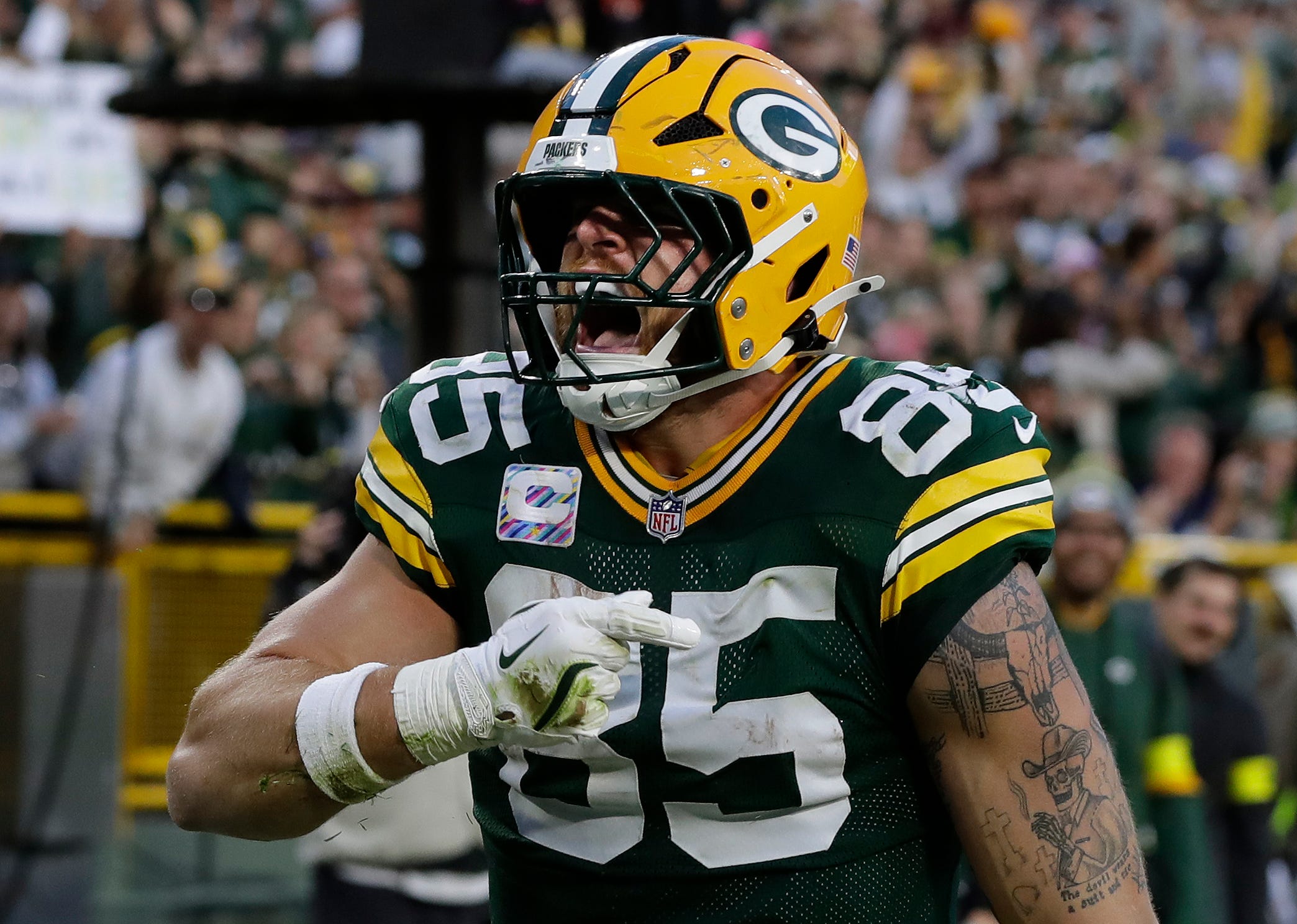
The Green Bay Packers have been active to keep their young core around, especially at the wide receiver position. Less than two months after extending Jayden Reed, the Packers reached a four-year extension with Christian Watson late last week.
For a draft and development team, keeping the successful cases around is imperative. After Watson, the front office should soon turn their attention to getting new deals done with some other pieces. So, let’s discuss the next extension candidates on the roster.
Tucker Kraft
We’ve discussed this a lot, because Kraft is entering the final year of his deal. At this point, undrafted rookie RJ Maryland is the only tight end on the roster under contract beyond 2026. Kraft is a rising star, and while his ACL injury complicates negotiations to a certain extent, the likely move is to get him signed to an extension before he gets even more expensive.
Kraft is counting $3.93 million against the cap thanks to the Proven Performance Escalator, but it’s still a cheap year — and that will help to dilute the cap hit of a long-term extension.
Devonte Wyatt
This extension is more complicated than Kraft’s for several reasons. Wyatt entered the NFL as an older prospect, so he’s already 28. Also, he’s never been a full-time player — he was set to be one in 2025, but injuries affected his playing time. And even when on the field, Wyatt is an incomplete player with a glaring weakness as a run defender.
On the other hand, a contract extension makes sense for several reasons. First, the Packers don’t have many long-term options along the defensive line. Second, Wyatt is playing under a fifth-year option, which hits the cap all at once. That means his cap number for 2026 is $12.938 million. A new deal could lower that impact. But that should probably be a mid-term extension.
Xavier McKinney
The Packers don’t usually extend non-quarterbacks with more than a year left on their contracts, but McKinney is set up to be an exception. Because the team was forced to adjust his contract to create more room, McKinney’s cap hit jumps from $9.86 million in 2026 to $24.8 million in 2027, an obvious stress point.
Green Bay tends to be cautious to hand players a third NFL deal, but he’s only 26 (will be 27 by August) and was an All-Pro in each of his first two seasons with the team. The safety market isn’t prohibitive for teams, so a new extension is totally feasible.
Lukas Van Ness
Like McKinney, Van Ness has two years left on his deal. And that’s because the Packers exercised his fifth-year option for 2027. Based on his average performance and lack of significant playing time, Green Bay should have much urgency to extend Van Ness ahead of this season. Usually, they will consider getting something done next offseason. But if Van Ness takes a step forward while Micah Parsons is out, a mid-season extension could be on the table to avoid inflation at the edge position.
An extension ahead of 2027 would help the salary cap. His $13.75 million fifth-year option is fully guaranteed and hits the cap all at once, so a new contract would allow the Packers to spread the cap hit and build a team-friendlier structure.
