
Underrated defensive chess piece emerges as key for the Packers to follow the NFL’s biggest schematic trend under Jonathan Gannon
Safety Evan Williams has been a rising defender, and his style of play offers a lot of versatility for the coaching staff.


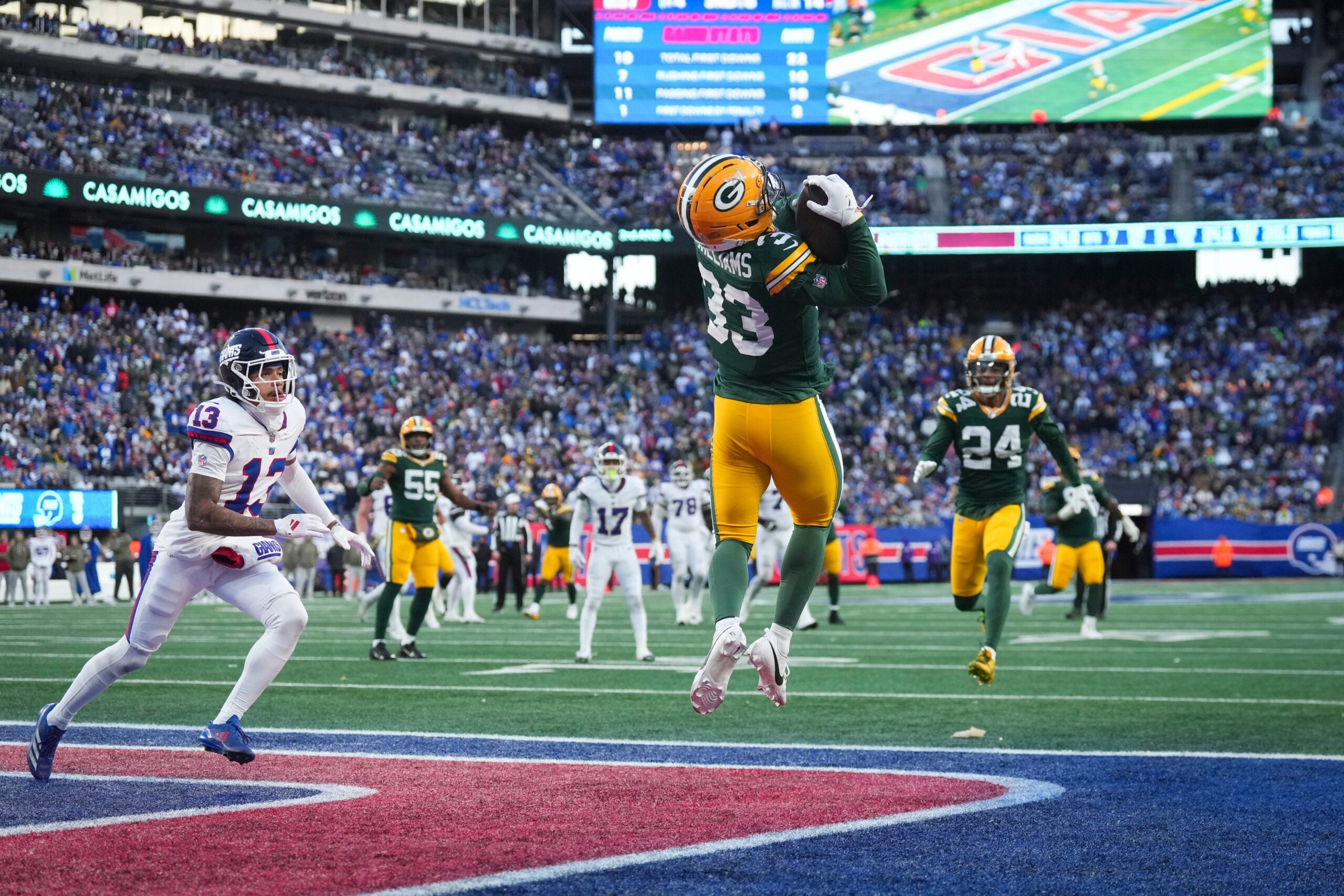
The Green Bay Packers are preparing for a significant defensive transformation under new defensive coordinator Jonathan Gannon, and safety Evan Williams could be the most important player in making it work.
The NFL’s schematic shift toward matching based on down and distance rather than personnel has gained momentum across the league, and Green Bay needs a versatile safety who can defend the run from the box while covering the pass at a high level. Williams fits that profile precisely.
The NFL’s defensive trend
Over the past few years, defenses across the league have moved toward a philosophy of keeping their best players on the field regardless of the opponent’s personnel groupings. The Seattle Seahawks under coach Mike Macdonald executed this at an elite level, prioritizing situation over matchup. The result is that defenses play nickel and dime packages more frequently, even against heavier offensive personnel. Defending the pass remains the priority, which leads to lighter defensive groupings on the field.
The challenge with that approach has always been run defense. A lighter defensive personnel package can get pushed around against physical offensive lines and committed rushing attacks. That’s where a player like Williams becomes essential.
Last season, Williams already functioned as a box piece within the Packers’ defense despite playing safety. He logged 280 defensive snaps in the box, 467 snaps as a deep safety, and 126 snaps in the slot. That versatility allowed Green Bay to maintain coverage integrity while keeping a capable run defender nearer the line of scrimmage.
Williams posted an 82.4 PFF run defense grade with 23 stops and 65 tackles. He was one of the elite safeties in the NFL as a run defender, and that ability to fill gaps and stop the run while also covering at a high level is exactly what Gannon’s scheme demands.
A different defensive identity under Gannon
The Packers’ defense will look significantly different in 2026. Under former defensive coordinator Jeff Hafley, Green Bay played Cover 3 on 33% of snaps and Cover 2 on 18%, with Xavier McKinney typically serving as the deep safety. Gannon’s Arizona Cardinals ran a completely different scheme: 26% quarters and 26% Cover 3, leaning much more heavily on two-high safety shells.
That transition aligns with what head coach Matt LaFleur has wanted for years. It’s why he hired Joe Barry back in 2021, who ran similar concepts but struggled with execution as a play-caller. The idea of deploying a defensive umbrella with more two-high looks has been a LaFleur priority, and Gannon brings the successful play-calling background to make it work.
Depth matters in the secondary
The Packers have a secondary built for this style. McKinney remains the All-Pro centerpiece, and Javon Bullard provides another versatile option who can move around the defense. Williams, though, is the one who can function as a dime linebacker in the box, bridging the gap between pass coverage and run defense.
Green Bay also has options like Kitan Oladapo, who played a limited defensive role over the past few seasons but performed well when called upon. Having those versatile pieces in the back end gives Gannon flexibility to match down and distance without sacrificing physicality against the run.
Everyone talks about McKinney as the Packers’ elite defensive weapon, and rightfully so. But Williams, a former fourth-round pick, has been rising steadily since entering the league. His second NFL season proved he can handle a significant defensive workload across multiple alignments.
Now entering a critical third year, Williams is positioned to take on a massive role in Gannon’s defense. How well he performs in that role will determine whether the Packers can successfully adopt the schematic approach that has reshaped NFL defenses.
