
Packers’ low-cost bet is quietly paying off, and it could factor into their plans at running back next season and beyond
Second-year running back Kaleb Johnson arrived from Pittsburgh for a 2028 sixth-round pick, and his production looks nothing like what he showed as a rookie.


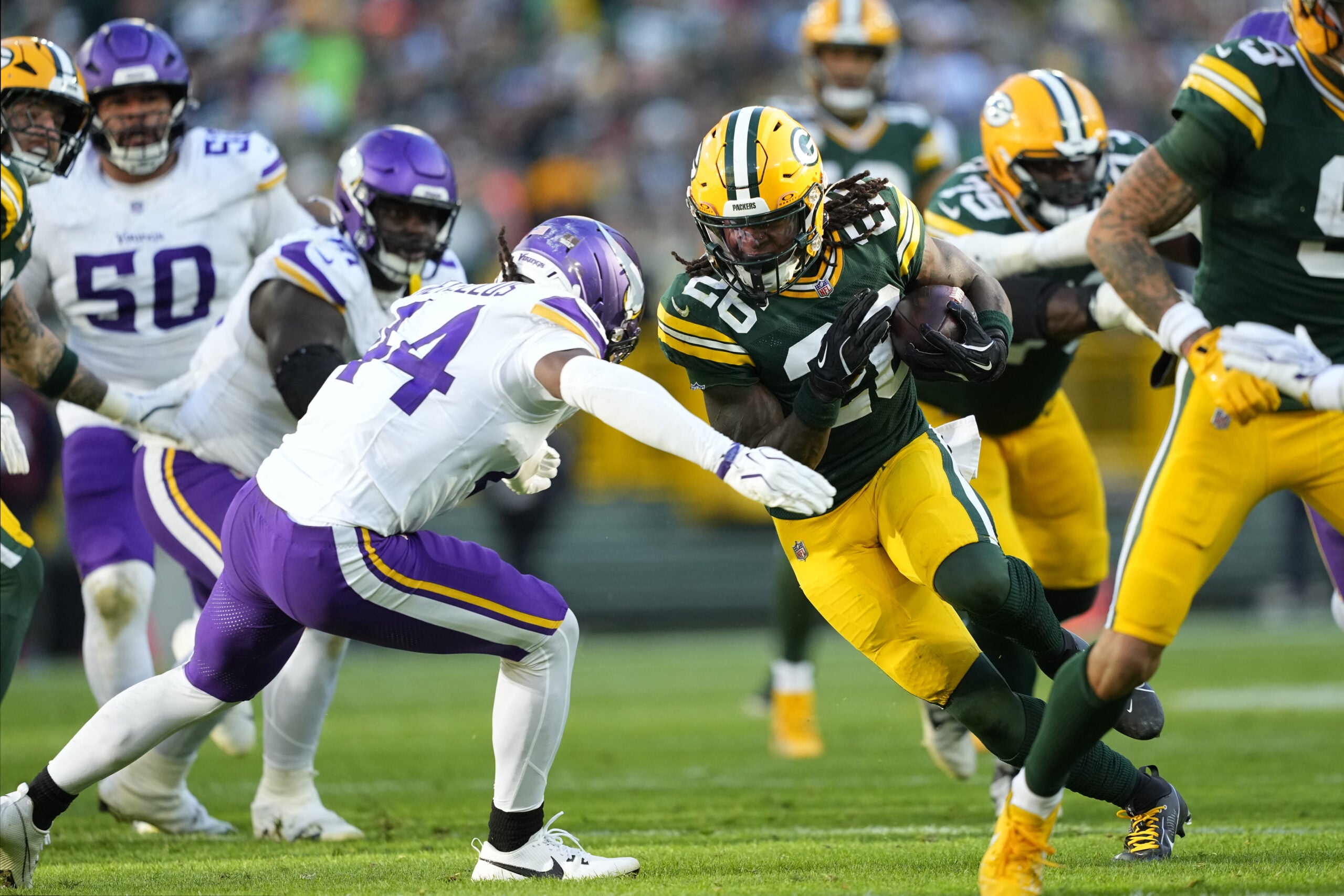
The Green Bay Packers made a quiet investment at running back before the regular season, and Kaleb Johnson is showing why it could be an important one well beyond 2026, especially with a Josh Jacobs decision on the horizon. Green Bay acquired the second-year running back from the Pittsburgh Steelers for a 2028 sixth-round pick. Johnson already looks like a different player than the one who struggled to find a role in Pittsburgh.
A former third-round pick, Johnson didn’t get many chances with the Steelers as a rookie. A fumble as a returner in 2025 made his trajectory in Pittsburgh murkier, and the Steelers eventually moved him to the Packers. Curiously enough, Johnson also fumbled early in his Green Bay stint. However, the coaching staff stuck with him, and that patience has been rewarded.
Numbers show clear improvement
Johnson has played eight games for the Packers after appearing in 10 for the Steelers in 2025. Outside of that, every number shows Green Bay getting more out of him than Pittsburgh did.
He already has 52 carries, up from 28 last season, and 214 rushing yards compared to 69 as a rookie. He also scored a rushing touchdown, something he didn’t do in Pittsburgh. More importantly, his efficiency jumped. Johnson averaged 2.5 yards per attempt in 2025, and that number is up to 4.1.
That’s even more impressive considering the blocking in front of him. The Packers rank 23rd in run block win rate, according to ESPN, and that ranking almost sounds generous given how often the offensive line has struggled to open running lanes.
Advanced metrics tell the same story. Johnson’s yards after contact per attempt went from 2.32 to 3.62, and he has forced 13 missed tackles after forcing only four last season. PFF’s elusive rating, which measures a runner’s success and impact independently of the blocking, jumped from 32.0 in 2025 to 95.5. By those measures, Johnson has been the most impactful runner the Packers have had in 2026.
Offensive coordinator Adam Stenavich noticed the difference, too.
“There were some flashes, obviously there were some good runs in there, but the one thing that Kaleb is, you could feel him attack the line of scrimmage,” Stenavich said.
Stenavich added: “He was coming off the ball really well, he was running hard, so that was really encouraging to see him go out there and do that. So very excited about him as we move forward for sure.”
Josh Jacobs decision looms
Johnson’s development is more impactful than a typical depth upgrade, because Green Bay has a decision to make on Josh Jacobs next offseason.
Jacobs is 28 and will turn 29 in the offseason. Releasing him would save the Packers $13.5 million against the cap and in cash. For a player who hasn’t produced at a high level in 2026, that’s a lot of money, and the Packers could reasonably move on from him.
Johnson, on the other hand, is still on his rookie contract and under team control through 2028. He’s making $1.129 million in 2026 and is slated to make $1.419 million in 2027 and $1.708 million in 2028. That leaves two more years on his deal after this one. He’s also only 23 and won’t turn 24 until August, so Green Bay has a young, cheap runner who is trending in the right direction.
Small price, promising return
The Packers made a relatively small investment to land Johnson. Given how thin the running back depth was, the move has already paid off, and his value could grow over the next few years.
Green Bay will probably still try to add a running back or two through the draft or other avenues, especially if Jacobs is gone. Johnson won’t be handed the job. Still, he has earned a place in that competition, and the second-year back is set to be part of the Packers’ backfield picture in 2027 and beyond.
