
Kevin Zeitler’s contract reveals an unusual detail behind the Packers’ incentive package and how his role affects it
The veteran guard signed a one-year, $4.05 million deal with Green Bay, and another $2.7 million depends on game-day choices made by the coaching staff.


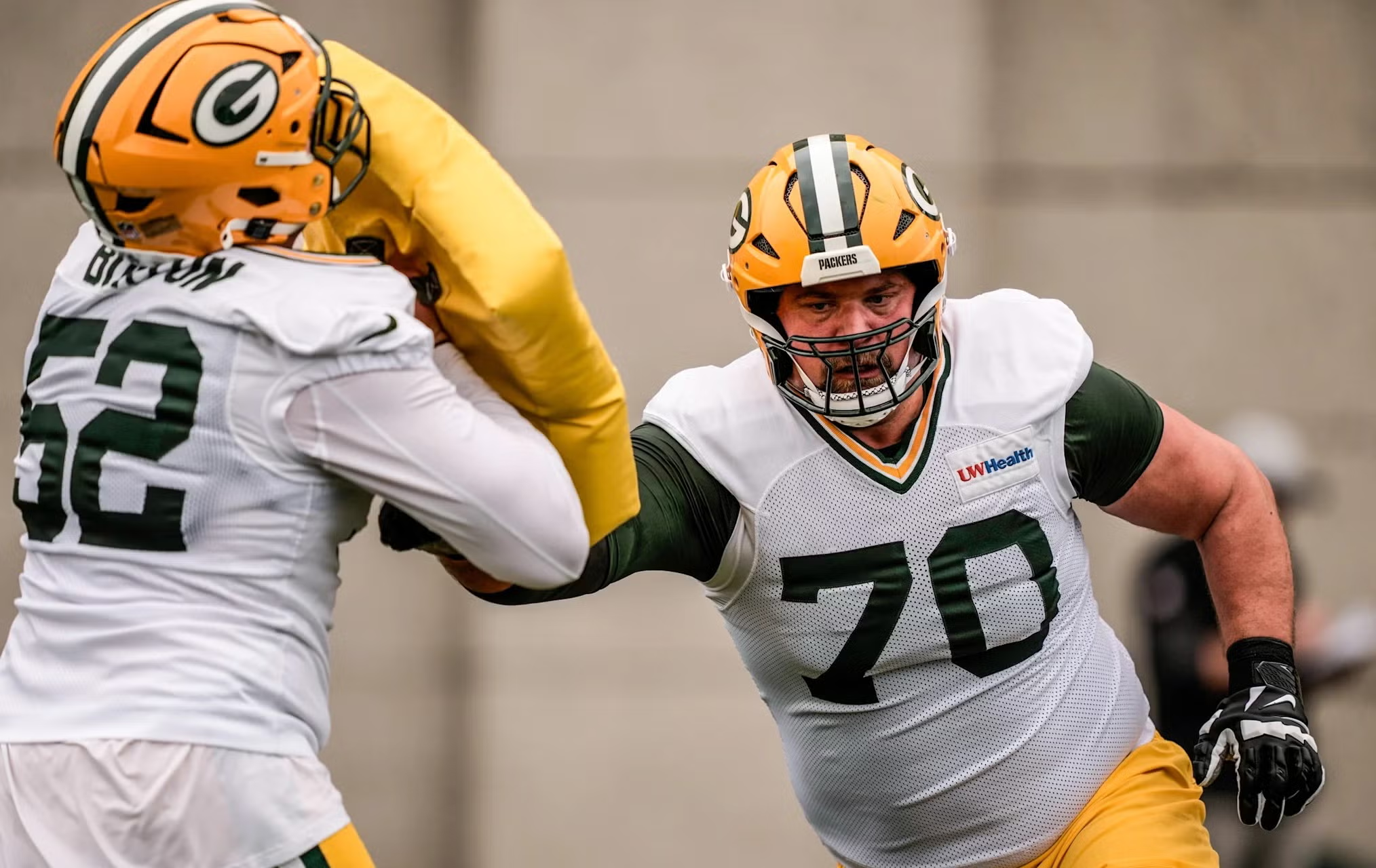
The Green Bay Packers signed veteran guard Kevin Zeitler to a one-year, $4.05 million contract, and the deal also includes another $2.7 million in incentives. The structure of the Zeitler contract adds context to how the Packers have handled him so far. They have kept him active on game days while keeping him off the field on offense, even though he’s played 11 special teams snaps over the past two weeks.
How much Zeitler makes in Green Bay this year depends on two things: whether he is active for games, and how many offensive snaps he plays. Those two pieces don’t always move together, and that’s where the contract gets unusual.
Breaking down the base value
Zeitler is making the prorated veteran minimum in base salary, which is $1.083 million. The contract also includes a $1.216 million signing bonus and a $1.75 million restructure bonus. Together, those figures add up to the $4.05 million total.
Most of that money won’t count against the cap this year, though, because the Packers added four void years to his contract. Zeitler’s cap hit this season is $1.676 million, and the rest of the bill comes due next year. Green Bay will carry $2.373 million in dead money next season, even though the deal expires after this year and Zeitler won’t be with the team.
It’s a common way to create short-term flexibility. Pushing money into a future year lets the Packers add a veteran without straining their current cap. They will pay for it later.
Getting paid without playing
The $2.7 million in incentives is the part that ties directly to the team’s lineup decisions. Of that total, $1.75 million comes from per-game active bonuses. That works out to $125,000 for every game in which Zeitler is active.
The key detail is that Zeitler only needs to be active to collect that bonus. He doesn’t need to play.
Over the past two games, for example, Zeitler did not start at guard. He still met the threshold for the bonus because he was active both times, so he has already earned $250,000 of that incentive. He was not active for the Week 4 game against the Tampa Bay Buccaneers, so that one doesn’t count.
The rest of the incentive package is built around playing time, but only on offense, so the special teams snaps don’t matter. If Zeitler plays 87% of the offensive snaps from the point he signed through the end of the season, he earns $475,000. If he reaches 92%, that number climbs to $950,000 (non-cumulative).
Those snap-count targets are already getting harder to reach. Zeitler hasn’t played an offensive snap in any of the past three games, and those games count toward his percentage.
The Packers’ choice so far
Green Bay is in a comfortable financial position, and the front office wouldn’t have agreed to this structure without being willing to pay the full amount. Cap concerns shouldn’t decide whether Zeitler plays or not.
Still, the setup is worth keeping in mind. Each week he is active without playing, Zeitler collects his $125,000 bonus while the snap-count incentives drift further away. Right now, the Packers are paying him every game day, and they have still chosen to keep him out of the lineup.
That could change soon. Packers right guard Travis Glover had an underwhelming performance against the Dallas Cowboys, and that opens a realistic path for Zeitler to finally start against the Detroit Lions in Week 7. If it happens, the active bonus would stop being the only part of his contract in play, and the snap-count targets would start to matter again.
