
Packers set to add game-changing piece no trade deadline deal can match, and the numbers prove how much it matters
Star edge defender Micah Parsons is working his way back from an ACL injury, and Green Bay’s defense looked like a different unit without him last season.


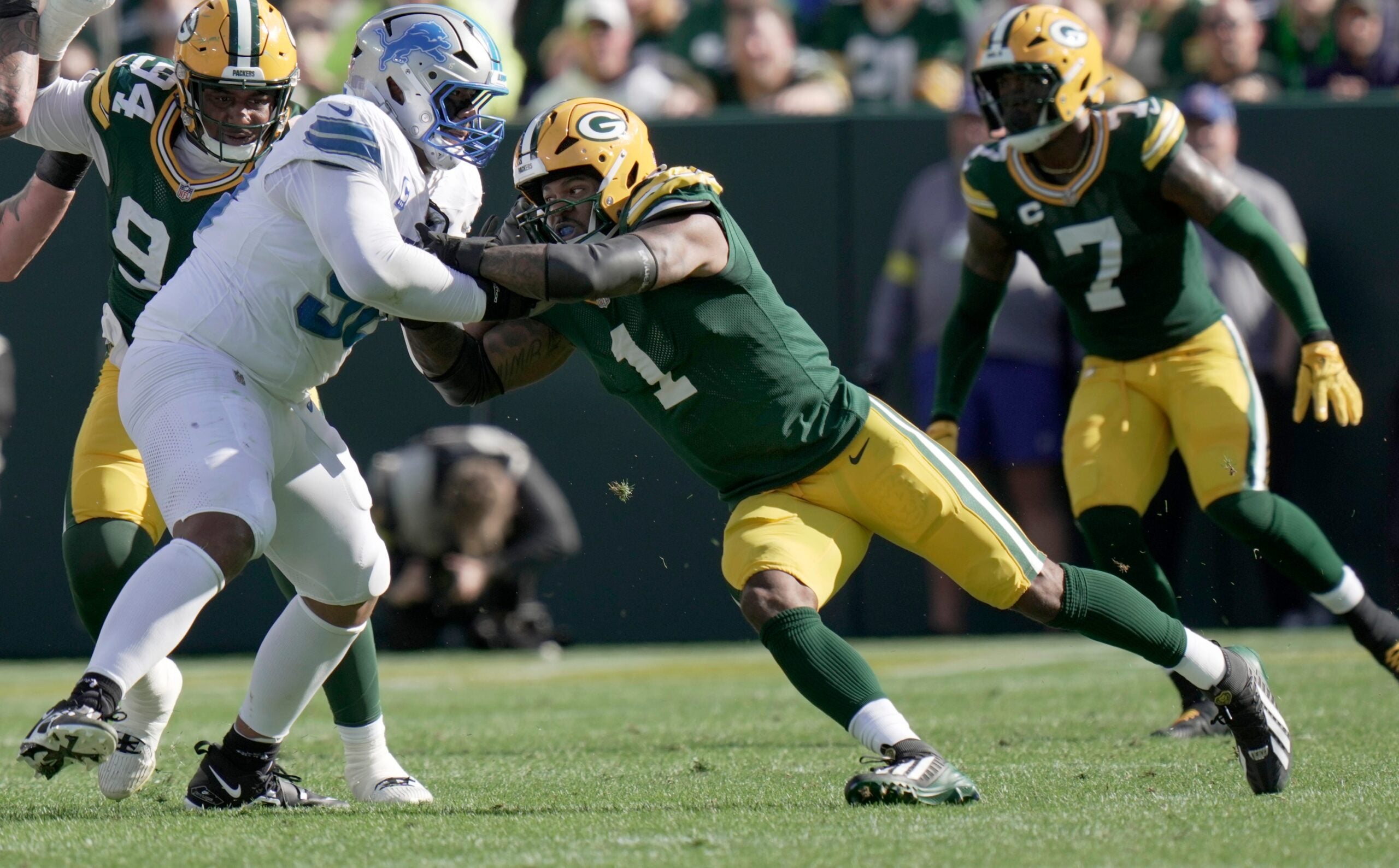
The NFL trade deadline is approaching, and several teams are hunting for reinforcements for the final stretch of the regular season. No team will get a bigger boost from a player who hasn’t suited up this season than the Green Bay Packers. Edge defender Micah Parsons is expected to practice this week for the first time, with the team designating him to return from the physically unable to perform (PUP) list as he recovers from his ACL injury.
The expectation is that Parsons will be available for the Week 12 matchup against the Los Angeles Rams on Thanksgiving Eve. For a Packers’ defense that has found success without him, adding a player of his caliber could change the ceiling of the entire unit.
The difference with and without Parsons
The gap in Green Bay’s defensive performance last season with Parsons on and off the field is striking. Parsons played 707 snaps, and the Packers allowed -0.048 EPA per play with him on the field, according to Sumer Sports. That mark would rank as the seventh-best defense in football by EPA per play this season.
Without Parsons on the field, across almost 400 plays, Green Bay allowed +0.095 EPA per play. By this season’s standards, that would rank 30th in the NFL.
The difference also showed up in the timeline of the season. Between Weeks 1-15, when Parsons was healthy, the Packers ranked 16th in EPA per play and 12th in success rate. Over the final three weeks, after the injury, the defense dropped to 26th in EPA per play and 28th in success rate. Former defensive coordinator Jeff Hafley ran a different scheme than what Jonathan Gannon does now, but the drop-off still shows how much Parsons meant to the unit.
Not just a pass rusher
Parsons’ impact wasn’t limited to obvious passing situations, despite what the Dallas Cowboys tried to sell after the trade. The EPA gap was notable on both dropbacks and running plays. The idea that Parsons can’t play the run is flat out wrong.
Part of that comes from what Parsons does himself. Additionally, his presence allows the defense to be more versatile and builds a better structure around him.
His individual production was elite in his first season in Green Bay after the trade with the Cowboys. Parsons finished with 12.5 sacks, 79 pressures, and 28 stops. According to PFF, he posted a 92.9 pass rush grade.
He did that in 15 games. Parsons was limited to start the season because he was still recovering from a back injury and had just arrived from Dallas. He also missed part of the Denver Broncos game and the final three games of the season. Even with all of that, he played at an elite level.
What Gannon can do with Parsons
The Packers have been fairly successful under defensive coordinator Jonathan Gannon. Through eight weeks, Green Bay ranks seventh in EPA per play. The team, however, sits 20th in success rate.
That split means the Packers aren’t a consistent defense on a down-to-down basis. They have generated negative plays for the offense, especially turnovers, and that creates a positive outlook. Once you exclude plays with turnovers for every team, though, Green Bay falls to 13th in EPA per play. That’s a material difference.
Parsons brings exactly what the unit is missing. He generates pressure on a more consistent basis, and that consistency helps the defense be more effective from snap to snap. More pressure on the quarterback can also help the Packers create those turnover plays with more regularity, rather than relying on them.
The key will be how Gannon fits Parsons into the plan. Last year, Hafley tried to rebuild the defense around Parsons instead of building on what was already working, and it didn’t produce the results Green Bay expected.
Gannon has a clear blueprint: generate pressure with exotic looks, especially up front. If he adds Parsons to that equation without discarding what has worked, the Packers have the potential to field an even more explosive and efficient defense, along with the down-to-down consistency the unit needs to play at a high level against any opponent.
