
Packers have multiple options to replace Jayden Reed, and the answer goes beyond one position group
Green Bay’s wide receiver and tight end groups and a returning third-round pick could carry the load while the slot receiver recovers from a neck injury suffered against the Jets.


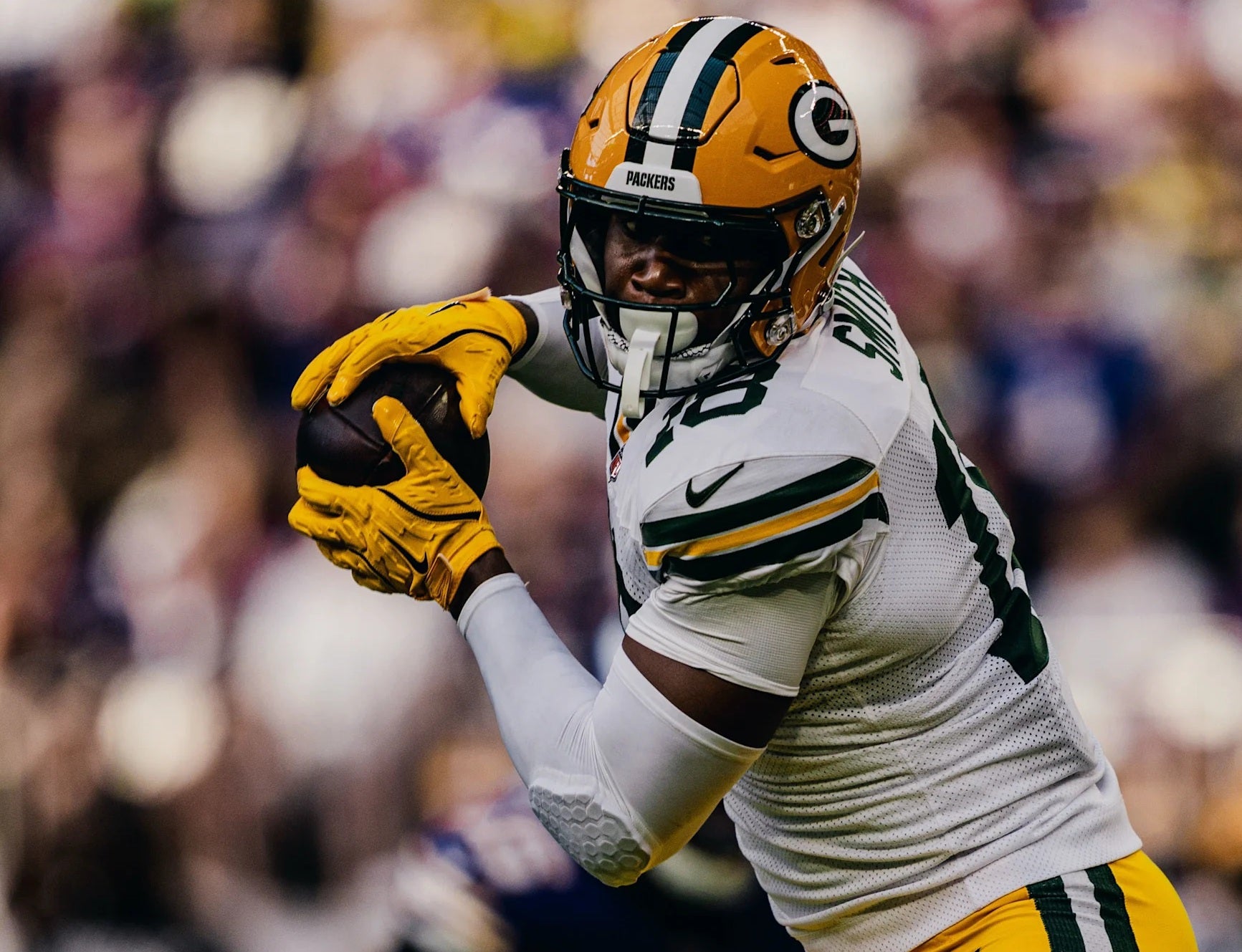
The Green Bay Packers will be without wide receiver Jayden Reed, potentially for an extended period, after he suffered a neck injury on the second offensive play of Sunday’s game against the New York Jets. Head coach Matt LaFleur said it’s still too early to determine if Reed will return this season at all. That leaves a significant hole in the Packers’ passing attack, and unlike last year, Green Bay doesn’t have the same depth at wide receiver to absorb the loss.
The question now is how the Packers replace Reed’s snaps and productivity. The answer likely involves leaning into their tight end group in addition to their depth pieces at WR.
The wide receiver depth chart still has some options
With Reed sidelined, the Packers have five other wide receivers on the 53-man roster. Christian Watson and Matthew Golden are the two primary options and will start alongside tight end Tucker Kraft as the top pass-catchers in the offense.
Beyond those two, the situation thins out. Skyy Moore and Bo Melton are next in line, followed by undrafted rookie J. Michael Sturdivant. The Packers also have two practice squad wide receivers available for game-day elevation if necessary: Isaiah Neyor and recently signed Quincy Skinner Jr.
Moore has been the fourth wide receiver in the rotation, playing 19.69% of the offensive snaps so far this season. Against the Jets, he stepped into the slot after Reed went down, playing 10 snaps out wide, nine in the slot, one in the backfield, and one in-line. He was targeted three times and finished with two receptions for six yards. In addition to his role as a kickoff and punt returner, Moore offers alignment versatility that the Packers will need over the coming weeks.
Melton has played 13.39% of the offensive snaps. Like Moore, he’s primarily a special teamer, but the Packers trust him because he’s been in Green Bay long enough to understand the offensive concepts. Against the Jets, Melton played five snaps out wide and four in the slot.
Tight ends as the biggest solution
The more viable alternative for the Packers is using more tight ends. With Josh Jacobs still on the Commissioner’s Exempt List, Green Bay doesn’t have the personnel to run multiple-back formations effectively. Putting a combination of MarShawn Lloyd, Kaleb Johnson, and Chris Brooks on the field at the same time would be underwhelming from a talent perspective.
The Packers do have the personnel to deploy multiple tight ends, though, and the early-season snap distribution shows they’re already comfortable doing it. Through the first two weeks, Green Bay used 11 personnel (one running back, one tight end, three wide receivers) on only 51.28% of offensive snaps. They used 12 personnel (two tight ends, two wide receivers) on 30.77% of snaps and 13 personnel (three tight ends, one wide receiver) on 14.53%.
Almost half of the Packers’ offensive snaps have already featured at least two tight ends on the field. Kraft has played 81.1% of the offensive snaps. Behind him, Jonnu Smith has played 35.43% and Mark Redman, 32.28%. Josh Wiley has played 8.66% of the snaps.
Smith and Redman offer different skill sets that make the multi-tight end approach functional. Smith, signed in free agency right ahead of the regular season, is more of a natural receiver. He’s played 28 snaps in-line, 13 in the slot, and four as a wideout through two games. His alignment versatility allows him to function as a de facto wide receiver while still contributing as a blocker from time to time.
Redman, acquired in a trade with the Los Angeles Rams for a 2028 seventh-round pick, is more of a traditional blocking tight end. He’s played 28 snaps in-line, seven in the slot, four out wide, and two in the backfield. The combination of Smith’s receiving ability and Redman’s blocking presence gives the Packers flexibility to mix and match personnel groupings.
Last year’s third-round pick Savion Williams is on injured reserve with an ankle injury but has a designation to return. He must miss at least two more games, but after the Tampa Bay Buccaneers game, Williams could be back for the Chicago Bears matchup in Week 5. He has the ability to play in the slot and could step into the wide receiver rotation while Reed recovers.
