
The Kansas City Chiefs are leaving traps on tape for their opponents in 2026, and they’re falling for it hook, line, and sinker
The Kansas City Chiefs planted seeds on film in Week 1 against the Denver Broncos and reaped the rewards in Week 2 against the Indianapolis Colts.


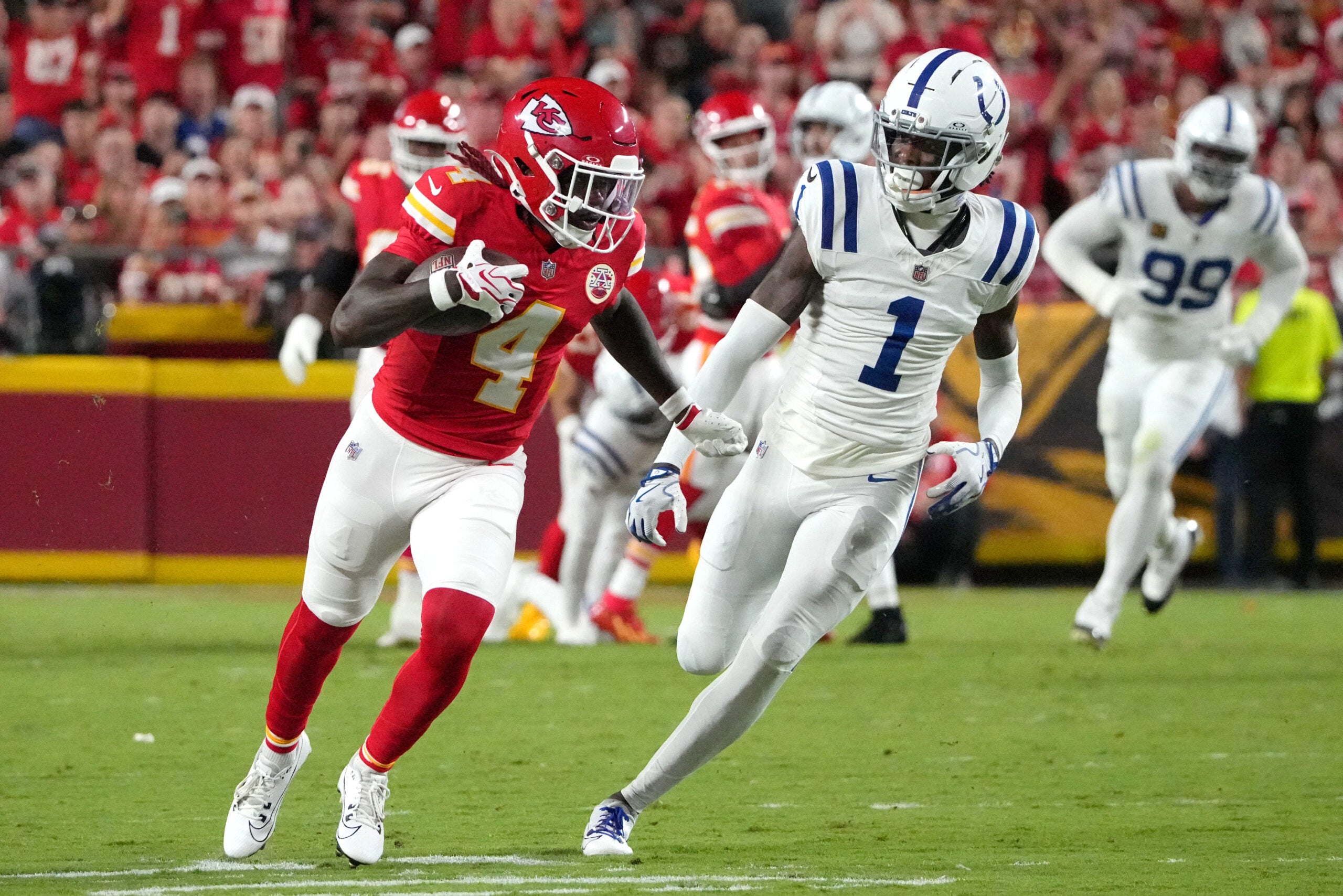
The Kansas City Chiefs laid a trap for their future opponents in Week 1, and they sprung it in Week 2 against the Indianapolis Colts.
It’s not uncommon for NFL teams to put something on tape to help set up future plays. The Chiefs have already done that numerous times in the first two weeks of the 2026 NFL season. The beauty of football is that you can line up in the same formation, give the same look, and run the same motion, but have an entirely different plan based on down, distance, situation, and so on. It can be a check or something called at the line of scrimmage for the quarterback. Perhaps it’s something the coaches call before the ball is even snapped.
What’s clear is that Kansas City is weaponizing that concept early in the season, and the results speak for themselves.
Rashee Rice’s motion trap paid off against the Colts
If you’ll recall, in Week 1 against the Denver Broncos, Chiefs wide receiver Rashee Rice had several plays where he motioned from a wide or slot alignment and inserted as a lead blocker into the C-gap between left tackle and tight end Travis Kelce to block for running back Kenneth Walker. It was effective and gave opposing coaches a specific tendency to study on film.
In Week 2 against Indianapolis, the Chiefs unleashed the same look. Instead of blocking, Rice feigned the block and ran a route out of the backfield. The result was Rice’s longest reception of the season, a 30-yard gain ahead of halftime.
Speaking to reporters on Wednesday, Rice confirmed the team had planned this, knowing opponents would watch the prior week’s film and that they could use a changeup to their advantage.
“Yeah, I did the previous week,” Rice explained. “Had a lot of plays where I would motion down into the line of scrimmage and block for the run game, and so it was just based off that play in the following week, knowing that the team that we played last week would, you know, watch film, and expect for me to go in that position and block for a running back.”
Unfortunately, Kansas City couldn’t capitalize with points at the end of the half. However, this is the type of play the Chiefs can set up with their newfound running game. It’s something they can keep leaning on during the 2026 season.
Khyiris Tonga’s 4th-and-1 conversion was another trap sprung
This isn’t the only time in 2026 that the Chiefs have used prior plays to set up opponents the following week. Look at the plays involving DT Khyiris Tonga lead-blocking for Walker. They put plenty of it on tape in Week 1, but they had some new wrinkles when they brought it out for Week 2.
On fourth-and-1 in Week 2 against Indianapolis, the Chiefs lined up in that same formation, and the defense keyed onto Walker. That set up the perfect opportunity for Kansas City to hand the ball off to their 6-foot-3, 331-pound fullback instead. Tonga picked up three yards on fourth-and-1 to convert and earn a fresh set of downs. They even tried to capitalize on the same look at the goal line later in the drive, showing the same formation on the Jalen Royals TD reception.
Patrick Mahomes may have already hinted at their next trap
The Chiefs also used a play in Week 1 that Patrick Mahomes believes will help set up future iterations and other things they can run off that look. That was the “Heisman” trick play the Chiefs borrowed from the 1930s.
“It was called Heisman,” Mahomes said. “I can’t remember who exactly ran it because it was black and white. It was very scratchy when we were watching it. It was a play that Coach (Andy) Heck brought to us. I’m sure Coach Reid had his imprint on it as well, and we designed it, and I just knew it was going to score. And hopefully that can set some stuff up. You know, Justin’s got a lot of ability running the ball and throwing the ball as well, and so hopefully that’s the first iteration of it.”
They’ve run that play before, but they can deploy different iterations that use quarterback Justin Fields, the passing game, and other types of motion to their advantage.
Kansas City Chiefs must continue planting poison pills on film
The goal here is to put a poison pill of sorts on tape. You get teams preparing for what they believe is a tendency, something you’ve shown in the past and been successful at. When they see that formation, they think they know what’s coming because they’ve studied the tape. In actuality, the Chiefs aim to break the tendency, do something entirely different, and set the opponent up to fail.
Part of that falls on the play-callers, Andy Reid and Eric Bieniemy, to know when to break the tendency. The other part of it lies in the player’s execution. It’s like acting because the Chiefs’ offense still has to sell the opposing defense on what they believe is coming. So far, the Chiefs have capitalized on this through the first two weeks of the 2026 NFL season. They’ll have to stay creative, plant these seeds on film, and find ways to alter plays and build off them to keep succeeding as the season progresses.
