
Minnesota Vikings potential trade for RB Jonathan Taylor creates salary cap issues, but not in the way you believe
We all know that the Minnesota Vikings are likely to be aggressive at the NFL trade deadline, but the salary cap creates issues.


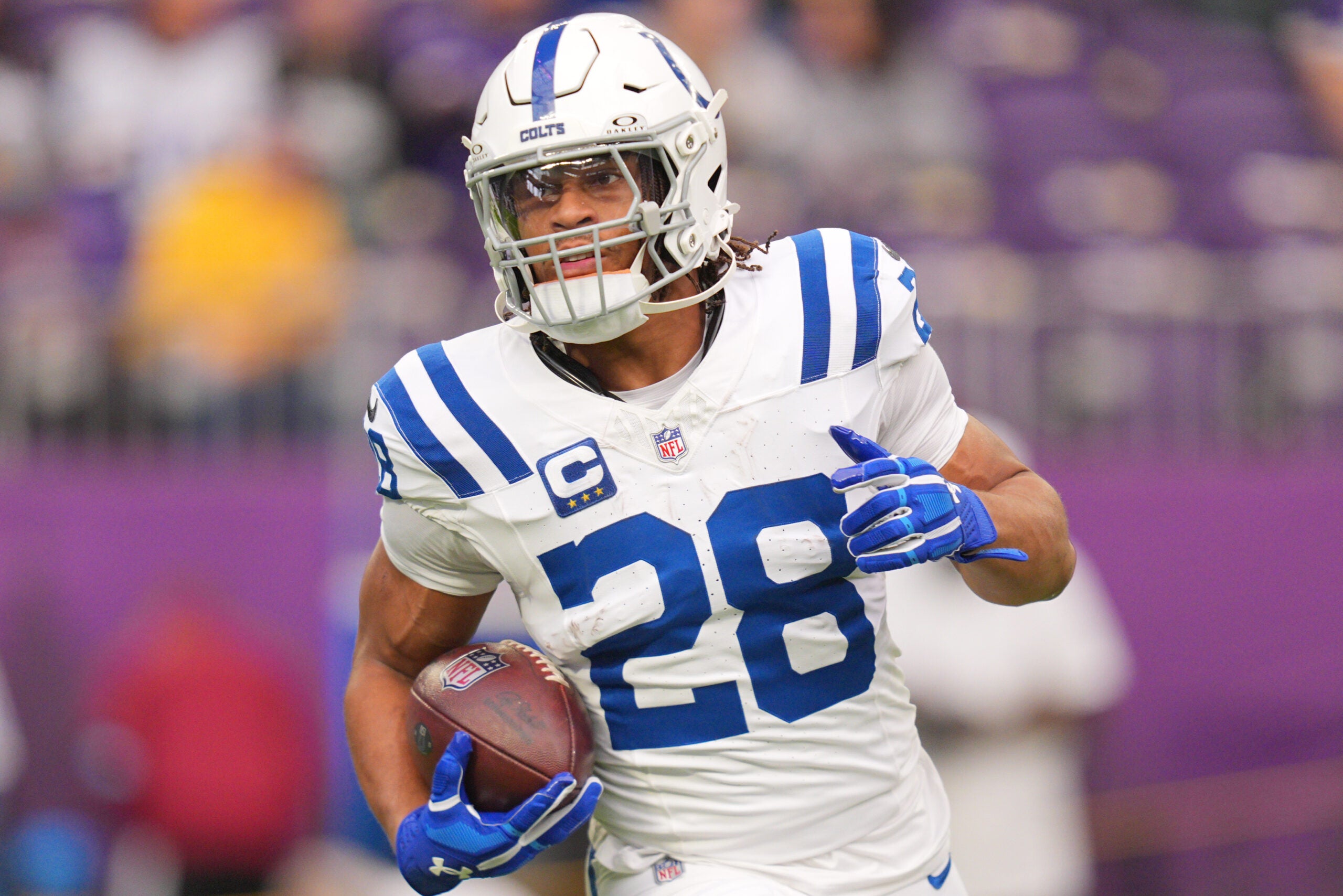
The NFL trade deadline is coming up, and the Minnesota Vikings are likely to be aggressive in targeting improvements on the roster. One of the main targets for the Vikings appears to be Indianapolis Colts running back Jonathan Taylor.
Making that trade is obvious for one key reason: they need an improvement in the running game. Aaron Jones and Jordan Mason are two solid players you want to have in your running back room, but they aren’t nearly good enough at this point to be your duo for a potential Super Bowl run. The real question about a possible Taylor trade is simple:
Can the Vikings afford it?
Salary cap complicates a potential Jonathan Taylor trade
We know the Vikings don’t have a ton of salary cap space, which is a major factor in who they can acquire in a trade. Right now, the Vikings have just $6.31 million in cap space. That means they have to either:
- The player they trade for has to have a cap hit less than $6.31 million
- Create more salary cap space with an extension or restructure
Edge rusher Andrew Van Ginkel (base salary $15.39 million, 4 void years), right guard Will Fries ($12.61 million, 3 remaining years), linebacker Blake Cashman ($6.9 million, 2 void years) and tight end T.J. Hockenson ($7 million, 1 void year) are the only realistic options for the Vikings to restructure. The problem is how much money do you want to push out into future years with players who may not be on the roster next year? For a potential Super Bowl, it may be worth it for the Vikings.
With Taylor’s contract, it’s something that the Vikings can currently absorb. If they trade for him after the Week 8 slate of games, acquiring Taylor would only incur a salary cap hit of approximately $4.36 million. A prorated $3.88 million of his $6.98 million base salary, along with $480k of his $1.02 million in per-game roster bonuses. That $4.36 could grow to $4.985 million depending on what his other bonuses of $625k are, but they are probably Likely To Be Earned bonuses, which hit the salary cap, but if they aren’t earned, they turn into a credit the following year.
That contract is easy to fit under the salary cap, and it would drop another $448k if they waited until the trade deadline. That is a significant amount of money with the Vikings in a salary cap crunch.
If they end up making a deal, it would be a huge one in multiple ways, and could vault the Vikings to another level offensively and be the first major move by general manager Nolan Teasley.

