
Philadelphia Eagles take a massive early gamble while rebuilding the offensive and defensive lines in latest 7-round 2027 NFL mock draft
The Philadelphia Eagles have an insane amount of capital in the 2027 NFL Draft. Who are some potential fits who make sense for the team?

The Eagles are in the middle of a rough 2026, and the draft board is starting to reflect it. With Lane Johnson retired and the offensive line in transition after the Cam Jurgens trade, general manager Howie Roseman has the capital—and the incentive—to get back to building the trenches.
This A to Z Sports simulator mock puts that idea into practice, loading up early on an edge and two offensive linemen before filling out the rest of the board.
It earns a solid grade overall. The early picks make sense. Some of the later ones are more about traits and development than immediate impact.
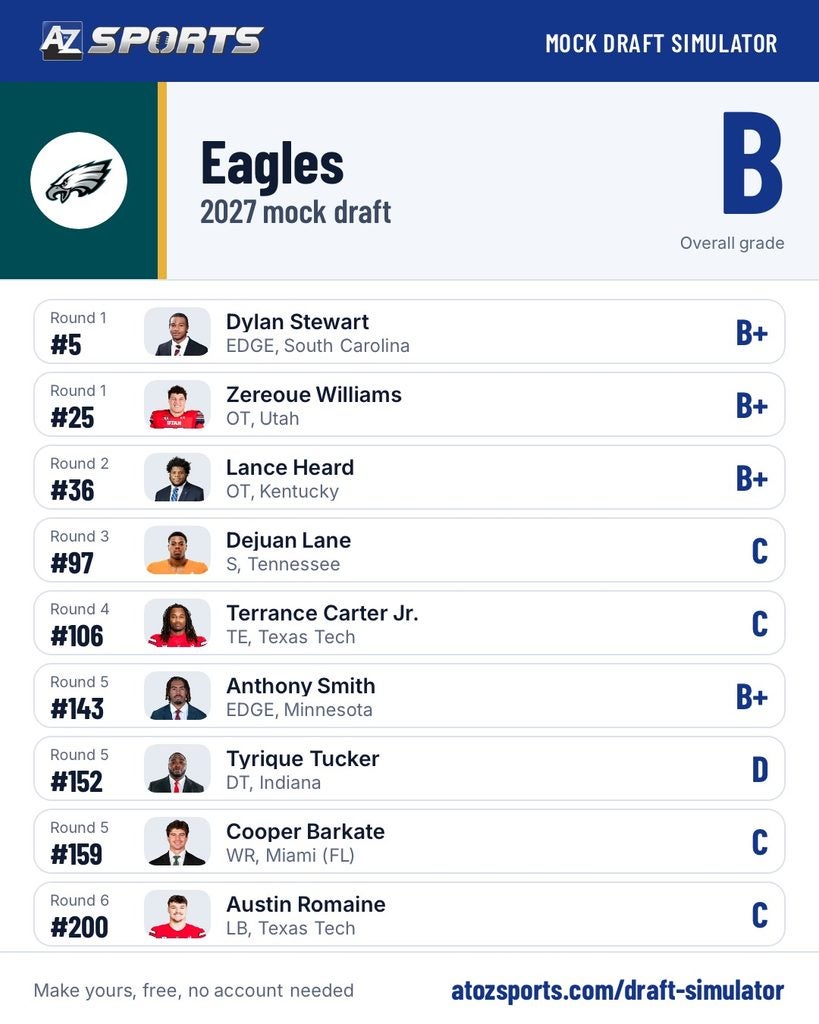
Eagles 7-round mock draft
Round 1, No. 5: Dylan Stewart, EDGE, South Carolina
Stewart is the kind of edge the Eagles have targeted when the opportunity is there. He’s 6-5, around 245 pounds, with the kind of first-step explosion that shows up on every scout’s board. As a true freshman, he piled up 6.5 sacks and 10.5 tackles for loss; even in a disrupted 2026, he’s flashed the same burst and bend. Multiple boards still have him in the top 10, often as the second edge behind Texas’ Colin Simmons.
There are red flags. He’s had a suspension and some on-field incidents. At this spot, though, the upside is hard to ignore for a defense that can always use another rusher opposite the established pieces. Roseman has never been shy about betting on athletic edges when the traits are this clear.
Round 1, No. 25: Zereoue Williams, OT, Utah
The second first-rounder (the Jacksonville pick from the Jordan Davis trade) goes to the offensive line. Williams is a 6-8, 320-pound left tackle who has taken over the starting job at Utah after spending time behind higher-profile teammates. He has the length and athleticism that come from a basketball background, and he has held up in pass protection as a starter in 2026.
He’s still relatively raw in the run game and has limited starting experience overall, but the physical tools are the kind the Eagles have developed before. With the right tackle spot in flux after Johnson’s retirement and Mailata locked in on the left, adding another long, athletic tackle is a logical swing.
Round 2, No. 36: Lance Heard, OL, Kentucky
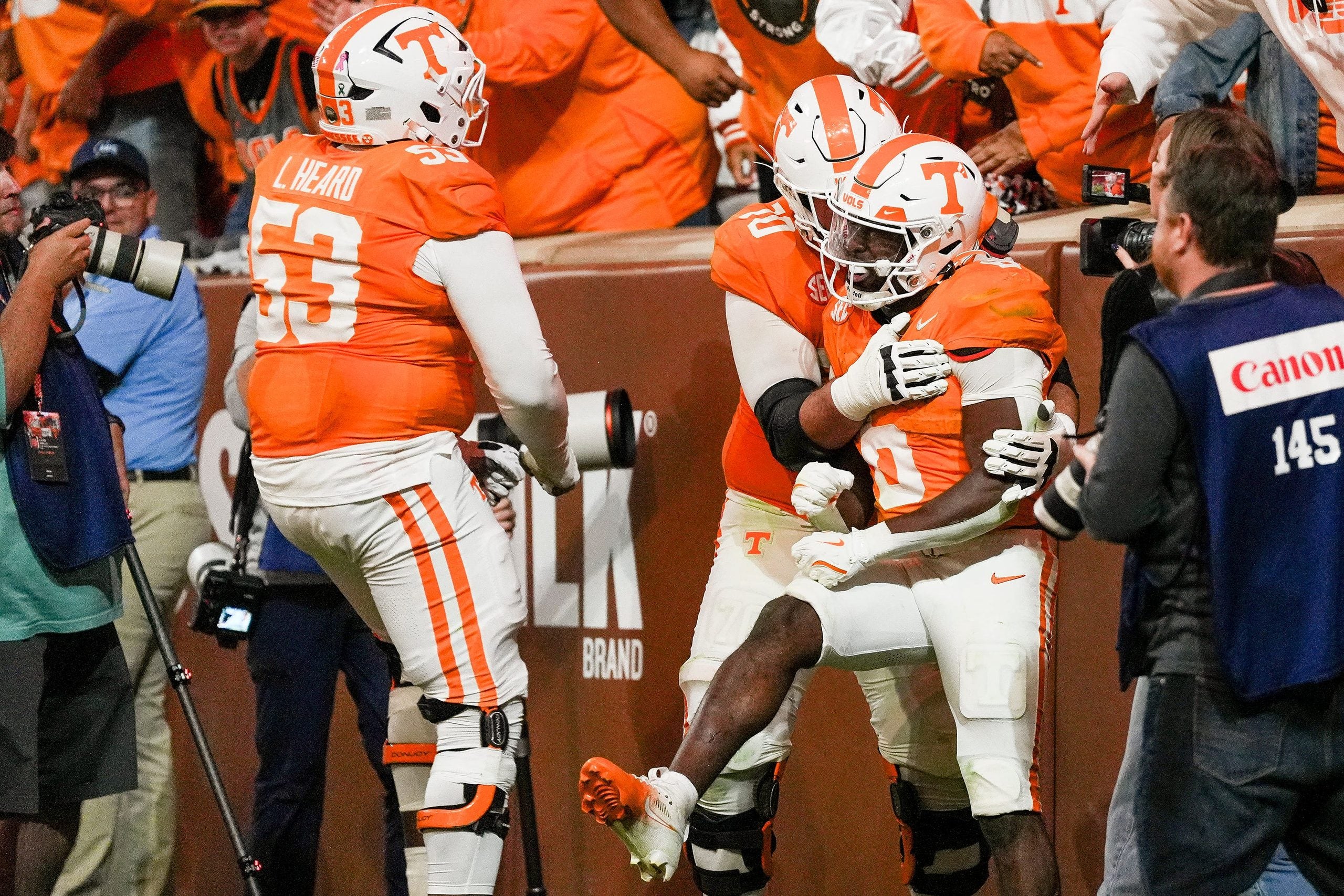
Doubling up on offensive line is aggressive, but it matches the current reality of the room. Heard is a 6-6, 325-pounder with SEC starting experience at LSU, Tennessee, and now Kentucky. He’s a power-first blocker who has cleaned up his pass protection in 2026 and brings three years of meaningful snaps against high-level competition.
Some evaluators see him eventually sliding inside, which would still be useful. Taking him here gives the Eagles two young tackles with different profiles—Williams the high-upside athletic piece, Heard the more experienced, heavier-set option. That’s the kind of depth the line has lacked since the Johnson/Jurgens departures.
Round 3, No. 97: Dejuan Lane, S, Tennessee
Lane transferred from Penn State and has shown versatility for the Volunteers—box, mid-field, single-high. He’s around 6-2, 215 with the size and range that lets him play multiple safety roles, and he’s produced interceptions and tackles for loss in 2026. The grade is more modest because he’s still refining his tackling and has limited starting experience, but the traits fit a secondary that values length and movement.
Round 4, No. 106: Terrance Carter Jr., TE, Texas Tech
Carter is a receiving-oriented tight end who transferred from Louisiana and put up productive numbers at Texas Tech (including strong YAC work). He’s more flex/H-back than a traditional inline blocker, which limits his ceiling for some schemes, but he gives the offense a reliable intermediate target who can create after the catch. With the Eagles’ tight end usage often featuring multiple roles, it’s a reasonable developmental add.
Round 5, No. 143: Anthony Smith, EDGE, Minnesota
Smith is a bigger edge (listed around 6-6, 280-285) who had a strong 2025 with double-digit sacks and earned All-Big Ten recognition. He’s not the pure athlete Stewart is, and his 2026 production has been quieter, but the length, power, and prior production give him a chance as a rotational piece who can set the edge and rush on obvious downs. At this spot, it’s solid value for a defensive line that likes multiple looks.
Round 5, No. 152: Tyrique Tucker, DT, Indiana
This is the weakest grade on the board, and it shows. Tucker is a shorter, thick interior player (around 6-0, 305) who has been a solid run defender and occasional pass-rush contributor for Indiana. He has productive moments—especially in 2025 on a strong Hoosiers defense—but the athletic profile is limited, and he projects more as a rotational or scheme-specific piece than a three-down starter. Late fifth is fine for a depth body; the D reflects the limited upside.
Round 5, No. 159: Cooper Barkate, WR, Miami (FL)
Barkate transferred from Duke, where he had a big 2025, and has been a reliable target at Miami. He’s a route-runner with good hands who projects best in the slot. The size and pure speed aren’t elite, which keeps him from rising higher on most boards, but he’s a polished, productive receiver who can contribute as a third or fourth option. Reasonable swing at this point.
Round 6, No. 200: Austin Romaine, LB, Texas Tech
Romaine came over from Kansas State and has been a productive tackler for Texas Tech. He’s instinctive against the run and has shown some coverage ability, though he lacks the ideal speed for a modern linebacker. At the end of the sixth, it’s a fine depth/special-teams pick with a chance to compete for snaps.
Overall, the mock leans into the obvious needs. Two offensive linemen and a top-end edge in the first two rounds address the line of scrimmage on both sides, which has been the franchise’s long-standing preference under Roseman.
The later picks are more hit-or-miss—Lane and Smith have clearer paths to contributing than Tucker does—but the early concentration of capital in the trenches keeps the grade in the B range. Whether the Eagles actually go this heavy on offensive line will depend on how the board falls and what free agency looks like, but the approach fits the current roster situation.
