
Very few GMs have kept control through 3 straight top-5 picks, and what happened to them next in NFL history matters for Titans GM Mike Borgonzi
The Titans are barreling toward another top-5 pick with extra draft ammo on the way. I dug into Super Bowl-era history to see what happens when one GM gets to spend it all.


The Tennessee Titans are 1-9 after a blowout loss to the Dallas Cowboys, and the 2026 NFL Draft order is coming into focus.
According to the A to Z Sports Playoff Predictor tool, Tennessee has a 97% chance to land a top-5 pick, including a 53% chance to land the No. 1 overall pick. The Titans are one of three teams with just one win heading into the final seven games, and they have the inside track on the strength of schedule tiebreaker against anyone else in that race. Barring a dramatic turnaround that involves a handful of wins, it’s safe to say they will be picking in the top five.
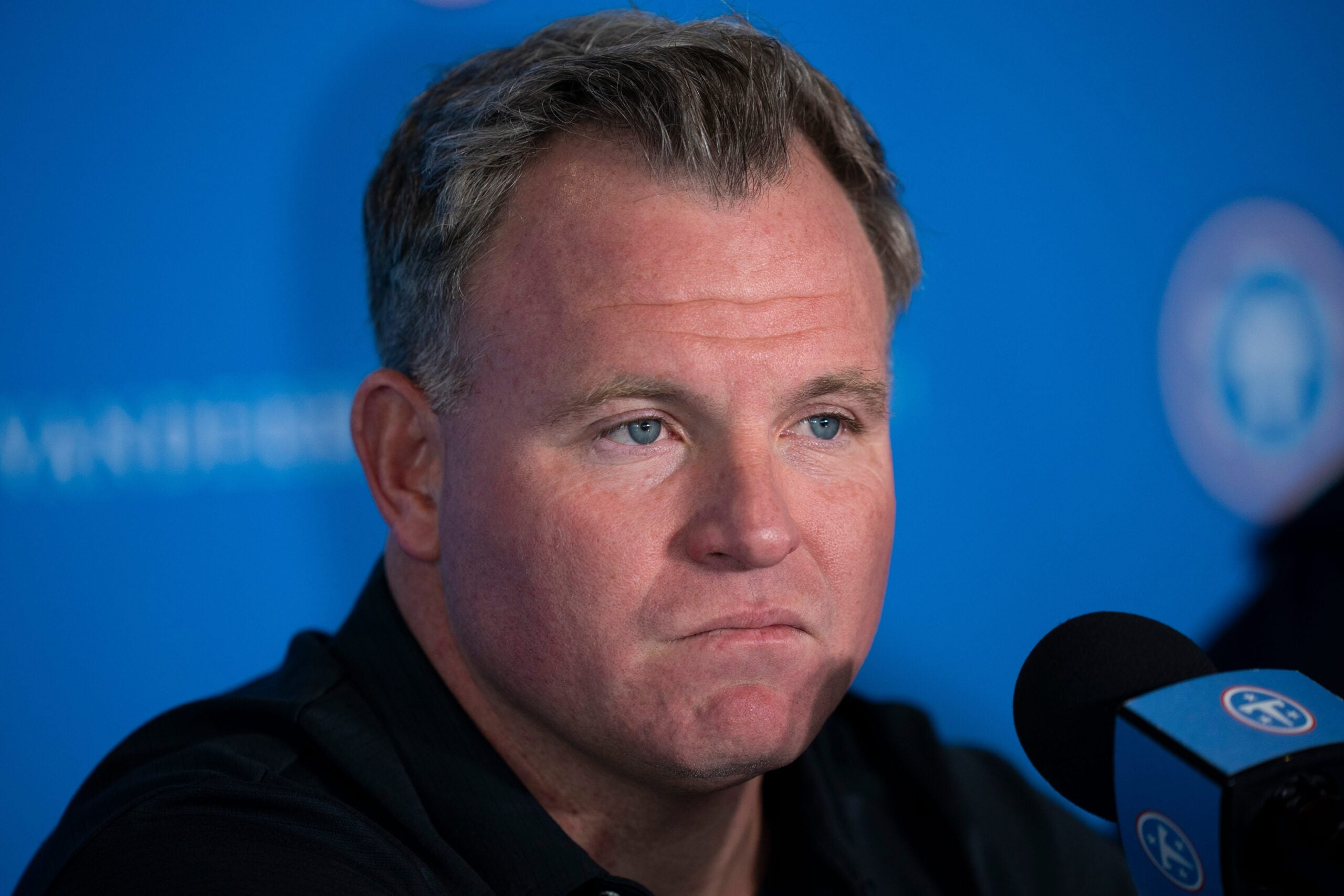
That brings me to GM Mike Borgonzi. Assuming he keeps his job, he is in line to make a lot of very high draft picks over the next couple of seasons. The Titans traded Jeffery Simmons and Amani Hooker, bringing in two additional first- an additional second-round pick.
So I looked into the history of teams that earned top-5 picks in three consecutive seasons.
In other words, teams that were roughly as bad as Tennessee has been, with similar earned draft ammo. How many of them let the same GM make the picks all three years? And for the ones that did, what happened next?
How rare is it for one GM to keep the keys?
This won’t surprise anybody, but it’s rare! In the Super Bowl era, 17 teams have earned three consecutive top-5 picks (some traded in and out of those spots, but they earned that value). Technically, nine of those 17 teams retained the same GM for all three seasons. However, only four of those nine kept the same GM as the actual decision-maker (and only two truly count). The other five were GMs in title only. Some were never the final voice, and others had that power and then lost it.
The four that stuck with one decision-maker were:
- The Houston Oilers from 1983-86 with Ladd Herzog
- The Oakland Raiders from 2013-15 with Reggie McKenzie, who is now part of the Titans’ front office
- The Cincinnati Bengals from 1992-95
- The Bengals again from 1999-2001
As you might guess, both Cincinnati runs belong to owner and GM Mike Brown. He’s in a unique situation because, as the owner, his job was never in jeopardy. So he only counts here in a technical sense. And respectfully to the Bengals organization, that’s not exactly the company you want to be keeping! The other two, funny enough, both carry Titans franchise connections.
It’s reasonable to say that teams with this stretch of earned draft capital rarely let the same person make the final call three seasons in a row. But when they do, what happens?
What those GMs did with the picks, and what came next
For the Oilers, Herzog traded the 2nd overall pick in 1983. In 1984, he took Dean Steinkuehler 2nd overall. In 1985, he traded down from No. 2 to take Ray Childress 3rd overall, and in 1986 he took Jim Everett 3rd overall.
The Bengals’ picks across those two runs were Dave Klingler, John Copeland, Dan Wilkinson, and Ki-Jana Carter, followed by Akili Smith, Peter Warrick, and Justin Smith in the second stretch. McKenzie traded the 3rd overall pick in 2013 for a haul, then took Khalil Mack 5th overall and Amari Cooper 4th overall.
Here’s where it gets more encouraging: generally speaking, the teams that kept their GM got back to the playoffs in the aftermath. The real success story belongs to this very franchise. The Oilers made those picks under Herzog and immediately went on a seven-year playoff streak. McKenzie’s Raiders went 12-4 in 2016 and reached a wild card game.
Cincinnati is the cautionary tale. After the first run, the Bengals hovered around .500 over the next three seasons but never made the playoffs. The second stint was even worse, as they went 6-10 and then 2-14 in the two years after that second three-year stretch.
The GMs who were retained in title, most of whom made some of the picks but lost final say on others, produced a handful of playoff turnarounds as well. The Buffalo Bills in the late 1960s and early 1970s had their O.J. Simpson and Lou Saban turnaround on the heels of their three-year run. The Atlanta Falcons in the late 1980s and early 1990s, with Ken Herock, jumped up right away and won a wild card game at New Orleans.
The Cleveland Browns at the turn of the century improved to above .500 and got to the playoffs. The Jacksonville Jaguars in the mid-2010s with Dave Caldwell went 10-6 after their draft run and won two playoff games on the way to an AFC Championship Game, where they lost by four points to Tom Brady’s Patriots.
The bottom line is that this history is a mixed bag. It is genuinely rare for one man to be handed the reins three years in a row with this much draft value attached to a team’s poor record. But in the cases where those GMs stayed with their organization through that span, there are plenty of examples of returns to .500 football and returns to the playoffs.
Something to consider as the future of the Titans franchise looms large…
