
The Jets made a huge mistake right after trading for Aaron Rodgers, and it cost them millions of dollars in cap space
The New York Jets made a big investment to acquire quarterback Aaron Rodgers last year, and it involved basically everything. The draft compensation was high — it ended up being two second-round picks, plus a first-round swap —, and the money is palatable but still significant. But the Jets decided to save in one area, […]


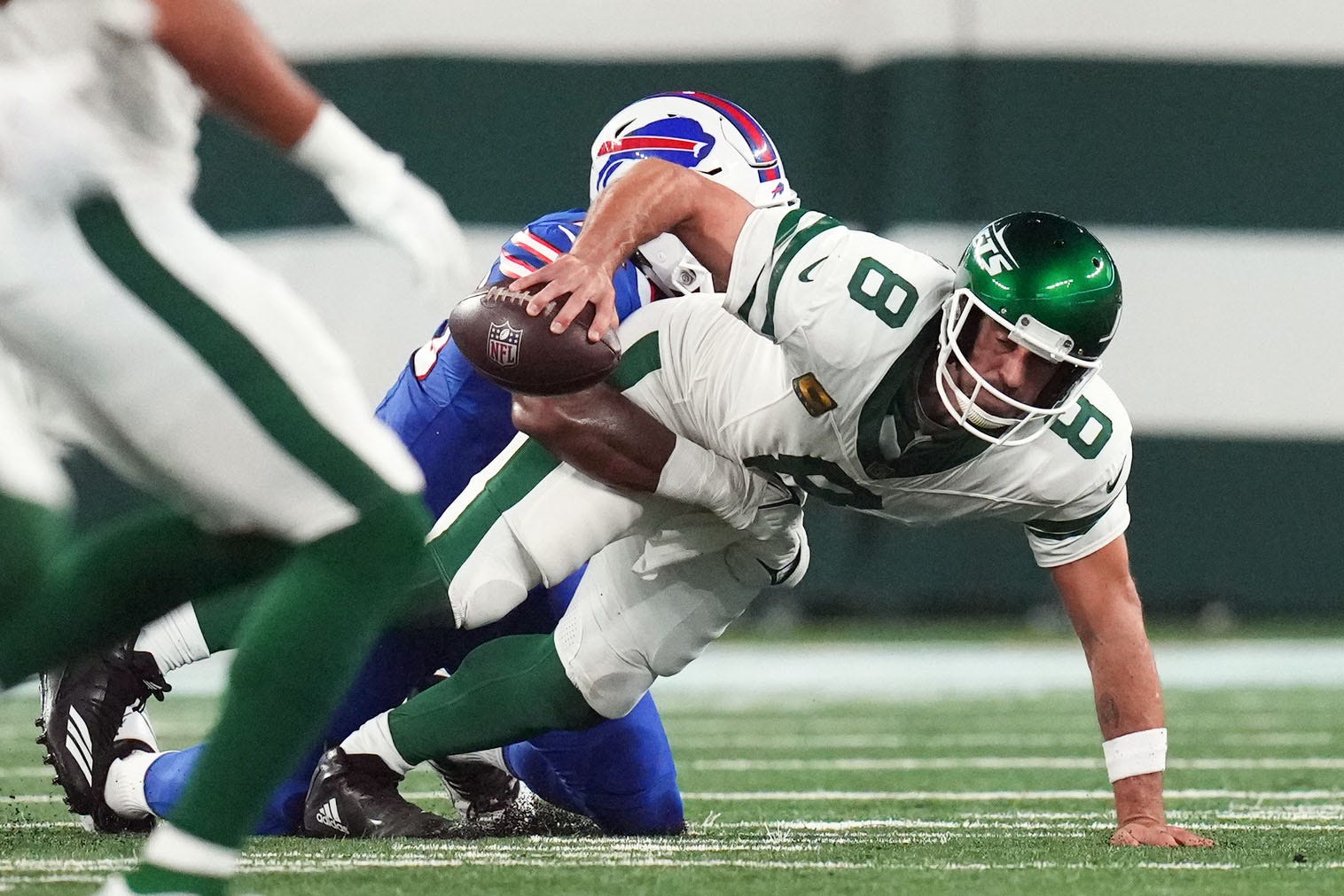
The New York Jets made a big investment to acquire quarterback Aaron Rodgers last year, and it involved basically everything. The draft compensation was high — it ended up being two second-round picks, plus a first-round swap —, and the money is palatable but still significant.
But the Jets decided to save in one area, and it came back to haunt them in a big way. According to Sportico and ESPN, the franchise decided to pass up the opportunity to acquire an insurance policy to Rodgers' contract.
It was something that Rodgers' deal already had in place when he was with the Green Bay Packers, but the Jets didn't want to carry it.
If the Jets had kept the insurance policy, they would have recoup part of the $37 million the quarterback earned in 2023. More important than the money itself is that the amount would have been credited back to this year's salary cap, meaning that the Jets could have a large amount of extra cap to build around Aaron Rodgers in 2024.
ESPN's reporter Kalyn Kahler wrote that it might have been an ownership decision, since general manager Joe Douglas comes from an insurance-friendly environment on the Philadelphia Eagles.
"According to an insurance industry source, the Jets never returned calls from multiple insurance brokers, including the one who wrote and sold the Packers their policy on Rodgers. The Jets could have negotiated the existing Rodgers policy to insure a reduced portion of the signing bonus, but instead they let the policy go," Kahler wrote. "Sportico reported the Jets haven't done a policy in at least 10 years. Per insurance industry sources, if a club wanted to insure $40 or $50 million of a contract, it would cost them somewhere between $1 or $2 million per year."
Maybe the insurance cost would have been higher considering Aaron Rodgers' age and injury history, but those are also the two strongest arguments for the Jets to buy the insurance.
In terms of money, you can make a case that an expensive insurance isn't worth it after all, but the cap savings in the case of an injury are too significant in an all-in window to pass up, and the Jets are paying a huge price on the field, even with Rodgers recovered from his Achilles issue.
