
Packers’ path to the Super Bowl suddenly looks much tougher with several questions looming before 2026 opener
Green Bay faces steep Super Bowl odds as health, depth, and offensive line questions converge ahead of the regular season.


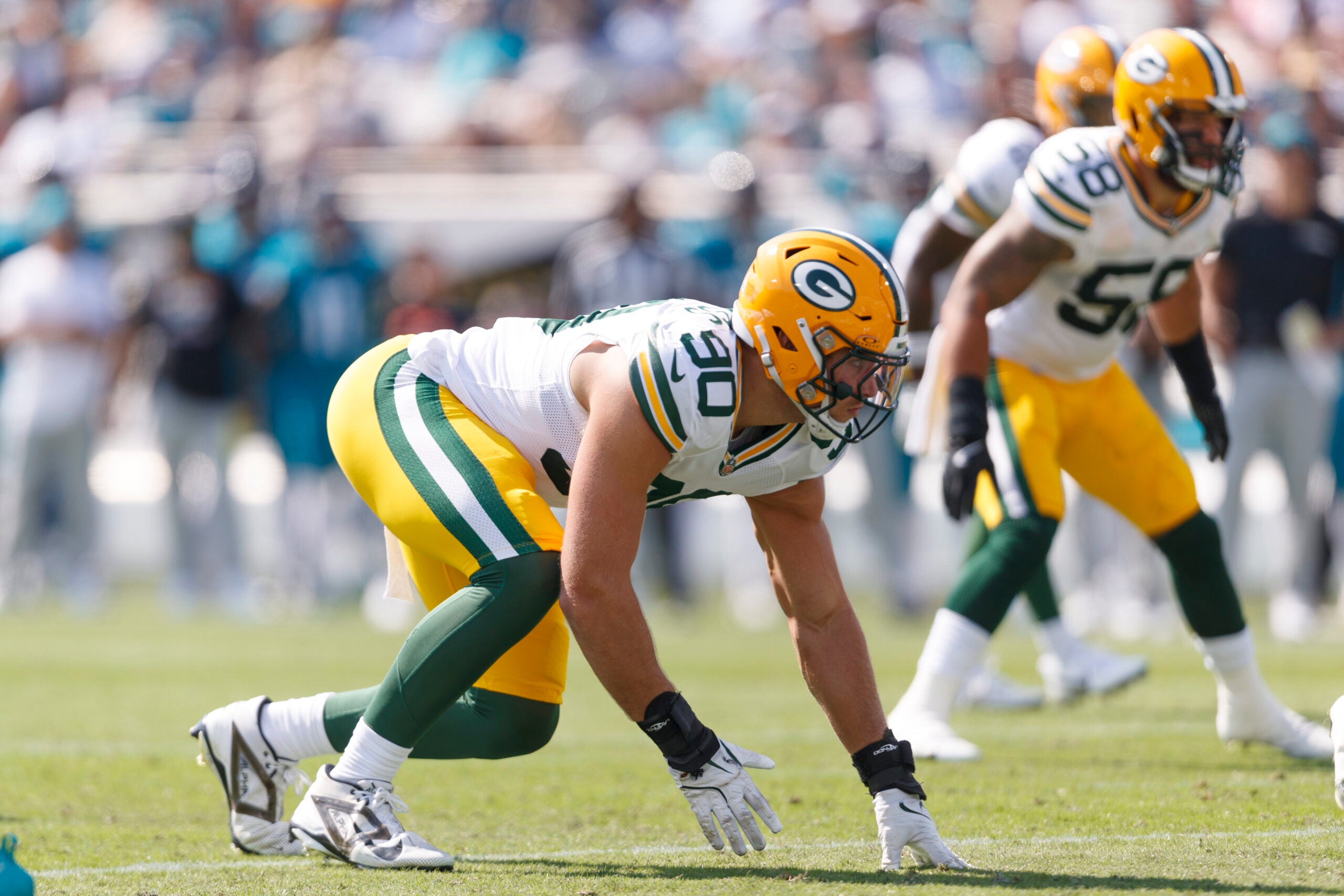
The Green Bay Packers enter the 2026 regular season surrounded by uncertainty after an offseason of significant roster turnover, coaching staff changes, and lingering injury concerns. A year ago, Green Bay looked like the best team in football after trading for edge defender Micah Parsons and rattling off wins over the Detroit Lions and Washington Commanders in Weeks 1 and 2. The narrative has shifted dramatically since then. The Packers are no longer widely viewed as legitimate Super Bowl contenders, and the reasons why come down to several factors that all need to break right simultaneously.
Taken individually, each concern has a reasonable path to resolution. But when you stack them together, the probability of everything aligning drops considerably. The margins to win a Super Bowl are razor thin, and Green Bay may not have much room for error compared to the past two seasons.
Health is the foundation, and it’s already shaky
Micah Parsons will miss roughly the first month of the regular season as he continues recovering from his ACL injury, and even after returning, he’ll likely face a snap count or some type of limitation as he works back to full strength. The Packers’ defense was materially worse without him last year. Green Bay went from 10th in success rate with Parsons on the field to 30th after he went down in the final three games of the 2025 season.
Beyond Parsons, offensive linemen Zach Bako-Bewele and Aaron Banks are both dealing with knee injuries and are probably not at full strength heading into the opener, if they will play whatsoever. That creates fragility at a position group already facing questions, which connects directly to the next concern.
Offensive depth took a real hit
The Packers lost wide receivers Romeo Doubs and Dontayvion Wicks, offensive linemen Rasheed Walker and Elgton Jenkins, and defenders Rashan Gary and Kingsley Enagbare this offseason. The players stepping into starting roles are capable, but projecting the same caliber of depth Green Bay carried over the past two seasons is difficult.
This ties back to health. Injuries will inevitably happen throughout an 18-week regular season. The difference is that the Packers are not as well prepared on paper to absorb those losses as they were in 2024 and 2025. Unless the team catches a generational break in terms of health, depth will be tested, and the answers behind the starters are less proven.
The offensive line carries real question marks
The only addition to the offensive line throughout the offseason was fifth-round pick Jager Burton. Walker and Jenkins are gone. The starting five has uncertainty at multiple spots: Jacob Monk opens the year at right guard, Anthony Belton did not develop as planned, Jordan Morgan is entering his first season as a full-time starter at left tackle, and Sean Rhyan is doing the same at center.
Add the Bako-Bewele and Banks injury situations, and the offensive line could be the position group most vulnerable to a cascading problem if one injury forces shuffling across the front.
Player development has to deliver
Because of the depth issues, the Packers need younger players to take real steps forward. Rookie Brandon Cisse has to generate impact from the jump. Former first-rounders like Jordan Morgan, Lukas Van Ness, and Matthew Golden were not high-level contributors on the 2025 roster, but they need to be now. The departures of veteran pieces demand that these players step up and perform at a higher level than they have to this point.
General manager Brian Gutekunst and head coach Matt LaFleur have built a track record of developing young players into contributors, but banking on multiple pieces making that leap in the same season adds another layer of variance to Green Bay’s outlook.
The Packers will need their elite players (Jordan Love, Micah Parsons, Tucker Kraft among them) to perform at a truly high level to compensate for these potential shortcomings. Green Bay’s margin for error in the NFC is thin enough that one significant injury or one underperforming position group could be the difference between a deep playoff run and a regular season failure.
In reality, the chances entering the 2026 season are not nearly as high as they were over the past two years, and Green Bay will have to beat those odds to establish itself as one of the NFC’s top teams.
